Vietnam Defense and News forum

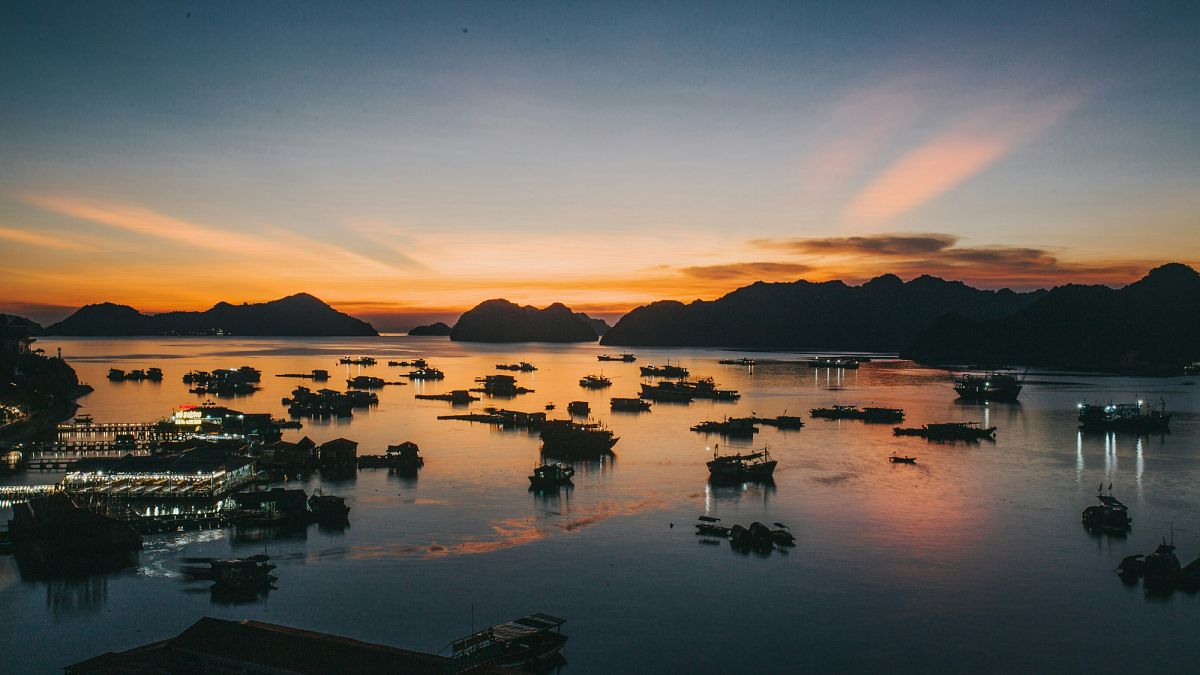
I visited Saigon last winter seeing many earning little, many earn a lot. There is a big gap between. Overall Vietnam is a manufacturing country thus many things are in surplus thus affordable for the mass. Have you ever travelled to the southern part?

To view this content we will need your consent to set third party cookies.
For more detailed information, see our cookies page.


I have been to Nha+Trang, and the mineral mud bath there left a deep impression on me. There are also tips everywhere, 10000 Vietnamese dong or 10 CNY. I think the southern part of Vietnam is more open than the northern part. North Vietnam looks too much like China, it's not fun.
Overall, the prices in Vietnam are about the same as in China. However, the pace in Vietnam is slower and the life of the Vietnamese is a bit more. I have traveled to many countries, and Vietnam is one of my favorites.
 
I visited Saigon last winter seeing many earning little, many earn a lot. There is a big gap between. Overall Vietnam is a manufacturing country thus many things are in surplus thus affordable for the mass. Have you ever travelled to the southern part?

To view this content we will need your consent to set third party cookies.
For more detailed information, see our cookies page.


And I have also been to Ho Chi Minh City, but not for tourism. Ho Chi Minh City is building a subway, and the shield machine used for the project comes from my upstream company. The shield teeth on the shield machine were purchased from my department. I once went to Ho Chi Minh City to solve technical problems.
 
I have been to Nha+Trang, and the mineral mud bath there left a deep impression on me. There are also tips everywhere, 10000 Vietnamese dong or 10 CNY. I think the southern part of Vietnam is more open than the northern part. North Vietnam looks too much like China, it's not fun.
Overall, the prices in Vietnam are about the same as in China. However, the pace in Vietnam is slower and the life of the Vietnamese is a bit more. I have traveled to many countries, and Vietnam is one of my favorites.
Yes the pace is Vietnam is slower. Always plenty of time for a coffee. We don’t want to work to death like in China, Japan or Korea. Life is short.
 
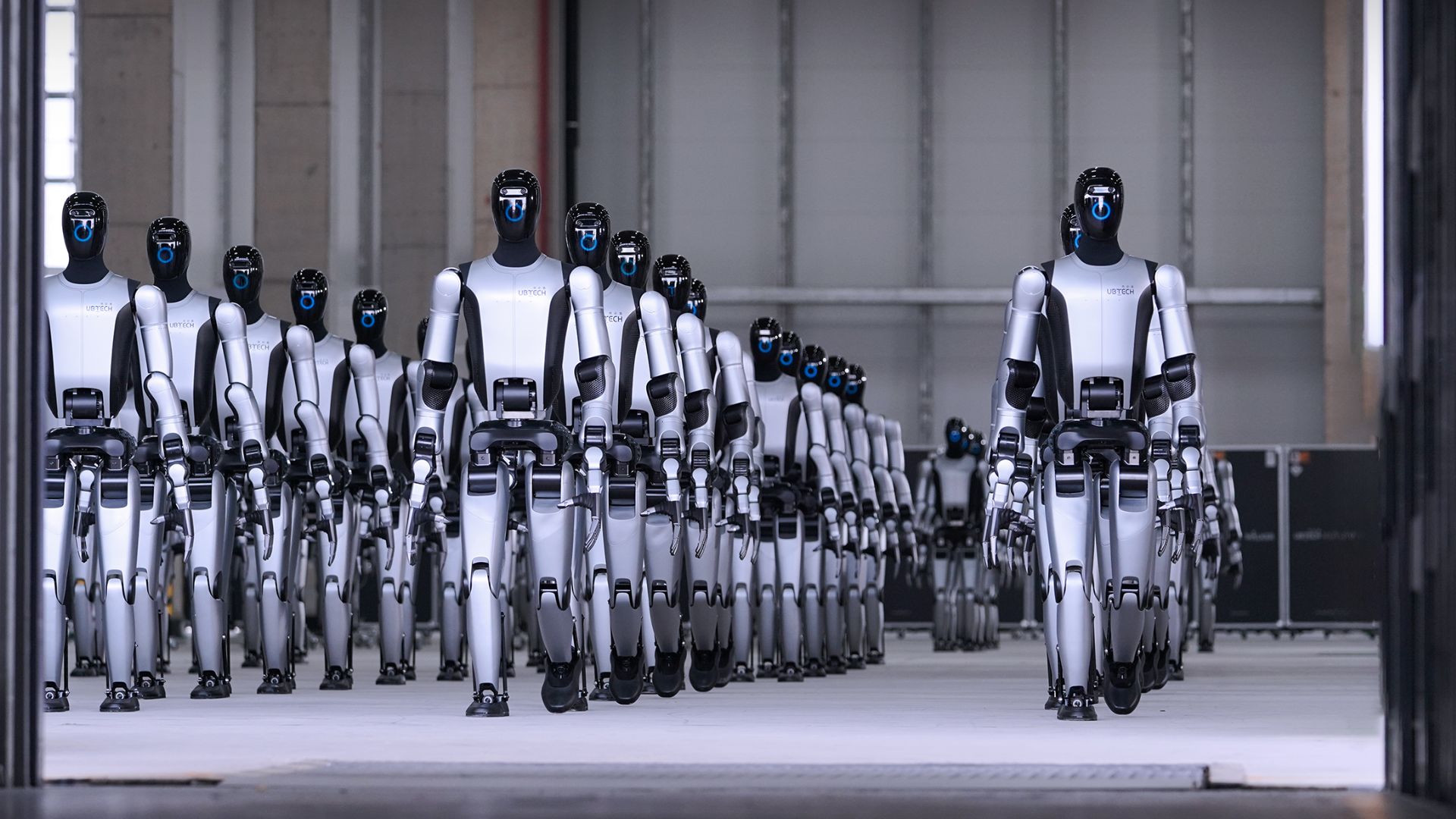
That’s interesting. The Chinese deploy industrial-grade humanoid robots to patrol the border to Vietnam. against smugglers?

1764221523431.png
 
Focus Gaming News Asia Pacific | South East Asia | Casino

Vietnam’s Grand Ho Tram to pilot casino access for locals​

11/26/25
1764221882661.png

Share​

There is currently only one casino where Vietnamese citizens can gamble.

Vietnam.- The Grand Ho Tram resort in Ba Ria-Vung Tau will reportedly open its casino to local players. According to GGR Asia, the resort has confirmed that it has received permission to allow access to Vietnamese nationals under a five-year pilot programme.

The move would mean that Vietnamese citizens can gamble at two casinos in the country, with Corona Resort & Casino on Phu Quoc Island the only venue that can currently accept local players. Players would need to be 21 or over and meet financial requirements. A resort to be developed in Van Don may also be included in the programme.

The Grand Ho Tram currently caters to foreigners only. Located southeast of Ho Chi Minh City, it’s in the midst of a new 35-hectare development to add a five-star hotel complex, luxury resort villas, entertainment and an international convention and exhibition centre. Corona Resort & Casino now has permanent permission to accept locals.

1764221949438.png
The project is a partnership between Lodgis Hospitality Holdings and VinaLiving, which is part of the investment company VinaCapital. The groundbreaking ceremony was attended by senior government officials and project partners.

The new development in Van Don is also hoping to gain permission to allow Vietnamese nationals to access their casinos, under a proposal drafted by the Ministry of Finance. Van Don’s US$2bn integrated resort is being developed by Sun Group and is due to open fully by 2032.
 
Vietnam’s blockbuster movie ‘Mua Do’ (Red Rain) is running for the Oscar, best international movie. Remember of 50 years ago the 81 day cruel decisive battle of Quang Tri.
Back then the Republican arny (South Vietnam) wanted to recapture the ancient Citadel from the Northern army at all costs.
1764223320554.png
1764224208107.png
 
What’s smaller than Mini?
Vinfast’s newest electric vehicle Minio.
To view this content we will need your consent to set third party cookies.
For more detailed information, see our cookies page.
 

ASEAN BEAT

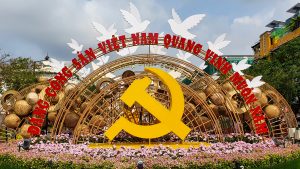
Why Vietnam Is Elevating Foreign Affairs to a ‘Core, Frequent’ Mission​

The Communist Party’s upcoming 14th National Congress is set to mark an important change in the country’s approach to foreign policy.


Why Vietnam Is Elevating Foreign Affairs to a ‘Core, Frequent’ Mission

Credit: Photo 291255513 © Duc Huy Nguyen |

Vietnam’s draft political report for the upcoming 14th National Congress of the Communist Party of Vietnam (CPV) signals a major change in how the country will advance its interests both at home and abroad.

In the report, the CPV identifies great power rivalry as one of the most pressing issues that Vietnam must overcome to realize its target of 10 percent GDP growth in 2026. Hence, it has elevated foreign affairs to the status of a “core, frequent” mission (“trọng yếu, thường xuyên”) of the party-state, putting it on par with national defense and internal security.

The CPV’s draft political report tasks its foreign service with two key tasks: addressing threats early and from afar; and elevating Vietnam’s international profile and strengthening its strategic autonomy through active engagement with international bodies and partners.

In the past, Vietnam’s diplomacy was more reactive, taking cues from the international environment and then adjusting its domestic policies. Now, the country wants to play a more active role by having diplomacy shape the international environment in ways conducive to its domestic interests. This change reflects the ambitions of Vietnam’s new “era of national rise.”

Underneath the language change lies a new strategic thinking. Vietnam is updating its playbook on how to deal with international polarization. This is not the first time that Vietnam has had to cope with international polarization. Throughout the three Indochina Wars, the country had to navigate the U.S.-Soviet and Sino-Soviet rivalries to realize its three goals of independence, unification, and border security. Its means at the time was different.

Hanoi primarily relied on the use of force to defeat France and the United States and their respective Vietnamese collaborators between 1946 and 1975. During the Third Indochina War, Hanoi again used its military to overthrow Cambodia’s Khmer Rouge and fight a border war with China, and Vietnamese troops were present throughout all of Indochina.

Diplomacy was relegated to the back seat, as Hanoi adopted the “talking while fighting” strategy. How much Hanoi could negotiate depended on how much territory it held or the military advantage it enjoyed on the ground.


Although the reliance on the use or threat of use of force was effective, it was costly. At the end of almost five decades of warfare in 1991, Vietnam was one of the poorest countries in the world.

A command economy and a rigid bureaucratic structure were useful for mobilization during wartime, but they soon became a burden on growth in peacetime. Hanoi well understood the cost of the use of force. As such, it adopted the “Three Nos” non-aligned foreign policy (no military alliances, no siding with one country against another, no foreign military bases, no using Vietnamese territory to oppose other countries) in the early 1990s to complement its domestic reform and to reassure China of Hanoi’s peaceful intentions.

Hanoi reinforced its commitment to renounce the use of force in 2019 with the addition of a fourth “no”: no using force or threatening to use force in international relations. It is no coincidence that Vietnam’s economy took off as the country demobilized its military and restricted the use of force abroad, most importantly in Laos and Cambodia.

Hanoi’s adoption of the “Three Nos” took place within a non-competitive international environment. The United States was enjoying its unipolar moment, Russia was dealing with internal turmoil, and China was still hiding its capability and biding its time. Laos and Cambodia werefirmly under Hanoi’s tutelage.

This environment has changed in the past three decades, as the United States is no longer enjoying relative strength vis-à-vis China and Russia, while China has signaled its ambition to assume a bigger role in regional affairs.

Vietnam’s western flank is being threatened by China’s growing influence in Laos and Cambodia. However, Hanoi understands that it cannot return to the use of force to navigate international polarization as it did throughout the Cold War.

At the same time, being dragged into a great-power conflict is anathema to Vietnam’s strategic autonomy. The country’s demographic decline, coupled with the painful lessons of war, has necessitated a cost-effective and non-kinetic way to thrive in an unkind environment.


Diplomacy is the most viable substitute for the use of force. This explains why Vietnam is set to elevate foreign service to a “core, frequent” mission level on par with the military and public security. Instead of sending the military abroad as it did in the three Indochina Wars, foreign affairs will now constitute the first line of defense beyondthe country’s physical border. Hanoi visualizesdiplomacy as a comprehensive ecosystem consisting of Party diplomacy, state diplomacy, and people-to-people diplomacy.

Each of the three branches will target a different audience depending on their respective political systems, and on whether they are a state or non-state actor, but together they will communicate Vietnam’s Four Nos to the international community to avoid unnecessary arms races or complicate territorial disputes.

A case in point is Vietnam’s military modernization program. Hanoi does not want its neighbors to misperceive the program as an aggressive move, and by emphasizing its peaceful intentions, Hanoi can carry on with the modernization necessary to protect its territorial integrity in case diplomacy fails. Shunning the use of force will also lessen the need for an ally, as it was during the Cold War, and thereby it could augment Vietnam’s strategic autonomy.

And as offense is often the best defense, Hanoi will also go on a charm offensive by emphasizing its “soft power” to win more support for its domestic political programs in international bodies. Hanoi will look to leverage Vietnam’s culture, language, and national narrative to win the global competition for cultural influence, and by extension, gain support for its own stance on international issues.
 
The battle of Hill 815
Since hundreds of years Lang Son is the most fortified at the northern flank, similar to the Ukraine’s Donbas. At the end fighting the Chinese is always a lose lose game.

To view this content we will need your consent to set third party cookies.
For more detailed information, see our cookies page.
 

Vietnam’s race between​

NGUYEN PHUONG LINH
To Lam has fast consolidated power, but this new logic of control is not reform in the Western sense.
Vietnam’s Communist Party General Secretary To Lam applauds during a parade marking Vietnam’s 80th National Day celebrations in Hanoi, 2 September 2025 (AFP/Getty Images)


Vietnam’s Communist Party General Secretary To Lam applauds during a parade marking Vietnam’s 80th National Day celebrations in Hanoi, 2 September 2025 (AFP/Getty Images)
Published 28 Nov 2025
Listen to this article
Vietnam has stopped pretending to be pure – and started learning to be fast. The question now is whether the country can be just as fast, without forgetting to be clean.

After nearly a decade of General Secretary Nguyen Phu Trong’s “burning furnace” anti-corruption campaign, Vietnam entered 2025 cautious and slow. Officials hesitated to sign approvals. Ministries froze in fear of investigations. Economic growth became collateral damage.

Under new party chief To Lam, that logic has flipped. He has consolidated power faster than any Vietnamese leader in recent memory and rewired the bureaucracy for velocity. What once took years now happens in months.

This is not reform in the Western sense. It is political engineering by command. Vietnam has discovered that control can drive growth. The state may not be cleaner, but it is more decisive.

Under Trong, power was dispersed and bureaucrats terrified of blame. Under To Lam, it is steep and vertical. The Ministry of Public Security (MPS) now anchors both political loyalty and administrative enforcement.

Vietnam’s state machine now runs like a start-up: launch, iterate, correct later. It is exhilarating – and exhausting.

The MPS is no longer just police. It governs. Its network now extends across Party bodies, government ministries, state-owned enterprises, and even major private conglomerates. Through ownership stakes, inspection mandates, and inter-agency steering committees, the security apparatus increasingly coordinates – not merely monitors – the state.

This reflects a broader regional pattern. Across Southeast Asia, governments are struggling to align speed with legitimacy. Indonesia wrestles with decentralisation; Malaysia with coalition fragility; Thailand with elite paralysis. Vietnam, by contrast, is testing whether discipline can substitute for consensus – whether control can be productive.

Control has, in many ways, become coordination. Fear has turned into efficiency. Officials are now rewarded for execution, not restraint. “We’re judged by how fast we deliver, not how clean we look,” one Hanoi bureaucrat noted.

That shift is visible everywhere. Consultation periods for new regulations have shrunk from 60 days to less than two weeks. The National Assembly reviewed 50 laws last month alone, from energy and trade to digital governance.

Speed has replaced deliberation as a virtue.

The new AI Law, for instance, was so rushed that insiders joked it must have been written by AI. Within five days, four drafts circulated – each more confusing than the last. It was clumsy, but revealing: Vietnam’s bureaucracy has learned to move fast, even if it hasn’t yet learned to move well.

A young Vietnamese woman looks at her mobile smartphone as she rides side saddle on the back of a Grab motorcycle taxi next to Hoan Kiem Lake in central Hanoi, Vietnam. (Photo by: Andy Soloman/UCG/Universal Images Group via Getty Images)

Speed has replaced deliberation as a virtue (Andy Soloman via Getty Images)

Trong’s campaign was meant to clean the system. Instead, it evolved it. Officials became cautious, not honest. Corruption didn’t disappear; it became more sophisticated, more “managed.” A Vietnamese executive put it bluntly: “I’d rather have a corrupt government with 10% growth than a ‘clean’ one with 6%.” It was half a joke – but it captured the new mood.

Today, “clean” means predictable. Graft has been absorbed into the system as a cost of coordination rather than a moral failure. The state’s true priority is not purity – it’s performance.

To Lam’s consolidation has made Vietnam both more stable and more brittle. GDP growth is heading toward 8%. Investment is rebounding. Decision-making is faster. Yet the same vertical hierarchy that powers efficiency also magnifies risk.

When authority depends on one command chain, innovation slows and errors compound. Policies are drafted faster than they can be implemented. Ministries race to please the centre, even when rules change mid-process.

Vietnam’s state machine now runs like a start-up: launch, iterate, correct later. It is exhilarating – and exhausting.

The coming Party Congress, likely moved forward to late 2025 or early 2026, will be the real test. Vietnam’s political system is sprinting toward it – trying to lock in personnel, policies, and projects before the reshuffle. Ministries are pushing approvals at record speed. Companies are adapting in real time. After the Congress, the machine will slow down as new power balances settle.

The question is not whether Vietnam can move fast. It already can. The question is whether it can sustain that pace – economically, institutionally, and socially – without breaking itself in the process.

Because the real balance in Vietnam today isn’t between democracy and control. It’s between speed and stamina.
 
Viettel Post deploys more robots “made in Vietnam”. seems the technology has matured.

To view this content we will need your consent to set third party cookies.
For more detailed information, see our cookies page.
 
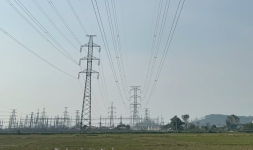
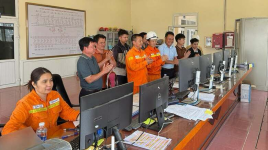
more electricity imports arriving from Laos via new long distance 220kV double circuits
Vietnam’s electricity demand is gigantic eventually about today’s UK and France combined.

1764310441511.png
1764310271879.png
 
Supermarket offers discounts especially on imported foods amid people suffer recent storms, floodings, natural disaster. Wet markets offer cheaper prices though.

To view this content we will need your consent to set third party cookies.
For more detailed information, see our cookies page.
 
Vietnam economy in 2025, outlook 2026

In a nutshell: on trades we are squeezed between the US and China more than ever. Household consumption spending still weak below prior Covid, savings too high. The gov steps in with massive infrastructure spending, firing all cylinders.

domestic companies are competitive on global markets as long as the tariffs do not exceed 10% over competitors. Higher productivity offset the impact.

The way out
Technology
Less savings, more consumption
Expanding market to Europe, Asia, Africa

To view this content we will need your consent to set third party cookies.
For more detailed information, see our cookies page.
 
Vietnam gov introduces 10 year golden visa. Getting employment pass, long term residency is easier than ever before. The new amendment allows Vietnamese to regain Vietnamese citizenship without giving up their foreign passports.


To view this content we will need your consent to set third party cookies.
For more detailed information, see our cookies page.
 

Users who are viewing this thread

Pakistan Defence Latest

Latest Posts

Back
Top