Navigation
Install the app
How to install the app on iOS
Follow along with the video below to see how to install our site as a web app on your home screen.
Note: This feature may not be available in some browsers.
More options
Style variation
You are using an out of date browser. It may not display this or other websites correctly.
You should upgrade or use an alternative browser.
You should upgrade or use an alternative browser.
Vietnam Defense and News forum
- Thread starter Viet
- Start date
More options
Who Replied?


- Thread starter
- #1,847
Trump meets Vietnam leader To Lam, vows to remove Hanoi from restricted lists
Get ST's newsletters delivered to your inbox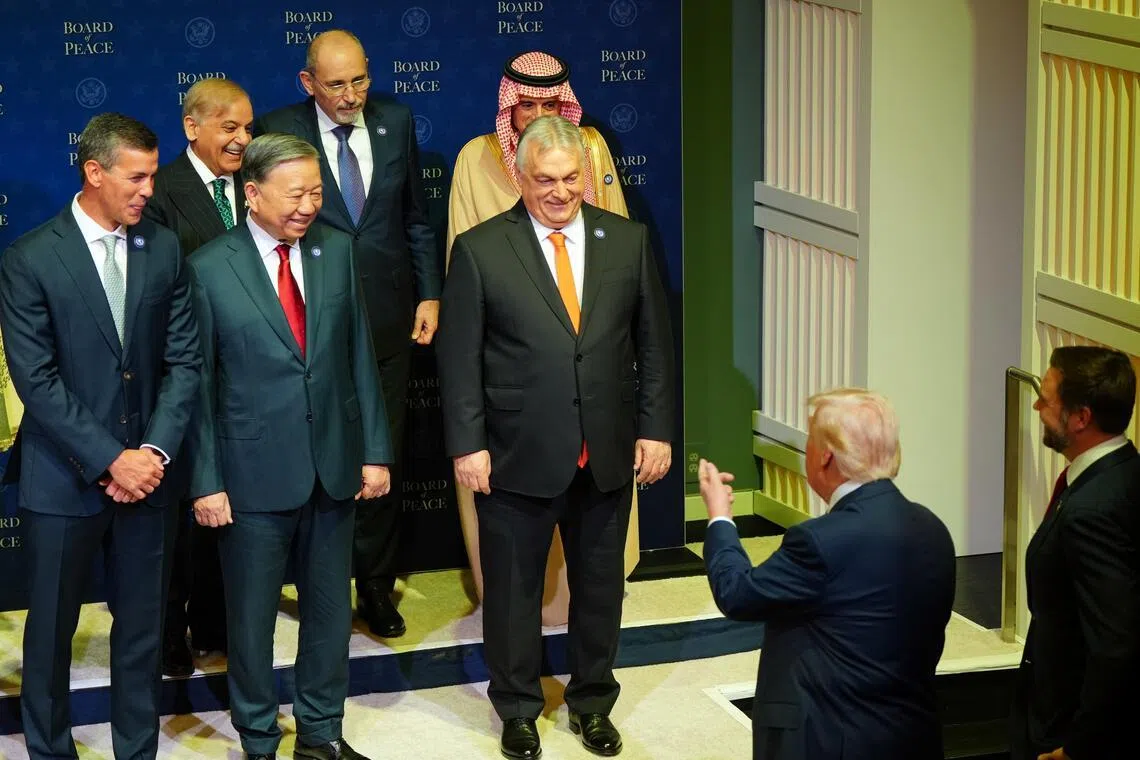
US President Donald Trump (second from right in the foreground) greeting Vietnamese leader To Lam (second from right in the front row) in Washington on Feb 19.
WASHINGTON/HANOI - US President Donald Trump met Vietnamese leader To Lam on Feb 20 and said he would work to remove Hanoi from lists of countries restricted in accessing US advanced technology, according to a summary of the talks posted on the news website of the Vietnamese government.
The first formal in-person meeting between the two took place at the White House after the head of Vietnam’s ruling Communist Party attended the
inaugural meeting of the Board of Peace
in Washington.
The meeting followed the announcement of deals worth over US$30 billion (S$37.9 billion), under which Vietnamese airlines would buy 90 aircraft from US planemaker Boeing.
- Thread starter
- #1,849
VIETNAM LIFE
Saturday, February 21, 2026, 13:54 GMT+7
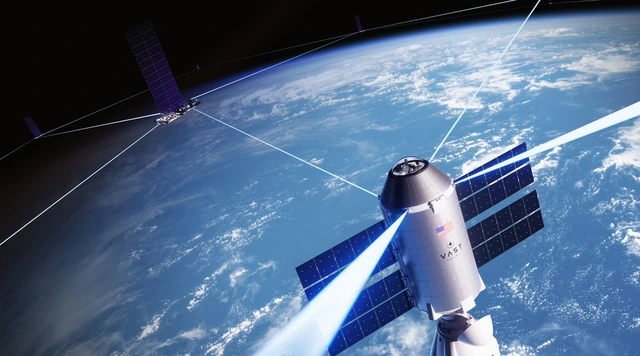
An illustration shows a satellite operating in low-Earth orbit. Photo: Business Wire
The Radio Frequency Department under the Ministry of Science and Technology said it has licensed the company to deploy four stations operating on E- and Ka-band radio frequencies and related equipment.
The licensed sites include Binh Nguyen Commune in northern Phu Tho Province and Lien Chieu Ward in Da Nang City.
Two additional gateway stations will be installed in Tang Nhon Phu and Tan Thuan Wards in Ho Chi Minh City, the country’s southern economic hub.
Ground gateway stations are critical infrastructure that connects satellite networks with terrestrial fiber-optic Internet systems, according to the department.
They convert signals, reduce latency, enhance data security, manage network traffic, and help ensure stable connectivity.
The four stations form part of Starlink’s initial roll-out phase, which aims to provide satellite Internet access to up to 600,000 user terminals.
Saturday, February 21, 2026, 13:54 GMT+7
Vietnam licenses first 4 SpaceX’s Starlink gateway stations

An illustration shows a satellite operating in low-Earth orbit. Photo: Business Wire
The Radio Frequency Department under the Ministry of Science and Technology said it has licensed the company to deploy four stations operating on E- and Ka-band radio frequencies and related equipment.
The licensed sites include Binh Nguyen Commune in northern Phu Tho Province and Lien Chieu Ward in Da Nang City.
Two additional gateway stations will be installed in Tang Nhon Phu and Tan Thuan Wards in Ho Chi Minh City, the country’s southern economic hub.
Ground gateway stations are critical infrastructure that connects satellite networks with terrestrial fiber-optic Internet systems, according to the department.
They convert signals, reduce latency, enhance data security, manage network traffic, and help ensure stable connectivity.
The four stations form part of Starlink’s initial roll-out phase, which aims to provide satellite Internet access to up to 600,000 user terminals.
- Thread starter
- #1,850
Home News Aviation
Daisuke Sato
-
Feb 3, 2026
 Spike Firefly. (Rafael pic)
Vietnam’s Ministry of Defense has reportedly signed an agreement with Rafael Advanced Defense Systems to equip the Vietnamese army with the “Maoz” drone, known as the Spike Firefly loitering munition, in a deal valued at approximately $250 million.
According to a report by Intelligence Online, the agreement includes the establishment of a production facility in Vietnam dedicated to manufacturing the Maoz/Firefly system. The facility will operate under a license issued by Rafael, with technical know-how transferred from Israel. Production will be carried out by a local Vietnamese company designated to run the plant.
The system selected by Vietnam is the Maoz drone, which Rafael markets internationally as the Spike Firefly. It is not a guided missile but a loitering munition designed to function as an expendable, operator-controlled strike drone. The system is launched from a portable canister, loiters over a target area, and detonates on command once the operator confirms the target.
The Spike Firefly, also known as L-Spike 1x, is designed for use by ground forces, particularly in urban and complex environments. The loitering munition provides real-time video to the operator, allowing target verification before detonation and enabling mission abort if required. This design allows controlled engagement rather than immediate impact after launch.
According to published technical data from Rafael, the Spike Firefly has an operational range of up to 5 kilometers, depending on the mission profile. The system is electrically powered and optimized for short-duration loitering missions that support infantry, special units, and light forces operating close to the front line.
The Maoz has already been used operationally by the Israel Defense Forces. Israeli forces employed the loitering munition during fighting in Gaza following the October 7 war.
Rafael reports that systems from the broader Spike family, which includes guided anti-tank missiles and loitering munitions, have been sold to 42 armies worldwide. Within that portfolio, the Maoz/Spike Firefly occupies a distinct role as a suicide drone that combines reconnaissance, target selection, and precision strike in a single expendable platform.
The deal reflects ongoing defense cooperation between Israel and Vietnam, which has expanded steadily in recent years. Vietnam has sought advanced strike, surveillance, and intelligence systems while also prioritizing domestic production and technology transfer as part of its defense procurement policy.
Vietnam signs deal for Israel-made Firefly loitering munition
ByDaisuke Sato
-
Feb 3, 2026
Vietnam’s Ministry of Defense has reportedly signed an agreement with Rafael Advanced Defense Systems to equip the Vietnamese army with the “Maoz” drone, known as the Spike Firefly loitering munition, in a deal valued at approximately $250 million.
According to a report by Intelligence Online, the agreement includes the establishment of a production facility in Vietnam dedicated to manufacturing the Maoz/Firefly system. The facility will operate under a license issued by Rafael, with technical know-how transferred from Israel. Production will be carried out by a local Vietnamese company designated to run the plant.
The system selected by Vietnam is the Maoz drone, which Rafael markets internationally as the Spike Firefly. It is not a guided missile but a loitering munition designed to function as an expendable, operator-controlled strike drone. The system is launched from a portable canister, loiters over a target area, and detonates on command once the operator confirms the target.
The Spike Firefly, also known as L-Spike 1x, is designed for use by ground forces, particularly in urban and complex environments. The loitering munition provides real-time video to the operator, allowing target verification before detonation and enabling mission abort if required. This design allows controlled engagement rather than immediate impact after launch.
According to published technical data from Rafael, the Spike Firefly has an operational range of up to 5 kilometers, depending on the mission profile. The system is electrically powered and optimized for short-duration loitering missions that support infantry, special units, and light forces operating close to the front line.
The Maoz has already been used operationally by the Israel Defense Forces. Israeli forces employed the loitering munition during fighting in Gaza following the October 7 war.
Rafael reports that systems from the broader Spike family, which includes guided anti-tank missiles and loitering munitions, have been sold to 42 armies worldwide. Within that portfolio, the Maoz/Spike Firefly occupies a distinct role as a suicide drone that combines reconnaissance, target selection, and precision strike in a single expendable platform.
The deal reflects ongoing defense cooperation between Israel and Vietnam, which has expanded steadily in recent years. Vietnam has sought advanced strike, surveillance, and intelligence systems while also prioritizing domestic production and technology transfer as part of its defense procurement policy.
- Thread starter
- #1,851


Vietnam to Locally Produce Israeli Spike Firefly Loitering Munition
Vietnam has signed a $250-million contract with Rafael Advanced Defense Systems to locally produce the Spike Firefly loitering munition.
 thedefensepost.com
- Thread starter
- #1,852
When Vietnam offered to become a Jewish state
 (L-R) Hồ Chí Minh in Paris, 1946; Portrait of Prime Minister David Ben-Gurion, 1949(photo credit: WIKIMEDIA COMMONS/GPO)
In postwar Paris, Ho Chi Minh privately urged David Ben-Gurion to form a Jewish government-in-exile in Vietnam, a forgotten episode linking Zionism, decolonization and two leaders who went on to reshape the 20th century.
In the summer of 1946, as Europe struggled to emerge from the wreckage of World War II and empires began to fracture, two men fighting for national independence found themselves living under the same roof in a Paris luxury hotel — and briefly contemplated an idea that today sounds almost inconceivable: the possibility of a Jewish government-in-exile on Vietnamese soil.
Ben-Gurion had arrived in Paris only days after what became known as “Black Saturday,” June 29, 1946, when British authorities arrested thousands of Jews across Palestine and detained much of the Zionist leadership. Wanted by British forces and unable to return home, Ben-Gurion took refuge in France, where Paris had become the main hub of Zionist political activity in Europe.
Ho Chi Minh, meanwhile, was in the French capital seeking international recognition for Vietnamese independence. Though the Japanese had occupied Indochina during the war, France was attempting to reassert control over its former colony. Ho hoped negotiations in Paris might spare Vietnam another conflict.
According to Ben-Gurion’s later recollections, recorded years afterward by Israeli journalist Shmuel Segev, the two men discovered each other at the hotel and began meeting daily. For nearly two weeks, one would climb a flight of stairs to the other’s room, and the conversations stretched for hours.
Ben-Gurion described Ho as soft-spoken, weary and intensely focused on his people’s future. He said the Vietnamese leader avoided communist rhetoric and preferred to present himself as a nationalist fighting for independence rather than as a revolutionary ideologue.
During one of their discussions, Ben-Gurion spoke candidly about the Zionist predicament — a stateless people, restricted immigration, British opposition and rising violence in Palestine. Ho responded with a striking proposal: he suggested that Ben-Gurion establish a Jewish government-in-exile in North Vietnam.
“He proposed that I immediately establish a Jewish government-in-exile on Vietnamese territory,” Ben-Gurion later recalled. “I thanked him and said that when the time came, I would consider his offer.”
Ben-Gurion said the idea, though offered sincerely, was never realistic. Zionist leadership was committed to establishing a state in Palestine, not elsewhere. Still, the conversation left a lasting impression.
“I am certain that we shall be able to establish a Jewish government in Palestine,” Ben-Gurion reportedly told Ho. He added that if he ever wrote to him, the Vietnamese leader might invite him to visit North Vietnam.
Ben-Gurion also said he learned to track the progress of Ho’s negotiations with the French by watching the red carpet outside the Vietnamese leader’s door. At first, it stretched from the street through the lobby and up the staircase. Gradually, sections were removed.
“When the carpet outside his door was removed, I knew the talks had failed,” Ben-Gurion recalled. “A few hours later, he came to my room to say goodbye. He was tired, worn out and disappointed, and he told me nothing remained but to fight.”
Within months, the First Indochina War erupted between Vietnamese forces and France.
Two years later, on May 14, 1948, Ben-Gurion stood in Tel Aviv and declared the establishment of the State of Israel. The following day, armies from Egypt, Syria, Jordan and Iraq invaded. Israel survived the war and secured its independence, though conflict would continue for decades.
Vietnam’s path proved longer and bloodier. After years of fighting, the country was partitioned in 1954 under the Geneva Agreements — which Israel supported — dividing North and South Vietnam. Full independence and reunification would not come until 1975, after decades of war that included extensive American involvement and the deaths of millions of Vietnamese and nearly 60,000 U.S. troops.

 www.ynetnews.com
In postwar Paris, Ho Chi Minh privately urged David Ben-Gurion to form a Jewish government-in-exile in Vietnam, a forgotten episode linking Zionism, decolonization and two leaders who went on to reshape the 20th century.
In the summer of 1946, as Europe struggled to emerge from the wreckage of World War II and empires began to fracture, two men fighting for national independence found themselves living under the same roof in a Paris luxury hotel — and briefly contemplated an idea that today sounds almost inconceivable: the possibility of a Jewish government-in-exile on Vietnamese soil.
Ben-Gurion had arrived in Paris only days after what became known as “Black Saturday,” June 29, 1946, when British authorities arrested thousands of Jews across Palestine and detained much of the Zionist leadership. Wanted by British forces and unable to return home, Ben-Gurion took refuge in France, where Paris had become the main hub of Zionist political activity in Europe.
Ho Chi Minh, meanwhile, was in the French capital seeking international recognition for Vietnamese independence. Though the Japanese had occupied Indochina during the war, France was attempting to reassert control over its former colony. Ho hoped negotiations in Paris might spare Vietnam another conflict.
According to Ben-Gurion’s later recollections, recorded years afterward by Israeli journalist Shmuel Segev, the two men discovered each other at the hotel and began meeting daily. For nearly two weeks, one would climb a flight of stairs to the other’s room, and the conversations stretched for hours.
Ben-Gurion described Ho as soft-spoken, weary and intensely focused on his people’s future. He said the Vietnamese leader avoided communist rhetoric and preferred to present himself as a nationalist fighting for independence rather than as a revolutionary ideologue.
During one of their discussions, Ben-Gurion spoke candidly about the Zionist predicament — a stateless people, restricted immigration, British opposition and rising violence in Palestine. Ho responded with a striking proposal: he suggested that Ben-Gurion establish a Jewish government-in-exile in North Vietnam.
“He proposed that I immediately establish a Jewish government-in-exile on Vietnamese territory,” Ben-Gurion later recalled. “I thanked him and said that when the time came, I would consider his offer.”
Ben-Gurion said the idea, though offered sincerely, was never realistic. Zionist leadership was committed to establishing a state in Palestine, not elsewhere. Still, the conversation left a lasting impression.
“I am certain that we shall be able to establish a Jewish government in Palestine,” Ben-Gurion reportedly told Ho. He added that if he ever wrote to him, the Vietnamese leader might invite him to visit North Vietnam.
Ben-Gurion also said he learned to track the progress of Ho’s negotiations with the French by watching the red carpet outside the Vietnamese leader’s door. At first, it stretched from the street through the lobby and up the staircase. Gradually, sections were removed.
“When the carpet outside his door was removed, I knew the talks had failed,” Ben-Gurion recalled. “A few hours later, he came to my room to say goodbye. He was tired, worn out and disappointed, and he told me nothing remained but to fight.”
Within months, the First Indochina War erupted between Vietnamese forces and France.
Two years later, on May 14, 1948, Ben-Gurion stood in Tel Aviv and declared the establishment of the State of Israel. The following day, armies from Egypt, Syria, Jordan and Iraq invaded. Israel survived the war and secured its independence, though conflict would continue for decades.
Vietnam’s path proved longer and bloodier. After years of fighting, the country was partitioned in 1954 under the Geneva Agreements — which Israel supported — dividing North and South Vietnam. Full independence and reunification would not come until 1975, after decades of war that included extensive American involvement and the deaths of millions of Vietnamese and nearly 60,000 U.S. troops.
When Vietnam offered to become a Jewish state
In postwar Paris, Ho Chi Minh privately urged David Ben-Gurion to form a Jewish government-in-exile in Vietnam, a forgotten episode linking Zionism, decolonization and two leaders who went on to reshape the 20th century
www.ynetnews.com
ety
Trusted Member

With To Lam visiting Trump in Washington, so now Vietnam has officially joined the losers club Board of Peace, haha. So now Vietnam wants to be tied to the Jewish state Israel, wow. Actually, the Jews wanted and planed to establish a Jewish state in China's Harbin in WW II. I am glad their plan died as those parasites got kicked out from China. China doesn't need Jews in the country. As a matter of fact, there are still small number of descendants of Jews in China that settled during the Song dynasty, they intermarried with local Chinese, but their descendants are only loyal to their religion and Israel, we don't need this kind people in China.When Vietnam offered to become a Jewish state
(L-R) Hồ Chí Minh in Paris, 1946; Portrait of Prime Minister David Ben-Gurion, 1949(photo credit: WIKIMEDIA COMMONS/GPO)
In postwar Paris, Ho Chi Minh privately urged David Ben-Gurion to form a Jewish government-in-exile in Vietnam, a forgotten episode linking Zionism, decolonization and two leaders who went on to reshape the 20th century.
In the summer of 1946, as Europe struggled to emerge from the wreckage of World War II and empires began to fracture, two men fighting for national independence found themselves living under the same roof in a Paris luxury hotel — and briefly contemplated an idea that today sounds almost inconceivable: the possibility of a Jewish government-in-exile on Vietnamese soil.
Ben-Gurion had arrived in Paris only days after what became known as “Black Saturday,” June 29, 1946, when British authorities arrested thousands of Jews across Palestine and detained much of the Zionist leadership. Wanted by British forces and unable to return home, Ben-Gurion took refuge in France, where Paris had become the main hub of Zionist political activity in Europe.
Ho Chi Minh, meanwhile, was in the French capital seeking international recognition for Vietnamese independence. Though the Japanese had occupied Indochina during the war, France was attempting to reassert control over its former colony. Ho hoped negotiations in Paris might spare Vietnam another conflict.
According to Ben-Gurion’s later recollections, recorded years afterward by Israeli journalist Shmuel Segev, the two men discovered each other at the hotel and began meeting daily. For nearly two weeks, one would climb a flight of stairs to the other’s room, and the conversations stretched for hours.
Ben-Gurion described Ho as soft-spoken, weary and intensely focused on his people’s future. He said the Vietnamese leader avoided communist rhetoric and preferred to present himself as a nationalist fighting for independence rather than as a revolutionary ideologue.
During one of their discussions, Ben-Gurion spoke candidly about the Zionist predicament — a stateless people, restricted immigration, British opposition and rising violence in Palestine. Ho responded with a striking proposal: he suggested that Ben-Gurion establish a Jewish government-in-exile in North Vietnam.
“He proposed that I immediately establish a Jewish government-in-exile on Vietnamese territory,” Ben-Gurion later recalled. “I thanked him and said that when the time came, I would consider his offer.”
Ben-Gurion said the idea, though offered sincerely, was never realistic. Zionist leadership was committed to establishing a state in Palestine, not elsewhere. Still, the conversation left a lasting impression.
“I am certain that we shall be able to establish a Jewish government in Palestine,” Ben-Gurion reportedly told Ho. He added that if he ever wrote to him, the Vietnamese leader might invite him to visit North Vietnam.
Ben-Gurion also said he learned to track the progress of Ho’s negotiations with the French by watching the red carpet outside the Vietnamese leader’s door. At first, it stretched from the street through the lobby and up the staircase. Gradually, sections were removed.
“When the carpet outside his door was removed, I knew the talks had failed,” Ben-Gurion recalled. “A few hours later, he came to my room to say goodbye. He was tired, worn out and disappointed, and he told me nothing remained but to fight.”
Within months, the First Indochina War erupted between Vietnamese forces and France.
Two years later, on May 14, 1948, Ben-Gurion stood in Tel Aviv and declared the establishment of the State of Israel. The following day, armies from Egypt, Syria, Jordan and Iraq invaded. Israel survived the war and secured its independence, though conflict would continue for decades.
Vietnam’s path proved longer and bloodier. After years of fighting, the country was partitioned in 1954 under the Geneva Agreements — which Israel supported — dividing North and South Vietnam. Full independence and reunification would not come until 1975, after decades of war that included extensive American involvement and the deaths of millions of Vietnamese and nearly 60,000 U.S. troops.
When Vietnam offered to become a Jewish state
In postwar Paris, Ho Chi Minh privately urged David Ben-Gurion to form a Jewish government-in-exile in Vietnam, a forgotten episode linking Zionism, decolonization and two leaders who went on to reshape the 20th century
- Thread starter
- #1,854
Relax, there is no change in foreign policy. Vietnam joins every club, every organization you can imagine. Remember the saying of a famous politician: if you are not at the table, you are part of the menu.With To Lam visiting Trump in Washington, so now Vietnam has officially joined the losers club Board of Peace, haha. So now Vietnam wants to be tied to the Jewish state Israel, wow. Actually, the Jews wanted and planed to establish a Jewish state in China's Harbin in WW II. I am glad their plan died as those parasites got kicked out from China. China doesn't need Jews in the country. As a matter of fact, there are still small number of descendants of Jews in China that settled during the Song dynasty, they intermarried with local Chinese, but their descendants are only loyal to their religion and Israel, we don't need this kind people in China.
As for the Jews, I understand your sentiment, but the Vietnamese see them a bit differently than the Chinese. It’s complicated.
ChineseTiger1986
Trusted Member

Relax, there is no change in foreign policy. Vietnam joins every club, every organization you can imagine. Remember the saying of a famous politician: if you are not at the table, you are part of the menu.
As for the Jews, I understand your sentiment, but the Vietnamese see them a bit differently than the Chinese. It’s complicated.
You will soon regret for getting aboard their ship.
Yellow is Okay
Registered Member
That Trump "would work to remove Vietnam from restricted lists" line is vague political messaging. It doesn't name a specific BIS rule, list, or change tied to lithography. Whether EUV, high-end DUV, or other advanced lithography tools are controlled is a separate question, because those tools and their key subsystems and technology fall under the CCL/ECCN classification system. CCL/ECCN is not a country blacklist. It is an item-based control list that classifies what the item is, how capable it is, and what technology area it belongs to, then assigns Reasons for Control to determine licensing requirements. Separately, in BIS Country Groups, Vietnam is listed under D:1 and D:3, and that country grouping makes it harder to use license exceptions and increases the chance that controlled items run into licensing friction. And then there's one common misconception is that Trump can directly change this. He can push policy direction, but formal changes to BIS country groupings and export rules are made by Commerce/BIS through rulemaking, while Congress can constrain or force outcomes through law, budget, and oversight.
- Thread starter
- #1,857
Why regret? Trump is happy, the US is happy. If anything the risk is high if we don’t participate this MAGA club.You will soon regret for getting aboard their ship.
- Thread starter
- #1,858
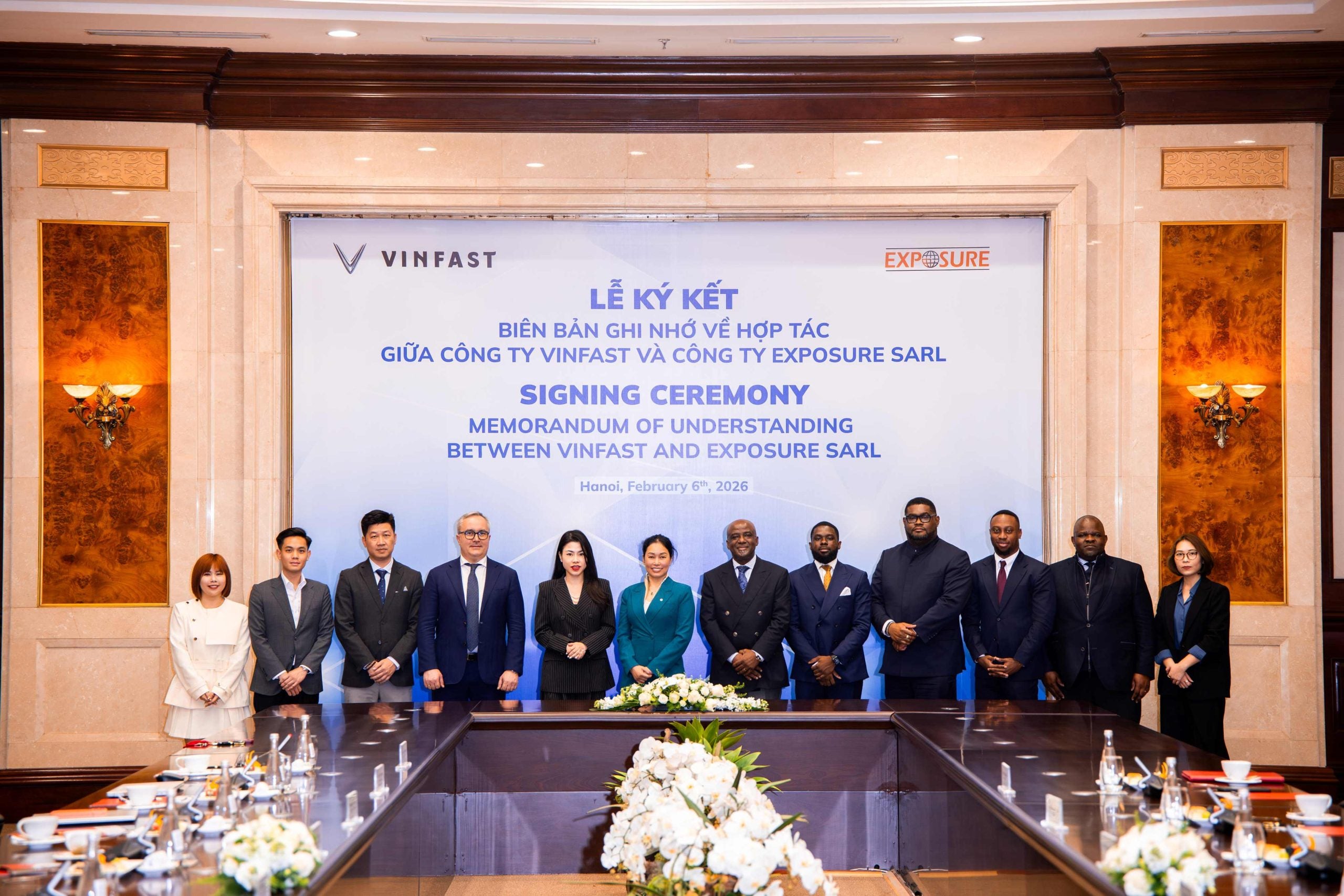
VinFast agrees to supply battery-powered taxis to Congo - Just Auto
Vietnamese battery electric vehicle (BEV) maker VinFast announced that it has signed a distribution agreement with local company Exposure SARL.
 www.just-auto.com
- Thread starter
- #1,859
NEWS
February 5, 2026
Manufacturing, Fab & Facilities, Modules
Asia & Oceania, Southeast Asia, Southeast Asia & Oceania
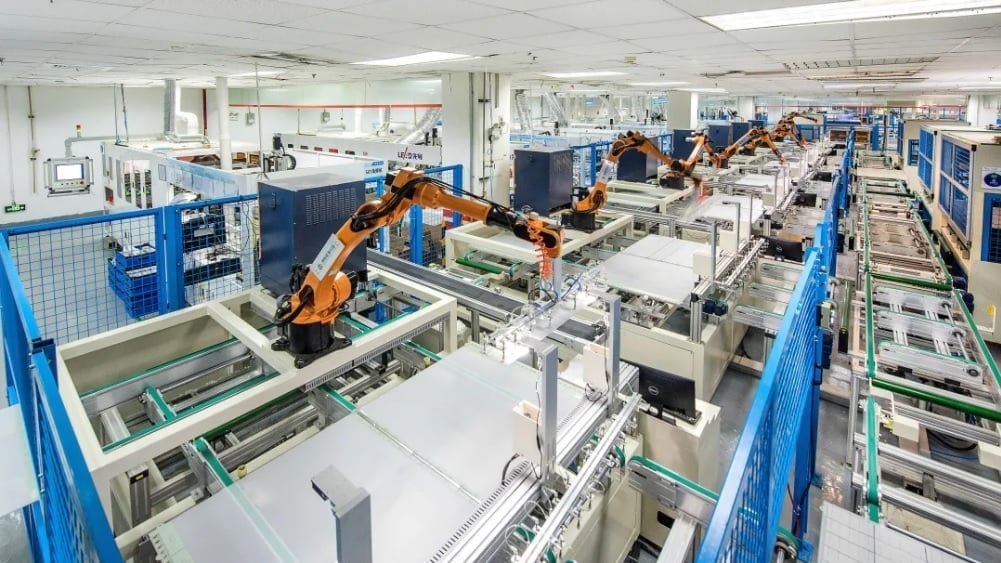 IRENA said the main drivers of module manufacturing cost are electricity prices and labour. Image: Trina Solar.
Vietnam is the cheapest country to produce fully domestic solar modules outside of China, according to a report from the International Renewable Energy Agency (IRENA).
Producing tunnel oxide passivated (TOPCon) solar PV modules in Vietnam using domestically produced polysilicon, ingots, wafers and cells is equivalent in price to a Chinese-made module, IRENA’s Solar PV Supply Chain Cost Tool shows. An all-domestic module in Vietnam costs US$0.18/Wp, which compares with US$0.191/Wp in India, US$0.256/Wp in Australia and US$0.284/Wp in Germany.
The report said that the cost of raw materials in the US sits between Australia and Germany, though it did not provide a precise domestic module cost, potentially because the capability is currently lacking in the US.
IRENA said the main drivers of module manufacturing cost are electricity prices and labour. This is the primary reason that Vietnam and other Asian countries offer lower production costs. In contrast, Germany’s higher manufacturing cost is driven almost entirely by electricity expenses, the report said, which are particularly costly in energy-intensive polysilicon production
In all regions profiled, solar cells, wafers and polysilicon comprise the largest portion of module production cost. But the cost of manufacturing falls everywhere when imported Chinese products are introduced, IRENA’s report shows.
In Vietnam, module production costs fall by 7% when importing Chinese polysilicon, around 19% when importing Chinese wafers and up to 31% when importing Chinese cells. This in turn increases the portion of cost that comes from “other materials”, overheads and increases proportional profits.
“Our analysis of the total module costs reveals that the overall price is highly dependent on the stage at which components are imported versus domestically manufactured,” the report said.
It continued: “Domestic manufacturing in most cases demonstrates higher costs, particularly when compared with importing components from lower-cost markets. The biggest cost reduction is observed when importing solar cells for local PV assembly, highlighting the current price advantages of established manufacturing centres.”
“While low-cost imports from China enabled a rapid solar deployment by making PV systems more affordable for installers and end users, these prices are significantly lower than what is required to maintain sustainable production levels,” it said. “Financial data from major manufacturers confirm that current price levels are below production costs, leading to financial strain across the value chain.”
Even amid political and industry efforts to consolidate upstream production levels and control price competition, Chinese solar manufacturers are struggling to maintain their bottom lines (subscription required). Simultaneously, IRENA’s data shows the extent to which established Chinese producers can have profound impacts on the viability of manufacturing in other regions, with prices “highly dependent” on the level of imported Chinese products. In Vietnam, where prices are comparable with China, many manufacturers are Chinese owned or operated.
“Without some corrective action, there is a risk of deepening market distortions within the solar industry,” the report said.
It recommended that governments adopt “hybrid strategies” combining supportive measures for domestic production and strategic importing of upstream components. It gave examples of lowering electricity prices for energy-intensive upstream manufacturing with preferential tariffs or incentives for onsite renewables, manufacturing certifications and incentives like India’s Production-Linked Incentive (PLI) programme and long-term strategy to focus on future or emerging technologies and R&D efforts.
The report concluded: “Countries can adopt hybrid strategies that combine importing of key upstream components (such as wafers or cells) with a focus on domestic assembly and module manufacturing. This approach helps balance cost competitiveness, job creation and ensure some level of security, especially where full domestic production remains uncompetitive.”
IRENA: Vietnam is cheapest country for domestic solar production
By Will NormanFebruary 5, 2026
Manufacturing, Fab & Facilities, Modules
Asia & Oceania, Southeast Asia, Southeast Asia & Oceania
Vietnam is the cheapest country to produce fully domestic solar modules outside of China, according to a report from the International Renewable Energy Agency (IRENA).
Producing tunnel oxide passivated (TOPCon) solar PV modules in Vietnam using domestically produced polysilicon, ingots, wafers and cells is equivalent in price to a Chinese-made module, IRENA’s Solar PV Supply Chain Cost Tool shows. An all-domestic module in Vietnam costs US$0.18/Wp, which compares with US$0.191/Wp in India, US$0.256/Wp in Australia and US$0.284/Wp in Germany.
The report said that the cost of raw materials in the US sits between Australia and Germany, though it did not provide a precise domestic module cost, potentially because the capability is currently lacking in the US.
IRENA said the main drivers of module manufacturing cost are electricity prices and labour. This is the primary reason that Vietnam and other Asian countries offer lower production costs. In contrast, Germany’s higher manufacturing cost is driven almost entirely by electricity expenses, the report said, which are particularly costly in energy-intensive polysilicon production
In all regions profiled, solar cells, wafers and polysilicon comprise the largest portion of module production cost. But the cost of manufacturing falls everywhere when imported Chinese products are introduced, IRENA’s report shows.
In Vietnam, module production costs fall by 7% when importing Chinese polysilicon, around 19% when importing Chinese wafers and up to 31% when importing Chinese cells. This in turn increases the portion of cost that comes from “other materials”, overheads and increases proportional profits.
“Our analysis of the total module costs reveals that the overall price is highly dependent on the stage at which components are imported versus domestically manufactured,” the report said.
It continued: “Domestic manufacturing in most cases demonstrates higher costs, particularly when compared with importing components from lower-cost markets. The biggest cost reduction is observed when importing solar cells for local PV assembly, highlighting the current price advantages of established manufacturing centres.”
A ‘problematic relationship’: demand vs. sustainability
These dynamics show the outsized influence of Chinese solar products on the global industry, IRENA’s report suggests.“While low-cost imports from China enabled a rapid solar deployment by making PV systems more affordable for installers and end users, these prices are significantly lower than what is required to maintain sustainable production levels,” it said. “Financial data from major manufacturers confirm that current price levels are below production costs, leading to financial strain across the value chain.”
Even amid political and industry efforts to consolidate upstream production levels and control price competition, Chinese solar manufacturers are struggling to maintain their bottom lines (subscription required). Simultaneously, IRENA’s data shows the extent to which established Chinese producers can have profound impacts on the viability of manufacturing in other regions, with prices “highly dependent” on the level of imported Chinese products. In Vietnam, where prices are comparable with China, many manufacturers are Chinese owned or operated.
“Without some corrective action, there is a risk of deepening market distortions within the solar industry,” the report said.
It recommended that governments adopt “hybrid strategies” combining supportive measures for domestic production and strategic importing of upstream components. It gave examples of lowering electricity prices for energy-intensive upstream manufacturing with preferential tariffs or incentives for onsite renewables, manufacturing certifications and incentives like India’s Production-Linked Incentive (PLI) programme and long-term strategy to focus on future or emerging technologies and R&D efforts.
The report concluded: “Countries can adopt hybrid strategies that combine importing of key upstream components (such as wafers or cells) with a focus on domestic assembly and module manufacturing. This approach helps balance cost competitiveness, job creation and ensure some level of security, especially where full domestic production remains uncompetitive.”
Users who are viewing this thread
Total: 17 (members: 0, guests: 17)
Pakistan Defence Latest
-
-
 Federal cabinet gives nod to imposition of emergency in KP; summary sent to president (20 Viewers)
- Latest: Mighty_Dragon_Strike
-

-

-
 PTI Murad Saeed in Afghanistan, was 'controlling KP govt' from there: Rana Sanaullah (3 Viewers)
- Latest: Meengla
Country Watch Latest
-

-

-
Iran - Israel/US War: Israel-US declare war on Iran, Iran responds (390 Viewers)
- Latest: BananaRepublic
-

-

Latest Posts
-
 Israel declares all Arab states as Illegitimate Official government declaration (20 Viewers)
- Latest: clutch
-

-
-