Water Management and Weather - Updates

This actually shows that the glaciers are melting faster in Himalayan regions that feeds water to rivers in the Indus basin. In the future there will be more water scarcity in the Indus basin.
 
Be Bharat, build Indra canal in Rajasthan desert. Which cool it down and reduces rainfall in eastern rivers.

But sir we build nukes 5000 years ago.0

Pakistan need to plant more trees in Cholistan desert to further cool Rajasthan desert.
 
To view this content we will need your consent to set third party cookies.
For more detailed information, see our cookies page.
 

FeatureIndus BasinGanga Basin
Streamflow Trend+8% Increase 📈-17% Decrease 📉
Primary DriverClimate Change (Increased precipitation)Human Activity (Groundwater extraction)
Key Sub-basin ImpactRise in Jhelum, Chenab, & Main Indus; Decline in Ravi & Sutlej.Widespread decline in Yamuna, Ramganga, and Upper Ganga.

Wish no bad to the Indians because unstability in Pakistan's neighborhood not good, on top of humanitarian concerns. It does appear the climate change is somehow benefiting Pakistan in last 10-15 years? Even the parched Baluchistan is getting a lot of rain every few Moonsoon seasons and heavy Monsoon rainfall happening in the eastern provinces of Pakistan.
Better water management is needed by Pakistan and given that a large part of Pakistan's population lives in the eastern half of Pakistan which gets significant Monsoon, Pakistan has some advantages in water management.
 
Unfortunately for Pakistan it's 80% dry arid land
And it's very tough climate and geography
Only a small part is arable or forest areas
In contrast
India is 50% arable land and over 25% forest cover

Pakistans water need and scarcity is existential threat with out water you will become desert

This is also the main key driver to try and get more green water saturated land in Kashmir and Jammu
To guarantee water flows which unfortunately is coming thru Indian himlayers and Indian Kashmir and Punjabi

Himlayers is god send for India natural defense from china and rivers flowing into mainland India keeping it green

Pakistan water management and wastage is criminal you people have invested nothing on Dams and controls you send money on the wrong places
Water control systems should be top priority to reduce the 80% arid land along with massive tree green forestry plantation to try and change your arid climate
 
Last edited:

125-Year-Old Canal Restored – 177,000 Acres Irrigated​


To view this content we will need your consent to set third party cookies.
For more detailed information, see our cookies page.
 
Largest Project in Pakistan's history 41000 Ponds will save 166 Billion Liters

To view this content we will need your consent to set third party cookies.
For more detailed information, see our cookies page.


Punjab government plans to construct 358 underground water tanks for irrigation​


LAHORE: The Punjab government has announced plans to build 358 underground water tanks across the province as part of efforts to improve irrigation and water management, according to an official statement reported by The Express Tribune.

The initiative aims to address water scarcity issues faced by farmers and to enhance the efficiency of water usage in agriculture. In addition to constructing the underground tanks, the government will also install wastewater treatment plants. These facilities are intended to treat wastewater so it can be safely used for irrigation purposes, thereby reducing the reliance on freshwater sources.

Officials stated that the project will be implemented in various districts of Punjab, targeting areas where water shortages have been particularly acute. The underground tanks are expected to help store rainwater and treated wastewater, making it available for agricultural use during dry periods. This approach is part of the provincial administration's broader strategy to promote sustainable water management and support the agricultural sector, which is a key component of Punjab's economy.

The government has emphasized that the treated wastewater will meet safety standards before being utilized for irrigation, ensuring that crops are not exposed to harmful contaminants. The project is also expected to contribute to environmental conservation by reducing the discharge of untreated wastewater into natural water bodies.

According to the official statement, the construction of the underground tanks and installation of wastewater treatment plants will be carried out in phases. The authorities have not yet provided a specific timeline for the completion of the project or detailed information on the locations of the tanks.

The Punjab government's initiative reflects ongoing efforts to address water scarcity challenges and to promote the efficient use of available water resources in the province.
 
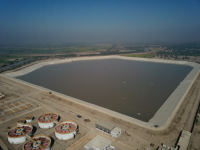
POWERCHINA has begun filling the Nabisar Vajihar Water Supply Project in Pakistan’s Sindh Province, moving the project into the operational phase. With a capacity of 2.7 million cubic meters across 460,000 square meters, the reservoir will secure water supply for local communities and farmland irrigation.

Since breaking ground in April 2024, the project has progressed on schedule through phased construction, completing a series of key stages—including reservoir excavation, embankment works, and related critical activities—with quality and pace widely recognized. True to our local commitment, the team relied heavily on local talent and resources, creating jobs and supporting shared growth in the community.

We look forward to continuing our work in Pakistan—building infrastructure that promotes sustainable progress.

1773525246160.png
 
Following recent rainfall and hailstorms in various parts of Balochistan, groundwater levels have begun to rise significantly, while numerous small and large dams have filled up, spreading waves of joy among farmers and orchard growers across the province.

Experts describe the recent rains as a major blessing for Balochistan, which had been suffering from severe drought and acute water shortages for the past several years.

The rainfall in Quetta, Pishin, Qila Abdullah, Zhob, Ziarat, Qila Saifullah, Loralai, Musakhel, Khuzdar, Mastung, Nushki, Chagai, Duki, Harnai, Musakhel, Makran Division, Nasirabad Division and other areas has not only improved groundwater levels but has also started filling dams in different regions.
 
Reports from rural areas indicate a noticeable increase in water in wells, karez systems (traditional underground channels), and tube wells.

Farmers say they are now hopeful of a better harvest this year for wheat, vegetables, fruits, and other crops. Orchard owners believe the rains will greatly benefit apple, grape, apricot, peach, and other fruit orchards.

Additionally, the growth of fresh grass in pastures is expected to provide much-needed relief to livestock breeders.
 
Experts believe that this spell of rainfall will play a key role in reducing the risks of drought in Balochistan. They added that if the rains continue in the coming days, the agricultural situation in most parts of the province could improve further.

On the other hand, local residents have welcomed the recent rains, expressing hope that the precipitation will not only ease the water crisis but also provide vital support to the agricultural economy.
 
To view this content we will need your consent to set third party cookies.
For more detailed information, see our cookies page.
 

Users who are viewing this thread

Pakistan Defence Latest

Country Watch Latest

Back
Top