
Beijingwalker
VIP Member

'We Will Not Survive': Toyota Boss Wants Japanese Automakers To Team Up To Beat Chinese EVs
Toyota boss has a radical solution to catch up to Chinese automakers. Will it work?
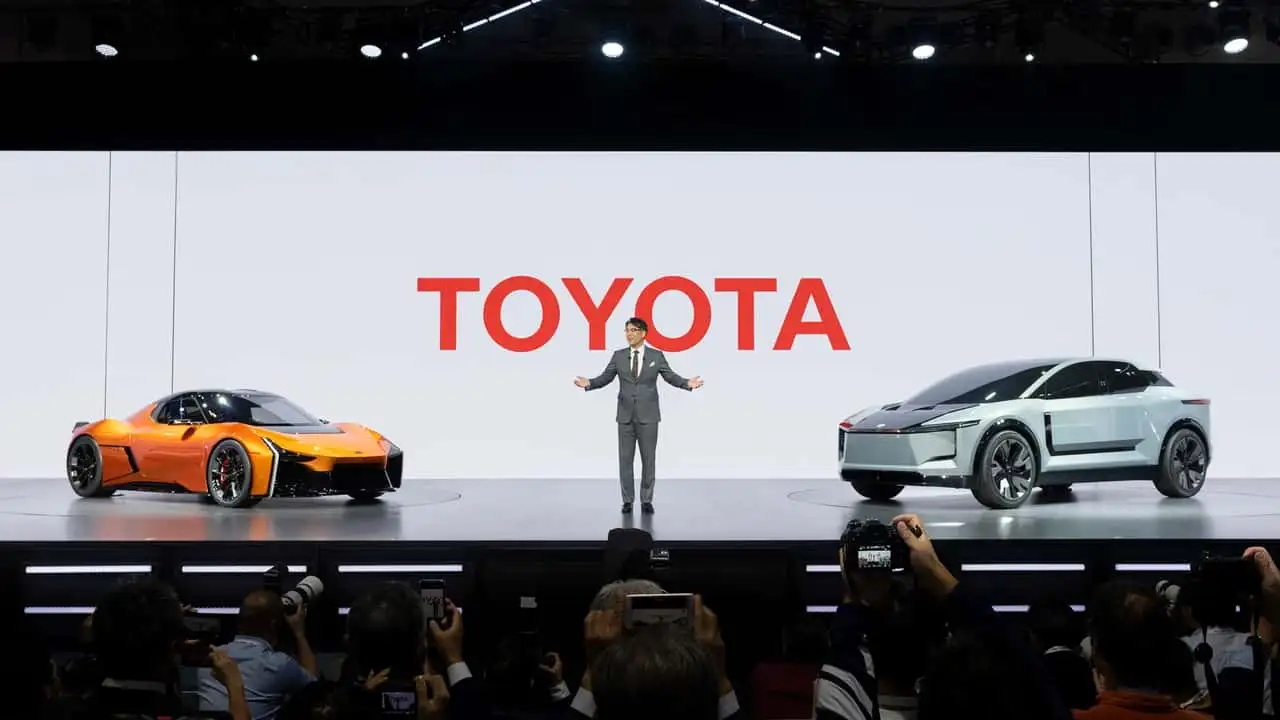
Photo by: Toyota

By: Suvrat Kothari
Jul 14, at 4:11pm ET
- Japanese automakers' sales are getting hammered worldwide due to the rise of Chinese carmakers.
- Toyota Vice Chairman Koji Sato is now championing a plan to standardize certain components under a new "Japan standard."
- He argues this would help cut costs and boost innovation.
“Unless things change, we will not survive,” Sato said during Toyota’s annual supplier meeting in March, as Automotive News reported. He stopped short of naming Chinese automakers directly, framing the goal instead as improving Japanese automakers’ “international competitiveness.”
But the numbers explain the urgency. Chinese automakers have been steadily eating into Japanese brands’ market share across several key regions, and Europe just became the latest example. In May, Chinese brands outsold Japanese automakers there for the first time ever.
Data from the European Automobile Manufacturers’ Association showed that combined sales from Geely Group, SAIC Motor, BYD, Chery Automobile and Leapmotor hit 138,140 units in Europe that month. Toyota, Suzuki, Honda, Nissan, Mazda and Mitsubishi combined for just 130,424 cars.
China tells an even starker story. Japanese automakers have been slow to embrace the EV transition, and they're paying for it as young Chinese EV startups post soaring sales built on software-defined cars, ultra-fast charging and cutting-edge battery tech. Toyota's China sales fell 17% in the first half of this year, while Honda's dropped a steeper 35%. Southeast Asia and Australia are following a similar pattern, as a wave of affordable Chinese EVs chips away at incumbents there too.
That's the backdrop for Sato's push at the Japan Automobile Manufacturers Association, which he leads. His proposal calls for standardizing components like steel, wiring harnesses and plastics across all major Japanese brands, freeing up resources to focus on what actually differentiates a car in the eyes of newer buyers.
His logic goes something like this: create a new “Japan standard” for parts that suppliers worldwide could build to. Standardizing the components customers never see would let automakers redirect that money toward the things customers do care about, like software features, driver assistance systems, faster-charging batteries, and a broader mix of powertrains.
As one example, Sato pointed out that suppliers currently produce 70,000 different variants of wiring harnesses alone. Trim that number down and manufacturing costs would likely follow.
It's an ambitious idea, and not without real hurdles. Getting so many different brands, models, variants and production lines across the industry to align on shared components is a massive undertaking, and it's far from certain that it's even feasible.
 ‘This Is The Biggest Fear For Me’: Toyota Chairman Admits He Isn’t Ready For The Electric Future
But Japanese automakers are under real pressure right now. If the top boss at the world’s largest automaker can rally his competitors in this effort, it might give them a fighting chance to regain their mojo.
“We have a strong sense of crisis that the Japanese auto industry is in a massive period of transition,” Sato told Automotive News. “Now is exactly the time to further develop and evolve with the challenges and reform initiatives that the auto industry as a whole must face.”


