Why the Afghan Taliban won the Afghanistan war against USA (2001-2021)

Muji.Iqbal

Trusted Member
Joined
Apr 18, 2023
Messages
6,690
Reaction score
5,324
Reputation
1,724.5
Country of Origin
Country of Residence

Mismatch of mindsets: why the Taliban won in Afghanistan​

This article is more than 3 years old
Laura Spinney
Analysis: the west tried to impose its alien values and it is time to try a new approach, as Joe Biden has indicated

Fri 24 Sep 2021 12.45 BST
Share
1736032821827.png


Some years ago, in Afghanistan, the anthropologist Scott Atran asked a Taliban fighter what it would take to stop the fighting, because families on both sides were crying. The fighter replied: “Leave our country and the crying will stop.”

The crying may not have stopped, but the Taliban have taken control of Afghanistan without an air force, heavy arms or expensive training, against US-backed Afghan government forces that outnumbered them four to one. In doing so, they have taken an important step closer to realising their stated goal, which is the creation of an Islamic emirate governed according to their interpretation of sharia law.


For decades, Atran, who holds academic posts in the UK, US and France, has been trying to understand what it is that makes ordinary people willing to fight to the death. He concludes that it is sacred values – values that may be religious or secular, such as God or country, but that are always non-negotiable, meaning they cannot be abandoned or exchanged for material gain.


Sacred values, according to Atran, are the reason that since the second world war, revolutionaries and insurgents have frequently triumphed over state armies and police forces that boast up to 10 times their personnel and firepower. Ultimately, the negotiable things that motivate such armies, such as pay and promotion, are no match for the sacred.

The surprise is no longer that this happens, but that western governments have failed to learn it – at great cost to the populations they represent. “It is sad to reflect that, after four recent wars, Britain has suffered, in effect, four defeats,” says Rob Johnson, who directs the Changing Character of War Centre at the University of Oxford. “This must surely beg the question: who has presided over such a dreadful track record?”
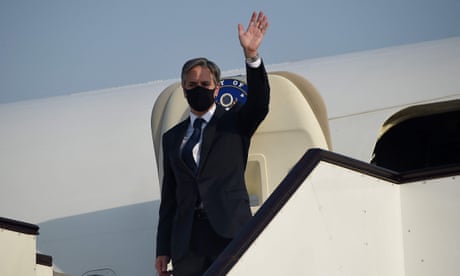
The US secretary of state, Antony Blinken, boards an aircraft as he departs Doha, Qatar, to travel to Germany.
US-led meeting to set out framework for Taliban cooperation
Read more
The blame, Atran suspects, lies less with individuals than with the democratic institutions that western governments often seek to export. These favour responses whose costs and benefits can be quantified, that fit the relatively short time horizons imposed by elections and institutional turnover, and that assume all opponents are “rational actors” who will negotiate and compromise: “everything the sacred and spiritual aren’t”, he says.

This mismatch of mindsets, along with politicians’ tendency to persist with an inappropriate response, rather than change tack and admit that lives and money were lost in vain – what economists call the “sunk cost fallacy” – has resulted in the Taliban’s victory, he believes.


The group of academics who have ventured to the frontline to ask fighters what brought them there is understandably small. Atran is one of them, having done fieldwork in Iraq and Afghanistan. Another is the University of Oxford anthropologist Harvey Whitehouse, who has quizzed Libyan rebels, British special forces and tribal warriors in Papua New Guinea.

Atran and Whitehouse actually disagree about the primary motives driving these fighters. Sacred values are important, says Whitehouse, but more important is group belonging – a visceral sense of oneness with others that often comes about through shared suffering, and that can be strengthened when the group is confronted by an external threat.
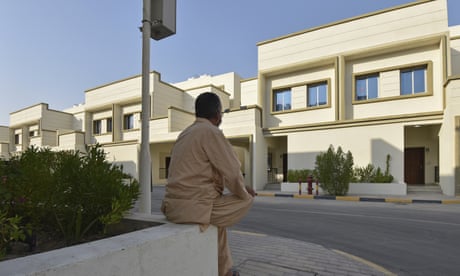
An Afghan man who was evacuated from Kabul sits on a wall at a temporary housing complex in Doha, Qatar.
International talks aim for consensus on Taliban government
Read more
His research suggests that, when push comes to shove, fighting comrades will abandon their values before they abandon each other; Atran finds the opposite. The two models have different implications in terms of how outsiders might engage with such groups, but Atran and Whitehouse agree that treating those groups as rational actors does not work. It was to try to persuade western governments that in many conflicts they are dealing with a different phenomenon, “devoted actors”, that in 2013 they and others created the Centre for the Resolution of Intractable Conflict (CRIC) at Oxford.

Eight years on, the message still has not got through. “It’s strange, we keep being invited [to meetings] yet it all seems to go in one ear and out the other,” says Atran, who has briefed at the highest levels of the US government.

Ashley Jackson, the Oslo-based co-director of the Centre for the Study of Armed Groups at the Overseas Development Institute, and author of a recent book, Negotiating Survival, based on hundreds of interviews with Afghans, has had a similar experience. In government circles, she says, people are often aware that a given, usually military response is not working, but they are not prepared to discuss alternatives. “The mindset is ‘you’re either with us or against us’,” she says. “There is no middle ground.”

One problem, according to CRIC’s founders, is a lack of self-awareness in western societies about the values they themselves hold sacred. They want to export democracy and its many advantages, which include a greater potential to generate wealth than non-democratic societies, but they seem to forget that democracy is a relatively recent invention of nation states. It took time to achieve, it is not perfect even where it prevails, and it is in retreat in many places. A recent poll showed that one in four Americans would prefer an authoritarian system of government, and the level of dissatisfaction is similar in the UK.

Lacking a firm grasp of their own values, westerners often have an even shakier grasp of the opposition’s. In the case of Iraq, the US Congress commissioned research from private companies that indicated that most Iraqis wanted democracy. “When we did our studies, on the frontline and in the region, it was exactly the opposite,” Atran says. “We got 2% support for democracy.” Democracy has never yet been successfully imposed on tribal societies, he adds, which is not to say that such societies could not one day choose to adopt it.


Richard Davis, another CRIC co-founder, who directed terrorism prevention policy under President George W Bush, has a different interpretation. He says that people in government and the military want to understand the cultures they are fighting, which is why the US Department of Defense funds the Minerva Research Initiative for social science – albeit with a tiny fraction of its budget. The problem, Davis says, has been in the implementation. Governments lack models for how to engage with devoted actors.

And yet, such models exist. CRIC’s fourth founding fellow is John Alderdice, who was involved in the negotiations that led to the 1998 Good Friday Agreement in Northern Ireland. That agreement came about, Alderdice says, because of a paradigm shift – a realisation that it was not enough to engage only the rational actors on each side; the devoted actors, or “extremists” as they were often referred to, had to be brought to the table too. “That involved listening to them, even if you disagreed profoundly with them, and asking what it was they were right about,” he says.

One thing devoted actors are often right about – or at least more so than foreign powers – is how the local communities they are embedded in think and feel. The Taliban’s success in Afghanistan owed a lot to tribal links that cut across their own and government forces, for example, and that they were able to leverage once the US had announced its impending withdrawal.

The Taliban may control Afghanistan, but the US and its allies still need to engage with them going forward, and soon, if the west wants to avert a humanitarian crisis and perhaps further conflict there, as well as exacerbating the risk of international terrorism. President Trump may have unwittingly shown how. The deal he initiated with the Taliban in 2020 has been criticised (his administration also tried and failed to cut Minerva’s funding), but at least he forced the two sides to the table. “It was precisely because he didn’t care that he was immune to the narratives that held us all hostage, and that fuelled a war that kept killing Afghans,” says Ashley Jackson.

President Biden’s declaration on 31 August that the US had had enough of nation-building abroad could open the way to a more lasting paradigm shift, if western governments are prepared to be guided by the evidence. Whitehouse, for one, says it’s long past time the problem was posed differently: “Rather than trying to foist alien value systems and group alignments on to populations that are already committed to different values and group alignments, how can we build on what’s there in a more consensual way to create enduringly peaceful and prosperous futures?”

The rewards of such a shift could extend to healing some of the fractures that have opened up in western societies too – partly due to the polarising effects of social media. The Trump supporters who attacked the Capitol, and those people who refuse Covid-19 vaccines on grounds of personal freedom, both fit the profile of devoted actors. Rational argument has not changed their minds, and governments have turned to force – in the form of vaccine mandates, for example. What these researchers are saying is that there may be a third way, and that science also holds the key to understanding those who reject it. “In the end,” says Whitehouse, “science-driven approaches are likely to do far more … to stem the tide of radicalisation, and to defuse those already committed to extreme pro-group action.”

 
Yes that is true, and that is why the Afghan Taliban is pro-Pakistan. At least most of them are.
They don't recognize Durand line or KP, Waziristan and even Balochistan and you call them pro-Pakistan ?
 
They don't recognize Durand line or KP, Waziristan and even Balochistan and you call them pro-Pakistan ?
I do not know who you are.

Yes Afghan Taliban are pro-Pakistan and recognize Durand Line, at least now.
 
Democracy is a luxury that primitive societies can't afford .... democracy has replaced religion as the opium of the masses .
 
May be you should come out of your cave

Afghanistan Will Never Recognize Durand Line as Border: Stanikzai

You can come out of your cave buddy, or are you an Indian hiding behind UK flags?

@Waz @Musings, check this person @PrinceofPersia 's country of origin.

There are a few Afghan Taliban who have issues with Pakistan.

But generally Afghan Taliban are pro-Pakistan.

Pakistan's stance on Durand Line is the same as the United Nations and Organization of Islamic Cooperation's stance on it, there is no expiry date on the Durand Line, that Afghan King signed in the late 1800's with the British.
 

NON-FICTION: DURAND’S ‘PERPETUAL AGREEMENT’

Muhammad Ali Siddiqi Published February 11, 2024


Join our Whatsapp channel
65c84c5274b10.jpg


Revisiting the Durand Line — Historical and Legal Perspectives
By Lutfur Rehman
IPS Press
ISBN: 978-969-448-836-3
229pp.


To write his book, Revisiting the Durand Line: Historical and Legal Perspectives, author Lutfur Rahman had to, in his own words “rescue” hundreds of thousands of documents and over a dozen maps from “forgotten files and dusty archives.” An immense task indeed!


The agreement defining the border between Afghanistan and British India was signed between Afghan monarch Ameer Abdur Rahman and British India’s Foreign Secretary Henry Mortimor Durand on November 12, 1893, in Kabul. The ‘Iron Ameer’, according to the author, was more interested in finalising the frontier than the British side. It was this agreement which Pakistan inherited.


The agreement had — or has — seven clauses and author Rahman discusses each one of them to enlighten the reader. Article One says the frontier between the two countries “starts from Wakhan and ends at the Persian border.” Under Article Two, the two sides pledged they would at “no time” exercise interference in “territories beyond the line.”

Article Three gives details of territorial adjustment, the withdrawal by both sides from the territories mentioned, and the Ameer pledged not to “interfere” in Bajaur, Swat and Chitral. The British agreed to give Birmal to the Ameer, who in return withdrew his claims to the “rest of Waziristan”, besides Chaghi in Balochistan.

Excavating archival documents and maps, a recent book offers a wealth of source material on Afghanistan’s fraught relationship with Pakistan
While articles Four and Five have the usual diplomatic stuff, Article Six makes it clear that the two sides are “fully satisfied” with the agreement, while Article Seven tells us that Britain would allow Afghanistan to import arms and ammunition from British India.

The point the author emphases is the permanence of the agreement and repudiates the claim by many scholars, especially Indian, that the agreement ceased to exist after Britain withdrew from the Subcontinent. Some scholars assert that the landmark agreement was only for a century. Author Rahman says nowhere does the agreement give a time limit and asserts that the Durand Line agreement “is a perpetual agreement and has no time limit.”


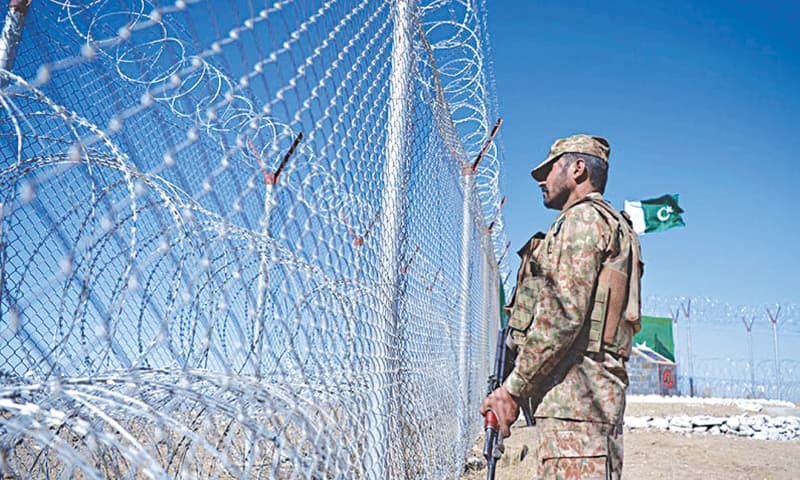
A soldier stands next to a border fence along Afghanistan's Paktika province in Angoor Adda, Pakistan | AFP


In the author’s own words, “the simple truth is that the words ‘one century or hundred years’ and ‘lease’ have not been mentioned in the Durand Line agreement and [in] all the subsequent Anglo-Afghan treaties. These are the assumptions unsupported by any empirical evidence. As such, the Durand Line Agreement is a perpetual agreement with no time limit.”

The chapter on Afghanistan’s history gives us landmark events — the country’s emergence as a sovereign state under the leadership of Ahmad Shah Abdali in 1747, the Great Game — the 19th century geopolitical drama involving Britain, Russia and Iran — and the blood-drenched Anglo-Afghan wars, culminating in the Durand Line agreement of 1893.

However, the man who finally succeeded in having his country recognised as a sovereign state was King Amanuulah, whose stupidity later gave him an unexpected victory. Believing that the British were exhausted by World War I, and hoping for an early success, Amanuulah crossed the Torkham border, only to see the British using a weapon the Afghans had never seen before — air power.

Luckily for him, the British were in no mood to continue fighting and both sides settled for peace, signing the Rawalpindi agreement of August 1918, under which the British recognised Afghanistan’s sovereignty in both domestic and foreign policy matters. The end of the monarchy and King Zahir Shah’s exit are events that have happened in our lifetime.

Today’s post-America Afghanistan ruled by the Taliban faces, according to the author, three challenges: getting international recognition, overcoming its economic crisis and taking on the so-called ‘Islamic State’’s Khorasan chapter (IS-K).

Coming to Kabul’s relations with Islamabad, the author says that, “contrary to popular belief”, the Taliban government is not on good terms with Pakistan. The author is wrong about popular opinion. Most people in Pakistan firmly believe the Taliban regime is far from being friendly. In fact, in spite of all that this country has done for its western neighbour since the Soviet invasion in December 1979 and the help of all sorts it gave to Afghanistan, successive governments in Kabul have been anything but grateful.

Whatever the government in power — and not just ones dominated by Hamid Karzai and Ashraf Ghani who both acted shamelessly as Indian stooges — most governments in Kabul have been openly or secretly working against Pakistan’s interests.

The public opinion in Pakistan has not forgotten that the terrorists who committed the blood-curdling act of slaughtering nearly 140 schoolchildren at the Army Public School in Peshawar in December 2014 had come from Afghanistan. The caretaker government in Islamabad has rightly minced no words and blamed the Kabul regime for providing safe havens to anti-Pakistan terrorists. As the author points out, the Kabul regime has not expelled the Tehreek-i-Taliban Pakistan (TTP) leaders from their safe havens.

The truth is that, in spite of the treaties, including the Durand Line agreement it signed with British India, Afghan rulers have not given up their “irredentist” claims on Pakistan, and on this they have always received military and diplomatic support from countries hostile to Pakistan.

Kabul was opposed to the very creation of Pakistan and, as the author himself points out in Chapter 5, it asked the British government to ‘return’ Balochistan and the then North-Western Frontier Province to Afghanistan instead of making them part of Pakistan.

Chapter 2 on the history of Khyber Pakhtunkhwa and Balochistan gives valuable information to the reader, while Chapter 4 on the Durand Line and international law makes the book a source of academic research for scholars. The maps are photos of archival material which, otherwise, would not be available to us.

On the whole, the book is a valuable contribution to the literature on Afghanistan and its vicissitudinous relationship with Pakistan.

The writer is Dawn’s External Ombudsman and an author

Published in Dawn, Books & Authors, February 11th, 2024

Conclusion: There is no "time limit" or "expiry date" on the legal document agreement between the Afghan King and British Sir Mortimer Durand in the late 1800s.


Another Point: "United Nations" and "Organization of Islamic Cooperation" does not see Durand Line as disputed territory but rather an official border between Pakistan and Afghanistan.
 
Last edited:
You can come out of your cave buddy, or are you an Indian hiding behind UK flags?

@Waz @Musings, check this person @PrinceofPersia 's country of origin.

There are a few Afghan Taliban who have issues with Pakistan.

But generally Afghan Taliban are pro-Pakistan.

Pakistan's stance on Durand Line is the same as the United Nations and Organization of Islamic Cooperation's stance on it, there is no expiry date on the Durand Line, that Afghan King signed in the late 1800's with the British.
Why are you getting emotional ?.

You said Taliban are your buddies so I pulled out an Afghan news article and showed it to you.

No need to cry this much.
 
Time to boycott American shit brand products.

Buy the Chinese and Japanese alternatives.
 
Democracy is a luxury that primitive societies can't afford .... democracy has replaced religion as the opium of the masses .
That sounds too cynical; but I am convinced it is definitely not for everyone. It is a sort of habit that got birthed in 13th century England and gets corrupted if you move far from there culturally. My inclination is authoritarianism is the default 'good' system of government for most societies. The ideal for most is Benevolent dictatorship, like China. I like Erdogan's formulation - use democracy as a streetcar, when necessary.
 
The only reason they won is Pakistan, the Taliban were virtually wiped out soon after Western intervention and had it not been for tacit Pakistani support they would stayed that way
 
That sounds too cynical; but I am convinced it is definitely not for everyone. It is a sort of habit that got birthed in 13th century England and gets corrupted if you move far from there culturally. My inclination is authoritarianism is the default 'good' system of government for most societies. The ideal for most is Benevolent dictatorship, like China. I like Erdogan's formulation - use democracy as a streetcar, when necessary.
Chinese one is not easy one to adapt to , they have yet to produce the beauty that attracts you ... pretty robotic ...good luck to them anyway
 
The only reason they won is Pakistan, the Taliban were virtually wiped out soon after Western intervention and had it not been for tacit Pakistani support they would stayed that way
Agreed that Pakistan's help made the Afghan Taliban won. Thats why the Afghan Taliban is pro Pakistan.
 

Users who are viewing this thread

Country Watch Latest

Latest Posts

Back
Top