Wildlife in Pakistan

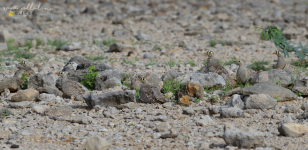
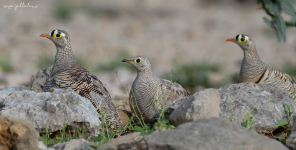
Lichtenstein's sandgrouses have always been on top of my list among the many birds and animals I have seen and shot at Kheerthar National Park on my regular wildlife photography trips for the past five years.

It has always been moment of immense pleasure to see and photograph these breathtakingly beautiful birds in the wild. Their natural camouflage makes them extremely difficult to spot when they are not moving or making any sound, which they virtually ever do.
#kheerthar_national_park Sindh, Pakistan


1728746539388.png


1728746751038.png
 
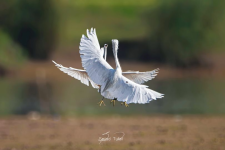
When feathers fly, Battle of the Egrets.
Oct 2024 - Sialkot , Pakistan.


1728746882429.png
 
The Beautiful Common Merganser in various glorious settings in the heavenly settings of Deosai National Park, GB..

July ‘2024


462854159_2521651044691267_1693661986453798874_n.jpg


463080967_2521651104691261_1187633278112353429_n.jpg
 
Tufted Duck & Common Pochard
Punjab, Pakistan
Nov-2023


1728747277661.png
 
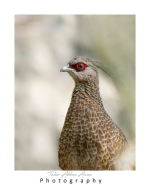
The kalij pheasant
March-2019
1728747325931.png
 
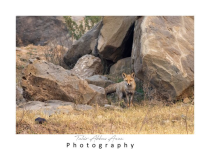
Red Fox
Islamabad
12-15-20141728747471567.png
 

Six arrested for illegal hunting in Punjab​

Special squad seizes firearms and hunted mag during raids in Gujrat's wildlife reserve.

News Desk
December 06, 2024

tribune


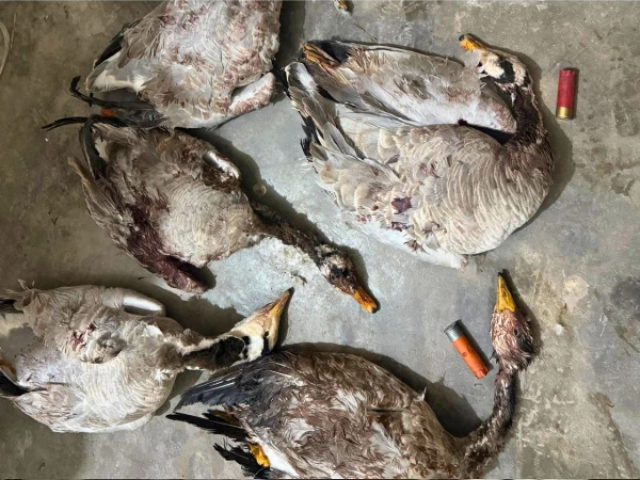
Punjab’s wildlife department has intensified its crackdown on illegal hunting, arresting six suspects and seizing firearms over illegal hunting of wild duck in the border areas of the province.

The special wildlife squad conducted raids in Gatti and Naddala in Gujrat's tehsil, recovering four 12-bore shotguns, two rifles, and hundreds of bullets, Express News reported.

The suspects were apprehended during a blockade and face charges under the Punjab Wildlife Act.
 

Alexandrine parrots disappearing from Pakistan’s skies

Anadolu Agency
December 9, 2024

A photo of Alexandrine parrots. — Anadolu


A photo of Alexandrine parrots. — Anadolu

Pakistan is in danger of losing one of its famed birds, the Alexandrine parrot, which is already on a global list of near-endangered species due to multiple factors, most of them human-made.

Wildlife experts cite habitat alteration, pollution, poaching and illegal trade as major factors behind the decline in the bird’s population, which is still the largest among the three parrot species found in the South Asian country.

Once abundant in the country’s plains, mainly along canals and foothills, and even in mega cities like Karachi, its population is currently restricted to the upper parts of northeastern Punjab and southern Sindh provinces and the border areas of Pakistan and India, including Jammu and Kashmir.

The tree-filled foothills of the scenic Murree Hill Station are another home to Alexandrine parrots.

“Apart from the systematic destruction of their habitat, they have become a source of income for a sizable number of people across the country, resulting in increasing poaching and subsequently illegal trade,” said Sakhawat Ali, an Islamabad-based wildlife expert.

Speaking to Anadolu, Ali observed that a huge number of Indian rosewood (Shisham or Tali) and Banyan (Ficus benghalensis) trees, the parrots’ favourite nesting places, have been systematically cut down in the agriculture belt of Punjab and Sindh over the past three decades because of their precious wood.

Agriculture authorities, he added, have replaced Indian rosewood with eucalyptus, which is useless for parrots and other human-friendly birds.

Eucalyptus in Pakistan was exported from Australia to feed the country’s matchstick industry and according to some environmentalists, it is environmentally hazardous.

Endorsing Ali’s view, Abdur Razzak Khan, a Karachi-based environmentalist, said that the use of agrochemicals, increasing human influence and pollution are other key factors behind the decline in the parrots’ population in the country, including mega cities like Karachi and Lahore.

In Karachi alone, the parrots’ numbers have plummeted by 60 per cent over the past five to eight years, he told Anadolu.

The alteration of habitats — a direct result of unplanned urbanisation and pollution — has badly affected the population of urban birds in major Pakistani cities in the past two decades, mainly house sparrows and parrots, said Khan.

In addition to Karachi and Lahore, the northwestern city of Peshawar, garrison city of Rawalpindi and textile hub of Faisalabad are among the most polluted cities in the region.

Instead of human-friendly birds like sparrows and parrots, which also serve as indicators of air quality, bird species such as kites, crows and mynas have occupied the skies of these cities, he added.

Predatory birds, mainly kites, often target parrots and sparrows, adding to the decline in the population of human-friendly birds, he said.

Recently, the Islamabad Wildlife Management Board (IWMB), a state-run body dedicated to wildlife conservation, conducted a survey in Islamabad. To its surprise, no Alexandrine parrots were spotted in the capital’s skies, indicating the gravity of the threats facing the bird.

If the situation persists, Khan warned, these birds may hardly be seen in the metropolises.
 

Lucrative business​

The Alexandrine parrot is the largest parrot species found in Pakistan. They have red patches on their wings and are green in colour, with mutations also occurring.

According to Anis Rehman, a wildlife expert based in Islamabad, the Alexandrine parakeet (Psittacula eupatria) is named after Alexander the Great, who is said to have first sent several of the birds from Punjab to the West, where they became popular as exotic pets of rich and noble families.

In addition to its large size, this species has the ability to mimic human speech, which makes it one of the most wanted birds by pet lovers, he added. A chick can earn a poacher Rs10,000-Rs12,000, while an adult Alexandrine parrot is sold for up to Rs50,000 in pet markets, according to Rehman.

“If a poacher catches a group of five to 10 hatchlings and parrots in a month, he can easily earn between Rs100,000 and Rs150,000, which is almost four times higher than the minimum (monthly) salary of Rs37,000,” he said.

Aside from pet lovers, professional breeders also buy wild parrots to crossbreed them with their bred species to improve the latter’s immunity.

The parrots play an important role in seed dispersal, while their nests serve as hibernation sites for several animals, mainly snakes and some squirrel species in the winter.

Many parrot species are in decline, and several are extinct. Of the 350 living species, some 130 are listed as near threatened or worse by the International Union for Conservation of Nature (IUCN).

The bird’s population in Pakistan has not been estimated.

The IWMB in December last year launched an “action plan” in the capital to contain the consistent decrease in the parrots’ population.

“We have registered over 50 breeders and 178 individuals (pet lovers) keeping over 2,200 parrots to ensure they cannot sell these birds into the market. Even their hatchlings will be registered,” said Ali, who also serves as deputy director of research at IWMB.
 
To view this content we will need your consent to set third party cookies.
For more detailed information, see our cookies page.
 

Spanish hunter pays hefty amount of $219,000 for markhor hunt​


Spanish hunter, Christian Pablo Abello Gamizo, obtained a permit to hunt the Kashmir markhor


News Desk
January 12, 2025

tribune


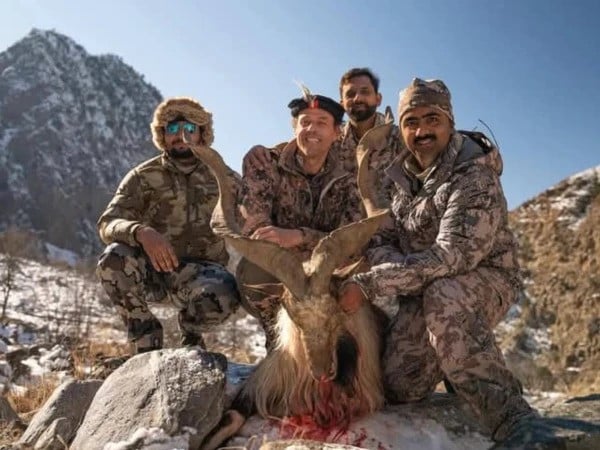
A foreign hunter successfully hunted a Kashmir markhor in the Ghairat Gol area of Lower Chitral, with the support of the Ghairat Conservation Committee and under the leadership of DFO Wildlife Lower Chitral, Farooq Nabi.

According to the Lower Chitral Wildlife Department, the trophy hunt took place at the Kashmir Markhor point in the Ghairat Conservation Committee's jurisdiction.

Spanish hunter, Christian Pablo Abello Gamizo, obtained a permit to hunt the Kashmir markhor. He paid a fee of USD 219,000, equivalent to PKR 61.25 million, for the hunting permit. The hunted markhor was nine years old and had a horn length of 41.5 inches.

It is noteworthy that 80% of the revenue generated from trophy hunting is allocated to local community development projects, while the remaining 20% is deposited into the government treasury.

In December last year, an American hunter paid a permit fee of PKR 75 million to hunt a markhor in the Toshi Shah Conservation Area, setting a record for the highest fee ever paid for markhor hunting in Chitral's history.
 

If we don’t save the Indus River dolphins, we also risk losing the river they call home


The endangered Indus River dolphin is more than a victim of environmental destruction — it’s a symbol of the profound ecological crisis that threatens us all.

Aniqa Atiq Khan
January 13, 2025

Bhulan toh humari saheliyan hain (dolphins are our friends),” said Mai Soomeri, hailing from Guddu town in Sindh. “When we are out here fishing or washing dishes, they are always there”.

She insisted that these creatures were more than just part of the Indus River ecosystem; they were their constant companions, offering playful company and solace in equal measure.

Soomeri is a member of the Bhulan Dost Programme — a flagship citizen science initiative led by World Wildlife Fund Pakistan (WWF-P) to empower fisher communities to protect the Indus River Dolphin and its habitat.


Mai Soomeri, member of Bhulan Dost Programme

Mai Soomeri, member of Bhulan Dost Programme


The Indus River dolphin, also known as the ‘blind dolphin’ that depends on sound waves for communication, is one of the world’s rarest mammals and the second most endangered freshwater river dolphin. In 1969, the species was feared to be on the brink of extinction, with only 100 dolphins remaining by 1972. According to WWF-P, with decades of collaborative efforts involving fisher communities, the Sindh Wildlife Department (SWD), and conservationists, its population has rebounded to 2,000 today.

Yet, the species is listed as “endangered” on the International Union for the Conservation of Nature’s (IUCN) Red List and with 60 per cent of these dolphins clustered in Sindh, their survival is far from certain.

“I can’t understand why anyone wouldn’t wholeheartedly support this cause,” Soomeri wondered.


Women along the banks of the Indus River, washing their utensils.

Women along the banks of the Indus River, washing their utensils.


“When we talk about the blind Indus dolphins, people often ask, ‘Why them? There are so many people in Pakistan who need help, shouldn’t we focus on them instead?’” remarked Toheed Ghani Mahesar, manager of the WWF-P’s of the Food and Agriculture Programme. He was addressing a workshop on the Indus River Dolphin Conservation Programme (IRDCP) in Sukkur, alongside the WWF-P’s conservation coordinator, Muhammad Imran Malik.


Organisers and journalists at the workshop.


Organisers and journalists at the workshop.
 
Last edited:
The issue with these endangered dolphins transcends the creatures themselves, pointing to a far larger problem, he emphasised. “These dolphins are vital bioindicators, reflecting the deteriorating health of our rivers and signalling our march towards climate change.

“The steady decline of plants, animals, marine life, and entire ecosystems is a glaring wake-up call. It’s our responsibility to raise awareness, sensitise others and play our part in the preservation of the environment,” he added.

Mahesar said that to truly grasp the severity of the species’ decline, it’s crucial to observe their past and present distribution.


Comparative maps showing the dolphins’ historical range versus their current.


Comparative maps showing the dolphins’ historical range versus their current.


Once spanning 3,400 kilometres from the estuary to the Karakoram foothills, the Indus River dolphins are now confined to a fraction of their former territory. Their current range has shrunk by 70pc, leaving them restricted to less than 1,000km of the river. “Around 80pc of the dolphins are now concentrated within just a 600km stretch,” Mahesar explained.

Despite this, sighting an Indus dolphin is rare. You could be surrounded by dozens of them but only manage to catch a fleeting glimpse of the cautious and guarded creatures that are more than aware of the dangers surrounding them.
 
According to Mahesar, the decline in the Indus River dolphin population can be attributed to several factors, beginning with “the construction of irrigation systems, barrages, and dams since the 1930s that has disrupted their natural habitat into isolated fragments — each piece smaller and more inhabitable than the last — preventing them from migrating freely within the river to find food and shelter.”

As a result, the dolphins became stranded in shrinking sections of the river, intensifying competition for resources, he said, adding that their inability to move across the river also disrupted their breeding patterns, further reducing their numbers, with young dolphins struggling to survive.

On January 13, 2024, a blind dolphin was found dead in the Bago-Jango section of a canal in Sukkur district. It had been forced to flee shallow waters in search of deeper ones as a result of water level reductions caused by annual maintenance at the Guddu and Sukkur barrages. In a similar vein, a carcass of a female dolphin was found in the Dadu Canal, in December 2022, likely a victim of water level drops that trapped it in canals and left it vulnerable to death.

Similar concerns were also recently echoed by Zulfikar Ali Bhutto Jr, an environmentalist and founder of Bulhan Bachao which works on wildlife conservation through community engagement. In a podcast, he shed light on controversial plans involving the construction of dams, adding that under the pretext of ‘cooperative farming’, the government of Pakistan aims to divert six canals from the Indus and Sutlej rivers.

The Sutlej River is already dry, he explained, elaborating that there isn’t sufficient water beyond the Sukkur Barrage to irrigate the four million acres of land targeted by this scheme. Instead, the land is being leased to affluent individuals, raising serious concerns about the project’s feasibility. If implemented, Zulfikar Jr warned, this plan would lead to mass starvation in Sindh, drain the rivers, and spell disaster for the already endangered Indus River dolphins.
 
Divisional forest officer, Chitral wildlife division, Farooq Nabi told Dawn that assisted by the local community, Cristian Pablo Abello Gamazo, 52, faced no difficulty in searching the nine-and-half-year wild goat of the trophy-size.

He said the hunter took a record time of only five minutes to hunt the goat down firing from a distant range using his 330-win-mag rifle.

Mr Nabi said the Spanish hunter is businessman by profession having experience of trophy hunting of different animals in many countries, while it was his first adventure in Pakistan.

Published in Dawn, January 13th, 2025
 

Users who are viewing this thread

Pakistan Defence Latest

Back
Top