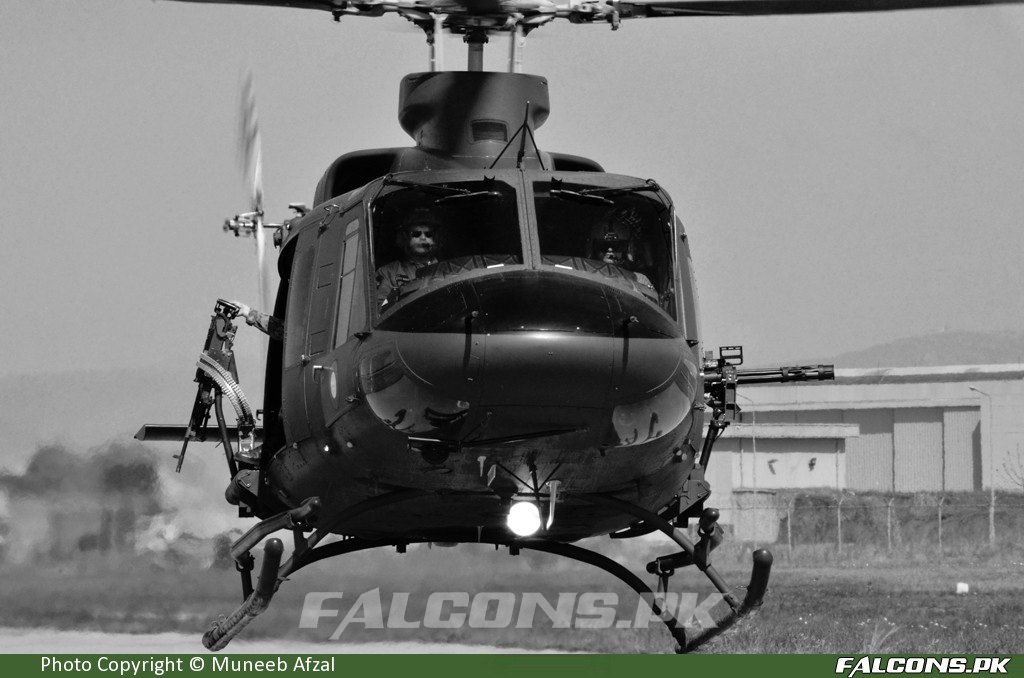
Z-10 ME/P deliveries Updates: Pakistan Army Aviation.

Did they not have to retrial it again in Pakistan after the changes were made to it or has that information been kept secret deliberately?
Why retrial?
There is enough data from the trial to make any and all changes necessary.

If they will be delivered - then any acceptance trials begin
 
Why retrial?
There is enough data from the trial to make any and all changes necessary.

If they will be delivered - then any acceptance trials begin
I thought one of the reasons Z-10's was rejected was because the material was not suitable for the Pakistani climate?
 
i guess that confirms it really. We b
I thought one of the reasons Z-10's was rejected was because the material was not suitable for the Pakistani climate?
no- the engines were too underpowered, could only carry half its max load. also had issues with filtering
 
I thought one of the reasons Z-10's was rejected was because the material was not suitable for the Pakistani climate?
Few helicopters are suitable for the varied climate - Thar in summers hits 50 degrees at times in the day with massive dust storms that make flight impossible.

Sheer winds at altitude along with thin air in the mountains.

You need engines able to tackle both the weight of the helicopter in such extremes and be maintained in austere conditions.

Your avionics have to be able to take a beating from everything ranging from water, ice to sand and rocks hitting sensitive sensor windows.

So yes - the original Z-10s were not fit for Pakistan’s requirements - the T-129 was and exceeded parameters. However, the Chinese went back and took the requirements to provide an upgraded system - and while it is still a barely pass in certain unique circumstances it will be a decent add on.

Question came in more regarding the utility of these assets as certain advisors on a certain battlefield in Europe saw the massacre of rotary assets via SAMs versus the general effectiveness and relative expendable nature of UCAVs and loitering munitions.
 
Few helicopters are suitable for the varied climate - Thar in summers hits 50 degrees at times in the day with massive dust storms that make flight impossible.

Sheer winds at altitude along with thin air in the mountains.

You need engines able to tackle both the weight of the helicopter in such extremes and be maintained in austere conditions.

Your avionics have to be able to take a beating from everything ranging from water, ice to sand and rocks hitting sensitive sensor windows.

So yes - the original Z-10s were not fit for Pakistan’s requirements - the T-129 was and exceeded parameters. However, the Chinese went back and took the requirements to provide an upgraded system - and while it is still a barely pass in certain unique circumstances it will be a decent add on.

Question came in more regarding the utility of these assets as certain advisors on a certain battlefield in Europe saw the massacre of rotary assets via SAMs versus the general effectiveness and relative expendable nature of UCAVs and loitering munitions.
It's worth recalling that the PAA was going for 2 attack helicopter types: AH-1Z and T129.

The way I see it, the Z-10ME would likely be the system in lieu of the AH-1Z, especially in the CAS role for anti-armour operations. In that sense, the main priority for the PAA was improving the Z-10ME's sand-filtering, endurance, and self-protection (from reinforced composite plating to electronic defensive aids like ECM).

The T129 was sought for its endurance, high-altitude, and hot-temp resilience, especially after spending a night in areas like Baluchistan and interior Punjab. My sense with the T129 was that it's a responsive and all-region system for rapid deployment and use. The AH-1Z was the follow-up for conventional conflicts.

I can see the T129 returning into the picture as the TEI TS1400 is now undergoing final certification. This will be done in 2026, so an ITAR-free variant of the T129 could be a thing.

In that sense, again, the T129 could be that responsive, all-region system, while the Z-10ME is the enforcer.
 
It was unveiled in September 2018 that an export version (Z-10ME) has been developed at Changhe with much improved electronics (including new IFF, mast mounted MMW search radar, laser DIRCM turrets on top of stub wings, multiple rectangular shaped laser/UV MAWS/ESM/ECM antennas and PD radar MAWS antennas mounted along the lower fuselage), ceramic armor plate protection, a bigger ammunition magazine in the nose, a new JPX-10D cannon, a new weapons package including CM-502KG ATGM, redesigned engine inlets with particle separators and more powerful engines (WZ-9G? 1,200kw class). So far two prototypes were built. It was reported in February 2020 that Pakistani Army has shown some serious interest in Z-10ME after the Turkish T129 deal was jeopardized. Video released in September 2018 indicated that some Z-10s and Z-10Hs have been further upgraded. The upgrades include external ceramic armor plates outside the forward and back cockpits as well as the engine compartment to provide a better protection against small AAA fire. UV band MAWS sensors were installed on both sides of the nose. The gunner also wears a new HMD.
Many of the upgrades were incorporated after trials conducted in Pakistan in hot and high conditions.
However no new information regarding the sale and induction of the type in PAA since 2020. It seems to be a closed case.
 
It's worth recalling that the PAA was going for 2 attack helicopter types: AH-1Z and T129.

The way I see it, the Z-10ME would likely be the system in lieu of the AH-1Z, especially in the CAS role for anti-armour operations. In that sense, the main priority for the PAA was improving the Z-10ME's sand-filtering, endurance, and self-protection (from reinforced composite plating to electronic defensive aids like ECM).

The T129 was sought for its endurance, high-altitude, and hot-temp resilience, especially after spending a night in areas like Baluchistan and interior Punjab. My sense with the T129 was that it's a responsive and all-region system for rapid deployment and use. The AH-1Z was the follow-up for conventional conflicts.

I can see the T129 returning into the picture as the TEI TS1400 is now undergoing final certification. This will be done in 2026, so an ITAR-free variant of the T129 could be a thing.

In that sense, again, the T129 could be that responsive, all-region system, while the Z-10ME is the enforcer.
They need to focus on them being primarily loitering munitions motherships or UCaV controllers on the eastern front. The near constant mobility and ability to maximize on station time via FARPs could be an asset if implemented correctly.

The western front - Balochistan - combined with Mi-35s they should be earth scorching systems,
 
To view this content we will need your consent to set third party cookies.
For more detailed information, see our cookies page.
 
There are rumor that Halted deal with USA may be resumed for A1Z1 attack copters and F-16 Block 70/72?
We may see something new Z10 ME soon this year. Hope for the best
 
the deal has always been on the table, the only sticking point has been n still is the method of payment.

PAF wants the payment to be made from CSF while the u.s wants cash.
 
Photo-1879.jpg
 

Users who are viewing this thread

Back
Top