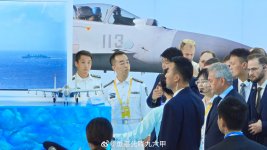
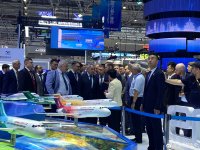
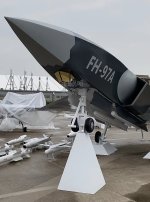
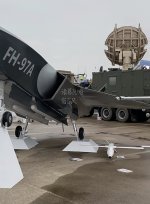
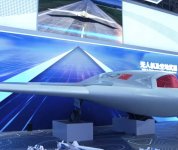
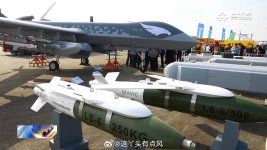
Zhuhai Airshow 2024

COMAC and Air China Sign Major Agreement for C929

13/11/2024 TECHNOLOGY

Major Agreement between COMAC and Air China​

Air China, the country’s flag carrier, has signed a major pre-order agreement with the Commercial Aircraft Corporation of China (COMAC) for its next-generation wide-body long-haul passenger jet, the C929, the official Xinhua news agency reported. The agreement secured its first order for the aircraft, despite the C929 still being under development. The deal was held at the China International Aerospace Exhibition (Airshow China) in Cuhay, Guangdong Province, China.


The C929 is aimed to compete with existing models, especially the “Airbus 350” and “Boeing 787”. This aircraft, which has a planned flight range of 12 kilometers, does not yet have a prototype in the development process and has not received a flight-capable license. The first delivery is expected to be made by 2027.

New Orders for C919​

During the fair, new orders were also received for other passenger aircraft models developed by COMAC. According to Chinese state television CCTV, local airline Hainan Airlines has ordered 919 of COMAC’s locally produced medium-haul narrow-body C60 passenger aircraft. Designed as a counterpart to popular models such as the Airbus 919 and Boeing 320, the C737 is in the fleets of China’s three largest airlines, Air China, China Eastern and China Southern. The aircraft has started to be used in commercial flights and can carry between 156 and 168 passengers and fly up to 5 kilometers.

The first delivery of the C919 was made on December 9, 2022, and the aircraft made its first commercial flight between Shanghai and Beijing on May 28, 2023. With the entry of the C919, which is the most widely used narrow-body passenger aircraft in the civil aviation sector, it is evaluated that China could have a significant share in the passenger aircraft market dominated by US-based Boeing and European-based Airbus companies.

The C2008, which began development by COMAC in 919, cannot be considered a fully national product because its critical components, such as the jet engine and flight control software, are produced by US-based companies such as General Electric and Honeywell and assembled in China.

Name Change of ARJ21 Model​

On the other hand, COMAC changed the name of its short-haul passenger aircraft model ARJ21 to “C909”, making it compatible with the medium and long-haul model names. Hainan Airlines, which was present at the fair, ordered 909 C40s, while another domestic airline, Colorful Guizhou Airlines, ordered 30. The first test flight of the ARJ21 was made in 2008 and its suitability for flight was registered at the end of 2014. It started commercial flights in June 2016 and is currently actively used on many domestic routes.

Produced in China through licensed assembly of Boeing subsidiary McDonnell Douglas’ MD-80 and MD-90 type aircraft, the ARJ21 has a capacity of 78 to 95 passengers. Capable of flying up to 3 kilometers, this short-haul passenger aircraft has the ability to fly safely in Alpine-type mountainous regions and in different airport conditions.


 

Zhuhai Airshow signals new era of global aviation leadership


11:02AM Thu November 14, 2024

14th November 2024 – (Zhuhai) The Zhuhai Airshow has emerged as a defining moment in China’s inexorable rise to aerospace supremacy. The exhibition not only showcases China’s impressive achievements but heralds a fundamental shift in global aviation power dynamics, with implications that will reverberate across the industry for decades to come.

The centrepiece of China’s aerospace ambitions, Commercial Aircraft Corporation of China (COMAC), has demonstrated extraordinary progress with its flagship programmes. The announcement of Air China as the launch customer for the C929 widebody aircraft represents more than a mere commercial transaction—it symbolises China’s decisive entry into a market segment long dominated by Western manufacturers Boeing and Airbus.

COMAC’s strategic rebranding of the ARJ21 regional jet as the C909 reflects a sophisticated understanding of global market dynamics and brand architecture. This move, coupled with significant technical improvements in weight reduction and operational efficiency, signals China’s commitment to creating a comprehensive commercial aircraft family that can compete effectively across all market segments.

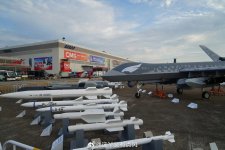
The presence of advanced military aircraft, including the J-20 stealth fighter and the debut of the J-35A, demonstrates China’s mastery of cutting-edge aerospace technologies. These achievements are particularly significant given the complexity of stealth technology and the limited number of nations capable of developing such advanced aircraft. Perhaps most telling is China’s unveiling of its commercial uncrewed spaceplane. This development represents a quantum leap in space technology, positioning China at the forefront of commercial space operations. The integration of “Chinese characteristics” into space exploration reflects a distinctive approach that combines technological innovation with practical applications.

The show’s impressive lineup of international participants, despite ongoing global tensions, underscores China’s growing influence in the aerospace sector. The presence of major Western manufacturers alongside Chinese companies highlights the industry’s recognition of China’s market importance and technological capabilities.

China’s aerospace strategy appears carefully calibrated to address both commercial and military requirements. The development of dual-use technologies and the integration of civilian and military aerospace sectors demonstrate a comprehensive approach to industry development that Western competitors may find challenging to match.

The scale of China’s aerospace ambitions is particularly evident in its approach to innovation. Unlike traditional Western aerospace development, which often prioritises incremental improvements, China’s strategy embraces bold technological leaps. This is exemplified by its simultaneous development of multiple aircraft programmes and its willingness to explore novel design concepts. COMAC’s success in securing orders from domestic carriers demonstrates the maturation of China’s commercial aerospace sector. While Western skeptics may dismiss these as politically motivated purchases, the technical improvements and operational efficiencies achieved by Chinese manufacturers suggest genuine commercial viability. The Hainan Airlines order for 60 C919 aircraft and 40 C909s represents a significant vote of confidence in domestic technology.

The military dimension of China’s aerospace capabilities, while impressive, serves a broader strategic purpose. The public debut of the J-35A stealth fighter, making China only the second nation to operate two types of stealth aircraft, signals not just military capability but technological parity with traditional aerospace powers. This achievement has significant implications for the global defence industry and international security dynamics.

Perhaps most significantly, China’s aerospace sector demonstrates remarkable integration between research institutions, manufacturers, and operators. This ecosystem approach, combining state support with market mechanisms, has accelerated technological development while ensuring commercial viability. The result is a uniquely Chinese model of aerospace development that challenges Western assumptions about industry organisation.

The development of supporting technologies and infrastructure further strengthens China’s position. Advanced manufacturing capabilities, sophisticated supply chains, and growing expertise in critical technologies such as composites and avionics create a comprehensive industrial base capable of sustaining long-term aerospace development.

International collaboration remains an important element of China’s strategy, despite geopolitical tensions. The presence of Airbus and other Western manufacturers at Zhuhai demonstrates the complex interdependencies of global aerospace. China’s ability to balance cooperation with indigenous development shows sophisticated understanding of industry dynamics.

The emergence of Chinese aerospace suppliers as credible alternatives to Western manufacturers has profound implications for global aviation. Airlines and operators worldwide now have viable alternatives to traditional suppliers, potentially reshaping competitive dynamics and pricing power within the industry.

Environmental considerations also feature prominently in China’s aerospace strategy. The focus on efficiency improvements and potential development of electric aircraft technologies suggests awareness of sustainability requirements. This positions Chinese manufacturers favourably as environmental regulations tighten globally.

The commercial uncrewed spaceplane represents perhaps the most ambitious element of China’s aerospace vision. This development signals China’s intention to compete in emerging market segments while demonstrating technological capabilities beyond traditional aviation. The potential for commercial space operations adds another dimension to China’s aerospace ambitions.
The implications for global aviation are profound. China’s emergence as a comprehensive aerospace power challenges existing industry structures while creating new opportunities for collaboration and competition. The success of Chinese manufacturers in developing advanced aircraft suggests a future where multiple centres of aerospace excellence compete and cooperate globally.

For Western aerospace companies, China’s ascent poses challenges but also opens doors for new partnerships and market opportunities. As competition grows in existing markets, navigating through technical, commercial, and political landscapes will be crucial for success. The Zhuhai Airshow is more than just a showcase of current technology—it hints at what the future of aviation might look like. China is taking a holistic approach to aerospace development, which integrates technical innovation with a keen sense for market dynamics and strategic planning. This could lead to substantial changes in the global aviation industry, affecting it for many years.

The takeaway from Zhuhai is undeniable: China’s aerospace sector has emerged as a significant global player, combining advanced technology with substantial market potential and strategic insight. This shift is set to redefine the aerospace landscape, presenting fresh challenges and opportunities. The industry’s future will be greatly shaped by China’s drive for innovation and its strategic ambitions.
 

Swarming drones and counter-drone systems dazzle at China’s Zhuhai air show​

The technology is regarded as crucial in any conflict over Taiwan and is a highlight for analysts attending the exhibition​


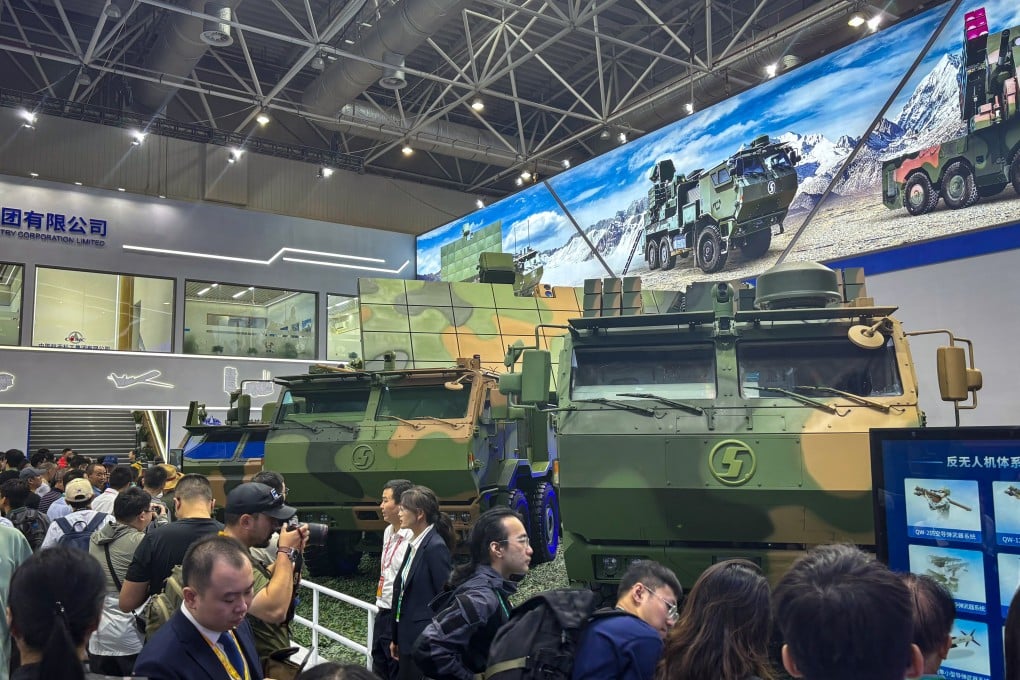
The China Aerospace Science and Technology Corporation display at the Zhuhai air show with an FK-4000 air defence weapons system (left) and FK-3000. Photo: Hayley Wong

Hayley Wongin BeijingandAmber Wangin Beijing
Published: 2:01pm, 14 Nov 2024

Advanced drone combat swarms and the systems to counter them – deemed crucial in a possible war scenario over Taiwan – are among the new weapons on display at China’s giant air show in Zhuhai.

China Aerospace Science and Technology Corporation debuted its FK-4000 mobile air defence weapons system which uses high-power microwaves (HPM) to intercept the smallest, lightest drones down to micro unmanned aerial aircraft.

The FK-4000 features an antenna array that is about eight metres (26ft) wide and capable of delivering microwave blasts to a distance of up to 3km (nearly two miles) in less than a second.

Microwaves are not only faster than traditional means of counter-attack, they are also basically invisible and can attack a bigger surface area, making them a more effective tool than lasers for large areas.

Also on show was an HPM system developed by Norico Group, which features a microwave emitter array of about the same size as the FK-4000, with a tracking mount and a search and tracking integrated radar on top.

Another defence systems giant, China Electronics Technology Group Corporation (CETC), has also incorporated the technology’s advantages into its Thunder Low-Altitude Defence System.

CETC is presenting a model of the system at Zhuhai event, but it is clear that it also integrates microwave radar and electro-optical detection along with tracking equipment in a single vehicle.

The military electronics manufacturer also showcased a second edition of a swarm launch vehicle, which has a load capacity of 48 fixed-wing drones that can all be launched within four minutes.

According to CETC, each vehicle can carry two sets of drones, and every device has a maximum payload and take-off weight of 7kg (15.4lb) and 30kg (66lb), respectively and an endurance of 120 minutes.

Military analyst and former PLA instructor Song Zhongping, who was at the China International Aviation and Aerospace Exhibition in Zhuhai, said the HPM counter-drone systems were “the most important highlight of the air show this year”.

“[How to counter] drones that are low-altitude, low-speed and small has been an old and difficult question for a lot of countries, he said.

China and other countries have sped up development of counter-drone systems after observing Russia’s insufficient defences against large numbers of small, cheap unmanned vehicles launched by Ukraine.

The asymmetric capabilities of drone warfare came under the spotlight again recently when a US admiral warned that an “unmanned hellscape” of swarming drones would be unleased in the Taiwan Strait in the event of an attack from the mainland.

Beijing regards Taiwan as part of its territory and has vowed to bring the island under mainland control, by force if necessary. Like most countries, the US does not recognise Taiwan as an independent state but is opposed to an attack and is also the island’s main arms supplier.

According to mainland military analyst Fu Qianshao, China’s drone swarm technology is “mature and leading the field” as reflected by CETC’s swarm launch vehicle, while the country is also advancing its capabilities of countering swarming drones.

Fu added that the microwave counter-drone weapons systems showcased at this year’s air show represent “an important direction for the future”, given their advantages over laser technology.

“Lasers target one drone at a time, whereas microwave weapons can target an entire area – much like a fly swatter – greatly enhancing air defence capabilities,” he said.

Fu also observed that few other countries have developed this technology, and their progress has been limited. “Our microwave weapons are at the leading level.”

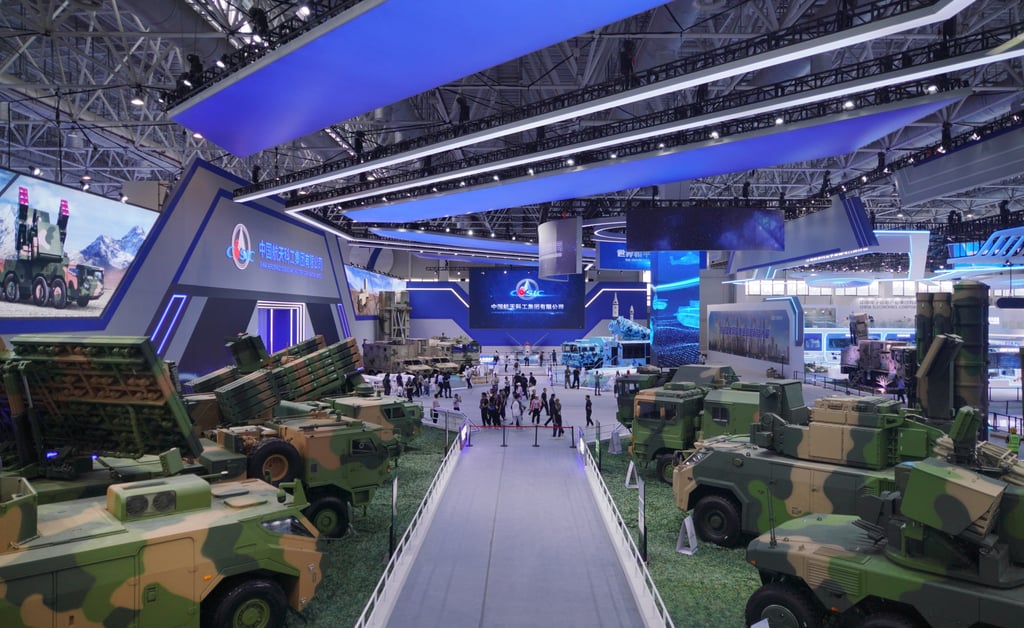
Counter-drone swarm systems are the highlight of this year’s air show at Zhuhai in Guangdong province, southern China, according to military analysts. Photo: Weibo/ 中国航天科工

Counter-drone swarm systems are the highlight of this year’s air show at Zhuhai in Guangdong province, southern China, according to military analysts. Photo: Weibo/ 中国航天科工

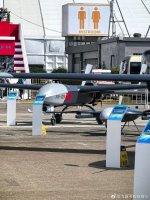
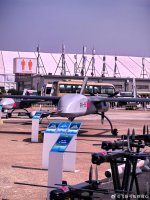
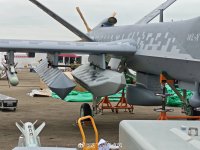
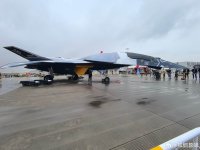
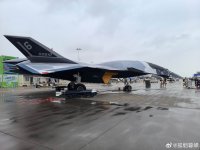
The Zhuhai air show also features a variety of unmanned vehicles, including the Jentank, a new type of Smart-Configuration Support Unmanned Aerial Vehicle (SS-UAV), which can act as an air carrier for drone swarms.

The large, jet-powered drone has a maximum take-off weight of 10 tonnes and offers a wide speed range, short take-off and landing capabilities, and high power, according to its developer, the Aviation Industry Corporation of China.

It is equipped with a quickly replaceable heavy-load mission module and eight hard points, allowing for flexible expansion and continuous upgrades according to user requirements, it said.

Song noted that the Jentank not only achieves unprecedented reconnaissance and strike capabilities compared to other drones, it also extends the reach of smaller drones by launching them in the air.

This year’s show features a newly-established dedicated area to accommodate the expanding variety of unmanned platforms that are on display. A four-hour show is taking place at the venue each day, with performances by unmanned air and surface vehicles.

The 330,000 square metres (81.5 acres) of extra exhibition space is located near Zhuhai’s Lianzhou general airport while the main venue is next to the Zhuhai airport.

Also unveiled at the show was the Orca – a 500-tonne unmanned combat vessel designed for firepower strikes, air defence, anti-missile operations, and anti-submarine warfare, with a maximum range of 4,000 nautical miles.

Song noted that the Orca would be capable of operating either solo or in coordinated “wolf pack” attacks, with multiple units working together to overwhelm an enemy.


Users who are viewing this thread

Pakistan Defence Latest

Country Watch Latest

Latest Posts

Back
Top