Oil, Gas and Refinery Sectors - updates

I am not an expert on this, but from what I have heard, the joint ownership between provinces and federation is one of the major obstacles for firms interested in Pakistani oil & gas. Parochial bureaucratic and political interests on both levels might be bit too difficult and expensive to deal with for these firms, whether they are national or multinational. We don't know much about the oil but new and substantial gas reserves are being discovered regularly, especially in Sindh. Any other country with either clearly centralized or provincialized rights structure having this fortune would probably have firms lining up.
 
Back when kekra 1 was being drilled, Experts had already warned that chances of success is between 15-20%

Having said that I have hopes for Turkish TPAO and Saudi Aramco not to mention Azerbaijani Socar and Chinese companies if they agree to put in this kind of money

Chatgpt on offshore potential

Recent studies & their takeaways (2022–2025)​


  • Pakistan Basins Study (PBS 2023/2024–2026) – ministry-backed consortium (OGDCL, PPL, MariEnergies, GHPL) with DeGolyer & MacNaughton as consultant. Phase-2a (Offshore Indus) is “near completion”; Offshore Makran is next. Expect refreshed charge/plays mapping and risk rankings. Ogdcl
  • Indus volcanics & reservoirs (2024, MDPI/JMSE) – integrates seismic + well control: Miocene mudstones at Pakcan-1 (~300 m, avg TOC ~2%, Ro ~0.8%) confirm source presence; key reservoir types are Miocene deltaics and Paleocene–Eocene carbonates; volcanics influence trap/reservoir distribution. MDPI
  • Makran prospectivity (2022, Journal of Petroleum Geology) – 2D seismic tied to Gwadar-1 outlines thrust-related traps and growth strata; interesting structures exist but petroleum system risk remains (charge/timing, seal). Royal Holloway Research Portal
  • Indus NW play review (2020, China Geology) – synthesizes wells & seismic; emphasizes charge immaturity/lack as a principal reason for past failures, recommends deeper/older source focus and careful pressure management. ScienceDirect
  • Gas hydrates & seepage (2021–2024) – multiple marine geoscience papers document methane seepage, mud diapirs, and continuous BSRs across Makran—evidence of gas migration, albeit not directly convertible into conventional reserves. SpringerLink+1
 
Chatgpt on offshore potential

Recent studies & their takeaways (2022–2025)​


  • Pakistan Basins Study (PBS 2023/2024–2026) – ministry-backed consortium (OGDCL, PPL, MariEnergies, GHPL) with DeGolyer & MacNaughton as consultant. Phase-2a (Offshore Indus) is “near completion”; Offshore Makran is next. Expect refreshed charge/plays mapping and risk rankings. Ogdcl
  • Indus volcanics & reservoirs (2024, MDPI/JMSE) – integrates seismic + well control: Miocene mudstones at Pakcan-1 (~300 m, avg TOC ~2%, Ro ~0.8%) confirm source presence; key reservoir types are Miocene deltaics and Paleocene–Eocene carbonates; volcanics influence trap/reservoir distribution. MDPI
  • Makran prospectivity (2022, Journal of Petroleum Geology) – 2D seismic tied to Gwadar-1 outlines thrust-related traps and growth strata; interesting structures exist but petroleum system risk remains (charge/timing, seal). Royal Holloway Research Portal
  • Indus NW play review (2020, China Geology) – synthesizes wells & seismic; emphasizes charge immaturity/lack as a principal reason for past failures, recommends deeper/older source focus and careful pressure management. ScienceDirect
  • Gas hydrates & seepage (2021–2024) – multiple marine geoscience papers document methane seepage, mud diapirs, and continuous BSRs across Makran—evidence of gas migration, albeit not directly convertible into conventional reserves. SpringerLink+1


I am particularly interested in Makran coast (More so than anything offshore) especially areas of mud volcanoes.This is similar to the structures surrounding gas fields in Azerbaijan especially Shah Deniz.

That's why I said we should get Socar to farm in those blocks
 

Pakistan's Hub Power plans major energy expansion with new oil terminal and EV network​


It will receive imported petroleum products for onward supply to PSO

ZAFAR BHUTTA
October 08, 2025


ocac urged the special investment facilitation council to intervene and recommend the withdrawal of petroleum and climate support levies on furnace oil which would help restore policy consistency and support critical sectors photo file


OCAC urged the Special Investment Facilitation Council to intervene and recommend the withdrawal of petroleum and climate support levies on furnace oil, which would help restore policy consistency and support critical sectors. PHOTO: FILE

ISLAMABAD: Hub Power Company has planned to build a Single Point Mooring (SPM) facility on the Hub coast for importing petroleum products for the state-run oil marketing company, Pakistan State Oil (PSO).

Hub Power also reveals that its oil and gas joint venture, Prime International, will participate in the upcoming bidding round for offshore exploration with partners and consortiums being formed for the purpose.

At present, Pakistan has only one SPM facility, set up by Cnergyico PK for transporting imported crude oil to the refinery. The SPM has an oil pipeline within sea, which takes crude oil to Cnergyico refinery.

Hub Power is working on an SPM proposal, however, its purpose will be to transport refined petroleum products to PSO for onward supply to dealers.

In a briefing for brokerage houses arranged by Topline Research, the management of Hub Power said that it was considering building SPM on the Hub coast for the import of petroleum products for PSO.

The plan involves using available storage tanks and transporting products through the Asia Petroleum Pipeline – in which PSO has a 49% stake – to Zulfiqarabad, where it connects with the White Pipeline that extends to the north. The company will be forming a joint venture-type structure for this transaction.

The management explored different options for its base plant in Hub, which has a huge piece of industrial land spread over 1,100 acres.

The options include setting up an aluminium smelter, which is an energy-intensive business and can help address Pakistan's surplus energy issue, while allowing Hubco to use its existing base plant as a backup. Since the site is located with land and sea transportation infrastructure, they will be able to easily import alumina (the raw material).

Given Pakistan's significant bauxite reserves, estimated at 200 million tons, including 74 million tons of identified reserves in Khushab, AJK, Khyber-Pakhtunkhwa and Ziarat, complete integration across the value chain can be explored at a later stage.
 
Hubco's senior management including CEO Kamran Kamal and CFO Muhammad Saqib gave a briefing on the recent financial results and the outlook.

Regarding the power-sector circular debt resolution, the company stated that they were not aware of any talks on waiving the late payment surcharge. They mentioned that any discussion on the matter would take place at the government-to-government level as those were China-Pakistan Economic Corridor (CPEC)-related plants and the relevant forum for such deliberations was the Joint Cooperation Committee (JCC).

Owing to the government's focus on this area and timely release of planned subsidies, the company's recoveries have improved, particularly for its coal-fired power plants. This is a reason for the reduction in finance cost along with a lower interest rate.

Regarding auto manufacturer BYD, Hubco officials said that they had received a much better response than what was initially expected in the market. They are currently the largest electric vehicle (EV) company in Pakistan and the demand for Atto 3 has increased steadily. BYD's local assembly will begin in the second half of 2026.

Hubco management emphasied that BYD offers a complete range of vehicles – from small cars to luxury sports utility vehicles (SUVs). For now, they have launched a C-segment SUV based on affordability, considering that the target customers can install their own charging infrastructure.

The company is also developing Pakistan's first and largest EV charging network, which will extend from Karachi to Peshawar along the motorway, thereby enabling EV adoption in the country.

Regarding car exports to right-hand-drive countries, the management saw a potential for that in the future, however, their current focus was on developing the plant. Two international financing partners are already on board.

Hubco's two coal-based plants are expected to declare project completion date (PCD) soon, after which they will be able to announce dividends. Unlike China Power Hub Generation Company (CPHGC), which declares dividends once a year, Thar Energy Limited (TEL) and ThalNova can declare dividends twice annually. The first dividend is expected to be higher than the return on equity (ROE) and is likely to be announced this quarter.

The company has a history of pursuing growth through diversification, having previously invested in coal power plants, exploration & production and is currently targeting EVs. It is also focusing on the mining sector and has recently invested in a junior mining company, Ark Metals (Pvt) Ltd, and is exploring other strategic opportunities
 
Pakistan Petroleum Limited (PPL), a major energy company in the country, has announced a strategic partnership with Turkish Petroleum Overseas Company (TPOC), a subsidiary of Turkiye’s national oil company TPAO, under the farm-out process of the Eastern Offshore Indus C Block.

The partnership is aimed at boosting offshore exploration and strengthening Pakistan-Turkiye energy cooperation, PPL said in its filing to the Pakistan Stock Exchange (PSX) on Tuesday.

“PPL is pleased to announce a major milestone in the farm-out process of the Eastern Offshore Indus C Block, marking the beginning of a strategic collaboration with TPOC, a wholly owned subsidiary of TPAO, the national oil company of Turkiye.

“This partnership is the result of high-level engagements between the governments of Pakistan and Turkiye, aimed at deepening bilateral cooperation in the energy sector and promoting Foreign Direct Investment (FDI) in Pakistan’s offshore exploration activities,” read the notice.

As part of this initiative, PPL has transferred the operatorship of the Block to TPOC, which is subject to regulatory approvals.

“This step reflects a broader government-level understanding and aims to incorporate international best practices into Pakistan’s offshore exploration operations.”

In parallel, PPL engaged Oil & Gas Development Company Limited (OGDCL) and Mari Energies Limited (MariEnergies) in the farm-out process.

“Both companies conducted thorough due diligence, leading to the successful execution of a farm-out agreement among PPL, TPOC, OGDCL, and MARI.

“Under the farm-out agreement, PPL will assign 25% Participating Interest (PI) and operatorship to TPOC, and 20% PI each to OGDCL and MariEnergies.

“PPL will retain the remaining 35% PI and will continue to play a key role in the Block’s development,” read the notice.

PPL said the collaboration marks a significant step toward unlocking Pakistan’s offshore hydrocarbon potential and sets the foundation for long-term strategic energy cooperation between Pakistan and Turkiye.
 
Excellent News Can't Wait For Drilling To Start
 
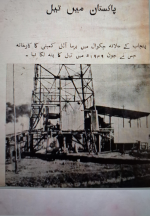
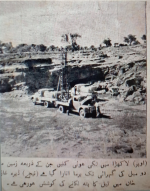
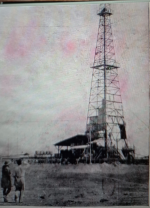
Oil well

1760825377641.png


1760825419539.png


Attock before partition

1760825462298.png
 

Pakistan receives first-ever US crude oil shipment


Tahir Sherani
October 29, 2025

Pakistan on Wednesday received its first-ever shipment of US crude with the cargo arriving at Cnergyico’s offshore terminal, marking a new chapter in Pak-US trade relations.

The cargo arrived aboard the Suezmax vessel MT Pegasus and docked at Cnergyico’s Single Point Mooring (SPM) port situated on the coast of Balochistan.

In August, it was reported that Cnergyico will import 1 million barrels of oil from Vitol this month.

“The arrival of Pakistan’s first-ever US crude oil cargo marks an important milestone for the country’s energy sector and for Cnergyico,” Vice Chairman of Cnergyico Pk Limited Usama Qureshi told Dawn.com.

“This first shipment will be followed by another in mid-November and a third in January 2026,” he stated, adding that collectively, “these three cargoes are expected to improve Pakistan’s trade balance with the United States by around $200 million”.

Qureshi said the SPM facility, the country’s only offshore crude handling terminal, can efficiently receive large vessels, reduce logistics costs, and enhance refinery operations.

“These imports not only diversify Pakistan’s crude supply but also strengthen bilateral trade ties and contribute to the country’s long-term energy security,” the vice chairman added.

In September, Cnergyico had ordered a second shipment of US crude after finding its debut purchase commercially viable, according to its vice chairman, paving the way for more imports.

In 2023, Cnergyico had imported the country’s first private-sector shipment of Russian crude oil, taking advantage of Moscow’s discounts on its oil exports.
 

Pakistan strikes $1 billion offshore oil, gas deal after decades​


Pakistan has made a historic achievement in its energy sector, securing a major offshore oil and gas exploration deal for the first time in 20 years. The development marks a major stride toward energy independence and aligns with Prime Minister Shehbaz Sharif’s vision for long-term resource sustainability and economic revival. Officials described the move as a milestone in Pakistan’s quest to strengthen domestic energy production and attract global investment.

Read more : Pakistan receives first US crude oil shipment, marks energy milestone

According to official details, successful bids for 23 offshore oil and gas blocks have been finalized, covering an expansive area of around 53,510 square kilometers. The initial investment of $80 million in exploration licenses will rise to approximately $1 billion during the drilling stage, signaling renewed investor trust in Pakistan’s energy potential. Moreover, authorities confirmed that this achievement marks the country’s most successful exploration round in two decades.

The government’s dual-basin strategy, focusing on the Indus and Makran offshore zones, has yielded strong results, opening new avenues for large-scale energy production. Experts believe this step will reduce Pakistan’s reliance on imported fuels while creating job opportunities and driving industrial growth. Furthermore, the successful bidding round has attracted major attention from global investors seeking stable energy prospects in South Asia.

Notably, several major domestic and international companies participated in the deal. Among them were OGDCL, PPL, Mari Energies, and Prime Energy from Pakistan, joined by foreign partners including Turkish Petroleum, United Energy, Orient Petroleum, and Fatima Petroleum. Their collaboration underscores growing global confidence in Pakistan’s upstream energy sector and reflects the country’s strategic progress in regional energy development.

A recent basin study by the U.S.-based firm DeGliver & McNaughton estimated Pakistan’s offshore reserves at nearly 100 trillion cubic feet of natural gas. These findings prompted the launch of Offshore Round 2025, which officials described as a “turning point” for the nation’s energy landscape. With new exploration activities underway, the project is expected to strengthen Pakistan’s energy security and economic resilience in the years ahead.
 

Pakistan strikes $1 billion offshore oil, gas deal after decades​


Pakistan has made a historic achievement in its energy sector, securing a major offshore oil and gas exploration deal for the first time in 20 years. The development marks a major stride toward energy independence and aligns with Prime Minister Shehbaz Sharif’s vision for long-term resource sustainability and economic revival. Officials described the move as a milestone in Pakistan’s quest to strengthen domestic energy production and attract global investment.

Read more : Pakistan receives first US crude oil shipment, marks energy milestone

According to official details, successful bids for 23 offshore oil and gas blocks have been finalized, covering an expansive area of around 53,510 square kilometers. The initial investment of $80 million in exploration licenses will rise to approximately $1 billion during the drilling stage, signaling renewed investor trust in Pakistan’s energy potential. Moreover, authorities confirmed that this achievement marks the country’s most successful exploration round in two decades.

The government’s dual-basin strategy, focusing on the Indus and Makran offshore zones, has yielded strong results, opening new avenues for large-scale energy production. Experts believe this step will reduce Pakistan’s reliance on imported fuels while creating job opportunities and driving industrial growth. Furthermore, the successful bidding round has attracted major attention from global investors seeking stable energy prospects in South Asia.

Notably, several major domestic and international companies participated in the deal. Among them were OGDCL, PPL, Mari Energies, and Prime Energy from Pakistan, joined by foreign partners including Turkish Petroleum, United Energy, Orient Petroleum, and Fatima Petroleum. Their collaboration underscores growing global confidence in Pakistan’s upstream energy sector and reflects the country’s strategic progress in regional energy development.

A recent basin study by the U.S.-based firm DeGliver & McNaughton estimated Pakistan’s offshore reserves at nearly 100 trillion cubic feet of natural gas. These findings prompted the launch of Offshore Round 2025, which officials described as a “turning point” for the nation’s energy landscape. With new exploration activities underway, the project is expected to strengthen Pakistan’s energy security and economic resilience in the years ahead.
What happened to the American investment in oil exploration that Trump had promised was going help Pakistan export oil to India one day ?
 
What happened to the American investment in oil exploration that Trump had promised was going help Pakistan export oil to India one day ?

No american company in this round. Still 17 blocks left so who knows, they may come for next round.
 
So they have just sold exploration rights and already know that the drilling will be worth 1 billion. They should have aimed higher and said 100 billion to make some members here happier.
 

Users who are viewing this thread

Pakistan Defence Latest

Back
Top