European Defence News and Discussions

November 12, 2025

Greece resumes talks with Israel to acquire advanced air defence systems under Achilles Shield programme​

By Martin Chomsky (Defence Industry Europe)

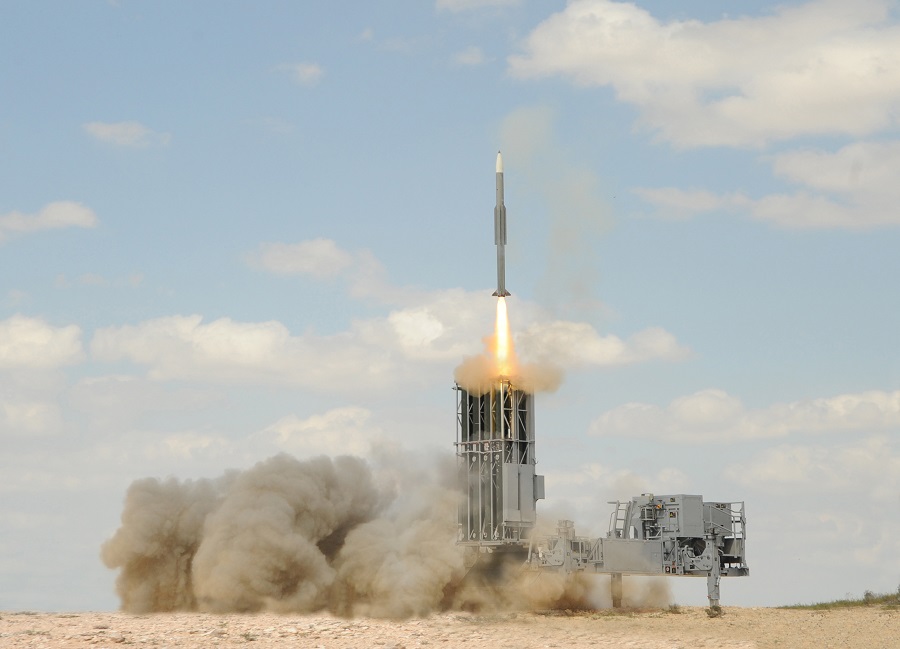
Azerbaijan has decided to purchase additional Israeli-made Barak MX air defence systems from Israel in a USD 1.2 billion deal.
Barak MX air defence system. Photo: IAI.
Greece’s Ministry of National Defence has resumed negotiations with Israel for the purchase of advanced air defence systems as part of the “Achilles’ Shield” initiative. The multilayered programme forms a central element of Greece’s 12-year Medium-Term Defence Armament Plan, aimed at modernising the country’s military capabilities.


Talks had previously been paused during Israel’s operations in Gaza due to sensitivities around defence deals. With a fragile ceasefire now in place, Athens has moved to reactivate the programme, underlining its importance for national security.

The planned acquisition includes three Israeli-developed systems to replace ageing platforms and strengthen Greece’s defence against ballistic missiles, drones, and aerial threats. The Spyder system from Rafael Advanced Defense Systems will substitute the outdated Russian OSA-AK and TOR-M1 units, which face ongoing supply and maintenance issues.


The Barak MX system from Israel Aerospace Industries (IAI), which owns the Greek firm Intracom Defense, is set to replace Hawk missile launchers with upgraded medium-range capabilities. For long-range and ballistic threats, Greece is considering the David’s Sling system (SkyCeptor variant), to succeed the ageing S-300 platforms affected by limited support due to strained ties with Russia.

Existing Patriot missile batteries will remain operational, serving as the backbone of the air defence network and integrating with the new systems. The total initial investment for “Achilles’ Shield” is estimated at around €3 billion, with early deployment focused on Thrace and the eastern Aegean islands.


Future phases will broaden coverage nationwide and address both aerial and maritime drone threats. Israeli proposals are currently ahead of European bids, offering stronger commitments on technology transfer and local production—key priorities for Greece’s defence industry.

The next steps will involve procedures within the Ministry of National Defence, followed by review by the Government Council for National Security (KYSEA) and final approval by Parliament. This marks a strategic shift towards advanced, flexible defence solutions amid ongoing instability in the Mediterranean region.
 
Ideally,SAMP-T would have been great since we're getting FDI HN frigates with Aster-30. And we use MICA missiles on the Rafale and Mirage 2000-5 Mk.II and that would make sense to buy MICA and upgrade to MICA NG in the future.
I don't remember, but I think Mica has a versión that can be launched also from VLS. So all in all It is very common sensed purchase strategy.
 
Turkey and Iran should support the Communists in Greece so that this historical enemy state is brought to it's knees.
 
Turkey and Iran should support the Communists in Greece so that this historical enemy state is brought to it's knees.
And what's your nationality/ethnicity,might I ask?
 

French Navy Rafale Jet fires ASMPA-R missile in carrier nuclear raid drill​


France has conducted its first evaluation firing of the renovated ASMPA-R nuclear-capable cruise missile from a Rafale Marine, in a flight profile representative of a Force aéronavale nucléaire (FANu) strike announced on 13 November by armed forces minister Catherine Vautrin. The shot, carried out shortly after the missile’s frontline entry into the naval air component and following its earlier deployment with the Strategic Air Forces in 2023, confirms that France’s sea-based air arm now fully matches the land-based leg of its airborne deterrent.


France has quietly crossed a new threshold in its nuclear posture. In a message posted on X on 13 November, armed forces minister Catherine Vautrin revealed that a Rafale Marine fighter had successfully carried out an evaluation firing of a renovated Air-sol moyenne portée améliorée rénové (ASMPA-R) missile, without its nuclear charge, at the end of a complex mission profile mirroring a FANu nuclear raid. Conducted under the codename Operation Diomede, the test came only days after the missile entered operational service within the carrier-based aviation component, and followed its earlier validation and frontline adoption by the Strategic Air Forces in 2023.


French_Navy_Rafale_Jet_fires_ASMPA-R_in_carrier_nuclear_raid_drill-d5973f4c.jpeg

The renovation of the ASMP-A results in a missile that retains an architecture comparable to the previous version while integrating a modernised propulsion unit, an improved inertial navigation chain, and a new thermonuclear warhead of around three hundred kilotons. (Picture source: French MoD)


The Rafale Marine and ASMPA-R pairing is now fully qualified in its role as a sea-based airborne vector of deterrence. The Rafale, a twin-engine fighter powered by Safran M88 turbofans, combines modern sensors with multi-role capability. Its RBE2 active electronically scanned array radar provides long-range detection, while the Spectra electronic warfare suite delivers warning, jamming, and decoy functions in dense threat environments. These systems allow the pilot to manage very low-altitude penetration while maintaining situational awareness under emissions control (EMCON). The range, supersonic speed, and mixed-altitude flight profile of the ASMPA-R increase the survivability of the system, especially against integrated air defence networks that are denser than at the time of the first ASMP-A’s introduction.

The renovation of the ASMP-A results in a missile that retains an architecture comparable to the previous version while integrating a modernised propulsion unit, an improved inertial navigation chain, and a new thermonuclear warhead of around three hundred kilotons. The extension of its range, now close to five hundred kilometres, increases the variety of approach axes and enables strikes against high-value targets beyond the first defensive belt. Supersonic cruise speed reduces the adversary’s reaction time, while very low-level or terrain-following flight profiles provide discreet routing. The missile thus remains able to cross anti-access zones created by long-range radars, modern surface-to-air systems, or advanced air defence platforms.


Adoption of the renovated missile by the FAS from 2023 makes it possible to validate its behaviour in strategic raid profiles during complex exercises. With its integration into the FANu, France restores symmetry between its two airborne components, one land-based and the other carrier-borne. The latter operates from the aircraft carrier Charles de Gaulle, whose air wing relies on Landivisiau naval air base to maintain operational availability. The ability to project a Rafale–ASMPA-R package from the sea introduces more uncertainty into French strategic planning, since an adversary must factor in a mobile vector whose position is not fixed and can change quickly according to the tempo of naval operations.

At the tactical and operational levels, a naval raid equipped with the ASMPA-R benefits from greater flexibility. The Rafale Marine can fuse data from space-based sensors, naval intelligence and the sensors of the carrier strike group to build a recognised maritime picture (RMP) and contribute to the combined operational picture (COP) of national forces. A deterrence mission can rely on in-flight refuelling provided by A330 Phénix aircraft, widening the range of possible routes and offering multiple options to complicate adversary assessments. The combination of low-altitude penetration, Spectra electronic protection, and a supersonic missile requires the opponent to monitor several vectors at once, whether they originate from a national air base or from the carrier at sea. The forthcoming Rafale F5 standard and the introduction of associated combat drones are expected to further strengthen this architecture by adding collaborative combat functions, deep-strike options, and enhanced surveillance capacity.


The geopolitical scope of Operation Diomede extends beyond the technical dimension. The test occurs at a time when debates on deterrence re-emerge in Europe, against a backdrop of renewed tension with Russia and questions within NATO regarding the distribution of nuclear responsibilities. By confirming that France maintains a modernised, carrier-borne airborne component under strict national control, Paris signals that it retains an independent strategic option, able to operate from the sea and therefore less exposed to a pre-emptive strike.

This posture, supported by a defence industrial and technological base capable of sustaining and developing sensitive systems, contributes to European stability by underlining the resilience of the French deterrence model. For European partners and rival powers alike, the test indicates that French modernisation follows a planned trajectory, that the transition to ASN4G is anticipated, and that France remains one of the few actors able to ensure the continuity of an autonomous deterrent based on complementary air and naval means.
 
Tanks are obsolete in modern warfare. Better to invest in drones.
It looks that way for now but it would change. As the protection systems will get improved in near future. They through AI and miniaturaization of Air Defense and Trophy System will get placed on those Tanks and will take out at least 8 to 12 incoming Anti Tank weapons before running out of ammo.
 
Thank you general. You should address that to the PLA's leadership and have them sell the thousands of tanks currently in active service.

Nearly 4,000 russian tanks lost mostly due to cheap drones.
$1,000 x 1,000 sucide RC drones are better then 1 x $1,000,000 tank in a battle field.
 
Tanks are obsolete in modern warfare. Better to invest in drones.

You are right,
maybe, the light tank will survive to move fast and capture territory or transport men
after drones have done their part.
 
Nearly 4,000 russian tanks lost mostly due to cheap drones.
$1,000 x 1,000 sucide RC drones are better then 1 x $1,000,000 tank in a battle field.
Yes they have, but Tanks still are not going anywhere instead what will happen is that AI and Anti Drone, Anti Missile system will be combined and placed on Tanks. I mean small version which can take on 8 to 12 upcoming projectiles, anti tank missiles and other systems before running out of ammo. Work on those will increase. Every country will come up with their own version to protect Tanks and your APC and IFV because you can't move your Army Forward without doing that. Helicopters and Planes in large numbers are really expensive.
 
You are right,
maybe, the light tank will survive to move fast and capture territory or transport men
after drones have done their part.
He is wrong totally wrong.
 
Yes they have, but Tanks still are not going anywhere instead what will happen is that AI and Anti Drone, Anti Missile system will be combined and placed on Tanks. I mean small version which can take on 8 to 12 upcoming projectiles, anti tank missiles and other systems before running out of ammo. Work on those will increase. Every country will come up with their own version to protect Tanks and your APC and IFV because you can't move your Army Forward without doing that. Helicopters and Planes in large numbers are really expensive.

Drones are the future no matter. Same applies for fighter jets, naval ships, and land forces once combat AI has matured. Currently cheap drones have upper hand on tanks. You will be looking at nearly 10 mil per tank once you start adding anti drone anti tank weapon technologies and not many militaries will be able to afford such a high cost. No tank in the world currently has any protection against wire guided drones waves. They maybe able to neutralize 5 or 10 drones at most.
 
The maximum range of a cruise missile as big as that is mentioned to be around 500 Km. Max speed is 3 mach.

Not a major threat to Russia obviously but a good asset to deter German dreams in the EU apparently.
 

Users who are viewing this thread

Back
Top