JF-17 PFX program

This is true, but doesn’t mean PAC can’t start now. Let’s scale back the ambition and say it is just a modification of the JF-17 design (no internal bay); it still would mean considerable engineering work to create what would be a new design.

My only point is, if they can get the funding, the designs are out there, And engineers can be trained, facilities built, and the development process gone through. Sure there is a steep learning curve, but like any start up, if they have the funding and can get the talent, faculties and assistance, a known design can be redeveloped locally.
I suggest that our Pakistani friends should focus on fundamental work rather than just presenting visionary ideas in PPT.
============================================================
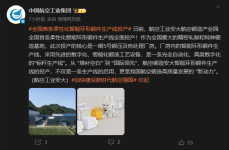
This is the news released by AVIC today.
1765195096839.png
China's first flexible and intelligent circular forging production line has been fully put into operation.
============================================================
This type of news may seem insignificant, but it will soon unleash astonishing power.

It is primarily used for the large-scale manufacturing of core structural components for aircraft, and the same production line can simultaneously manufacture core structural components with completely different specifications for various types of aircraft.
 
can u tell us how turkey did it
Education primarily, a more egalitarian approach to train young minds, rather than being reserved for the rich elites. Long experience in license production, not assembly, of fourth gen aircraft, and utilising the private sector. NASTP goes a little way to improve education, but even then it's probably reserved for elites. Pakistan has no experience of license production, the JF17 is only license assembly of parts from China. They could have produced unlicensed versions of the Mirage, like the Israelis did, but never had the capability or will. No experience in engine production at all, so any thoughts of producing a combat engine in Pakistan is just laughable.
 
Education primarily, a more egalitarian approach to train young minds, rather than being reserved for the rich elites. Long experience in license production, not assembly, of fourth gen aircraft, and utilising the private sector. NASTP goes a little way to improve education, but even then it's probably reserved for elites. Pakistan has no experience of license production, the JF17 is only license assembly of parts from China. They could have produced unlicensed versions of the Mirage, like the Israelis did, but never had the capability or will. No experience in engine production at all, so any thoughts of producing a combat engine in Pakistan is just laughable.

Not just that, they had a full F-16 production line for decades and were a major F-35 partner for a few years. That all helped a lot I imagine.
 
Education primarily, a more egalitarian approach to train young minds, rather than being reserved for the rich elites. Long experience in license production, not assembly, of fourth gen aircraft, and utilising the private sector. NASTP goes a little way to improve education, but even then it's probably reserved for elites. Pakistan has no experience of license production, the JF17 is only license assembly of parts from China. They could have produced unlicensed versions of the Mirage, like the Israelis did, but never had the capability or will. No experience in engine production at all, so any thoughts of producing a combat engine in Pakistan is just laughable.

Small drones, medium size, and then larger drones, then UCAVs all in Turkieye designed and built. They then built all the wind tunnels, and organisations like ASELSAN, Bayraktar etc to create a pool of engineers with "career roadmaps". They then built Hukus, Hurjet all Turkish before attempting Kaan.

https://www.dailysabah.com/gallery/...light-in-10-years/images?gallery_image=139624

They started small, built the people and buildings, gave them projects to work on and grow. Built an entire ECOSYSTEM of civilian engineers. None of this has happened in Pakistan.

Türkiye also has a fantastic university network, I have interviewed a few Turks in my time, they are very capable people.

These kind or projects are about people "first" and buildings second. Pakistan is not wired to invest in people. That is the problem.
 
Small drones, medium size, and then larger drones, then UCAVs all in Turkieye designed and built. They then built all the wind tunnels, and organisations like ASELSAN, Bayraktar etc to create a pool of engineers with "career roadmaps". They then built Hukus, Hurjet all Turkish before attempting Kaan.

https://www.dailysabah.com/gallery/...light-in-10-years/images?gallery_image=139624

They started small, built the people and buildings, gave them projects to work on and grow. Built an entire ECOSYSTEM of civilian engineers. None of this has happened in Pakistan.

Türkiye also has a fantastic university network, I have interviewed a few Turks in my time, they are very capable people.

These kind or projects are about people "first" and buildings second. Pakistan is not wired to invest in people. That is the problem.
You can't really compare an industrialised major economy like Turkey with Pakistan anyway, and quite frankly it's a miracle Pakistan has achieved what little it has. In my view, Pakistan should just focus on developing a production ecosystem first, primary license production, and then slowly develop an R&D base. There's no point for a country like Pakistan to redesign the wheel, and when it does, you end up with the failed project Azm. Defence planers should focus on a sanction free production base that continues during times of conflict.
 
They made it with the clay and baked it in the oven. You think he will have an answer for you.
And I suppose you have all the answers do you Mr Baja? You've come back calling yourself "think tank" lol talk about delusions of grandeur...the kind that ends up with failed project Azm.
 
You can't really compare an industrialised major economy like Turkey with Pakistan anyway, and quite frankly it's a miracle Pakistan has achieved what little it has. In my view, Pakistan should just focus on developing a production ecosystem first, primary license production, and then slowly develop an R&D base. There's no point for a country like Pakistan to redesign the wheel, and when it does, you end up with the failed project Azm. Defence planers should focus on a sanction free production base that continues during times of conflict.

This is exactly the vision behind PFX project. It has pretty decent timeline. Prototype: 2028 - 2029
Testing: 2029 - 2031
Limited production: 2031 - 2033
Serial production: 2033 - 2035

Is it achievable with current state of Pakistan defense industry? It’s pretty much possible since Turkey is willing to transfer technology to Pakistan for Manufacturing of Drone and also KAAN project. It’s possible that Pakistan might be able to accomplish is with the help of Turkey and China’s support. It will most likely designed with Chinese engine specifications. I am being overly optimistic but we don’t have many choices.
 
Last edited:
And I suppose you have all the answers do you Mr Baja? You've come back calling yourself "think tank" lol talk about delusions of grandeur...the kind that ends up with failed project Azm.

No sir. I am using Quantum Ai model to predict future and Ai is not always correct. 😂

We all have a right to dream. Mr. Jinnah dream of envisioned a democratic, modern, and inclusive Pakistan. You all know what it has become, Pakistan’s people face systemic exploitation by entrenched elites.
 
Last edited:
Because Pakistan seems to want to move up the value added chain, while seeking the Saudis fund it. They get done what they can, outsource what they can’t yet to Chinese expertise advising local engineers. The goal might be spin off products that can earn some revenue, as well as bring GCC countries into the Chinese ecosystem on the basis of a Pakistani platform. Pakistan as the middle man gets its defense industry funded and its inventories across all services stocked. If the Saudis are willing to fund the project, Pakistan should go for all the specs it deems necessary; performance as a fighter, as a UCAV command post, and as a launch platform for large and long range missiles from an internal weapons bay; just as the Turks would do if they got GCC funding. The Saudis get the first fully developed variants, and then once Saudi and Pakistani needs are meet, it’s a decent enough product for the export market, just like the JF-17 Block 3 is today.
Thing is, if we want to 'move up the value added chain' then we'd need to think outside of the final product, and more about the inputs that feed into it. For example, Canada will always be at the cusp of manufacturing a fighter indigenously (to around 75%+) because it wields most of the key industries, e.g., composites, aluminum, gas turbines, etc., and can tap into its industry to source the inputs. What it does not have is a design and development front for the aircraft itself as a lot of that expertise went to the US since sinking (literally) the Avro Arrow. But if you gave the Canadian industry the mandate to indigenize the Gripen, they can do it because the means to do it is all there. They just need the OEM (Saab) to take the lead in design.

The problem with the PAF approach is that it has always been design-focused, but literally zero was given to the industrial back-end. Moreover, most of our leaders have a poor understanding of what the industrial back-end really means, they mostly just think it's the assembly plant, but don't pay much attention to the supply chain feeding into it.

It's going to sound brutal, but even with all that we have put into the JF-17, we didn't move one inch past where we were with the Mirage III/5. In fact, we may be behind in some respects because, with the Mirage III/5 at least, we did have cadres at many, many points who knew the plane inside and out and could re-manufacture parts from scratch at home (which we did/do for the ATAR D-MRO and MRF). In fact, I'd argue that we were maybe just a step behind where the South Africans were who could manufacture new wings, tails, and front-fuselages for the M3/5 (to turn it into the Cheetah), and two steps behind the Israelis who could build an entirely new fighter from it.

The AHQ that conceived of the M3/M5 MRF and ATAR MRO facility had actually built a decent and workable groundwork to evolve from. I can argue that, perhaps, we actually moved backwards with the JF-17 because we didn't apply the lessons that we knew already from the Mirage to the Thunder.

I'll put it this way: We can keep the Mirage 3/5 going without the French, but we can't do the same for the JF-17 without the Chinese. That should really speak volumes of how far we've fallen.

Now, if the goal is to move up the value chain, then we need to focus less on the end product and more on the industries that feed into it.

Whether it's JF-17 or J-35, it's irrelevant; what now matters is, what % of Pakistani-sourced content can we feed into it, and can we increase it? To its credit, HIT actually understands this pretty well. I suspect someone there learned the lessons from the al-Khalid and ensured that Haider would run along more feasible lines. So, for example, instead of focusing on an original 'joint' design at the end of the chain, HIT picked up the VT4 as-is, and worked on local-sourcing where it could (e.g., gun barrel, electronics, and gradually other inputs). In a way, it's good news in that while PAC is faltering, we're seeing best practices emerge out of places we'd least expect, like HIT.

Unfortunately, we're lacking in so many critical and advanced industries, our ability to contribute to the J-35 is extremely limited. The JF-17 we can fare a bit better, I'm sure, but serious investment in those critical industries (aluminum, composites, and so on) is necessary first. This is why thinking at an even simpler level -- e.g., drones, cruise missiles, loitering munitions, etc -- is smarter because we can scale these out by the tens of thousands over the long-term and drive lots of private interest in supporting these outputs. Eventually, the private sector will grow large enough to start taking on more complex programs.
 
Thing is, if we want to 'move up the value added chain' then we'd need to think outside of the final product, and more about the inputs that feed into it. For example, Canada will always be at the cusp of manufacturing a fighter indigenously (to around 75%+) because it wields most of the key industries, e.g., composites, aluminum, gas turbines, etc., and can tap into its industry to source the inputs. What it does not have is a design and development front for the aircraft itself as a lot of that expertise went to the US since sinking (literally) the Avro Arrow. But if you gave the Canadian industry the mandate to indigenize the Gripen, they can do it because the means to do it is all there. They just need the OEM (Saab) to take the lead in design.

The problem with the PAF approach is that it has always been design-focused, but literally zero was given to the industrial back-end. Moreover, most of our leaders have a poor understanding of what the industrial back-end really means, they mostly just think it's the assembly plant, but don't pay much attention to the supply chain feeding into it.

It's going to sound brutal, but even with all that we have put into the JF-17, we didn't move one inch past where we were with the Mirage III/5. In fact, we may be behind in some respects because, with the Mirage III/5 at least, we did have cadres at many, many points who knew the plane inside and out and could re-manufacture parts from scratch at home (which we did/do for the ATAR D-MRO and MRF). In fact, I'd argue that we were maybe just a step behind where the South Africans were who could manufacture new wings, tails, and front-fuselages for the M3/5 (to turn it into the Cheetah), and two steps behind the Israelis who could build an entirely new fighter from it.

The AHQ that conceived of the M3/M5 MRF and ATAR MRO facility had actually built a decent and workable groundwork to evolve from. I can argue that, perhaps, we actually moved backwards with the JF-17 because we didn't apply the lessons that we knew already from the Mirage to the Thunder.

I'll put it this way: We can keep the Mirage 3/5 going without the French, but we can't do the same for the JF-17 without the Chinese. That should really speak volumes of how far we've fallen.

Now, if the goal is to move up the value chain, then we need to focus less on the end product and more on the industries that feed into it.

Whether it's JF-17 or J-35, it's irrelevant; what now matters is, what % of Pakistani-sourced content can we feed into it, and can we increase it? To its credit, HIT actually understands this pretty well. I suspect someone there learned the lessons from the al-Khalid and ensured that Haider would run along more feasible lines. So, for example, instead of focusing on an original 'joint' design at the end of the chain, HIT picked up the VT4 as-is, and worked on local-sourcing where it could (e.g., gun barrel, electronics, and gradually other inputs). In a way, it's good news in that while PAC is faltering, we're seeing best practices emerge out of places we'd least expect, like HIT.

Unfortunately, we're lacking in so many critical and advanced industries, our ability to contribute to the J-35 is extremely limited. The JF-17 we can fare a bit better, I'm sure, but serious investment in those critical industries (aluminum, composites, and so on) is necessary first. This is why thinking at an even simpler level -- e.g., drones, cruise missiles, loitering munitions, etc -- is smarter because we can scale these out by the tens of thousands over the long-term and drive lots of private interest in supporting these outputs. Eventually, the private sector will grow large enough to start taking on more complex programs.
Well summed up. The problem is there's no private industrial base to outsource production of components from raw materials, so it becomes prohibitively expensive for PAC to produce every single nut, bolt and everything else, that's why they could do limited production for some key components for the Mirages, but nothing like what the Israelis or South African could do. And let's not even start with engines, there's not a single private entity in Pakistan that has any expertise with license assembly of engines let alone production. Even the might of China's industrial base has struggled with developing contemporary jet engines with tech like single crystal blades.
 
Well summed up. The problem is there's no private industrial base to outsource production of components from raw materials, so it becomes prohibitively expensive for PAC to produce every single nut, bolt and everything else, that's why they could do limited production for some key components for the Mirages, but nothing like what the Israelis or South African could do. And let's not even start with engines, there's not a single private entity in Pakistan that has any expertise with license assembly of engines let alone production. Even the might of China's industrial base has struggled with developing contemporary jet engines with tech like single crystal blades.
Exactly, and this takes us back to my incessant complaining about the bad apples in our bureaucracy and our political class who've utterly destroyed the private sector in every way except for the importers, agri hoarders, dollar smugglers, and stock market "experts".

I will reckon here that Pakistan can produce the scientific and engineering expertise to build its own jet. I'm NOT saying it'd happen quick or at low cost or without a lot of hiccups. But, we CAN do it, and we CAN find a way to fill the gaps we have provided we have the WILL to commit and the WILLINGNESS to mobilize the nation, especially the private sector.

But when we're run by idiots who'd ask, "wHy SpEnD oN NuCleAr FuEl CyCle WeN wE gOt No RoaD and GoT nO StOcK mArKet?" then where are we expecting to see strong policymaking?
 
Well summed up. The problem is there's no private industrial base to outsource production of components from raw materials, so it becomes prohibitively expensive for PAC to produce every single nut, bolt and everything else, that's why they could do limited production for some key components for the Mirages, but nothing like what the Israelis or South African could do. And let's not even start with engines, there's not a single private entity in Pakistan that has any expertise with license assembly of engines let alone production. Even the might of China's industrial base has struggled with developing contemporary jet engines with tech like single crystal blades.

The Pakistan Army’s obsession with monopolizing defense production through state owned institutions has been a strategic blunder. Instead of nurturing private defense companies that could innovate and compete globally, the establishment crushed them under its boot, treating them with the same hostility it reserves for “rogue politicians.”

The result? State owned factories bloated with bureaucracy, starved of knowledge, and incapable of delivering major indigenous projects. AZM and many other projects failed due to lack of knowledge & innovation.
Tanks, aircraft, and ships remain dependent on foreign designs, while Pakistan’s private innovators were deliberately sidelined.

Compare to Turkey, this policy didn’t secure Pakistan, it crippled our defense industry, robbed the nation of economic opportunity, and left 240 million people dependent on imports for their security. The Army’s refusal to allow private firms to flourish is not just mismanagement; it is a betrayal of national potential.

Post 2000, Army is beginning to realize their blunders.
 

Users who are viewing this thread

Pakistan Defence Latest

Back
Top