Chinese Aircraft Carriers - Liaoning, Shandong, Fujian and the future

@Deino @Michael I have a question? the J35 naval version is purely designed for fujian EMALS CATOBAR? it can not be deployed on liaoning and shandong? is this correct or i am wrong here? i know the KJ-600 can only be launched from fujian. but i am not sure about J35?

As far as my very basic knowledge of aerodynamics the canards in J-15 is purely for the high lift and stability at low speeds especially on Liaoning and Shandong? Otherwise there wont be canards on Su-33 and J-15 as incase of Su-30MKK and J-16?
 
An update of the new aircraft carrier‘s Island structure at the test facility at Wuhan.

View attachment 164325

Here is report from China's EMALS manufacturer as they are taking order for both Type 004 and Type 005 AKA the next gen nuclear supercarrier twin-sister class.

So this mockup represents the island structure for both Type 004 and Type 005.

Dalian is already building the first ship known as the Type 004, and Jiangnan will be building the twin-sister ship known as the Type 005 a little later, perhaps starting in next year.

China's CVN is different from the Nimitz/Ford as the US CVN is all powered by nuclear reactors, and the diesel engines as backup as the nuclear reactors are overloaded and unable to supply other power.

The Chinese CVN is hybrid with the nuclear reactors to power the ship, and the EMALS being powered by the gas turbines.

d93eeb35755026db3f44fa8bb1a0c9b7.jpg
 
Last edited:
Here is report from China's EMALS manufacturer as they are taking order for both Type 004 and Type 005 AKA the next gen nuclear supercarrier twin-sister class.

So this mockup represents the island structure for both Type 004 and Type 005.

Dalian is already building the first ship known as the Type 004, and Jiangnan will be building the twin-sister ship known as the Type 005 a little later, perhaps in next year.

China's CVN is different from the Nimitz/Ford as the US CVN is all powered by nuclear reactors, and the diesel engines as backup as the nuclear reactors are overloaded and unable to supply other power.

The Chinese CVN is hybrid with the nuclear reactors to power the ship, and the EMALS being powered by the gas turbines.

View attachment 164358
if i understand correctly that means type 004 is also non nuclear? the first nuclear power is going to be type 005?
 
if i understand correctly that means type 004 is also non nuclear? the first nuclear power is going to be type 005?

Type 004/005 = ship being powered by nuclear reactors and EMALS being powered by gas turbines

Ford class = both ship and EMALS being powered by nuclear reactors
 
Type 004/005 = ship being powered by nuclear reactors and EMALS being powered by gas turbines

Ford class = both ship and EMALS being powered by nuclear reactors
Thank you for clarification. Apology in advance for my weak knowledge but does it matters the EMALS powered by nuclear reactors or gas turbines? or does this can have major impact where ford class will have edge?
 
Thank you for clarification. Apology in advance for my weak knowledge but does it matters the EMALS powered by nuclear reactors or gas turbines? or does this can have major impact where ford class will have edge?

The gas turbine can generate power more efficiently than the reactor in short term.

The nuclear reactors stand for endurance and nearly unlimited range, and the gas turbines stand for explosive power for sprint.

China has integrated both advantage from nuclear reactors and gas turbines into one.

Fujian is the original supercarrier who first starts this footprint, and its successors like Type 004 and Type 005 will improve on its footprint.

The USN also got this concept of nuclear-gas turbine hybrid supercarrier, you can reach CVN-LX.

However, they didn't go after this technology tree as they had overconfidence for their A1B nuclear reactor.
 
Here is report from China's EMALS manufacturer as they are taking order for both Type 004 and Type 005 AKA the next gen nuclear supercarrier twin-sister class.

So this mockup represents the island structure for both Type 004 and Type 005.

Dalian is already building the first ship known as the Type 004, and Jiangnan will be building the twin-sister ship known as the Type 005 a little later, perhaps starting in next year.

China's CVN is different from the Nimitz/Ford as the US CVN is all powered by nuclear reactors, and the diesel engines as backup as the nuclear reactors are overloaded and unable to supply other power.

The Chinese CVN is hybrid with the nuclear reactors to power the ship, and the EMALS being powered by the gas turbines.

View attachment 164361


I know we have Not always the Same opinion, but thanks a Lot for this info … so are 004 & 005 de facto sister vessels of the same clsss or will they be different?
 
I know we have Not always the Same opinion, but thanks a Lot for this info … so are 004 & 005 de facto sister vessels of the same clsss or will they be different?

They are both labeled as next-gen nuclear supercarrier, and are taking the same batch of EMALS equipment manufactured by the same supplier.

I assume the construction date between Type 004 and Type 005 is very close, and the two ships are indeed identical. And the chance that they are twin-sister ship are nearly 100%.

This Wuhan mockup stands for the next-gen supercarrier, not just a modified Type 003.
 
@Deino @Michael I have a question? the J35 naval version is purely designed for fujian EMALS CATOBAR? it can not be deployed on liaoning and shandong? is this correct or i am wrong here? i know the KJ-600 can only be launched from fujian. but i am not sure about J35?

As far as my very basic knowledge of aerodynamics the canards in J-15 is purely for the high lift and stability at low speeds especially on Liaoning and Shandong? Otherwise there wont be canards on Su-33 and J-15 as incase of Su-30MKK and J-16?
ofc they can all operate on liaoning and shandong, comfirmed on state tv, just waiting for the J-35 production to ramp up.
 
They are both labeled as next-gen nuclear supercarrier, and are taking the same batch of EMALS equipment manufactured by the same supplier.

I assume the construction date between Type 004 and Type 005 is very close, and the two ships are indeed identical. And the chance that they are twin-sister ship are nearly 100%.

This Wuhan mockup stands for the next-gen supercarrier, not just a modified Type 003.


Ok so 004 is a CVN

But if 005 from JNCX is a sister ship to 003 then it would not be the same as 004?

003 conventional EMALS
004 CVN + hybrid EMALS
005 conventional EMALS

Unless you are saying 003 is a single class carrier which would not be in line with traditional and historical warship production from China ?
 
Ok so 004 is a CVN

But if 005 from JNCX is a sister ship to 003 then it would not be the same as 004?

003 conventional EMALS
004 CVN + hybrid EMALS
005 conventional EMALS

Unless you are saying 003 is a single class carrier which would not be in line with traditional and historical warship production from China ?

The Type 003 is actually the first prototype of the Chinese CVN-LX, and the Chinese government has fooled so many military fans by pretending it is simply a conventional carrier that carries the EMALS.

Yes, Fujian’s EMALS is indeed powered by conventional power by gas turbines, but its ship propulsion has never mentioned the boilers.

There is plenty of proof that the Type 003 has nuclear propulsion.

The Type 005 is going to be built JNCX, and it is going to be a 120-130K tonnes twin-sister ship to Dalian‘s Type 004.

JNCX has acquired the nuclear lisence before Dalian, and they are preparing to build the world‘s first container ship that is powered by the molten salt reactor, so it doesn‘t make sense that they are focusing to build conventional powered carriers.
 
The Type 003 is actually the first prototype of the Chinese CVN-LX, and the Chinese government has fooled so many military fans by pretending it is simply a conventional carrier that carries the EMALS.

Yes, Fujian’s EMALS is indeed powered by conventional power by gas turbines, but its ship propulsion has never mentioned the boilers.

There is plenty of proof that the Type 003 has nuclear propulsion.

The Type 005 is going to be built JNCX, and it is going to be a 120-130K tonnes twin-sister ship to Dalian‘s Type 004.

JNCX has acquired the nuclear lisence before Dalian, and they are preparing to build the world‘s first container ship that is powered by the molten salt reactor, so it doesn‘t make sense that they are focusing to build conventional powered carriers.
Sounds like a tall claim without presenting any evidence, though.
 
ACs are sitting ducks in an era of hypersonic and supersonic anti-ship cruise missiles
 
Sounds like a tall claim without presenting any evidence, though.

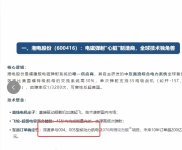
6-7 months prior the sea trial of Fujian, JNCX has ordered the primary circuit cleaning device.

YHL(一回路)清洗装置 is the primary circuit cleaning device.


Only the nuclear powered ship would require this device before the sea trial, and JNCX has only started to build the nuclear icebreaker this year, and will build the TEU24000 later.

So this primary circuit cleaning device was only meant for Fujian.

The Type 004/005 twin-sister ships will be the upgraded version of Fujian.
 
Here is the AI answer why a nuclear powered ship needs the primary circuit cleaning device before the sea trial:

Yes, a nuclear-powered supercarrier's primary circuit undergoes extensive cleaning and flushing processes during the construction and testing phases, before the sea trials, as part of the overall pre-operational readiness testing. These processes ensure the system is free of impurities before the reactor goes critical and begins full operation.

Pre-Operational Cleaning
  • Initial Flushing and Chemical Cleaning: Before fuel is loaded and the reactor starts up, the primary coolant system (and other associated water systems) is flushed with pure water and often subjected to chemical cleaning agents to remove manufacturing debris, rust, scale, and other contaminants.
  • Corrosion Protection: The system surfaces are typically treated to form a protective oxide layer (passivation) to minimize future corrosion, which helps keep the coolant clean during operation.
  • Quality Standards: All components and processes must meet the highest quality assurance standards to ensure the integrity of the reactor coolant pressure boundary and overall safety.

In-Operation Purification Systems
Once operational, the supercarrier's reactor plant is equipped with permanently installed Reactor Coolant Cleanup Systems (also known as the Chemical and Volume Control System, or CVCS, in Pressurized Water Reactors like those used in the Navy).
These systems constantly "polish" the reactor coolant during normal power generation to:
  • Remove soluble and insoluble impurities using ion exchange resins and filters.
  • Control the chemistry of the water (e.g., lithium and boron control).
  • Reduce the buildup of activated corrosion products.
Therefore, the system is clean before sea trials, and built-in systems manage water purity during operation and maintenance. The "cleaning device" is an integral part of the ship's permanent systems, used during the pre-trial phase and for the entire life of the reactor.
 

Users who are viewing this thread

Country Watch Latest

Latest Posts

Back
Top