PAF J-10CE News, Updates and Discussion

Status
Not open for further replies.
On PAF's lack of modern SOW:
It is reality and what we saw in May 2025 conflict was the outcome of PAF's historic blunder of turning itself into a completely defensive force with focus on "Defending" the skies only and not preparing for "Punishing Back" the enemy.
I have been saying it since ages that fundamental flaw in PAF's strategic mindset that led to this situation is it being a purely defense oritened force. Look at its fighter fleet in terms of weapon carrying capacities and ranges and then compare it to IAF's 10-Squadron strong fleet of SU-30MKI where each can carry nearly 8 tons of ordinance. Its bigger size allows it to carry weapons like Brahmos for which PAF has very little to no defense. (as we saw in May 2025 conflict). PAF has always told us because Pakistan does not has geopolitical ambitions hence it is contended with its light Multirole fighters like F-16s and JF-17s. No real strike platform. ROSE project itself was a desperate attempt to have some kind of SOW capability after pressler amendments. First time PAF suffered from lack of this capability was Kargil and that was in 1999. Now why do I say it is flawed mindset. Apart from IAF's strength in A2G capabilities, we will also have to take into account the geographical strength of India. It has massive land mass and in Indian Ocean it has even bigger space to manuvear and lure Pakistani single engine light to medium weight multirole fighters deep into its territory in a Kill-Box of S-400 and other advanced long range SAMs. In absense of a true long range, heavy weight bomber fighter (J-16 type), PAF will never be able to neutralize deep embedded IACCS nodes, SAM sites, IAF bases, C2 nodes etc. Leave all those aside, PAF will not even be able to neutralize all those massive ammuniton dumps and Earth Covered Magazines (ECMs) there. Look at this image, this facility is just one of dozens more like this...
View attachment 166432
How much aerial firepower required to deal with all those ECMs in this single ammunition dump near Ambala? PAF always required heavy bombers with powerful long range A2G weapons (ideally with Penetrator warheads). Look at Israel. A tiny state and still operating more than 160 F-15s. Why? Because it is not about the size of Israel but the size of its adversaries. All Arab nations. How Pakistan's situation is different? We are also upagainst an adversary that has massive land advantage. Only way to overcome this is to have something that can provide both range and firepower. Lastly, for those who still have doubts, think why China is developing H-20 despite having various types of Flankers, J-20, and J-10Cs. It's never about your size or ambitions ... it is always about the capability of your adversary which must dictate your war prepardness.

Thanks for reading.
Pakistan cannot and should not try to destroy heavily fortified Indian airbases. It won't do any meaningful damage and Indians can just hide it like in May. We need to do actual damage to their economy where damage can be measured in terms of tens of millions of dollars. Hit and shut down their economic zones, that will cause substantial damage every day the businesses remain shut.
 
Yes that is what I was eluding to but it became (is becoming) an end in itself. As soon after achieving it we start talking about off ramps and strategic restraints.
Because you have Ferraris, BMWs and Toyotas but can only afford two tanks of fuel for most of them.
Best analogy I can givr
 
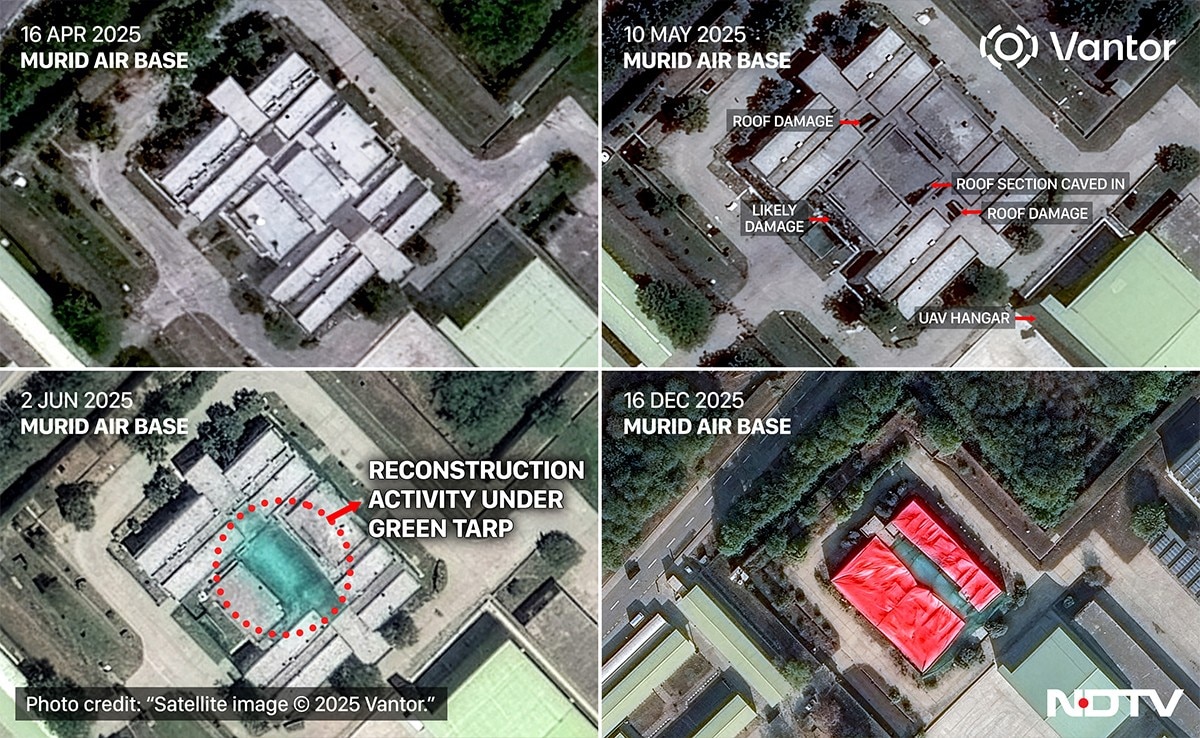
Murid C2 wasn't destroyed even after a direct hit. Without bunker busters, underground structures can't be taken out with a single hit.
Underplaying is a genuine concern but so is way overestimating any threat.

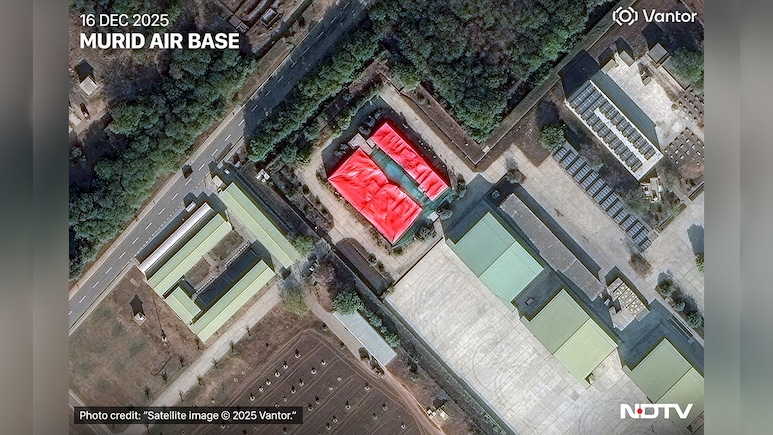
Have you seen the latest satellite pics of Murid C2 covered with large red tarpaulin?

We will never know how much damage Muridke underground structure took. But indians wont stop at single hit next time. It would be multiple and they'll make sure to take out the base. Once again you are underplaying the threat. Pakistan doesn't have credible defence against Brahmos.

They have recently tested 800 KM Brahmos and a new factory in Hyderabad to produce 100-150 missiles every year. They don't need to bring brahmos close to border to fire, they have depth to target Pakistan bases from delhi even. Shoot and scoot just like our Fatah-1 and 2.
 
Have you seen the latest satellite pics of Murid C2 covered with large red tarpaulin?

We will never know how much damage Muridke underground structure took. But indians wont stop at single hit next time. It would be multiple and they'll make sure to take out the base. Once again you are underplaying the threat. Pakistan doesn't have credible defence against Brahmos.

They have recently tested 800 KM Brahmos and a new factory in Hyderabad to produce 100-150 missiles every year. They don't need to bring brahmos close to border to fire, they have depth to target Pakistan bases from delhi even. Shoot and scoot just like our Fatah-1 and 2.
No, I have not seen any satellite pics but I have seen the damage. So I will stick with my previous opinion.
And Indians can't achieve multiple hits at same target for reasons already mentioned earlier.
We will see about 800km NG when it enters service, though we already have 750 km Fateh-IV which is stealthier and won't be intercepted at same rate like we did with Brahmos.
 
It was a case of hit on a particular location and mass of missile carrying debris through. I saw a pic from someone who was a 100m off.
Wait so the hangar wasn't a direct hit?
 
A very long post with some inferences which are quite strange for me... what did IAF achieve with Brahmos and SCALP hits? Apart from optics of those satellite pictures, nothing was gained. Whereas PAF achieved all the required targets in surface attack role.
Su-30 MKI is a liability against modern AESA equipped smaller aircraft with long range BVRs like PL-15.
Now this is puerly a subjective approch. We lost men and aircraft both in Bohlari(partially or fully is still debateable). We don't know what exactly happened in Jaccobabad and Nur Khan, Murid, and to those radars. So, trying to brush these losses (Potential or actual) under the rug is not going to serve our national security interests any good.
I would love to see any sort of proof of any tangible Pakistani counter strike. So far all we have heard are claims. For a common man it may be believeable to listen to Waseem Badami on ARY News telling us this air base of India destroyed and that Indian air field nullified in just few minutes but for people like us it is only natural to raise question in the absence of those satellite pictures from our side especially when we know how big an average airbase usually is on Indian side and how much firepower required to actually "destroy" them. You yourself explained in one of your posts that IAF will have to put a lot more effort to completely negate operations from Sargodha. So, It is only natural to ask how PAF is going to achieve the same with smaller fleet size and smaller platform with smaller range +yield weapons? This naturally lead us to next question; what sort of systems we need to achieve that!
Even if I concede that India couldn't achieve anything at all (remember even in 65/71 India was not able to hit this many PAF installations) there is no way to ensure that next time IAF will made same mistakes. Flankers are formiddible platform and so is Rafale, IAF's poor planning caused them so many aircraft on 7th ... but see, the same MKI launched many successful hits against same PAF without any loss on 9th and 10th. Because they changed the tactics after realizing the mistake.
Finally, you are an IR scholar, so a word of caution, when we discuss PAF vs. IAF, we must understand, it is actually far bigger and complex equation with many powerful players directly and indirectly involved.
 
No, I have not seen any satellite pics but I have seen the damage. So I will stick with my previous opinion.
And Indians can't achieve multiple hits at same target for reasons already mentioned earlier.
We will see about 800km NG when it enters service, though we already have 750 km Fateh-IV which is stealthier and won't be intercepted at same rate like we did with Brahmos.
We don't have the systems necessary for a 90%+ interception rate against a high-intensity BrahMos strike.

Our IADS was never architected to take on waves of cruise missiles, be they subsonic or supersonic. It was designed for a threat model that assumed the main threat would be IAF fighter aircraft approaching the border (and it was successful in that role), but proved ineffective against a relatively low-intensity Indian cruise-missile strike salvo.

Why do I say that? Because X number of Indian missiles ultimately got through and began hitting our bases. Even if those missiles didn't really damage us within a super-limited 3-4 day exchange, what about when India amps up the intensity by 2-3X? What if their rocket-based SSMs or subsonic LACMs are also brought into the picture?

The fact that our IADS wasn't built for the kind of war India now wants to fight isn't the PAF or PA's fault. This style of warfare became apparent in 2023-2024 during the Russia-Ukraine War, and the lessons that would inform solutions to high-intensity cruise missile strikes didn't kick in until around 2024-2025. Pakistan got a taste of what's to come.

That's why the PAF and PA need to densify the short and medium-range SAM layers, ideally with a modern SAM platform using thrust-vectoring nozzles and active/standalone seekers (IIR or ARH).

In fact, short- and medium-range SAMs with ToT, as well as high-rate and distributed production within Pakistan, must be the priority. And, second to SAMs, the next priority should be a strike-capable fighter.
 
To view this content we will need your consent to set third party cookies.
For more detailed information, see our cookies page.

These Bharati Bastor-el Bastor wants to fix the BD Muslims! They killed one leader, and their billions of $s of investment went down the drain within a couple of days......
 
No, I have not seen any satellite pics but I have seen the damage. So I will stick with my previous opinion.
And Indians can't achieve multiple hits at same target for reasons already mentioned earlier.
We will see about 800km NG when it enters service, though we already have 750 km Fateh-IV which is stealthier and won't be intercepted at same rate like we did with Brahmos.

tiskvqms_murid-new_625x300_18_December_25.jpg


d2gf9ngk_murid-collage-satellite_625x300_18_December_25.jpg


I have to disagree with your opinion. Indians has a better satellite coverage of our military assets than Pakistan has of India. India demonstrated the pinpoint strike capability in May skrimish based on the satellite data. In the next round, what is stopping them from sending a barrage of Land based and Air based Brahmos from the get go? We talking about the stand off ranges of 300-400 KM. Well out of PAF BVR range.

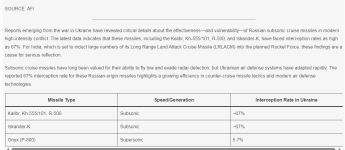
Fatah-IV is subsonic. Indians air-defence are much more layered and advance than ours. Let's take an example from Ukraine war and the interception rate of slow moving cruise missiles.

1766434795127.png
 
Last edited:
We don't have the systems necessary for a 90%+ interception rate against a high-intensity BrahMos strike.

Our IADS was never architected to take on waves of cruise missiles, be they subsonic or supersonic. It was designed for a threat model that assumed the main threat would be IAF fighter aircraft approaching the border (and it was successful in that role), but proved ineffective against a relatively low-intensity Indian cruise-missile strike salvo.

Why do I say that? Because X number of Indian missiles ultimately got through and began hitting our bases. Even if those missiles didn't really damage us within a super-limited 3-4 day exchange, what about when India amps up the intensity by 2-3X? What if their rocket-based SSMs or subsonic LACMs are also brought into the picture?

The fact that our IADS wasn't built for the kind of war India now wants to fight isn't the PAF or PA's fault. This style of warfare became apparent in 2023-2024 during the Russia-Ukraine War, and the lessons that would inform solutions to high-intensity cruise missile strikes didn't kick in until around 2024-2025. Pakistan got a taste of what's to come.

That's why the PAF and PA need to densify the short and medium-range SAM layers, ideally with a modern SAM platform using thrust-vectoring nozzles and active/standalone seekers (IIR or ARH).

In fact, short- and medium-range SAMs with ToT, as well as high-rate and distributed production within Pakistan, must be the priority. And, second to SAMs, the next priority should be a strike-capable fighter.
SHORADS are already being acquired. Also, with 40 Su-30, this is the best they can do. By the time they will amp up their capability, our defenses will be ready.
I am still unable to understand how are we reducing all these on basis of those hits. Even with beefed up layered IADS, there will be hits. Israel has one of the best AD network and yet we saw Iran engaged many targets.
 
There is a common misconception about the number of missiles vs launch platforms which Indians use and fear mongers on this side use.

Having the ability to manufacture a hundred or more Brahmos per year and having 1000 Brahmos (of all sub types and shelf time) doesn’t mean 1000 are ready to launch.

In reality it depends on the number of TELs(of which they have ~150 because they need to hide them in bunkers or hidden sheds) , MKIs which are wired to carry Brahmos(no more than 2 squadrons worth at MAX) and the rest are for their ships(which are the greater Brahmos threat).
This also applies to us as well. The limiting factor for the new rocket force will be how many offensive missiles it can actually deploy and use. We could be producing 1,000 Fatah 2 and Fatah 4 each month for all that it matters, but if we have just a few dozen TELs (which probably isn't too far off the truth maybe) then it doesn't really matter how many missiles we have, the rest will be stored, susceptible to being targeted, and then turnaround time and reloading logistics will be critical. The Fatah series is our first real attempt at producing a conventional strike capability, whereas previously our land based strike weapons were primarily intended for nukes and deterrence, and therefore produced in limited numbers. I would be very keen to see how many TELs we actually produce and deploy, not how many missiles.
 
@HemlockKhalid/AeronautIR

It wasn't just runaway craters. PAF Muridke C&C building destroyed with pinpoint accuracy. and an underground munition store was hit with a precise bunker buster french missile. PAF Bholari was hit with precise Brahmos strike which caused the deaths of 8 PAF personnel and a possible SAAB Damage. Nur Khan Base was precisely hit and 2 non-functional truck which were used to host mobile C&C was destroyed and a building with it and also C-130 damaged which was parked nearby. PAF Jacobabad hangar was precisely targeted. Sukkur airbase hangar precisely targeted. Rahim yar Khan airport destroyed.

Even if 20% brahmos goes through is enough to damage the PAF bases considerably and affect the operations to large extent. We are making the same mistake indians makes, underplay their long range sticks. They have plenty and can cause considerable damages with pinpoint accuracy.

What we have? Strategic restraint and huge talk of "hidden surprises".
PAF lacked point defence capabilities as in a kinetic kill. Was relying too much on Spoofing and jamming at the last stages , when the missile is about to reach the airbases.
But none of the Indian strikes were accurate or pin point. Nur Khan air base attack with Storm shadows. One hit near the perimeter fence and another hit a road outside. Another storm shadow was found intact in the fields. That was no technical error?
That was due to PAF Jamming and spoofing that the missiles lost their way.
As far as Brahmos were concerned, the Indians fired just too many of those, and many were still found among the crops in open fields.
The few which hit the target , were the Sargodha air base Run way and the Shahbaz air base hanger. Shahbaz air base was a Brahmos strike and it skimmed a portion of the roof,, judging by the debri field.

On the other hand Pakistani Fateh Missiles did pretty well. Only after the Fateh strikes, did Indi ask USA to intervene and stop the war.
 
SHORADS are already being acquired. Also, with 40 Su-30, this is the best they can do. By the time they will amp up their capability, our defenses will be ready.
I am still unable to understand how are we reducing all these on basis of those hits. Even with beefed up layered IADS, there will be hits. Israel has one of the best AD network and yet we saw Iran engaged many targets.
Yes, india went full capacity against Pakistan on that day. If anyone thinks India held back, they are wrong.
Likewise the destruction of Brahmos storage facility , stopped India from Lunching another attack until the Brahmos numbers are replenished.
 
Yes, we did it for PL-15 integration too.

So we can now fully integrate any weapon of choice onto the JF17 completely independently?

And the Azerbaijani jf17s also has additional Turkish sensors and radar installed and was that work completed independently by Pakistan also?
 
Status
Not open for further replies.

Users who are viewing this thread

Back
Top