Chinese 6th Generation Aircraft News & Discussions

This ain't the age of designing planes on paper and testing planes with models. This is the computer age. Get with the times man.
so if this computer age, and no need for testing them in real life so why SAC and CAC are testing their prototypes in real life, Please explain also this joker
 
This ain't the age of designing planes on paper and testing planes with models. This is the computer age. Get with the times man.


And you get some sense and stop this BS! You still need to test certain systems and as good as AI might be in certain domains, it cannot replace proper testing and evaluations.
 

China could enable stealth jets turn enemy radar beams into power with its 6G smart surface​

The surface eliminates the need for traditional batteries by harvesting power directly from radar or environmental signals.

ByAman Tripathi
MilitaryDec 29, 2025 01:28 AM EST

image

The technology makes 'electromagnetic cooperative stealth' possible. (Representational image)Mike Yeo/X

Researchers in China have reportedly developed a smart electromagnetic surface capable of converting ambient electromagnetic waves into electrical power.

This development represents an integration of electromagnetic engineering and communication principles.

“In the case studies, by jointly optimizing parameters such as transceiver beamforming, robot trajectories, and RIS coefficients, solutions based on multi-agent deep reinforcement learning and multi-objective optimization are proposed to solve problems such as beamforming design, path planning, target sensing, and data aggregation,” said the researchers in a new paper.

The innovation focuses on a self-sustaining electronic system that combines wireless information transfer with energy harvesting, potentially altering the current methods used in electronic warfare and wireless networking.

“Ultimately, it is expected to have a broad impact on 6G communications, the Internet of Things, intelligent stealth and other related fields,” added the researchers.

Utilizing two-dimensional reflecting material​

The technology utilizes a reconfigurable intelligent surface (RIS), which is a two-dimensional reflecting material designed to manipulate electromagnetic waves in real-time.

By drawing power from radar or other environmental signals, the surface operates without the need for traditional batteries.

“A reconfigurable intelligent surface (RIS)-aided IoRT (Internet of Robotic Things) network is proposed to enhance the overall performance of robotic communication, sensing, computation, and energy harvesting,” noted the research paper.
In practical applications involving stealth aircraft, this allows for the harvesting of enemy radar beams to power onboard propulsion or communication systems, reported SCMP.

This capability supports a concept known as electromagnetic cooperative stealth, where multiple networked platforms work in coordination to reduce their overall radar cross-section and visibility to sensors.

Beyond military use, the surface is designed to support 6G telecommunications through integrated sensing and powering for satellites or base stations.

Integrating data transmission and radar-like functionality​

The hardware platform integrates data transmission and radar-like functionality to optimize the use of spectrum and hardware resources.

Current prototypes demonstrate the ability to perform beam steering up to ±45° with low side lobes, which improves signal coverage in scenarios where a direct line-of-sight is obstructed by physical barriers.
The researchers describe this RIS architecture as a low-cost and highly programmable solution for future wireless networks.

By jointly manipulating scattered electromagnetic waves and actively radiated signals, the system reduces the physical space and hardware costs typically required for such multifunctionality.

The surface can be configured to create intentional radio dead zones, a feature that helps mitigate signal interference and reduces the risk of electronic eavesdropping.

The team suggests that this architecture will eventually enable environment-adaptive integrated sensing systems, micro base stations, and self-powered relay systems.

Impact on connected systems​

As next-generation wireless communications increasingly focus on the transmission channel, the ability to include sensing, communication, and power harvesting into a single hardware platform is expected to impact fields ranging from the Internet of Things to intelligent stealth.

“As the technology continues to mature, it is envisioned that RISs may play a pivotal role in enabling more sophisticated, efficient, and reliable robotic operations, opening a new era of advancements in intelligent and connected systems,” concluded the paper.

 
I don't think the skin is there to convert weak EM forces into anything useful. The emission as a total may be great but the magnitude that lands on the skin is miniscule.

The above article is ridiculous.

Yes these newer Chinese metamaterial for 6th gen fighters is virtually science fiction compared to previous generation skins which focus on defeating RF. It's remarkable what metamaterials allow you to incorporate. Yes it's possible to create a surface skin that converts radar energy into electrical energy but it's so easily debunked as something useless once you consider how little radar energy hits an aircraft's skin, especially at long ranges. What I think the J-36 skin would do is act as a emitter and 360 passive sensor, allowing the J-36 to pinpoint where RF energy is originating from and giving it perhaps another piece of information.
 

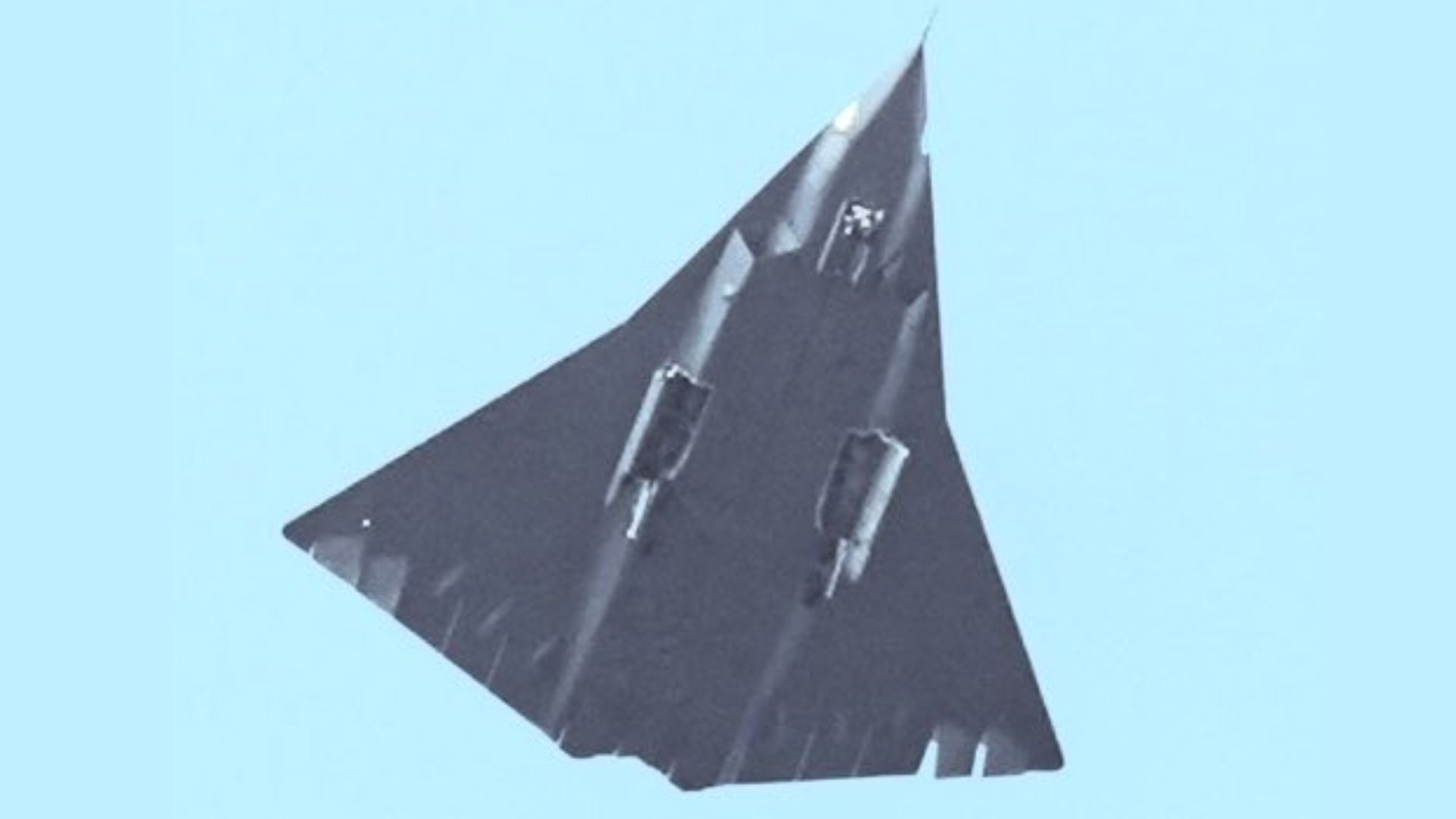
China tests 3rd prototype of J-36 and advances in next-generation fighter-bomber​

Dec 30, 2025


China tests 3rd J-36 prototype and advances next-generation fighter-bomber (X @RupprechtDeino)

China tests 3rd J-36 prototype and advances next-generation fighter-bomber (X @RupprechtDeino)

Images released on December 25 show the jet flying alongside a J-10C fighter, used as an escort aircraft, indicating it was a test flight. The new prototype appeared about a year after the first and a few months after the second, pointing to an accelerated development pace.

Analysts note that the three known J-36 prototypes show visible differences between them, especially in elements such as air intakes, engine exhausts, landing gear, and other structural details. These variations suggest that the Chinese aviation industry is testing multiple technical solutions in parallel before finalizing the aircraft configuration. The third prototype, for example, does not feature a flight data probe on the nose, present on previous models, although this does not necessarily indicate proximity to serial production.

Developed by Chengdu Aircraft Corporation, the J-36 is often described as a heavy, three-engine aircraft associated with sixth-generation combat concepts, although this classification is still debated. Experts indicate that the project can perform both long-range strike missions, employing advanced air-to-air and air-to-surface missiles, and strategic actions against land and maritime targets, prioritizing low observability and internal weapons carriage.

The expectation is that the J-36 will replace the aging fleet of JH-7 fighter-bombers in the People’s Liberation Army Air Force, in service since the 1990s. Comparisons have also been made to the Russian Su-34, due to the focus on deep strike missions under the protection of air defenses and escort fighters.

Although Beijing has not released official performance data, the successive appearance of flying prototypes demonstrates the Chinese effort to expand its long-range strike capability and showcase technological advances in the military aerospace sector.

To view this content we will need your consent to set third party cookies.
For more detailed information, see our cookies page.


According to some credible account, the PLAAF is going to be receiving the jet for testing and feedback this year.

 

China could enable stealth jets turn enemy radar beams into power with its 6G smart surface​

The surface eliminates the need for traditional batteries by harvesting power directly from radar or environmental signals.

ByAman Tripathi
MilitaryDec 29, 2025 01:28 AM EST

image

The technology makes 'electromagnetic cooperative stealth' possible. (Representational image)Mike Yeo/X

Researchers in China have reportedly developed a smart electromagnetic surface capable of converting ambient electromagnetic waves into electrical power.

This development represents an integration of electromagnetic engineering and communication principles.

“In the case studies, by jointly optimizing parameters such as transceiver beamforming, robot trajectories, and RIS coefficients, solutions based on multi-agent deep reinforcement learning and multi-objective optimization are proposed to solve problems such as beamforming design, path planning, target sensing, and data aggregation,” said the researchers in a new paper.

The innovation focuses on a self-sustaining electronic system that combines wireless information transfer with energy harvesting, potentially altering the current methods used in electronic warfare and wireless networking.

“Ultimately, it is expected to have a broad impact on 6G communications, the Internet of Things, intelligent stealth and other related fields,” added the researchers.

Utilizing two-dimensional reflecting material​

The technology utilizes a reconfigurable intelligent surface (RIS), which is a two-dimensional reflecting material designed to manipulate electromagnetic waves in real-time.

By drawing power from radar or other environmental signals, the surface operates without the need for traditional batteries.

“A reconfigurable intelligent surface (RIS)-aided IoRT (Internet of Robotic Things) network is proposed to enhance the overall performance of robotic communication, sensing, computation, and energy harvesting,” noted the research paper.
In practical applications involving stealth aircraft, this allows for the harvesting of enemy radar beams to power onboard propulsion or communication systems, reported SCMP.

This capability supports a concept known as electromagnetic cooperative stealth, where multiple networked platforms work in coordination to reduce their overall radar cross-section and visibility to sensors.

Beyond military use, the surface is designed to support 6G telecommunications through integrated sensing and powering for satellites or base stations.

Integrating data transmission and radar-like functionality​

The hardware platform integrates data transmission and radar-like functionality to optimize the use of spectrum and hardware resources.

Current prototypes demonstrate the ability to perform beam steering up to ±45° with low side lobes, which improves signal coverage in scenarios where a direct line-of-sight is obstructed by physical barriers.
The researchers describe this RIS architecture as a low-cost and highly programmable solution for future wireless networks.

By jointly manipulating scattered electromagnetic waves and actively radiated signals, the system reduces the physical space and hardware costs typically required for such multifunctionality.

The surface can be configured to create intentional radio dead zones, a feature that helps mitigate signal interference and reduces the risk of electronic eavesdropping.

The team suggests that this architecture will eventually enable environment-adaptive integrated sensing systems, micro base stations, and self-powered relay systems.

Impact on connected systems​

As next-generation wireless communications increasingly focus on the transmission channel, the ability to include sensing, communication, and power harvesting into a single hardware platform is expected to impact fields ranging from the Internet of Things to intelligent stealth.

“As the technology continues to mature, it is envisioned that RISs may play a pivotal role in enabling more sophisticated, efficient, and reliable robotic operations, opening a new era of advancements in intelligent and connected systems,” concluded the paper.

I don't think the skin is there to convert weak EM forces into anything useful. The emission as a total may be great but the magnitude that lands on the skin is miniscule.

The above article is ridiculous.

Yes these newer Chinese metamaterial for 6th gen fighters is virtually science fiction compared to previous generation skins which focus on defeating RF. It's remarkable what metamaterials allow you to incorporate. Yes it's possible to create a surface skin that converts radar energy into electrical energy but it's so easily debunked as something useless once you consider how little radar energy hits an aircraft's skin, especially at long ranges. What I think the J-36 skin would do is act as a emitter and 360 passive sensor, allowing the J-36 to pinpoint where RF energy is originating from and giving it perhaps another piece of information.
https://pmc.ncbi.nlm.nih.gov/articles/PMC12737270/
https://www.microsoft.com/en-us/research/project/energy-harvesting-and-wireless-power-transfer/
 
According to some credible account, the PLAAF is going to be receiving the jet for testing and feedback this year.
I saw the original blog post.

He hinted that a "四世同堂(four-generation family)" might emerge next year (2026).
1767329161849.png
=============================================================

IMO.

This is a possible scenario.

The PLAAF still has J-7 fighter jets (3rd-Gen) in service.

In 2026, the J-36 may be handed over to the PLAAF for initial military testing. According to regulations, if military research institutions become deeply involved in the project, this can also be considered as the J-36 entering military service.

One point to note:
Military industrial enterprises may utilize certain facilities and venues of military research institutions, and even borrow military personnel (such as the PLAAF test pilot team) when developing weapons and equipment. This is different from the deep involvement of military research institutions. This practice is not considered the commissioning of weapons and equipment into service.

The core difference lies in "who is leading the work?"
 
Last edited:

Users who are viewing this thread

Back
Top