NGAD IS THE BEST
Elite Member


please explain how?No it does not take years.
Follow along with the video below to see how to install our site as a web app on your home screen.
Note: This feature may not be available in some browsers.
please explain how?No it does not take years.

please explain how?
so if this computer age, and no need for testing them in real life so why SAC and CAC are testing their prototypes in real life, Please explain also this jokerThis ain't the age of designing planes on paper and testing planes with models. This is the computer age. Get with the times man.
Sorry, my mistake. Wenyao actually refers to a different CAC UAV that made its maiden flight in 2025Official? May I ask for a source?

Sorry, my mistake. Wenyao actually refers to a different CAC UAV that made its maiden flight in 2025
so if this computer age, and no need for testing them in real life so why SAC and CAC are testing their prototypes in real life, Please explain also this joker
This ain't the age of designing planes on paper and testing planes with models. This is the computer age. Get with the times man.
lol ,there is no short cut in aviation kidThese days real life flight testing is the final stage of testing.


 interestingengineering.com


China could enable stealth jets turn enemy radar beams into power with its 6G smart surface
The surface eliminates the need for traditional batteries by harvesting power directly from radar or environmental signals.
ByAman Tripathi
MilitaryDec 29, 2025 01:28 AM EST
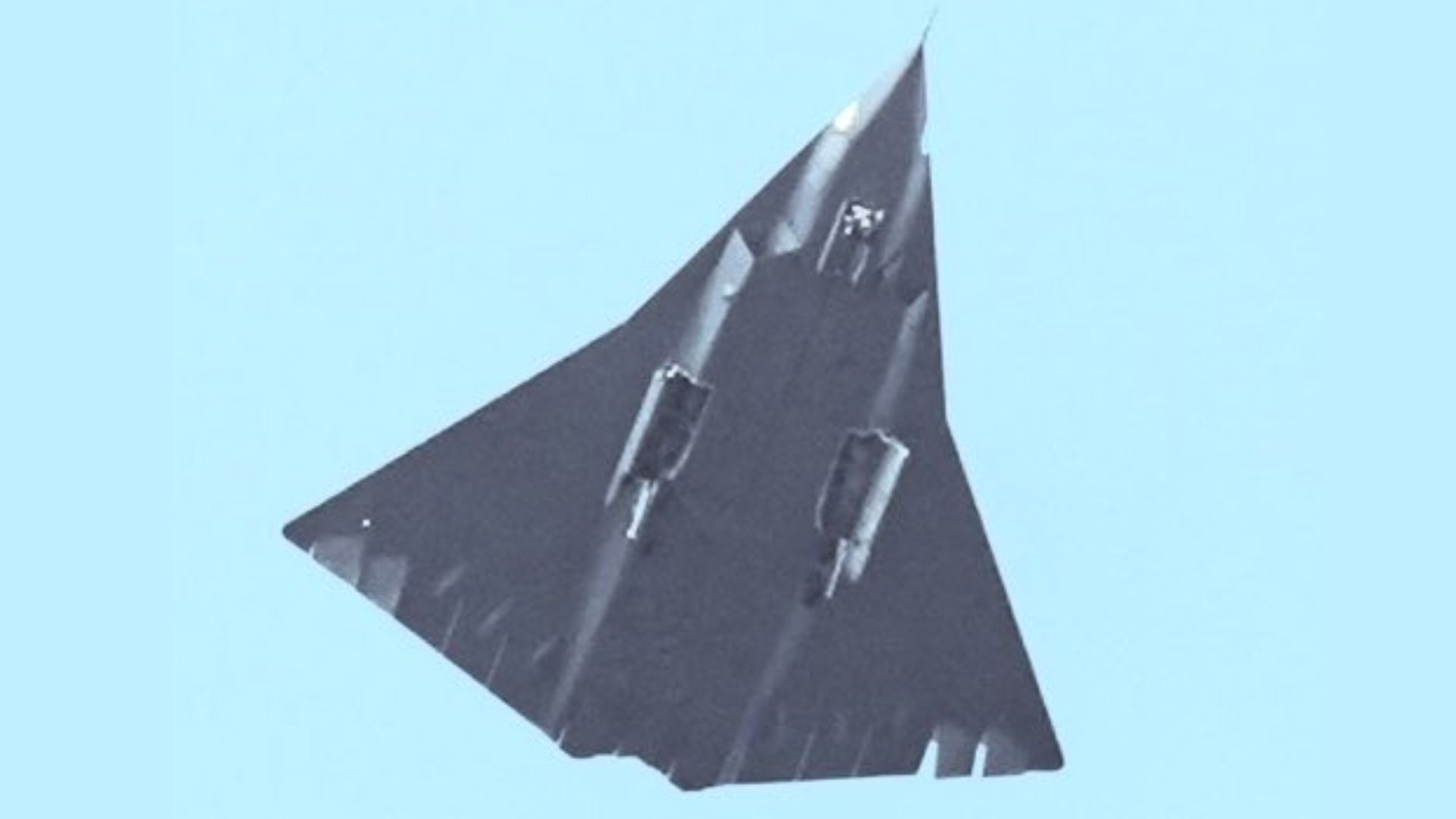
The technology makes 'electromagnetic cooperative stealth' possible. (Representational image)Mike Yeo/X
Researchers in China have reportedly developed a smart electromagnetic surface capable of converting ambient electromagnetic waves into electrical power.
This development represents an integration of electromagnetic engineering and communication principles.
“In the case studies, by jointly optimizing parameters such as transceiver beamforming, robot trajectories, and RIS coefficients, solutions based on multi-agent deep reinforcement learning and multi-objective optimization are proposed to solve problems such as beamforming design, path planning, target sensing, and data aggregation,” said the researchers in a new paper.
The innovation focuses on a self-sustaining electronic system that combines wireless information transfer with energy harvesting, potentially altering the current methods used in electronic warfare and wireless networking.
“Ultimately, it is expected to have a broad impact on 6G communications, the Internet of Things, intelligent stealth and other related fields,” added the researchers.
Utilizing two-dimensional reflecting material
The technology utilizes a reconfigurable intelligent surface (RIS), which is a two-dimensional reflecting material designed to manipulate electromagnetic waves in real-time.
By drawing power from radar or other environmental signals, the surface operates without the need for traditional batteries.
“A reconfigurable intelligent surface (RIS)-aided IoRT (Internet of Robotic Things) network is proposed to enhance the overall performance of robotic communication, sensing, computation, and energy harvesting,” noted the research paper.
In practical applications involving stealth aircraft, this allows for the harvesting of enemy radar beams to power onboard propulsion or communication systems, reported SCMP.
This capability supports a concept known as electromagnetic cooperative stealth, where multiple networked platforms work in coordination to reduce their overall radar cross-section and visibility to sensors.
Beyond military use, the surface is designed to support 6G telecommunications through integrated sensing and powering for satellites or base stations.
Integrating data transmission and radar-like functionality
The hardware platform integrates data transmission and radar-like functionality to optimize the use of spectrum and hardware resources.
Current prototypes demonstrate the ability to perform beam steering up to ±45° with low side lobes, which improves signal coverage in scenarios where a direct line-of-sight is obstructed by physical barriers.
The researchers describe this RIS architecture as a low-cost and highly programmable solution for future wireless networks.
By jointly manipulating scattered electromagnetic waves and actively radiated signals, the system reduces the physical space and hardware costs typically required for such multifunctionality.
The surface can be configured to create intentional radio dead zones, a feature that helps mitigate signal interference and reduces the risk of electronic eavesdropping.
The team suggests that this architecture will eventually enable environment-adaptive integrated sensing systems, micro base stations, and self-powered relay systems.
Impact on connected systems
As next-generation wireless communications increasingly focus on the transmission channel, the ability to include sensing, communication, and power harvesting into a single hardware platform is expected to impact fields ranging from the Internet of Things to intelligent stealth.
“As the technology continues to mature, it is envisioned that RISs may play a pivotal role in enabling more sophisticated, efficient, and reliable robotic operations, opening a new era of advancements in intelligent and connected systems,” concluded the paper.
China's 6G surface could convert enemy radar beams into power for stealth jets
Researchers in China have developed a reconfigurable intelligent surface (RIS) that harvests energy from enemy radar.
https://pmc.ncbi.nlm.nih.gov/articles/PMC12737270/I don't think the skin is there to convert weak EM forces into anything useful. The emission as a total may be great but the magnitude that lands on the skin is miniscule.
The above article is ridiculous.
Yes these newer Chinese metamaterial for 6th gen fighters is virtually science fiction compared to previous generation skins which focus on defeating RF. It's remarkable what metamaterials allow you to incorporate. Yes it's possible to create a surface skin that converts radar energy into electrical energy but it's so easily debunked as something useless once you consider how little radar energy hits an aircraft's skin, especially at long ranges. What I think the J-36 skin would do is act as a emitter and 360 passive sensor, allowing the J-36 to pinpoint where RF energy is originating from and giving it perhaps another piece of information.

I saw the original blog post.According to some credible account, the PLAAF is going to be receiving the jet for testing and feedback this year.