General Economic Updates


Pakistan has requested the United Arab Emirates (UAE) to roll over a debt of $2.5 billion for two years and cut interest rate by almost half, including for a $450 million loan taken 30 years ago.

The request was made around the time the UAE president visited Pakistan. After meeting the UAE president, Prime Minister Shehbaz Sharif said that the UAE had agreed to roll over the debt, but he did not give further details. Separately, the World Bank informed Pakistan on Thursday that the country's investment levels remained below the targets decided under the $20 billion Country Partnership Framework. Central bank and government sources said that Pakistan requested the UAE to roll over the maturing debt of $2.45 billion. Of the total, $1 billion is maturing on Friday and another $1 billion will mature next week.

Sources said that the UAE president had already agreed on the extension but it was not clear whether the debt had been rolled over for one year or two years. Pakistan has sought extension in the debt repayment period for two years and a reduction in interest rate by more than half, according to the central bank sources. Replies from the State Bank and the Ministry of Finance were awaited till the filing of the story.

PM Sharif had reportedly informed the cabinet that a $2 billion repayment was due and the UAE was extending the period. The UAE had extended $2 billion in 2018 for one year. This debt is part of Pakistan's foreign exchange reserves of $16 billion. Deputy Prime Minister Ishaq Dar said on Wednesday that Pakistan still owed $12 billion to the friendly countries, including $5 billion owed to Saudi Arabia, $3 billion to the UAE and $4 billion to China.

In 2018, the UAE had charged 3% interest rate, but last year it increased the rate by more than double to 6.5%. Sources said that Pakistan requested the UAE to cut the rate to around 3% due to the improvement in Pakistan's credit rating and lower global rates. The second deposit of $1 billion came in July 2023 as part of the IMF's condition to arrange $3 billion in further loans to meet the external financing needs before entering a short-term bailout package. Sources said that Pakistan had taken a $450 million loan from the UAE in 1996-97, which remains unpaid, and it is bearing a 6.5% interest on the loan. The government has sought the two-year extension as it will not be able to return the debt during the IMF programme, which is ending in September next year.

Pakistan's external sector stability depends on the rollover of foreign loans and securing fresh financing from the IMF and the World Bank. The country remains unable to enhance exports, which fell nearly 9% to $15.2 billion during the first half of the current fiscal year. PM Sharif has constituted a committee to evaluate how exports could be increased from last year's $32 billion to $63 billion in four years. Foreign investment in Pakistan is also not rising despite efforts. A World Bank team on Thursday met with Finance Minister Muhammad Aurangzeb and informed him that "investment levels remain below the ($20 billion) Country Partnership target," said the Ministry of Finance.

World Bank Country Director Bolormaa Amgaabazar briefed the finance minister about the Country Partnership Framework (CPF). "The World Bank highlighted the importance of accelerating private investment, noting that investment levels remain below the CPF target," said the ministry.

The bank board approved a 10-year, $20 billion debt package last year but its materialisation hinges on improvement in economic indicators and meeting the policy-based loan conditions.

The finance ministry said that discussions with the World Bank delegation focused on designing a coherent, programmatic investment framework aligned with CPF objectives, covering business environment reforms, state-owned enterprise reforms, trade facilitation, capital market development and export competitiveness. Both sides acknowledged that Pakistan had made progress towards macroeconomic stability through prudent fiscal and monetary policies and emphasised the need to translate the stability into sustained economic growth, higher investment and job creation.

The ministry said that the World Bank proposed a results-based approach with clearly defined policy milestones, performance indicators and targeted technical assistance to support implementation. Pakistan last week sought the World Bank's support for the refinancing of $36 billion energy debt. The lender said that it may not be able to fund the total debt but could extend guarantees to cover part of it.

"The World Bank also briefed the finance minister on the potential use of policy-based guarantees as part of future operations to support Pakistan's liability management, refinancing of high-cost debt and innovative financing approaches, subject to achievement of agreed policy milestones," said the finance ministry. The Express Tribune reported last week that Pakistan had approached the World Bank for its possible role in refinancing $36 billion worth of energy debt taken in the past from multilateral and bilateral creditors to develop power projects.

A preliminary proposal has been developed with the aim of replacing the expensive foreign debt with relatively cheaper multilateral debt to reduce the end-consumer price. According to the proposal, the government wants to ease the power sector debt burden by securing a concessionary, long-term financing. It was seeking a 15-year debt repayment period, including a four-year grace period, they added.

The objective is to cut energy prices to around 8 to 9 cents per unit, which translates into Rs25 per unit.

Regards

PS: Hopefully the advances from the JF17 sale could help in paying off the high-cost debt from UAE
 
The saddest and funniest part is that these GHQ duffers try to spin these failures as some great achievement with a straight face and actually think that people will be stupid enough to believe them.

We proudly label a barely even trade deficit as some sort of success when 50% of the "exports" are made up of remittances.

You expect too much from this lot.

Phir kuch bolo to you get labeled anti-Pakistan or a pessimist or somewhat. Rather be that than be constantly fooled by these chumps like a clown.
 
To view this content we will need your consent to set third party cookies.
For more detailed information, see our cookies page.
 

What is benefit of this newly form dg tax policy department ?

Any economic expert please guide ?

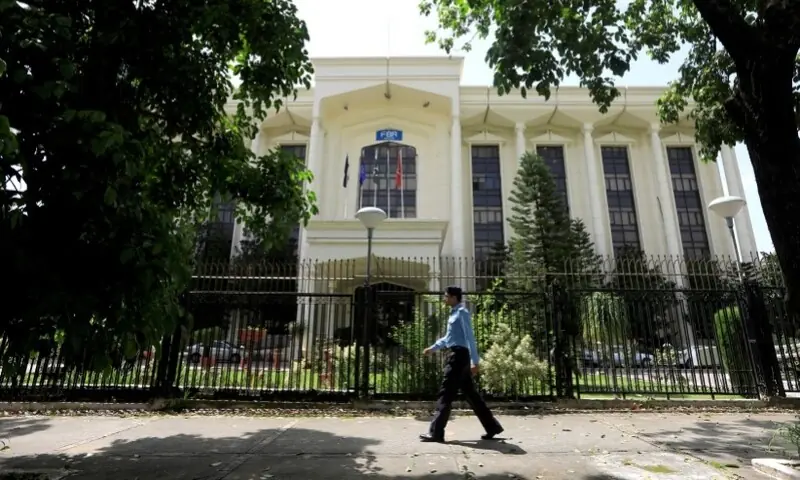
In simplest terms, they want the Federal Board of Revenue (FBR) to focus solely on collection and enforcement, and not make policy or rate decisions that lead to quick fixes to boost collection by raising rates and hurting long-term growth.

Hence, with TPO separate, it can set policies and rates and perform other revenue modeling independent of FBR, without being influenced to hit targets or change policy.

This is mandated by the IMF, and I do not disagree with this decision, as career revenue officers need to meet their monthly and quarterly goals. When their collection efforts aren't on pace, they would adjust policies and rates.
 
Source: Dawn
https://search.app/nhPKJ

Pakistan’s FX rate illusion

View attachment 173320


as I understand, writer of this article, is not concerned about him being CEO of unilever which expatriate $ for consumer good sale in Pak.

effectively he is arguing:

1. kill local industry
2. give us stable rate
3. we will not invest in Pak.

and if government does no do all that, then, all of their investment will be taken to property market in Dubai
 
In simplest terms, they want the Federal Board of Revenue (FBR) to focus solely on collection and enforcement, and not make policy or rate decisions that lead to quick fixes to boost collection by raising rates and hurting long-term growth.

Hence, with TPO separate, it can set policies and rates and perform other revenue modeling independent of FBR, without being influenced to hit targets or change policy.

This is mandated by the IMF, and I do not disagree with this decision, as career revenue officers need to meet their monthly and quarterly goals. When their collection efforts aren't on pace, they would adjust policies and rates.
Thanks for the clear understanding.
 
1769040167444.png


The Jang is reporting now as the news seems from Oct 2025.
 

Fitch affirms Pakistan at 'B-' under new rating criteria​

Business
By Our Correspondent
January 22, 2026


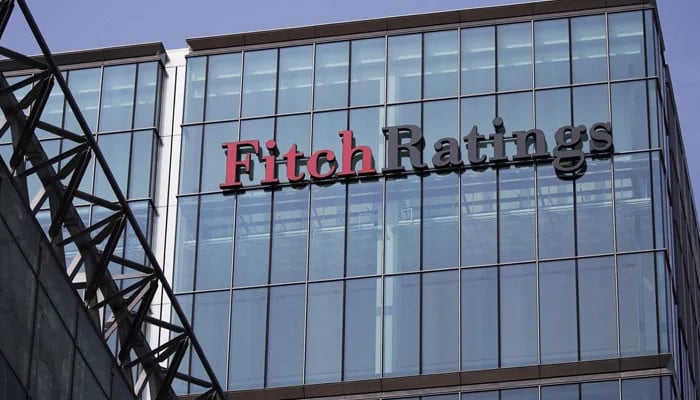
The headquarters of Fitch Ratings Ltd. stands in the Canary Wharf business and shopping district in London, UK. — AFP
KARACHI: Fitch Ratings has affirmed Pakistan’s long-term foreign-currency debt ratings at B- and assigned a recovery rating of RR4, following the removal of the sovereign from Under Criteria Observation, the agency said on Wednesday.

The decision reflects the application of Fitch’s revised Sovereign Rating Criteria, which came into force in September 2025 and, for the first time, incorporate explicit recovery assumptions into sovereign debt ratings.

Fitch said the senior unsecured long-term debt ratings of Pakistan and The Pakistan Global Sukuk Programme Company Limited have been equalised with the country’s long-term foreign-currency issuer default rating. The agency cited expectations of average recovery prospects in a default scenario, given Pakistan’s high level of government debt and interest payments relative to revenue, and the absence of other factors that would warrant a notch above or below the IDR.

Fitch upgraded Pakistan’s long-term foreign-currency IDR to B- with a stable outlook on April 15, 2025, from CCC+.

The agency said Pakistan has an ESG relevance score of 5 for political stability and rights, as well as for rule of law, institutional and regulatory quality, and control of corruption, in line with other sovereigns. These scores reflect the weight given to World Bank Governance Indicators in Fitch’s sovereign rating model, with Pakistan ranked at the 22nd percentile.

Fitch said risks to the rating include a failure to place government debt and debt-servicing indicators on a sustained downward trajectory, as well as renewed pressure on external liquidity, including from delays in reviews under the International Monetary Fund (IMF) programme or looser economic policy settings.

Factors that could support an upgrade include a material reduction in government debt and interest burdens, particularly through fiscal consolidation aligned with IMF commitments, alongside structural improvements in tax revenue. A sustained easing of external financing risks, including stronger access to external funding and a durable rise in foreign-currency reserves beyond Fitch’s forecasts, could also support positive rating action.


Fitch affirms Pakistan’s debt ratings at ‘B-’

Khaleeq Kiani
January 22, 2026

ISLAMABAD: Fitch Ratings, one of the world’s top three agencies, on Wednesday affirmed Pakistan’s long-term debt ratings at ‘B-’ (B-negative), which it had upgraded in April last year, and assigned a Recovery Rating of ‘RR4’ following the removal of the ratings from Under Criteria Observation (UCO).

In a statement issued from its regional office in Hong Kong, the agency said the rating actions reflect the application of Fitch’s new Sovereign Rating Criteria, effective September 2025, and the inclusion of recovery assumptions into sovereign debt ratings for the first time.

The recovery rating RR4 denotes ‘average’ recovery expectation from default in a scale of six categories, starting from RR1 for outstanding, RR2 for superior, RR3 for good and RR4 for average. This is followed by RR5 for below average and RR6 for poor.
 

Nestle announces additional $60m investment in Pakistan​

Finance minister terms move 'strong vote of confidence' in Pakistan’s economic reforms, formalisation drive

Web Desk
January 22, 2026


finance minister muhammad aurangzeb meets nestl executive vice president and chief executive officer for asia oceania and africa remy ejel on the sidelines of the world economic forum s annual meeting in davos switzerland on thursday ministry of finance x


Finance Minister Muhammad Aurangzeb meets Nestlé Executive Vice President and Chief Executive Officer for Asia, Oceania and Africa Remy Ejel on the sidelines of the World Economic Forum's annual meeting in Davos, Switzerland on Thursday. — MINISTRY OF FINANCE X

Nestlé has announced an additional $60 million investment in Pakistan in a move that signals renewed confidence in the country’s economic reform agenda, the finance ministry said on Thursday.

The finance ministry said in a post on X that the development came during a high-level business roundtable, held on the sidelines of the World Economic Forum annual meeting in Davos, that was chaired by Finance Minister Muhammad Aurangzeb and brought together chief executives and senior leaders of major multinational companies to discuss Pakistan’s investment climate, reform trajectory and long-term growth prospects.

It said a "major highlight" of the discussion was the announcement by Nestlé Executive Vice President and Chief Executive Officer for Asia, Oceania and Africa Remy Ejel of "an additional investment of $60 million in Pakistan".
 

Business costs 34pc higher than region

Khaleeq Kiani
January 23, 2026

ISLAMABAD: The cost of doing business in Pakistan is about 34 per cent higher than in regional economies, creating a serious competitiveness crisis for local industry, a business group said on Thursday.

In a statement, the Pakistan Business Forum (PBF) said higher operating costs had “severely undermined” the ability of local industries to compete in international markets.

It said that due to irrational taxation, excessive energy costs and currency instability, Pakistan’s exporters were unable to match regional competitors, resulting in stagnant exports since 2022 despite global trade recovery in several sectors.

PBF Chairman Ahmad Jawad said that in the given scenario, Pakistani businesses were struggling to survive, let alone expand exports, as their cost structures remain misaligned with regional economies such as Bangladesh, India and Vietnam.
 
PBF warns of competitiveness crisis, calls for tax, energy reforms

He said the rupee should be stabilised at Rs240 per dollar, saying that a stronger and more predictable exchange rate would help curb inflation, lower imported raw material costs, and bring stability to export orders.

He recalled that continuous devaluation had failed to boost exports and had instead fuelled inflation, increased production costs and eroded business confidence.

The PBF noted with disappointment that over the last six years, the rupee had devalued by nearly Rs160 against the dollar, a situation that reflected poor economic management rather than market fundamentals.

“For the time being, the rupee is holding its position, but when we look at the country’s foreign exchange reserves, the current dollar price against the rupee is still excessively high and not truly market-driven,”

Mr Jawad said, adding that artificial devaluation had only benefited speculative elements while damaging productive sectors of the economy.

Highlighting the crisis in the cotton sector, PBF Chairman for South and Central Punjab Malik Talat Suhail expressed grave concern over the closure of more than 400 cotton ginning factories, which had disrupted the entire cotton value chain and negatively impacted farmers, ginners and the textile industry.

Mr Sohail said cotton ginners were not being provided with a level playing field due to the unjustified imposition of 18pc GST on local cottonseed and oil cake, which had increased costs and reduced demand for local cotton, ultimately causing financial losses to farmers.

He said cotton was one of the most important components of Pakistan’s import bill, and removing the 18pc GST on cotton seed and oil cake would significantly encourage cotton cultivation in Punjab and Sindh, reduce dependency on imports and help revive the domestic cotton economy.
 
PBF warns of competitiveness crisis, calls for tax, energy reforms

He said the rupee should be stabilised at Rs240 per dollar, saying that a stronger and more predictable exchange rate would help curb inflation, lower imported raw material costs, and bring stability to export orders.

He recalled that continuous devaluation had failed to boost exports and had instead fuelled inflation, increased production costs and eroded business confidence.

The PBF noted with disappointment that over the last six years, the rupee had devalued by nearly Rs160 against the dollar, a situation that reflected poor economic management rather than market fundamentals.

“For the time being, the rupee is holding its position, but when we look at the country’s foreign exchange reserves, the current dollar price against the rupee is still excessively high and not truly market-driven,”

Mr Jawad said, adding that artificial devaluation had only benefited speculative elements while damaging productive sectors of the economy.

Highlighting the crisis in the cotton sector, PBF Chairman for South and Central Punjab Malik Talat Suhail expressed grave concern over the closure of more than 400 cotton ginning factories, which had disrupted the entire cotton value chain and negatively impacted farmers, ginners and the textile industry.

Mr Sohail said cotton ginners were not being provided with a level playing field due to the unjustified imposition of 18pc GST on local cottonseed and oil cake, which had increased costs and reduced demand for local cotton, ultimately causing financial losses to farmers.

He said cotton was one of the most important components of Pakistan’s import bill, and removing the 18pc GST on cotton seed and oil cake would significantly encourage cotton cultivation in Punjab and Sindh, reduce dependency on imports and help revive the domestic cotton economy.
 

Users who are viewing this thread

Pakistan Defence Latest

Latest Posts

Back
Top