Navigation
Install the app
How to install the app on iOS
Follow along with the video below to see how to install our site as a web app on your home screen.
Note: This feature may not be available in some browsers.
More options
Style variation
You are using an out of date browser. It may not display this or other websites correctly.
You should upgrade or use an alternative browser.
You should upgrade or use an alternative browser.
General Economic Updates
- Thread starter Sainthood 2.0
- Start date
More options
Who Replied?


ghazi52
THINK TANK: CONSULTANT
The State Bank of Pakistan (SBP) maintained its key policy rate at 10.5 per cent on Monday during its Monetary Policy Committee (MPC) meeting.
Brokerage house Topline Securities noted that this “came as a surprise” as a majority of their participants were expecting a rate cut.
Since its last meeting, the committee noted that real GDP growth was provisionally reported at 3.7pc year on year for the first quarter of the FY2026, led by the industry and agriculture sectors.
Auto sales, domestic cement dispatches, Petroleum, Oil and Lubricants (POL) sales (excluding furnace oil), fertiliser off-take, and imports of machinery and intermediate goods recorded notable growth, suggesting sustained domestic demand.
Large-scale manufacturing (LSM) posted growth of 8pc year on year and 10.4 pc year on year in October and November 2025, raising LSM growth to 6pc during July-November FY2026, according to the committee’s findings.
Their findings also posted that the latest information in agriculture pointed to encouraging prospects for the wheat crop. These favourable developments in the commodity-producing sectors were expected to provide further energy to the services sector.
The MPC noted that this improved upon earlier estimates of GDP growth, now projecting it in the range of 3.75-4.75pc for FY2026, expecting this momentum to strengthen further in FY2027, supported by the unfolding earlier reduction in the policy rate.
They also noted that consumer and business confidence improved, and inflation expectations of these stakeholders eased. Furthermore, the State Bank’s forex reserves surpassed the end-December target, reaching $16.1 billion as of January 16, led by SBP’s ongoing forex purchases.
The committee also noted that the IMF had slightly upgraded Pakistan’s global growth forecast for FY2026, while highlighting risks from elevated global tariff uncertainty and volatile commodity prices.
Due to these developments, the MPC maintained the real policy rate to stabilize inflation within the target range of 5 to 7pc over the medium term. The committee also emphasised the need for a coordinated and prudent monetary and fiscal policy mix, along with structural reforms to enhance productivity, to increase exports, and achieve high growth on a sustainable basis.
Brokerage house Topline Securities noted that this “came as a surprise” as a majority of their participants were expecting a rate cut.
Since its last meeting, the committee noted that real GDP growth was provisionally reported at 3.7pc year on year for the first quarter of the FY2026, led by the industry and agriculture sectors.
Auto sales, domestic cement dispatches, Petroleum, Oil and Lubricants (POL) sales (excluding furnace oil), fertiliser off-take, and imports of machinery and intermediate goods recorded notable growth, suggesting sustained domestic demand.
Large-scale manufacturing (LSM) posted growth of 8pc year on year and 10.4 pc year on year in October and November 2025, raising LSM growth to 6pc during July-November FY2026, according to the committee’s findings.
Their findings also posted that the latest information in agriculture pointed to encouraging prospects for the wheat crop. These favourable developments in the commodity-producing sectors were expected to provide further energy to the services sector.
The MPC noted that this improved upon earlier estimates of GDP growth, now projecting it in the range of 3.75-4.75pc for FY2026, expecting this momentum to strengthen further in FY2027, supported by the unfolding earlier reduction in the policy rate.
They also noted that consumer and business confidence improved, and inflation expectations of these stakeholders eased. Furthermore, the State Bank’s forex reserves surpassed the end-December target, reaching $16.1 billion as of January 16, led by SBP’s ongoing forex purchases.
The committee also noted that the IMF had slightly upgraded Pakistan’s global growth forecast for FY2026, while highlighting risks from elevated global tariff uncertainty and volatile commodity prices.
Due to these developments, the MPC maintained the real policy rate to stabilize inflation within the target range of 5 to 7pc over the medium term. The committee also emphasised the need for a coordinated and prudent monetary and fiscal policy mix, along with structural reforms to enhance productivity, to increase exports, and achieve high growth on a sustainable basis.
Owaiz
Registered Member

In theory, it is supposed to make tax policy independent of revenue collection. Most countries with rule of law have something like this, in one form or another. The purpose is to serve as a check on the harassment of taxpaying individuals and companies from within the government before the aggrieved parties are forced to go to the courts.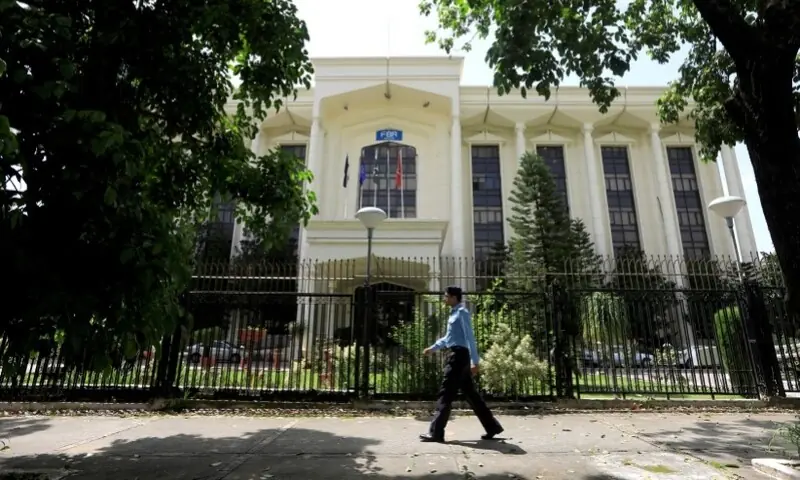
PM Shehbaz appoints first director general for Tax Policy Office
Dr Najeeb Ahmed Memon has been appointed the new director general for a two-year term.www.dawn.com
What is benefit of this newly form dg tax policy department ?
Any economic expert please guide ?
The hope is that a stable and predictable tax administration regime will encourage compliance and also investments that can generate taxable income.

hydrabadi_arab
Trusted Member
*SBP Projections for the next 6-months:*
*Medium-term Inflation Target:* 5-7% Avg.
*Imports:* 8%YoY growth expected in FY26.
*Exports:* 6% YoY contraction expected in FY26.
*Current Account Deficit (FY26):* 0-1% of GDP.
*Real-GDP Growth for FY26 revised upwards:* 3.75% - 4.75%.
5% growth is likely in current FY. $460bn GDP.
*Medium-term Inflation Target:* 5-7% Avg.
*Imports:* 8%YoY growth expected in FY26.
*Exports:* 6% YoY contraction expected in FY26.
*Current Account Deficit (FY26):* 0-1% of GDP.
*Real-GDP Growth for FY26 revised upwards:* 3.75% - 4.75%.
5% growth is likely in current FY. $460bn GDP.
Owaiz
Registered Member
Where did that 5% number come from ? We will be lucky to get to 3%. The **** duffers keep making up things and expect the askarandu idiots to blindly believe them.*SBP Projections for the next 6-months:*
*Medium-term Inflation Target:* 5-7% Avg.
*Imports:* 8%YoY growth expected in FY26.
*Exports:* 6% YoY contraction expected in FY26.
*Current Account Deficit (FY26):* 0-1% of GDP.
*Real-GDP Growth for FY26 revised upwards:* 3.75% - 4.75%.
5% growth is likely in current FY. $460bn GDP.
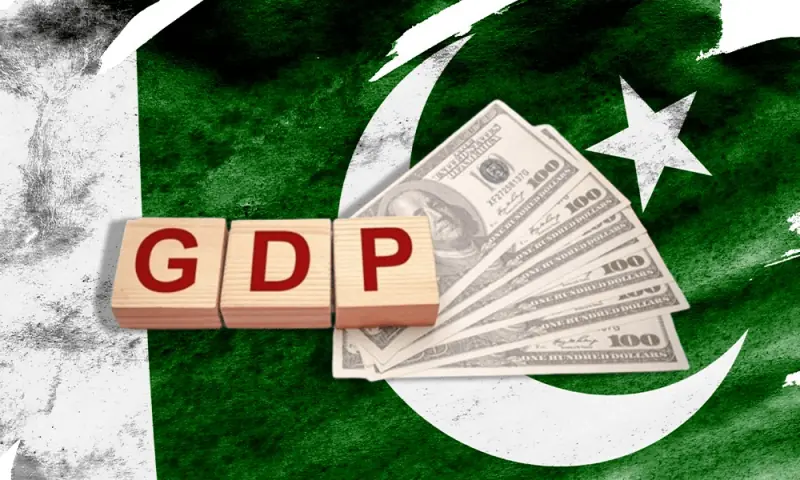
Pakistan unlikely to achieve IMF’s projected 3.2% GDP growth, say experts
Economists forecast growth more likely to remain between 2.5% to 3%
www.brecorder.com

Pakistani Dragon
Elite Member

Pakistan launches ‘SHIKRA’ system to revolutionise passport issuance
- SHIKRA system enables 24/7 supervision of entire passport issuance process
Published January 26, 2026
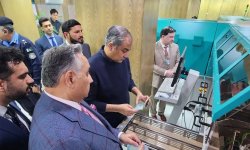
Federal Interior Minister Mohsin Naqvi has inaugurated “SHUKRA,” a state-of-the-art monitoring system designed to overhaul the passport application, printing process and performance of the passports department, the Ministry of Interior said in a statement on Monday.
The system, officially known as Secure Hybrid Intelligence for Knowledge-based Response Analytics (SHIKRA), marks a significant shift toward total digitisation at the Directorate General of Immigration and Passports.
“The SHIKRA system enables 24/7 supervision of the entire passport lifecycle, from the initial application to final delivery, both in Pakistan and across global missions,” the ministry said.
It said new automatic German-manufactured machines have been integrated to automate the printing process, effectively removing human intervention and increasing departmental capacity.
Security features of the Pakistani passport have been upgraded to meet the International Civil Aviation Organisation (ICAO) global standards, the MoI said.
READ MORE: Pakistan seeks AI help to curb illegal immigration
On the interior minister’s directives, the issuance of Emergency Travel Documents has also been transitioned to a digital format.
During his visit, Naqvi inspected the newly activated 24/7 call centre, forensic lab, and a digital integrated dashboard. The briefing highlighted that the new system can automatically identify “rush” periods at specific offices and monitor machinery status to prevent backlogs.
“The Pakistan passport system has now been aligned with the best international standards,” stated Naqvi. “Our goal is to ensure world-class, high-speed, and secure services for all citizens.”
The inauguration was attended by high-ranking officials, including the Federal Investigation Agency director general (FIA DG), Immigration and Passports DG, Islamabad chief commissioner, and Islamabad Police inspector general.


Pakistani Dragon
Elite Member
Treasury bills attract $114m in 16 days
Shahid IqbalPublished January 25, 2026

A file photo of a person holding US dollar bills. — AFP/File
KARACHI: The new calendar year began with record foreign investment in domestic bonds, as inflows into treasury bills during the first 16 days of January crossed $114 million.
Latest data released by the State Bank of Pakistan showed the country received a record-high inflow in January, the largest monthly inflow recorded over the past six and a half months.
However, foreign direct investment (FDI) declined sharply during the first half of the current fiscal year (FY26), falling 43pc to $808m from $1.425bn in the same period last year.
Despite a booming equity market, foreign investors preferred T-bills, while the stock market continued to witness net foreign outflows during the six and a half months under review.
Data showed that during the first 16 days of January, inflows into T-bills amounted to $114.7m, while outflows stood at $18.5m. In contrast, the equity market saw inflows of just $17m against outflows of $61.5m during the same period.
During the first six and a half months of FY26, total inflows into T-bills reached $625m, while outflows amounted to $408m. Over the same period, equity market inflows stood at $164m, compared to outflows of $459m.Strong inflows attributed to stable exchange rate
Financial experts attributed the strong inflows largely to a stable exchange rate, which boosted investor confidence in repatriating profits and capital amid expectations of limited movement in the dollar rate.
The highest inflow during the first 16 days of January came from Bahrain at $48m, followed by Singapore with $28m, the UAE with $15m and the UK with $13m.
Compared to the buoyant stock market, inflows into T-bills remained significantly higher despite a decline in T-bill rates during the last two auctions held this month.
The State Bank slashed T-bill rates by up to 31 basis points in the auction held on Jan 21. Yields on one-month papers were cut by 31bps to 9.8pc, three-month papers by 26bps to 9.89pc, six-month papers by 22bps to 9.94pc, and 12-month papers by 16bps to 10pc.
In the previous auction held on Jan 8, cut-off yields were reduced by 29bps, 34bps, 32bps and 33bps for one-month, three-month, six-month and 12-month papers, respectively.
As a result, T-bill rates are now largely in single digits, except for the 12-month paper, which carries a yield of 10pc.
Some experts partly attributed the high inflows to perceived macroeconomic stability. Faisal Mamsa, CEO of Tresmark, said Pakistan appeared stable on the surface, with inflation declining, foreign exchange reserves improving, a steady exchange rate and the KSE-100 index nearing 190,000 points.
However, he noted that economic growth remained the weak link, with the cost of doing business around 34pc higher than regional peers and exports remaining stagnant.
“Pakistan’s economic indicators in 2025 reflected a broad-based recovery, supported by easing inflation, improving macroeconomic stability, and a strong rebound in domestic demand,” said a research report by Topline Securities.
On the macroeconomic front, inflation fell sharply to an average of 3.5pc, enabling monetary easing. The report cited declining six-month T-bill yields, record expected remittances of $40bn, improving foreign exchange reserves and 10pc growth in large-scale manufacturing as factors underpinning economic resilience.
Pakistani Dragon
Elite Member
Every time our PTI Shaikh Chillis celebrate some decline in the economy somewhere, they get hit with another surprise growth in the economy elsewhere.
Lesson for the Shaikh Chillis - don't celebrate doom and gloom too early... or, just don't wish ill against Pakistan at all.
Lesson for the Shaikh Chillis - don't celebrate doom and gloom too early... or, just don't wish ill against Pakistan at all.

PakFactor
Elite Member
In the field of economics, this strategy is called 'hot money' by external institutional investors. This strategy generates short-term portfolio inflows into T-bills due to their high yields and isn't tied to real economic activity. It creates a policy trap, as Pakistan will have to maintain high yields to keep attracting external investor inflow. This would then put a strain on the treasury and eventually keep rolling over and paying more.
From Pakistan's perspective, it's a temporary fix, not a permanent solution.
In this scenario, domestic borrowers suffer because they must pay high borrowing costs.
From Pakistan's perspective, it's a temporary fix, not a permanent solution.
In this scenario, domestic borrowers suffer because they must pay high borrowing costs.

Watandar
SpeedLimited
It also robs private industry from investments as why would banks take any risk on a company when they can get guaranteed returns for their money from Govt of Pakistan bonds.In the field of economics, this strategy is called 'hot money' by external institutional investors. This strategy generates short-term portfolio inflows into T-bills due to their high yields and isn't tied to real economic activity. It creates a policy trap, as Pakistan will have to maintain high yields to keep attracting external investor inflow. This would then put a strain on the treasury and eventually keep rolling over and paying more.
From Pakistan's perspective, it's a temporary fix, not a permanent solution.
In this scenario, domestic borrowers suffer because they must pay high borrowing costs.
PakFactor
Elite Member
It also robs private industry from investments as why would banks take any risk on a company when they can get guaranteed returns for their money from Govt of Pakistan bonds.
That, but rather the industrialists will borrow less, due to the cost of doing business.


well its kinda true, but turkey russia brazil offer way higher yields - plus pakistan keeps slashing rates so this is not just the case of hot moneyIn the field of economics, this strategy is called 'hot money' by external institutional investors. This strategy generates short-term portfolio inflows into T-bills due to their high yields and isn't tied to real economic activity. It creates a policy trap, as Pakistan will have to maintain high yields to keep attracting external investor inflow. This would then put a strain on the treasury and eventually keep rolling over and paying more.
From Pakistan's perspective, it's a temporary fix, not a permanent solution.
In this scenario, domestic borrowers suffer because they must pay high borrowing costs.
plus the very nature of the bonds and their rollovers will always have significant outflows at maturity so the stats are always skewed
PakFactor
Elite Member
well its kinda true, but turkey russia brazil offer way higher yields - plus pakistan keeps slashing rates so this is not just the case of hot money
plus the very nature of the bonds and their rollovers will always have significant outflows at maturity so the stats are always skewed
Those points are fair, but they don’t change the core dynamic of the T-bill offering, which is short-term and attracts opportunistic inflows sensitive to interest rates. Even if Pakistan cuts rates, investors enter for yield and exit when the rate advantage or risk perception shifts.
Rollovers cause inflows and outflows but make capital unstable. They don’t build capacity, support exports, or strengthen the economy. Instead, they only create temporary FX breathing room and raise government borrowing costs.
Users who are viewing this thread
Total: 5 (members: 0, guests: 5)
Pakistan Defence Latest
-
 Federal cabinet gives nod to imposition of emergency in KP; summary sent to president (64 Viewers)
- Latest: Meengla
-

-

-
After uneasy questions, Bangladesh Army chief broke into Nazrul geeti during Oct 1 darbar (2 Viewers)
- Latest: RealNapster
-

Country Watch Latest
-
Iran - Israel/US War: Israel-US declare war on Iran, Iran responds (116 Viewers)
- Latest: OldTwilight
-

-

-
-

Latest Posts
-
-
-
Federal cabinet gives nod to imposition of emergency in KP; summary sent to president (64 Viewers)
- Latest: Meengla
-
 Makkah Defence Alliance: Turkey, Saudi Arabia, and Pakistan, news & updates (43 Viewers)
- Latest: RescueRanger
-
Iran - Israel/US War: Israel-US declare war on Iran, Iran responds (116 Viewers)
- Latest: OldTwilight