Pentagon Reveals 2026 Defense Strategy
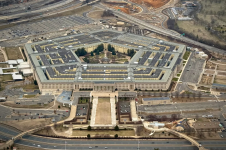
The Pentagon has released its 2026 National Defense Strategy (NDS), outlining a shift in U.S. military priorities under the Trump administration, with a focus on homeland defense, reduced emphasis on China as the primary threat, and stronger demands on allies to shoulder more responsibility for regional security.
The strategy, published on January 23, sets the framework for U.S. defense planning over the coming years and reflects the administration’s broader 'America First' approach to national security.
The 2026 NDS makes no reference to climate change, which the previous Biden administration had described as an "emerging threat." The strategy
does not mention Taiwan, a U.S. partner that China considers part of its territory.
Defend The Homeland
Defending the U.S. homeland and the Western Hemisphere is identified as the Pentagon’s highest priority. This marks a shift away from large-scale overseas commitments and back toward addressing threats closer to U.S. territory, aligning with the Trump administration’s focus on domestic security.
The strategy defines border security as a national security priority, saying that under President Trump, the U.S. military’s foremost mission is the defense of the homeland.
It directs the Department of War (formerly the Department of Defence) to work with the
Department of Homeland Security to secure U.S. borders and
prevent illegal crossings and other forms of infiltration. The document also calls for broader action across the Western Hemisphere to counter
narco-terrorist organizations, prioritizing support for regional partners while maintaining the option for unilateral action if necessary.
It further emphasizes securing strategic terrain in the hemisphere, including
Greenland, the
Panama Canal, and key maritime routes, saying that the United States will not cede military or commercial access and reaffirming the
Monroe Doctrine.
In a DHS recruitment campaign for Immigration and Customs Enforcement, the department used language framing enforcement work as patriotic service, posting slogans such as "Your country is calling you to serve at ICE…Together, we must defend the homeland" to attract new agents, including offering signing bonuses and other incentives to applicants willing to help carry out deportations.
ICE raids and deportations have been presented by DHS as tied to defending the homeland.
China No Longer Named the Top Priority
In a notable departure from recent defense strategies, the document no longer identifies China as the United States’
foremost strategic threat.
While Beijing’s military modernization and regional influence are still described as serious challenges, the strategy avoids framing U.S. policy around the expectation of near-term conflict with China. Instead, it emphasizes deterrence and preventing any single power from dominating key regions or threatening U.S. interests directly.
"Our goal in doing so is not to dominate China; nor is it to strangle or humiliate them. Rather, our goal is simple: To prevent anyone, including China, from being able to dominate us or our allies," the document reads.
Greater Burden-Sharing From Allies
The strategy calls on U.S. allies to take on a greater share of responsibility for their own defense, particularly in countering threats from
Russia and
North Korea. European allies are encouraged to lead in deterring Russia, while South Korea is expected to play the primary role in defending against North Korean aggression, with U.S. forces providing more limited support.
Russia is described as a persistent but "manageable" threat, while North Korea is addressed as a regional security concern.
Ukraine is only mentioned a handful of times, suggesting a reduced emphasis compared with previous U.S. policy documents. While the strategy acknowledges Russia’s ongoing
war in Ukraine and notes that NATO allies should take the lead in supporting Ukraine’s defense, it frames this as primarily Europe’s responsibility.
The document states that sustaining peace in and around Ukraine "will require leadership and commitment from our NATO allies" and that U.S. support will be "critical but more limited."
U.S. Plans For Greenland
The document refers to Greenland as "key terrain" in the Western Hemisphere.
"We will guarantee U.S. military and commercial access to key terrain, especially the Panama Canal, Gulf of America, and Greenland," the document reads.
President Trump has repeatedly expressed interest in acquiring Greenland, including discussing the idea of purchasing the territory through Denmark, although Greenland's leaders have rejected the Republican leader's advances and affirmed the island is not for sale.
Trump’s focus on Greenland reflects concerns about Russian and Chinese influence in the Arctic and the region’s strategic and resource potential.
"We have seen adversaries’ influence grow from Greenland in the Arctic to the Gulf of America, the Panama Canal, and locations farther south. This not only threatens U.S. access to key terrain throughout the hemisphere; it also leaves the Americas less stable and secure, undermining both U.S. interests and those of our regional partners."
The documents signal a recalibration of U.S. defense priorities under the Trump administration, strongly focusing on protection of the homeland and the Western Hemisphere while taking a more measured approach to global conflicts. By highlighting strategic locations such as Greenland, the Panama Canal, and the
Gulf of America, the Pentagon reveals its cards, signaling its intent to expand influence in key strategic areas.
https://media.defense.gov/2026/Jan/23/2003864773/-1/-1/0/2026-NATIONAL-DEFENSE-STRATEGY.PDF


