Navigation
Install the app
How to install the app on iOS
Follow along with the video below to see how to install our site as a web app on your home screen.
Note: This feature may not be available in some browsers.
More options
Style variation
You are using an out of date browser. It may not display this or other websites correctly.
You should upgrade or use an alternative browser.
You should upgrade or use an alternative browser.
Pakistan Agriculture News / Discussions
- Thread starter ghazi52
- Start date
More options
Who Replied?

SaadH
Elite Member


F@ujeet efficiency at its very best...when you have a third rate former airman who couldn't even make it to the low IQ factory of PMA colonial slaves as your mafia head and dictator, then these brain dead bone headed decisions and results are the norm not the exception.

hydrabadi_arab
Trusted Member
Selling cattle fodder to UAE is a success. Looks like there is some potential if water is provided.
Project is still going on and companies working. But for expansion on large scale they will need to sort out water issue.
Project is still going on and companies working. But for expansion on large scale they will need to sort out water issue.
Jango007
Registered Member

Selling cattle fodder to UAE is a success. Looks like there is some potential if water is provided.
Project is still going on and companies working. But for expansion on large scale they will need to sort out water issue.
Wow just wow ….
Nothing amazes me more than a Patwari skill of finding success in an utter failure ….
hydrabadi_arab
Trusted Member
Wow just wow ….
Nothing amazes me more than a Patwari skill of finding success in an utter failure ….
The success of PTI
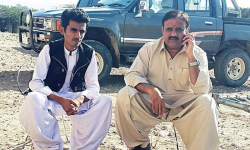
Do nothing but keep crying.
Jango007
Registered Member
I am truly not sure what you are saying here but pls in your Patwari mind explain what this pic has to do with billions of Rs of corruption Maryam and Asim did in this project .

PakFactor
Elite Member
Article is long so here is AI summary.
The article "Chasing a Green Illusion," published on January 10, 2026, details the unraveling of the Green Pakistan Initiative (GPI), an ambitious state project intended to transform the Cholistan desert into corporate farmland to ensure national food security.
Here is a summary of the key findings:
1. Operational Failure and Investor Withdrawal
2. The Water Controversy
- Exodus of Companies: Major investors are withdrawing or scaling back. Unity Food group is reportedly leaving, while other entities like Airlink Communications, Beaconhouse, and SinoPak Guangdong are scaling down operations or laying off staff.
- Harsh Realities: Despite promises of abundant resources, companies face a lack of basic infrastructure (roads, electricity) and an extremely hostile climate. Sandstorms have repeatedly destroyed cash crops like cotton.
- Water Crisis: The fundamental flaw is the lack of viable water. Groundwater in Cholistan is highly saline (high TDS levels), making it unsuitable for major crops like wheat. Consequently, many farms have been forced to grow only Rhodes grass (cattle fodder) for export to the UAE, rather than food for Pakistan.
3. Social Displacement and Resistance
- Unviable Plans: The government's plan to dig a canal from the Sutlej River is mathematically and politically fraught. Experts argue the canal cannot provide enough water for the allocated land.
- Political Tension: Diverting water from the Sutlej is controversial because the river's rights were assigned to India under the Indus Water Treaty, and within Pakistan, the province of Sindh opposes further diversions by Punjab.
- Broken Promises: Alternative solutions proposed by consultants, such as riverbed filtration systems, have not been implemented, leaving investors with dry or saline land.
ConclusionThe article characterizes the project as a failure that has not only missed its agricultural targets—producing fodder instead of food—but has also sparked significant social unrest by displacing vulnerable local populations.
- Evictions: To make way for corporate farming, the state is evicting tenant farmers who have tilled state lands for generations (some since 1947). This is occurring in areas like Rakh Ghulaman, Ehsanpur, and Muhammad Nagar.
- Farmer Resistance: Affected farmers have organized legal defenses and protests under the slogan malki ya moat ("ownership or death"), successfully obtaining temporary stay orders from the courts against their eviction.
Guess who made this fucking dumbest plan and called it a green revolution ?
Uneducated Matric pass Failed martial and his bitch .
Now when you are so astronomically stupid to pick the most arid land … make millions from companies willing to invest and then pocket all that money …..
Another MAGA corruption scandal of our Generals and Patwari alliance …
View attachment 173740
Seems normal to me, and proves Pakistan is functioning as intended. Carry on, good work. Even I couldn't make a project a sunk cost as quickly as these guys could if I tried my hardest.


Oscar
Moderator
When your primary profession is property dealing or taking loans to buy equipment and you see everything in that lens - this is what happens.
But to be truly fair they would in their wildest dreams ever have the intellectual capacity to think of water levels, salinity studies, soil nutrient levels - etc etc.
Part of it also is self awareness and introspection. If you are honest enough to ask “what have I missed and what else is needed” at a national mentality level you would apply it whether in and out of uniform.
Instead if there was anyone more fitting of permanent early stage startup thinking it is Pakistanis in general. They think of an idea and get hyped up to execute it regardless of their qualifications or resources ideally from pockets not their own- the realize they bit off more than they can chew and try to salvage whatever money to their own(not their investors) pockets and run out.
But to be truly fair they would in their wildest dreams ever have the intellectual capacity to think of water levels, salinity studies, soil nutrient levels - etc etc.
Part of it also is self awareness and introspection. If you are honest enough to ask “what have I missed and what else is needed” at a national mentality level you would apply it whether in and out of uniform.
Instead if there was anyone more fitting of permanent early stage startup thinking it is Pakistanis in general. They think of an idea and get hyped up to execute it regardless of their qualifications or resources ideally from pockets not their own- the realize they bit off more than they can chew and try to salvage whatever money to their own(not their investors) pockets and run out.

Goenitz
Elite Member

nope... 26th, 27th and 28th amendments only.Just build the dams already.
Also, India is taking 10-20% more Chenab water in the coming years (extending some canal). That is equal to billions of $
PakFactor
Elite Member
When your primary profession is property dealing or taking loans to buy equipment and you see everything in that lens - this is what happens.
But to be truly fair they would in their wildest dreams ever have the intellectual capacity to think of water levels, salinity studies, soil nutrient levels - etc etc.
Part of it also is self awareness and introspection. If you are honest enough to ask “what have I missed and what else is needed” at a national mentality level you would apply it whether in and out of uniform.
Instead if there was anyone more fitting of permanent early stage startup thinking it is Pakistanis in general. They think of an idea and get hyped up to execute it regardless of their qualifications or resources ideally from pockets not their own- the realize they bit off more than they can chew and try to salvage whatever money to their own(not their investors) pockets and run out.
This part of your post, "resources ideally from pockets not their own," there is an old saying from our better elders before the current set we are dealing with: "jis ka zar nai laga, usko asas nai hota." Rough translation: if one didn't put up blood, sweat, and money, he doesn't feel the loss. No truer words could be written in store. When things are handed to someone for free or without struggle, they lack emotional attachment and, with it, responsibility.
Carrying about the investor's stake is a bygone thought within our collective consciousness at the national level. To be quite simple, there are no leadership-building qualities or a developed framework within the forces or at the civilian level. From the beginning till now, had their brain faculty worked, we wouldn't be in the position we are currently in.
Last edited:

Jango007
Registered Member
When your primary profession is property dealing or taking loans to buy equipment and you see everything in that lens - this is what happens.
But to be truly fair they would in their wildest dreams ever have the intellectual capacity to think of water levels, salinity studies, soil nutrient levels - etc etc.
Part of it also is self awareness and introspection. If you are honest enough to ask “what have I missed and what else is needed” at a national mentality level you would apply it whether in and out of uniform.
Instead if there was anyone more fitting of permanent early stage startup thinking it is Pakistanis in general. They think of an idea and get hyped up to execute it regardless of their qualifications or resources ideally from pockets not their own- the realize they bit off more than they can chew and try to salvage whatever money to their own(not their investors) pockets and run out.
My dad was a metallurgist and worked as a consultant through out Pakistan for the mining and industrial companies for their project setups . He would prepare feasibility reports on the project like the way he was taught and technically supposed to be .
Apart from multinational companies no local gave a damn about what he recommended and all they cared about was having a top of the line feasibility report to get the bank loan .
Once the loan was approved all recommendations were thrown in the garbage .
Similarly when you put uneducated and corrupt twin like Maryam and Asim in charge they will simply **** up the project because they neither have the intellect , vision, technical understanding or interest in the project except to have their posters plastered and kick backs deposited in their accounts .
mulj
Trusted Member
That does not exclude dams which would or should have different purpose for enhancement and being backbone for agricultural modernisation.nope... 26th, 27th and 28th amendments only.
Also, India is taking 10-20% more Chenab water in the coming years (extending some canal). That is equal to billions of $
mythbuster
Trusted Member
Naysayers are always there , avoid paying attention to them....as you said water is the issue...Sindh is , unnecessarily , creating problems otherwise project is sound and viable.Selling cattle fodder to UAE is a success. Looks like there is some potential if water is provided.
Project is still going on and companies working. But for expansion on large scale they will need to sort out water issue.

ghazi52
THINK TANK: CONSULTANT
- Thread starter
- #285
K-P adopts smart sensors to save water, boost crop yields
Real-time data from soil sensors helps K-P farmers end irrigation guesswork, saving water by 30%, cutting fuel costs
Wisal Yousafzai
January 23, 2026
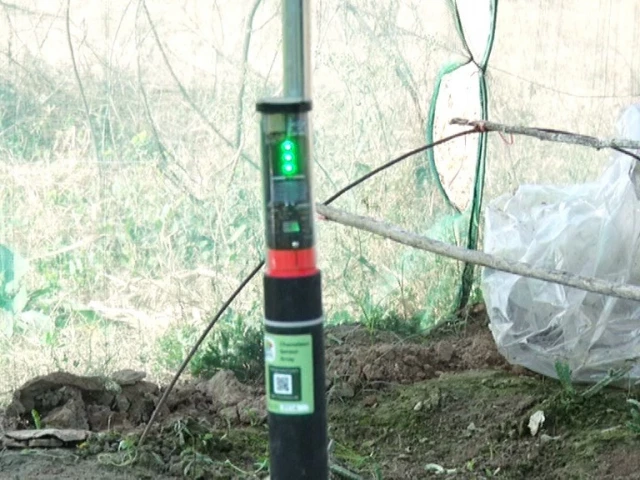
PESHAWAR: Farmers in Khyber-Pakhtunkhwa (K-P) are beginning to save significant amounts of water and improve agricultural productivity with the help of modern soil moisture sensor technology.
Experts believe that scaling up such technology across K-P could help make agriculture more resilient to climate change while easing pressure on Pakistan’s dwindling water resources. Early findings, based on experiences from Punjab, indicate substantial benefits.
The technology, known as a soil water moisture sensor array, has been installed at the Tarnab Research Farm and in selected farming areas of the province. 50 sensors have been installed in Charsadda district and 60 in Mansehra. The sensors provide real-time data to farmers, enabling them to irrigate crops only when necessary rather than relying on guesswork or traditional schedules.
Speaking to The Express Tribune, Dr Gulzar Ahmed, Research Officer at the Pakistan Scientific Research Centre, said the initiative is a joint effort with the International Water Management Institute (IWMI). He explained that the sensor system works on three signals, similar to traffic lights, making it easy for farmers to understand irrigation needs.
Users who are viewing this thread
Total: 1 (members: 0, guests: 1)
Pakistan Defence Latest


Country Watch Latest
-

-
 France offers flexibility for India to integrate indigenous weapons with Rafale (13 Viewers)
- Latest: Pakistanithinktank
-
 Greek media lays out first 24 hours of hypothetical clash with Türkiye (10 Viewers)
- Latest: Watandar
-

-

Latest Posts
-

-
-
 UN should move its headquarters from the US to Middle East - EDITORIAL - ARAB NEWS (13 Viewers)
- Latest: TruthSeeker
-
France offers flexibility for India to integrate indigenous weapons with Rafale (13 Viewers)
- Latest: Pakistanithinktank
-
