Manipulative or not,defence sites say they are allowing us to buy weapons and systems that USA has been reluctant to give us.
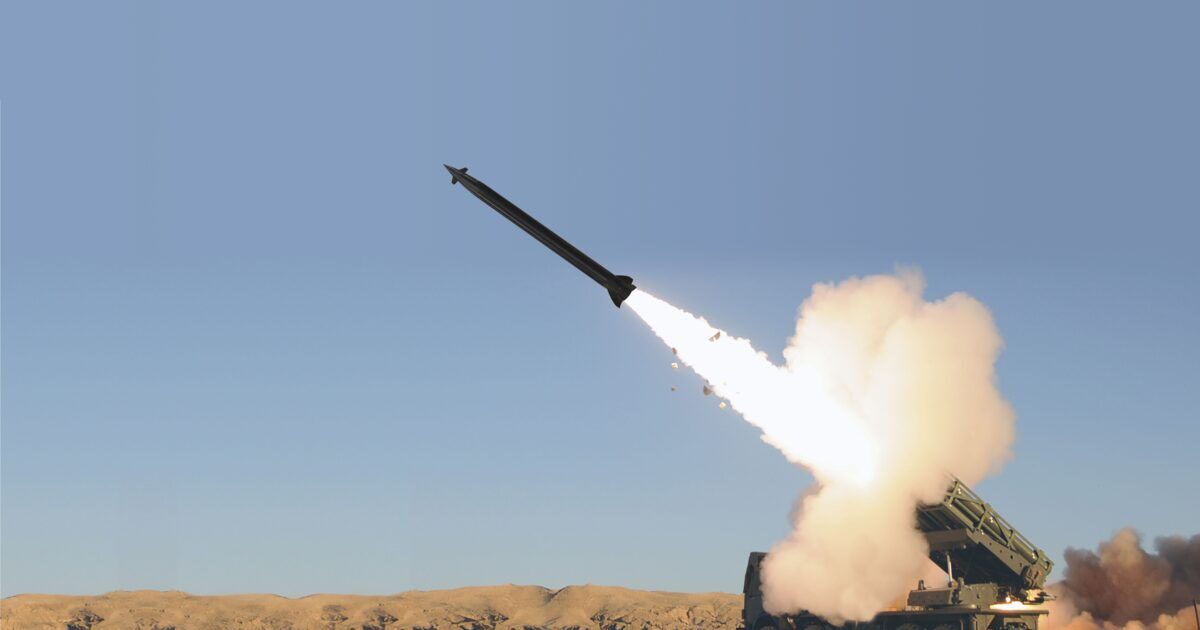
The PULS, which were approved in a closed session of the competent parliamentary committee in early December 2025, at a cost of around 650 million euros, constitute the “edge” of the deep strike for the Greek Army, with the potential to enhance deterrence in Evros and the island area.
The critical element is not only the maximum range attributed to the system, but the overall logic: massive firepower, variety of ammunition, speed of planning and execution of fire, and a message that Greece is not limited to point defense, but is gaining the ability to impose costs in depth.
This first leg leads directly to the second and incomparably larger one, which concerns the Israeli-designed anti-aircraft and anti-missile "umbrella", the so-called "dome", which is being discussed as a package of around 3 billion euros and constitutes the backbone of the "Achilles Shield" strategy.
The committees, the network and the philosophy of deterrence
According to information, after the completion of the PULS process, parallel technical and operational lines of work have already been activated for the main subsystems of the “dome”: Barak, Spyder, David’s Sling and radar.
The goal is to translate the “architecture” into specific configurations, numbers, timetable and, above all, into rules of engagement and interconnection with the national command and control system.
Here lies the essence of the expanded cooperation between Greece and Israel. This is not a simple purchase of weapons systems that will stand autonomously on Greek soil. The Israeli approach, tested in real high-intensity conditions, is based on a network-centric logic, that is, on sensors, C2, launchers and interceptors that operate as a single system, with real-time data exchange.
The “Dome” Levels and Their Role
- Spyder All-in-One (AiO)
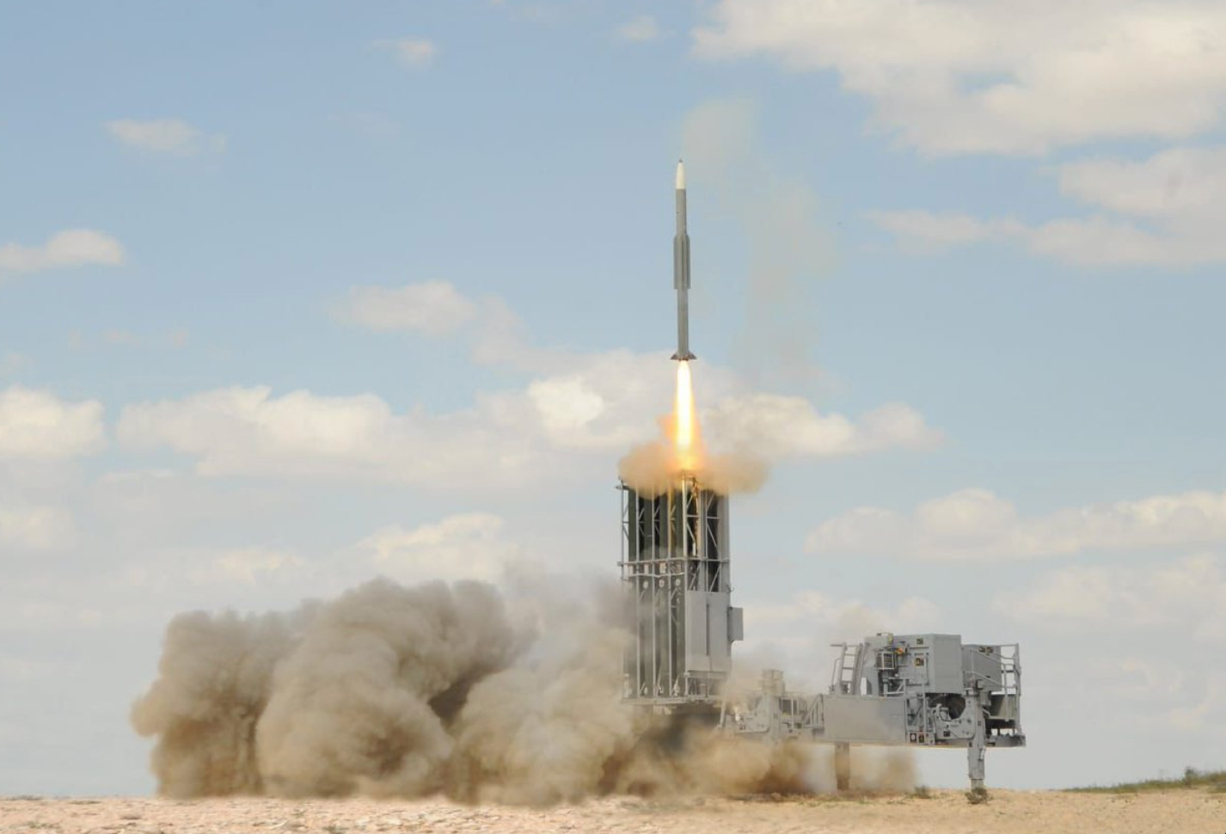
At the lower layer, where the survival of frontline forces, islands and critical installations against UAVs, helicopters and low-flying targets is at stake, the Spyder AiO is emerging as a rapid response and high mobility solution, with Python-5 and Derby missiles on a fully integrated platform
- Barak MX
At the middle layer, the Barak MX is emerging as a “backbone” for regional defense, with capabilities to deal with aircraft, UAVs and missiles, and with a common sense perspective on land and sea. The fact that the Republic of Cyprus has already proceeded with the selection and receipt of the Barak MX shows that the Israeli air defense umbrella is evolving into a regional model in the Eastern Mediterranean and functions as a “multiplier” of trilateral cooperation
- David’s Sling
At the top of the array, to address more demanding threats, David’s Sling is designed as a bridge between classic air defense and anti-ballistic capability. At the operational level, its value is not only the performance of the interceptor, but also the ability to operate as part of a unified air defense picture, with a combination of sensors and multiple “layers” of interception.
- EL/M-2084 Radar (ELM-2084 MMR)
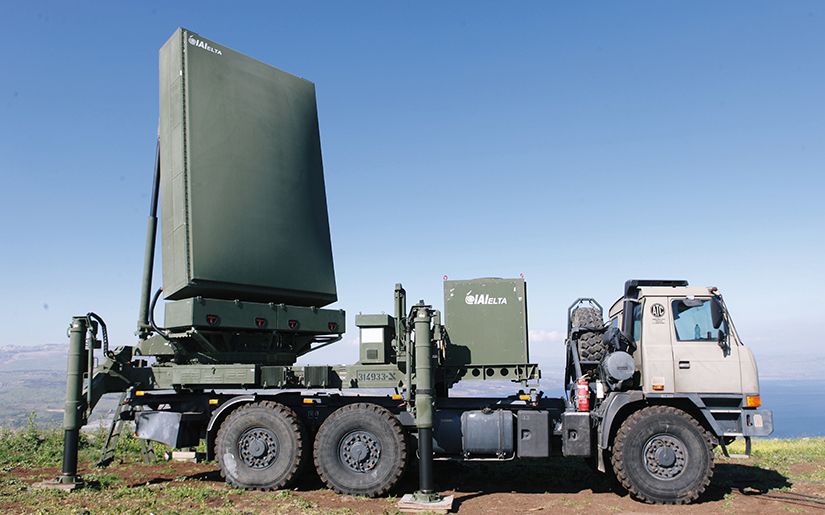
Radars are the “nervous system”. The EL/M-2084 is described by the manufacturer as a multi-mission AESA radar, with a role in air defense and early warning, and is a central sensor in Israeli air defense architectures. For Greece, the stakes are the creation of a sensor array that will reveal low traces and withstand a saturated environment.
Iron Beam: the release of the laser and the economy of war
In this environment, Iron Beam comes as the new tool that changes the economics of interception against cheap, numerous UAVs and saturation attacks. Rafael announced in late December 2025 the delivery of the first operational high-power Iron Beam laser system to the Israeli armed forces, marking the transition from development to operational integration.
For Greece, the discussion of “release” takes on particular importance precisely because the main risk in the Aegean is not only the qualitative threat, but also the quantitative one. That is, the possibility of massive attacks with drones, roving munitions and combined strikes that seek to exhaust interceptor stocks.
The laser, with a lower marginal cost per engagement and theoretically “greater endurance” in prolonged use, can function as a critical complement to classic missile solutions, if properly integrated into C2 and rules of engagement.
This is the deepest value of Iron Beam in the Greek plan. It does not replace Patriot, Barak or Spyder. But it provides an answer where the adversary invests in a cheap attack. And this, against a Turkey that is massively developing UAVs and testing saturation scenarios, is a strategic message.
BlueWhale: undersea superiority, know-how and Greek participation
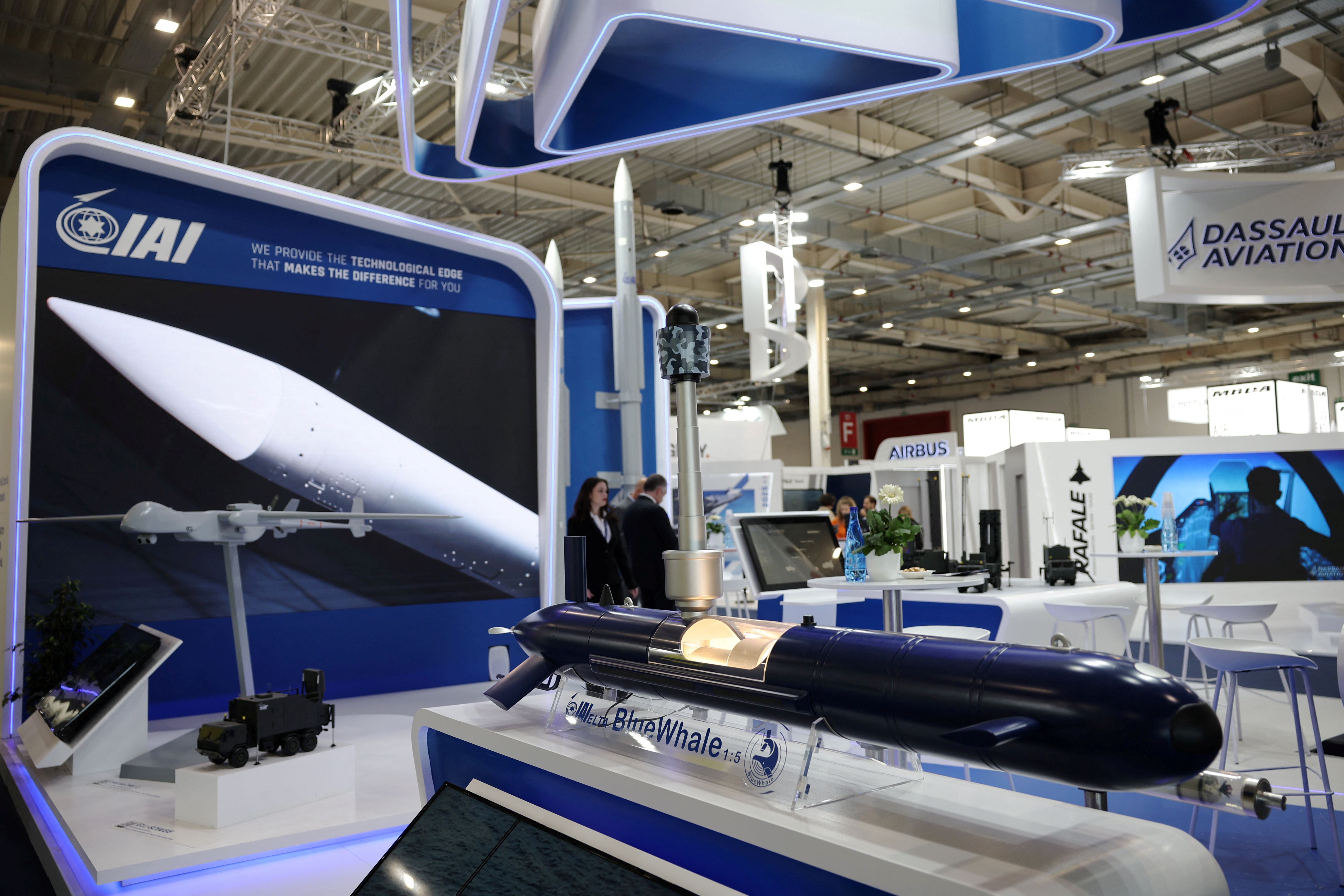
The expansion of Greek-Israeli cooperation does not stop in the sky. It also goes below the surface. The agreement for BlueWhale, IAI’s large unmanned underwater system, connects two critical objectives: operational support for surveillance and anti-submarine warfare missions, and at the same time industrial participation of the Greek Aerospace Industry in production and development.
In a sea where competition is shifting towards sensors, tracks, acoustic imaging and “first contact”, a UUV that can operate for weeks and collect information with a low operational footprint creates a new field of options.
And most importantly, it places Greece in a closed club of countries that are acquiring serious unmanned underwater capabilities, at a time when underwater security (pipelines, cables, ports, naval bases) is evolving into a primary pillar of national defense.
The message to Ankara and the new cost-effective balance
Public statements in Athens, even when they do not name names, are taking pictures. Turkish behavior in the Aegean, the disputes, the instrumentalization of crises and the pursuit of “graying out” create an environment where Greece seeks to take away from Ankara the advantage of initiative.
The goal of the expanded cooperation between Greece and Israel is twofold:
- To increase the ability to impose costs in depth (PULS and more general strike power).
- To reduce the effectiveness of low-cost attacks (dome, anti-drone, Iron Beam, network-centric integration), so that the saturation scenario does not turn into operational or economic hemorrhage.
Turkey has invested for years in massive UAVs and in an aggressive pressure logic with a “hybrid” footprint. Greece's response, with Israeli technology and Western interoperability, is to move the field to network-centric defense, early warning, multiple layers of interception, and a new economy of engagement.
- The feeling that “the architecture is locked in” is not enough. The program will be judged by two indicators:
Speed of implementation: the threat does not wait, and windows of opportunity in prices, production lines and policy decisions are closing quickly.
- Sustainability of support: without substantial Greek participation in C2, integration, MRO and cybersecurity, no shield remains operational for decades.
Precisely for this reason, the expanded cooperation with Israel must translate into a “measurable Greek footprint”. It must create know-how, high-value jobs, the ability to self-support and room for upgrading, so that Greece does not simply buy security, but partially produces it.
Η έγκριση από τη Βουλή της απόκτησης 36 συστημάτων πυραυλικού πυροβολικού PULS δεν ήταν απλώς ένα ακόμη εξοπλιστικό π...

www.onalert.gr