Türkiye vs Israel - tensions, conflicts and rivalry | Latest News and Updates

I was thinking of the pre Erdogan Turkey vs the Turkey since Erdogan on geopolitical level--not on personal level. I didn't mention whatever happening in Iran.

In 1974 when Turkiye had to intervene in Cyprus to stop the genocide we had the UK, France and the Soviet Union threatening us not to. The UK threatened to send 100, 000 troops to the island. The USA also made her threats and you can get a feel for it in the Johnson letter which made all kinds of threats towards Turkiye.

Don't be fooled, when it comes to geopolitical interests, there is no secular, Islamic divide. If a threat presents itself the state will move to protect herself.

Erdogan goes tomorrow and nothing geopolitically will change for Turkiye, nothing.

I pointed out before on this forum the other day, you want to understand the state of Turkiye, pay attention to what her military men say.

And lets not get it twisted pretty much the entire Muslim world left the Syrian people to their fate. Only Turkiye stood firm despite facing threats from the USA, EU. Russia and Isreal.

To view this content we will need your consent to set third party cookies.
For more detailed information, see our cookies page.


One thing we have to give the secular west and the white world in general, when they come after a non-white nation they find it so easy to unite. When the Turk opposes the white mans games, in nearly the whole of history he has done it alone.
 
Last edited:
That is the reason they overthrowned Morsi and with american help installed a puppet Regime.
You forget that millions of Egyptians didn't actually want Morsi and that Morsi was a Muslim Brotherhood radical.

Sisi yes,Sisi yes,Morsi no,Morsi no.
 
In 1974 when Turkiye had to intervene in Cyprus to stop the genocide
Get your facts right and stop spreading misinformation. There was no genocide. In a complicated political situation,there was a coup in Cyprus and Turkey found the chance to intervene.
 
You forget that millions of Egyptians didn't actually want Morsi and that Morsi was a Muslim Brotherhood radical.

Sisi yes,Sisi yes,Morsi no,Morsi no.
Majority wanted him and you greek of all people should know what that means being from the birthplace of democracy or is that only reserved white Europeans?
 
More like a snake. 🐍
Manipulative or not,defence sites say they are allowing us to buy weapons and systems that USA has been reluctant to give us.

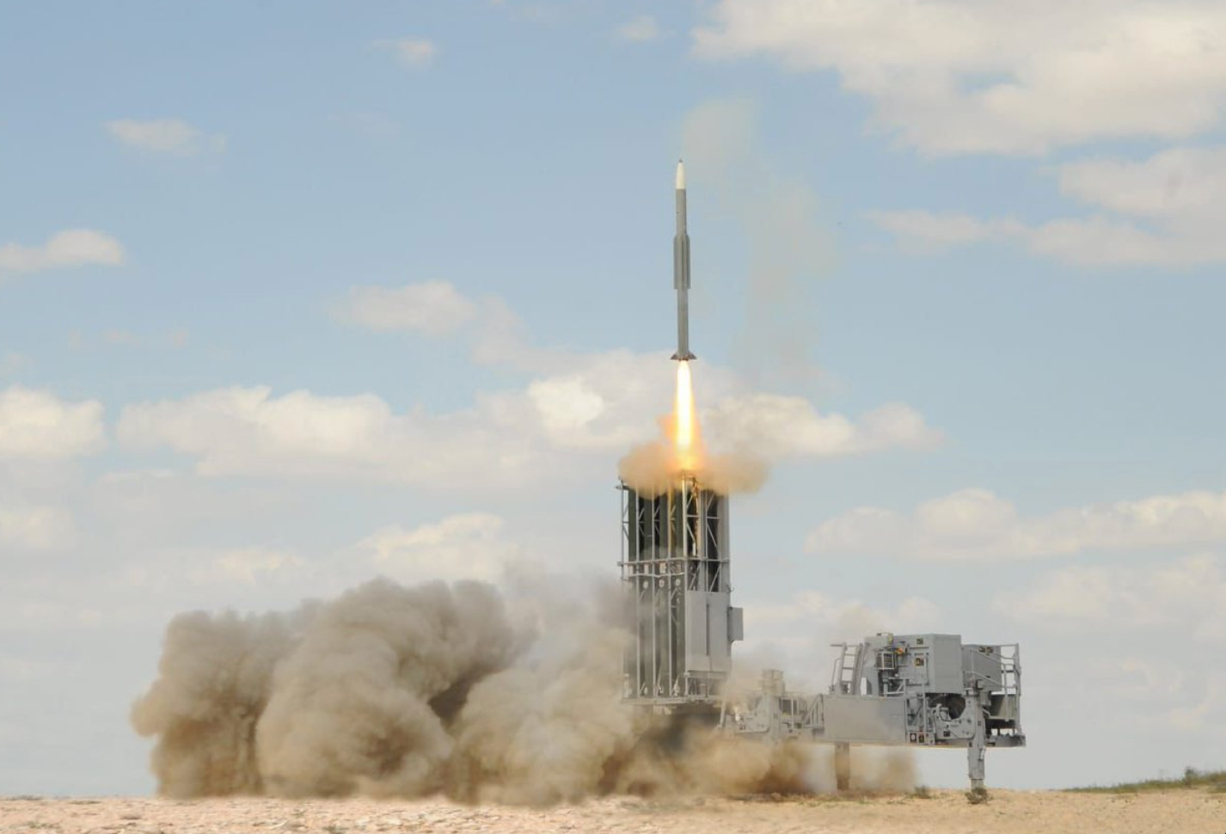
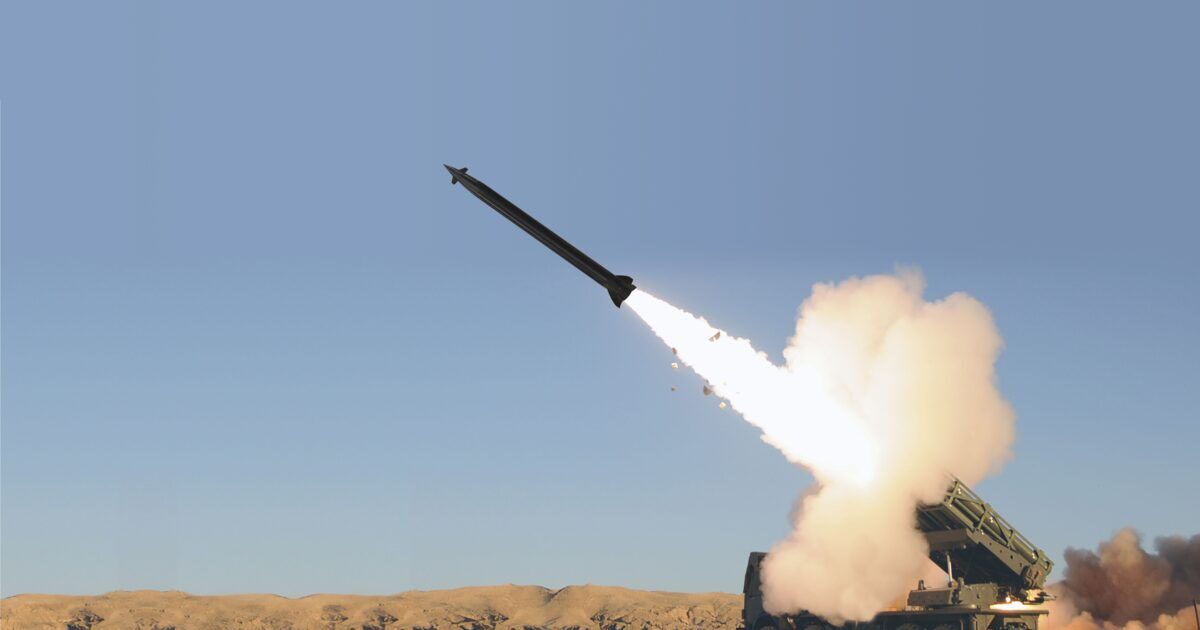
The PULS, which were approved in a closed session of the competent parliamentary committee in early December 2025, at a cost of around 650 million euros, constitute the “edge” of the deep strike for the Greek Army, with the potential to enhance deterrence in Evros and the island area.

The critical element is not only the maximum range attributed to the system, but the overall logic: massive firepower, variety of ammunition, speed of planning and execution of fire, and a message that Greece is not limited to point defense, but is gaining the ability to impose costs in depth.

This first leg leads directly to the second and incomparably larger one, which concerns the Israeli-designed anti-aircraft and anti-missile "umbrella", the so-called "dome", which is being discussed as a package of around 3 billion euros and constitutes the backbone of the "Achilles Shield" strategy.


θόλος


The committees, the network and the philosophy of deterrence

According to information, after the completion of the PULS process, parallel technical and operational lines of work have already been activated for the main subsystems of the “dome”: Barak, Spyder, David’s Sling and radar.

The goal is to translate the “architecture” into specific configurations, numbers, timetable and, above all, into rules of engagement and interconnection with the national command and control system.

Here lies the essence of the expanded cooperation between Greece and Israel. This is not a simple purchase of weapons systems that will stand autonomously on Greek soil. The Israeli approach, tested in real high-intensity conditions, is based on a network-centric logic, that is, on sensors, C2, launchers and interceptors that operate as a single system, with real-time data exchange.

The “Dome” Levels and Their Role
  • Spyder All-in-One (AiO)

    At the lower layer, where the survival of frontline forces, islands and critical installations against UAVs, helicopters and low-flying targets is at stake, the Spyder AiO is emerging as a rapid response and high mobility solution, with Python-5 and Derby missiles on a fully integrated platform

  • Barak MX

    At the middle layer, the Barak MX is emerging as a “backbone” for regional defense, with capabilities to deal with aircraft, UAVs and missiles, and with a common sense perspective on land and sea. The fact that the Republic of Cyprus has already proceeded with the selection and receipt of the Barak MX shows that the Israeli air defense umbrella is evolving into a regional model in the Eastern Mediterranean and functions as a “multiplier” of trilateral cooperation

  • David’s Sling

    At the top of the array, to address more demanding threats, David’s Sling is designed as a bridge between classic air defense and anti-ballistic capability. At the operational level, its value is not only the performance of the interceptor, but also the ability to operate as part of a unified air defense picture, with a combination of sensors and multiple “layers” of interception.

  • EL/M-2084 Radar (ELM-2084 MMR)

    Radars are the “nervous system”. The EL/M-2084 is described by the manufacturer as a multi-mission AESA radar, with a role in air defense and early warning, and is a central sensor in Israeli air defense architectures. For Greece, the stakes are the creation of a sensor array that will reveal low traces and withstand a saturated environment.
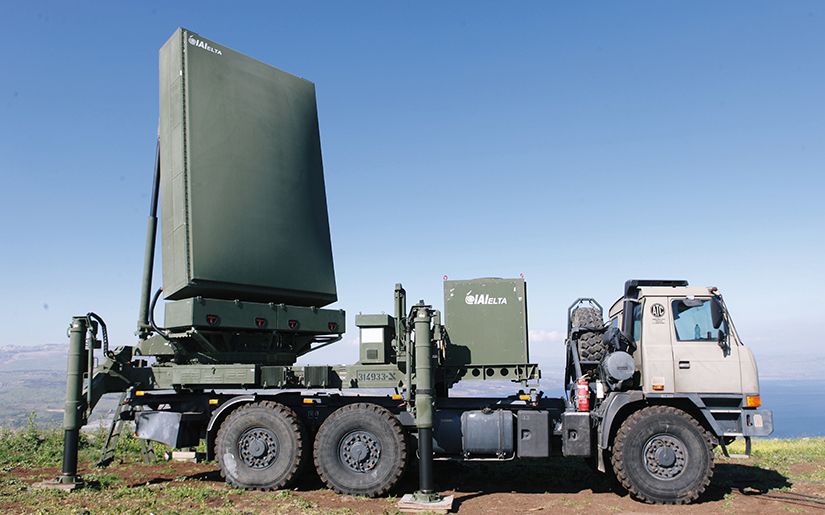
ELM-RADAR-ISRAEL.jpeg


Iron Beam: the release of the laser and the economy of war

In this environment, Iron Beam comes as the new tool that changes the economics of interception against cheap, numerous UAVs and saturation attacks. Rafael announced in late December 2025 the delivery of the first operational high-power Iron Beam laser system to the Israeli armed forces, marking the transition from development to operational integration.

For Greece, the discussion of “release” takes on particular importance precisely because the main risk in the Aegean is not only the qualitative threat, but also the quantitative one. That is, the possibility of massive attacks with drones, roving munitions and combined strikes that seek to exhaust interceptor stocks.

The laser, with a lower marginal cost per engagement and theoretically “greater endurance” in prolonged use, can function as a critical complement to classic missile solutions, if properly integrated into C2 and rules of engagement.

This is the deepest value of Iron Beam in the Greek plan. It does not replace Patriot, Barak or Spyder. But it provides an answer where the adversary invests in a cheap attack. And this, against a Turkey that is massively developing UAVs and testing saturation scenarios, is a strategic message.
Ισραήλ


BlueWhale: undersea superiority, know-how and Greek participation


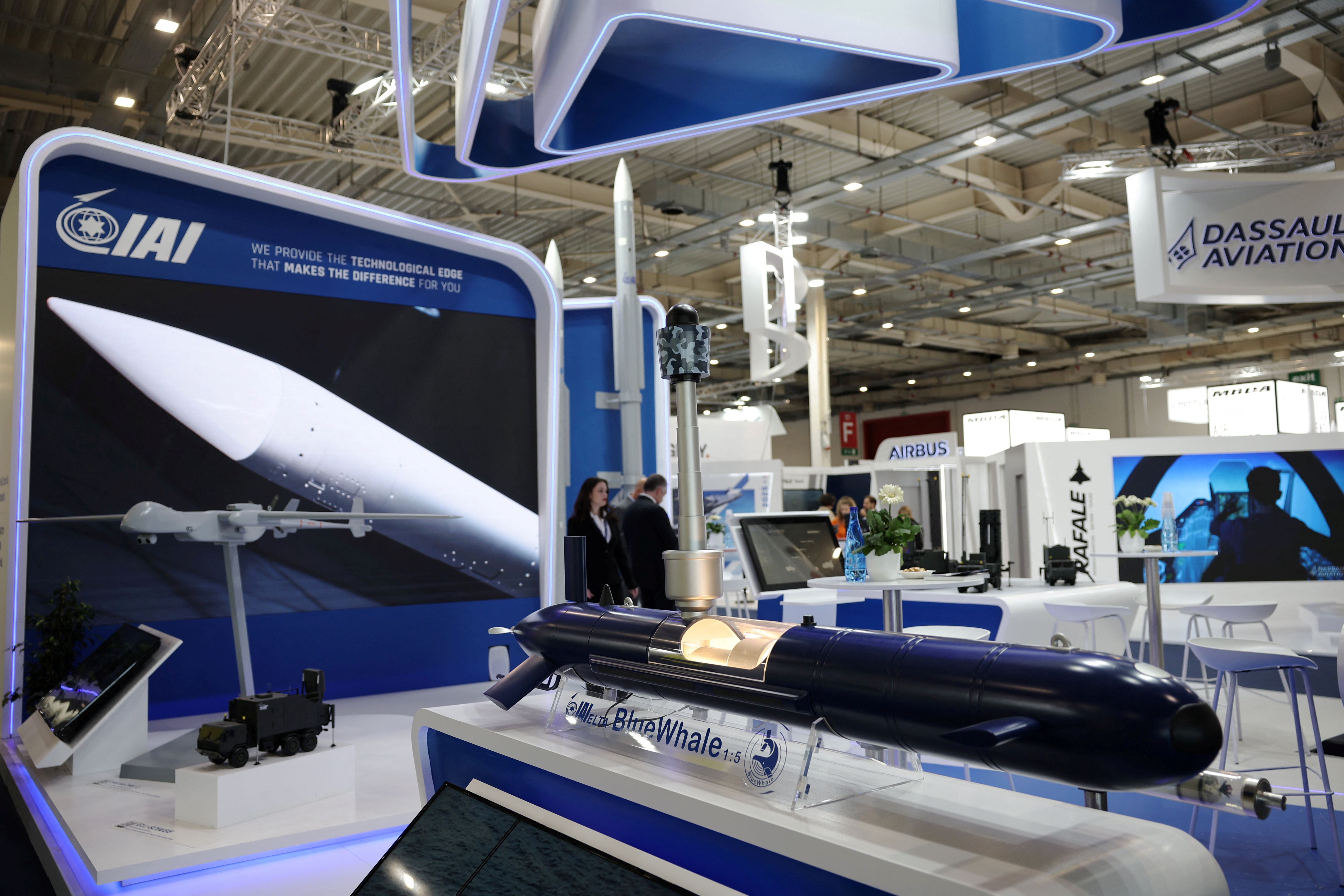
The expansion of Greek-Israeli cooperation does not stop in the sky. It also goes below the surface. The agreement for BlueWhale, IAI’s large unmanned underwater system, connects two critical objectives: operational support for surveillance and anti-submarine warfare missions, and at the same time industrial participation of the Greek Aerospace Industry in production and development.

In a sea where competition is shifting towards sensors, tracks, acoustic imaging and “first contact”, a UUV that can operate for weeks and collect information with a low operational footprint creates a new field of options.

And most importantly, it places Greece in a closed club of countries that are acquiring serious unmanned underwater capabilities, at a time when underwater security (pipelines, cables, ports, naval bases) is evolving into a primary pillar of national defense.

The message to Ankara and the new cost-effective balance

Public statements in Athens, even when they do not name names, are taking pictures. Turkish behavior in the Aegean, the disputes, the instrumentalization of crises and the pursuit of “graying out” create an environment where Greece seeks to take away from Ankara the advantage of initiative.

The goal of the expanded cooperation between Greece and Israel is twofold:

  • To increase the ability to impose costs in depth (PULS and more general strike power).

  • To reduce the effectiveness of low-cost attacks (dome, anti-drone, Iron Beam, network-centric integration), so that the saturation scenario does not turn into operational or economic hemorrhage.

    Turkey has invested for years in massive UAVs and in an aggressive pressure logic with a “hybrid” footprint. Greece's response, with Israeli technology and Western interoperability, is to move the field to network-centric defense, early warning, multiple layers of interception, and a new economy of engagement.

  • The feeling that “the architecture is locked in” is not enough. The program will be judged by two indicators:

    Speed of implementation: the threat does not wait, and windows of opportunity in prices, production lines and policy decisions are closing quickly.
  • Sustainability of support: without substantial Greek participation in C2, integration, MRO and cybersecurity, no shield remains operational for decades.

    Precisely for this reason, the expanded cooperation with Israel must translate into a “measurable Greek footprint”. It must create know-how, high-value jobs, the ability to self-support and room for upgrading, so that Greece does not simply buy security, but partially produces it.

 
Last edited:
To view this content we will need your consent to set third party cookies.
For more detailed information, see our cookies page.

Turkey deploys advanced radar at Damascus airport, raising Israeli concerns

Turkey deployed an advanced radar system at Damascus International Airport, a move Western sources warn could restrict Israel’s freedom of action in Syrian airspace and heighten regional tensions.

Turkey recently deployed an advanced radar system at Damascus International Airport in a move that could limit Israel’s freedom of action in Syrian airspace.

The HTRS-100 air traffic control radar system, produced by the Turkish defense company ASELSAN, was described by Turkey’s Ambassador to Syria Nuh Yilmaz as a deployment that “represents a significant infrastructure upgrade for the main aviation hub of Syria’s capital.”

The system provides “precise detection and tracking of all aerial targets surrounding airports, integrating the most advanced technologies to ensure maximum reliability and performance,” a Turkish expert said.

The radar operates at ranges of approximately 150-200 km., and is described as a tool that “delivers accurate detection and tracking of all airborne targets in the vicinity of the airport.”

The Jerusalem Post reported in December that Turkey was working to deploy radar systems across Syrian territory, in a move that, according to Western intelligence sources, could significantly reduce Israel’s aerial freedom of action over the country.

Over the past year, Israel has operated freely in Syria and has also used Syrian airspace to reach targets in other countries, such as Iran.

Senior security official: 'Turkish air base would undermine Israel's freedom of action in Syria'

About a year ago, shortly after the fall of Bashar al-Assad’s regime, Israel carried out a series of strikes against military bases in Syria, including Syrian Air Force installations. These strikes were conducted amid concerns that Turkey might establish permanent bases on Syrian soil and deploy drones there.

At the same time, a senior security official told reporters that the possibility of Turkey establishing a military base in Syria constituted a “potential threat.”

“If a Turkish airbase is established, it would undermine Israel’s freedom of action in Syria,” the official said.

“This is a potential threat that we oppose. We struck the bases to send a clear message that we will not allow our aerial freedom of action to be compromised.”

Recently, tensions between Israel and Turkey have escalated further. Yeni Safak, a Turkish outlet with a pro-President Recep Tayyip Erdogan spin, published a headline declaring “Israel is Turkey’s number one enemy” a day after a trilateral meeting between Prime Minister Benjamin Netanyahu and the leaders of Greece and Cyprus.

During that meeting, Netanyahu stated, “To those who fantasize about restoring their empires, it’s not going to happen,” in an apparent reference to Erdogan.


1. This is a radar system developed for civil aviation.

2. This is how cheap Israeli propaganda looks like.
 
Majority wanted him and you greek of all people should know what that means being from the birthplace of democracy or is that only reserved white Europeans?
The Hellenic world had kings and emperors for more than 5,000 years. Talking about Athens which was not even a total democracy,makes you sound like those liberal-leftists.
 
You forget that millions of Egyptians didn't actually want Morsi and that Morsi was a Muslim Brotherhood radical.

Sisi yes,Sisi yes,Morsi no,Morsi no.

Hold election in Egypt today, see who wins. lol
 
Manipulative or not,defence sites say they are allowing us to buy weapons and systems that USA has been reluctant to give us.

The PULS, which were approved in a closed session of the competent parliamentary committee in early December 2025, at a cost of around 650 million euros, constitute the “edge” of the deep strike for the Greek Army, with the potential to enhance deterrence in Evros and the island area.

The critical element is not only the maximum range attributed to the system, but the overall logic: massive firepower, variety of ammunition, speed of planning and execution of fire, and a message that Greece is not limited to point defense, but is gaining the ability to impose costs in depth.

This first leg leads directly to the second and incomparably larger one, which concerns the Israeli-designed anti-aircraft and anti-missile "umbrella", the so-called "dome", which is being discussed as a package of around 3 billion euros and constitutes the backbone of the "Achilles Shield" strategy.


θόλος


The committees, the network and the philosophy of deterrence

According to information, after the completion of the PULS process, parallel technical and operational lines of work have already been activated for the main subsystems of the “dome”: Barak, Spyder, David’s Sling and radar.

The goal is to translate the “architecture” into specific configurations, numbers, timetable and, above all, into rules of engagement and interconnection with the national command and control system.

Here lies the essence of the expanded cooperation between Greece and Israel. This is not a simple purchase of weapons systems that will stand autonomously on Greek soil. The Israeli approach, tested in real high-intensity conditions, is based on a network-centric logic, that is, on sensors, C2, launchers and interceptors that operate as a single system, with real-time data exchange.

The “Dome” Levels and Their Role
  • Spyder All-in-One (AiO)

    At the lower layer, where the survival of frontline forces, islands and critical installations against UAVs, helicopters and low-flying targets is at stake, the Spyder AiO is emerging as a rapid response and high mobility solution, with Python-5 and Derby missiles on a fully integrated platform

  • Barak MX

    At the middle layer, the Barak MX is emerging as a “backbone” for regional defense, with capabilities to deal with aircraft, UAVs and missiles, and with a common sense perspective on land and sea. The fact that the Republic of Cyprus has already proceeded with the selection and receipt of the Barak MX shows that the Israeli air defense umbrella is evolving into a regional model in the Eastern Mediterranean and functions as a “multiplier” of trilateral cooperation

  • David’s Sling

    At the top of the array, to address more demanding threats, David’s Sling is designed as a bridge between classic air defense and anti-ballistic capability. At the operational level, its value is not only the performance of the interceptor, but also the ability to operate as part of a unified air defense picture, with a combination of sensors and multiple “layers” of interception.

  • EL/M-2084 Radar (ELM-2084 MMR)

    Radars are the “nervous system”. The EL/M-2084 is described by the manufacturer as a multi-mission AESA radar, with a role in air defense and early warning, and is a central sensor in Israeli air defense architectures. For Greece, the stakes are the creation of a sensor array that will reveal low traces and withstand a saturated environment.
ELM-RADAR-ISRAEL.jpeg


Iron Beam: the release of the laser and the economy of war

In this environment, Iron Beam comes as the new tool that changes the economics of interception against cheap, numerous UAVs and saturation attacks. Rafael announced in late December 2025 the delivery of the first operational high-power Iron Beam laser system to the Israeli armed forces, marking the transition from development to operational integration.

For Greece, the discussion of “release” takes on particular importance precisely because the main risk in the Aegean is not only the qualitative threat, but also the quantitative one. That is, the possibility of massive attacks with drones, roving munitions and combined strikes that seek to exhaust interceptor stocks.

The laser, with a lower marginal cost per engagement and theoretically “greater endurance” in prolonged use, can function as a critical complement to classic missile solutions, if properly integrated into C2 and rules of engagement.

This is the deepest value of Iron Beam in the Greek plan. It does not replace Patriot, Barak or Spyder. But it provides an answer where the adversary invests in a cheap attack. And this, against a Turkey that is massively developing UAVs and testing saturation scenarios, is a strategic message.
Ισραήλ


BlueWhale: undersea superiority, know-how and Greek participation


The expansion of Greek-Israeli cooperation does not stop in the sky. It also goes below the surface. The agreement for BlueWhale, IAI’s large unmanned underwater system, connects two critical objectives: operational support for surveillance and anti-submarine warfare missions, and at the same time industrial participation of the Greek Aerospace Industry in production and development.

In a sea where competition is shifting towards sensors, tracks, acoustic imaging and “first contact”, a UUV that can operate for weeks and collect information with a low operational footprint creates a new field of options.

And most importantly, it places Greece in a closed club of countries that are acquiring serious unmanned underwater capabilities, at a time when underwater security (pipelines, cables, ports, naval bases) is evolving into a primary pillar of national defense.

The message to Ankara and the new cost-effective balance

Public statements in Athens, even when they do not name names, are taking pictures. Turkish behavior in the Aegean, the disputes, the instrumentalization of crises and the pursuit of “graying out” create an environment where Greece seeks to take away from Ankara the advantage of initiative.

The goal of the expanded cooperation between Greece and Israel is twofold:

  • To increase the ability to impose costs in depth (PULS and more general strike power).

  • To reduce the effectiveness of low-cost attacks (dome, anti-drone, Iron Beam, network-centric integration), so that the saturation scenario does not turn into operational or economic hemorrhage.

    Turkey has invested for years in massive UAVs and in an aggressive pressure logic with a “hybrid” footprint. Greece's response, with Israeli technology and Western interoperability, is to move the field to network-centric defense, early warning, multiple layers of interception, and a new economy of engagement.

  • The feeling that “the architecture is locked in” is not enough. The program will be judged by two indicators:

    Speed of implementation: the threat does not wait, and windows of opportunity in prices, production lines and policy decisions are closing quickly.
  • Sustainability of support: without substantial Greek participation in C2, integration, MRO and cybersecurity, no shield remains operational for decades.

    Precisely for this reason, the expanded cooperation with Israel must translate into a “measurable Greek footprint”. It must create know-how, high-value jobs, the ability to self-support and room for upgrading, so that Greece does not simply buy security, but partially produces it.

honestly weird thing I never got why Greece is so far behind with their own military industry compared to most European countries even east European countries but dude yeah they’re snakes nothing against Greeks because most stand with Palestinians even if they disagree with turkey etc but yeah a snake will turn on you sooner or later
 
honestly weird thing I never got why Greece is so far behind with their own military industry compared to most European countries even east European countries but dude yeah they’re snakes nothing against Greeks because most stand with Palestinians even if they disagree with turkey etc but yeah a snake will turn on you sooner or later
Well on the military industry part,we had a promising one in the 70s and 80s with some good projects in the 90s as well. But political corruption,government indifference and interests destroyed it.

On the second part,I don't doubt if Israelis could strike a deal with the Turks and reconciliate,they'd leave us like that but for now,we need to get any weapons and ToT they can give us and others like the Americans aren't. You see,the Americans and some Western Europeans care about NATO and wouldn't give us everything needed in a possible war with Turkey. The Israelis are not in NATO so they don't care. Right now they feel threatened by Turkey and we must take advantage of that.

But I understand what you're saying. No State can completely trust another one.
 
Well on the military industry part,we had a promising one in the 70s and 80s with some good projects in the 90s as well. But political corruption,government indifference and interests destroyed it.

On the second part,I don't doubt if Israelis could strike a deal with the Turks and reconciliate,they'd leave us like that but for now,we need to get any weapons and ToT they can give us and others like the Americans aren't. You see,the Americans and some Western Europeans care about NATO and wouldn't give us everything needed in a possible war with Turkey. The Israelis are not in NATO so they don't care. Right now they feel threatened by Turkey and we must take advantage of that.

But I understand what you're saying. No State can completely trust another one.
No Israelis will turn on everyone they are in it for themselves and will use any pawns to further that this isn’t if turkey and Israel become friendly that’s what Israelis do play everyone against each other same as they always do
 
You forget that millions of Egyptians didn't actually want Morsi and that Morsi was a Muslim Brotherhood radical.

Sisi yes,Sisi yes,Morsi no,Morsi no.
Ok but he was elected in a poll ni by a finger.
 

Users who are viewing this thread

Pakistan Defence Latest

Back
Top