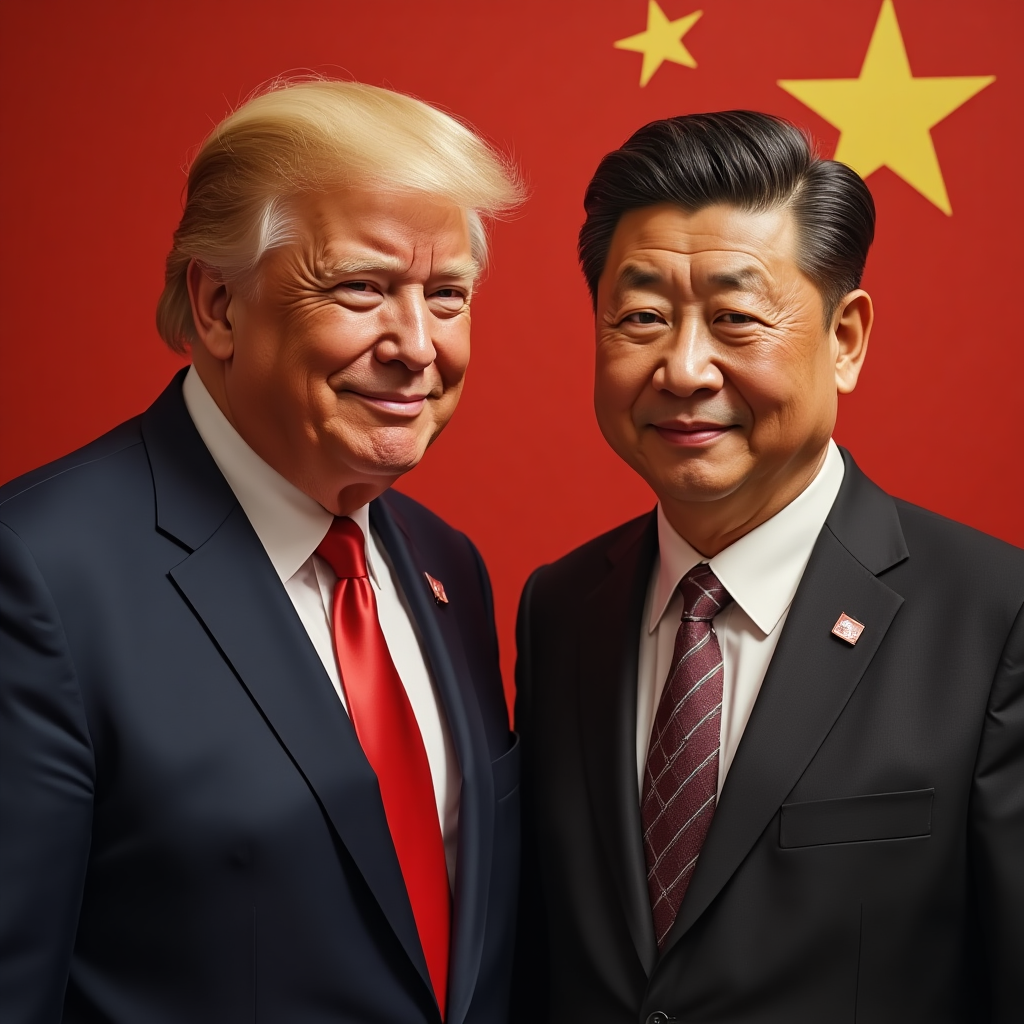
Exactly the opposite. China's industrial chain is protecting the only remaining large enterprises in Germany, and China is now a refuge for German companies.
You can go to Taicang County, Jiangsu Province, China to take a look. German companies are all taking refuge there. There are currently 568 German companies in Taicang County, among which 18 of the top 20 German companies are located in Taicang County. These German companies are using China's industrial chain to sustain their survival.
According to data compiled by the German Economic Institute (IW), German investment in China rose to more than $8 billion in 2024.

www.fxleaders.com
Germany’s Investment in China Hits a Four-Year High
Tuesday, January 27, 2026
BERLIN/FRANKFURT, Jan 27 (Reuters) - Investments by German companies in China hit a four-year high in 2025, data compiled for Reuters shows, underscoring how U.S. President Donald Trump's
trade policy is pushing industries and governments to boost business ties elsewhere.
The previously unreported data from the IW German Economic Institute showed investments in China rose to more than 7 billion euros ($8 billion) between January and November last year, up 55.5% from 4.5 billion euros in 2024 and 2023.
At the same time, German companies nearly halved their investments in the United States during the first year of Trump’s second term. Meanwhile, China reclaimed its position as Germany’s largest trading partner last year, after having been overtaken by the U.S. in 2024.
The figures illustrate how the Trump administration’s aggressive tariff policies following its return to the White House have undermined business confidence among firms in Europe’s largest economy, prompting them to look to China as an alternative market.
This shift comes as the EU signed a free trade agreement with Mercosur just weeks ago and finalized another deal with India only hours ago.
Middle powers seek alternatives
Germany is not alone in strengthening trade ties beyond the U.S. sphere of influence. British officials are traveling to China this week in hopes of securing additional trade agreements, ranging from automobiles to pharmaceuticals.
Similarly, Canada is looking to expand its trade relationships with China and India. In this context, Prime Minister Mark Carney presented an alternative to Trump’s worldview at the World Economic Forum in Davos last week.
Carney argued that while the rules-based global order may have come to an end, Canada and other “middle powers” can act collectively to avoid becoming casualties of U.S. trade policy. “When the rules no longer protect you, you have to protect yourself,” he said.
The remark came shortly before Carney continued negotiations with China on a preliminary trade agreement that would include preferential access for Chinese electric vehicles to the Canadian market. Shortly thereafter, Trump threatened to impose a 100% tariff on Canadian products.
German firms' China investments driven to four-year high by US trade wars
January 27, 202611:16 AM UTCUpdated ago