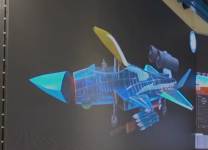
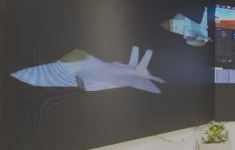
JF-17 PFX program

Kaan was such a super missed opportunity.

Remember the PaKiStaAnI EngINe3rs WoRkING at kAaN? they were originally sent with the mission to...wait for it...decide if it was better to join Kaan or pursue Azm...for 2 years they were supposed to figure this out. Just imagine the hubris of our people. Sonay pe suhaga. At the end of this period Azm was cancelled and Pakistan was basically too late and unwilling to join Kaan. Kaheen kay nahin rahay. I remember all the "ThE TuRKS dONt Kn0W wh@t th3y R d0iNG", especially from the PAF guys I met, especially especially from the PAF guys that ended up going to Kaan. I just need to smoke whatever they smoke. Like being a Trump supporter - living in your reality despite facts you can literally see.

I'm sorry, I was just too close to the Kaan-PAF fiasco. No point in crying over spilled milk.
I distinctly remember folks on the old PDF saying that PAC was ahead of TAI in aerospace R&D and manufacturing. Like, it was so stupid to hear it back then, but unfortunately, we had (and have) a lot of people buying it up.
 
@Michael

As they become more affordable and ubiquitous with 5th and 6th gen R&D, there is the increased use more modern carbon fiber that is thermally optimized, to reduce IR signature, especially at key places on the aircraft; Intakes, leading edges and tail, at the nose (behind the radome). Any estimate what these materials would cost to implement at these key locations if not over larger parts of the aircraft?

Furthermore, with datalinks as with AESA radars, we will probably invisible warfare between aircraft. AESA radars trying to jam or fry the other guys electronics, while datalinks or ew suites trying to jam but also insert malware into the other’s network.
IMO Bayraktar has invested in the most strategic fields: building one of the world's largest aero-quality composite naterial facility, and a JV with Ukraine to make turbo-fan engines. According to Selchuk Bayrakrar, he wants to see the turbo-fan engines are to his drones like the way batteries are to the smart phones. It implies he wants to change the culture of making platforms based on the engines....
 
What aircraft meets the Chinese military standard for 4.5th-generation fighter jet?
The Chinese military and defense industry still use the old standard in formal and rigorous contexts (i.e., the J-10C and J-16 are considered 3rd-generation fighters, and the J-20 is considered a 4th-generation fighter); however, in informal settings and in Chinese state media propaganda, they use the new standard (i.e., the J-10C and J-16 are considered 4th-generation fighters, and the J-20 is considered a 5th-generation fighter). To avoid confusion, I will use the new standard in the following description.

In a more rigorous classification, the J-16 is considered a 4.5th-generation fighter. The J-10C is a 4th-generation fighter; its avionics system approaches the level of a 4.5th-generation fighter, but the J-10C as a whole does not meet the 4.5th-generation fighter standard.
 
Would go for one of the Single engine designs studied by Türkiye, when they were developing their KAAN program be a good choice?

The FX-06 option, with the proposed TF-35000 engine would have nearly the same TWR as the F-35. A version without an internal weapons bay could be more affordable. The 4.5 gen design the PAF may want, if the costs can be controlled. We would have to see how far along the Turks were in the R&D on the design though.

ljuperu.jpg

This was previously discussed, check this thread.

@puttputt

I agree that Pakistan’s defense industry cannot be compared to Turkey or other emerging defense powers because it is still building the most basic industrial, technological, and institutional foundations. Unlike Turkey which spent decades investing in R&D, manufacturing ecosystems, supply chains, and governance reforms. Pakistan remains heavily dependent on foreign suppliers for critical technologies, components, and sustainment.

Most of Pakistan’s major platforms, including the JF‑17, rely on 3rd party support for avionics, sensors, engines, electronics, and integration. Without external partners, these programs cannot function. This dependency limits Pakistan’s ability to design, produce, or export advanced systems independently.

Until Pakistan strengthens its economy, reforms its institutions, and builds a coherent defense industrial base, it cannot realistically produce major platforms on its own or match countries that have already built decades of indigenous capability. The priority must be economic stability, industrial infrastructure, and long term capability development, not comparisons or unrealistic expectations.
 
@JamD

Should we, and can we, bring the complete JF-17 production line to Pakistan? How do you see such a project contributing to our know-how?
 
@JamD

Should we, and can we, bring the complete JF-17 production line to Pakistan? How do you see such a project contributing to our know-how?
please explain complete production? from raw metals to full JF-17B3? or we import all materials in the form from which we can make all sub systems and also an airframe
 
please explain complete production? from raw metals to full JF-17B3? or we import all materials in the form from which we can make all sub systems and also an airframe
Honestly, I'd rather more knowledgeable members define it. Obviously, we shouldn't aim at a hundered-percent localisation, even if excluding the engine, because we lack finances and scale. But aluminium alloys are certainly something we could invest in. So yes, importing raw inputs when localisation isn't feasible and local subsystems whenever possible.
 
@JamD

Should we, and can we, bring the complete JF-17 production line to Pakistan? How do you see such a project contributing to our know-how?
Really depends on what we as a nation and PAF decides. Questions to ask
A. Does PAF see the JF-17 serving in some form (future blocks) for a another 30 years or is the JF-17 basically maxed out in terms of space, role, and upgrade capacity?
B. Does Pakistan really want to industrialize starting with its aerospace industry and is it willing to make the requisite investment. This is a huge question.

If the answer to both questions is a resounding yes, THEN it would make sense to increase PAC's production share in the JF-17. In terms of what this means:
1. Import all of the machines and jigs used to manufacture 100% of the airframe albeit with imported raw material.
2. Have a plan to start sourcing this material locally.
3. Separately identify systems and make a priority list of what is easiest to make in Pakistan and go down that list slowly. For example maybe the MAWS is easier to manufacture locally then the HUD (I'm making this up as an example).

If you ask me personally, I don't think the answer to either A or B is yes.
My answer A: JF-17 is a rather small jet that has served its purpose for the time it was designed for. It has limited upgrade capacity in terms of structural strength, excess electrical power, physical space, payload capacity, airframe design. It would make more sense for PAF to look for the next backbone for PAF's fleet - I don't think JF-17 has the upgradability and the backing of the USA as the F-16 before anyone makes that comparison.
My answer B: Aerospace is a very high tech industry and for a country like Pakistan that has essentially deindustrialized en masse, I would think there are many more lower rungs of industry that need to be built before we should do aerospace. For example, a vibrant automotive industry might make a good stepping stone. This will also jumpstart things like aluminum plants that will end up feeding your eventual aerospace industry.
 
This was previously discussed, check this thread.

@puttputt

I agree that Pakistan’s defense industry cannot be compared to Turkey or other emerging defense powers because it is still building the most basic industrial, technological, and institutional foundations. Unlike Turkey which spent decades investing in R&D, manufacturing ecosystems, supply chains, and governance reforms. Pakistan remains heavily dependent on foreign suppliers for critical technologies, components, and sustainment.

Most of Pakistan’s major platforms, including the JF‑17, rely on 3rd party support for avionics, sensors, engines, electronics, and integration. Without external partners, these programs cannot function. This dependency limits Pakistan’s ability to design, produce, or export advanced systems independently.

Until Pakistan strengthens its economy, reforms its institutions, and builds a coherent defense industrial base, it cannot realistically produce major platforms on its own or match countries that have already built decades of indigenous capability. The priority must be economic stability, industrial infrastructure, and long term capability development, not comparisons or unrealistic expectations.
yara, the problem is that to improve the economy and initiate development, we need to enact very aggressive reforms at the top, such as:
  • 1. Removing babus from leadership and authority in the SOEs.

  • 2. Keeping generals, retired senior officers, political appointees, party loyalists, etc out of the SOEs.

  • 3. Revamping the tax system so that the burden on manufacturing is reduced and, instead, the taxation on wholesalers, importers and big agriculturalists is raised.
I am confident that if we executed the aforementioned 3 steps with ruthlessness, the Pakistani economy will turn around, we'll have a booming industrial base, and we'll be known as the Asian Leopard for springing off a tree and taking everyone by surprise.
 
yara, the problem is that to improve the economy and initiate development, we need to enact very aggressive reforms at the top, such as:
  • 1. Removing babus from leadership and authority in the SOEs.

  • 2. Keeping generals, retired senior officers, political appointees, party loyalists, etc out of the SOEs.

  • 3. Revamping the tax system so that the burden on manufacturing is reduced and, instead, the taxation on wholesalers, importers and big agriculturalists is raised.
I am confident that if we executed the aforementioned 3 steps with ruthlessness, the Pakistani economy will turn around, we'll have a booming industrial base, and we'll be known as the Asian Leopard for springing off a tree and taking everyone by surprise.

Before anything can improve, Pakistan must first be freed from the hijackers who have captured the state. These power brokers have only one mission, cling to authority at any cost, even if the entire country collapses under their watch. They have dismantled every pillar that makes a nation functional, democracy has been hollowed out, the government reduced to a rubber stamp, and the judiciary turned into a tool for settling political scores. Nothing operates the way it should. Institutions don’t serve the people; they serve the puppeteers pulling the strings behind the curtain.

What you see today is not governance. it’s a staged performance designed to keep the same small group in control while the nation sinks deeper into crisis. Until Pakistan is liberated from these forces, no reform, no progress, and no justice can ever take root.
This is the reality no one wants to talk about.
 

Users who are viewing this thread

Pakistan Defence Latest

Latest Posts

Back
Top