Aerospace Hongtu collaborates on a 2.8 billion yuan aerospace project in Suzhou, advancing an annual production capacity of 20 rockets.
cls.cn·
Jan 19 15:28
① PIESAT collaborates on a 2.8 billion yuan aerospace project in Suzhou; ② Meanwhile, the company is advancing its annual production capacity of 20 rockets.
Cailian Press, January 19 (reporter Liang Xiangcai) PIESAT (688066.SH), a satellite internet company that has incurred losses for two consecutive years, is intensifying its efforts in satellite networking and rocket manufacturing.
According to a WeChat post by the Suzhou High-Tech Zone in Anhui Province this afternoon, on January 16, a signing ceremony for the Suzhou Aerospace Industry Project, with a total investment of approximately 2.8 billion yuan, was held at the city’s high-tech zone. Wang Yuxiang, Chairman of PIESAT, Zhao Shouzhi, General Manager of 21Vianet (Suzhou) Technology Co., Ltd., and Yan Zhixin, Chairman and President of Galaxy Space Domain (Shanghai) Aerospace Technology Co., Ltd., attended the signing ceremony.
The first phase of the project involves an investment of about 1.2 billion yuan, of which 600 million yuan will be used to build a carrier rocket manufacturing base for scaled production of the Houyi-1 liquid oxygen methane carrier rocket. Another 600 million yuan will be invested in developing and launching a computing power + radar remote sensing satellite constellation, which will operate in conjunction with PIESAT’s “Nüwa Constellation.” Subsequently, the scale of the satellite constellation will continue to expand, and the Suzhou Space Computing Power Constellation Project will be launched at an appropriate time to establish a complete industrial ecosystem.
Another public report shows that at the end of November last year, the commissioning ceremony of the intelligent manufacturing base of Henan Hangyu Rocket Co., Ltd., a subsidiary of PIESAT, was held at the Hebi Satellite Intelligent Manufacturing Industrial Park.
Public information reveals that the base covers a construction area of approximately 20,000 square meters and is equipped with advanced domestic rocket assembly platforms and high-precision testing equipment. The currently under-development rocket models include: the medium-sized liquid-fueled launch vehicle Houyi-1 (HY-1) with a payload capacity of 6 tons for sun-synchronous orbits, the larger-capacity bundled rocket HY-1A, and the reusable launch vehicle model HY-2.
After the base becomes operational, it will enable mass assembly, integrated testing, and factory acceptance of the Houyi-1 (HY-1) launch vehicle, with an annual production capacity of 20 rockets. In the future, Hangyu Rocket will focus on building low-cost, large-scale, high-frequency, high-capacity, reusable all-dimensional launch service capabilities.
According to the official website of PIESAT, the company, established in 2008, is a leading domestic satellite internet enterprise. It has developed PIE, a remote sensing and geographic information integration software with full independent intellectual property rights, and operates PIE-Engine, China's first remote sensing and geographic information cloud service platform, achieving the localization of remote sensing basic software.
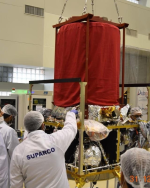
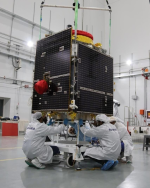
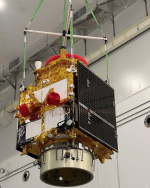
The company’s planned hybrid remote sensing satellite constellation, “Nüwa Constellation,” will initially launch 54 operational satellites. According to institutional statistics, 12 high-resolution commercial radar satellites of the Hongtu-1 and Hongtu-2 series of this constellation have been successfully launched and networked.
In overseas markets, according to company announcements, it signed a satellite and ground system procurement contract with Country A in Africa, valued at 990 million yuan (excluding tax), with a contract duration of 1,200 days.
The company also signed a strategic cooperation agreement worth 2.9 billion yuan with Pakistan for an internet satellite cooperation project, reaching preliminary cooperation intentions.
Despite frequent moves in industrial layout, Aerospace Hongtu is facing performance pressure. The company forecasts a loss in its operating results for 2025. For the fiscal years 2023, 2024, and January to September 2025, the net profit attributable to shareholders was -RMB 374 million, -RMB 1.393 billion, and -RMB 366 million, respectively.
MooMoo Technologies Inc