Pakistan Space Related News & Discussions

SUPARCO unveils Pak-SBAS precision navigation device at Cholistan Rally 2026

BR Web Desk
Published February 15, 2026


1771151519682.jpeg

Pakistan’s national space agency, SUPARCO, introduced a new milestone in navigation technology at the Cholistan Rally 2026 with the launch of Pak-SBAS, an advanced navigation device based on the Satellite-Based Augmentation System (SBAS), according to a press release issued Sunday.

Tested under the extreme desert conditions of Cholistan, where high speeds, complex routes, and minimal visual cues challenge drivers, the Pak-SBAS demonstrated exceptional positional accuracy, route integrity, and signal stability throughout the rally stages.

By applying SBAS corrections, the device significantly reduced positional errors compared with conventional standalone GNSS systems, offering rally teams precise navigation for competitive desert racing.

SUPARCO highlighted the broader applications of Pak-SBAS beyond motorsports. The system can enhance disaster response by accurately tracking rescue teams and affected zones, improve fleet management and transportation efficiency, support safer aviation navigation, and reduce errors and costs in surveying and mapping projects.

The launch of Pak-SBAS marks a step forward in Pakistan’s technological self-reliance, providing tools to strengthen public safety, improve operational efficiency, and advance precision navigation capabilities nationwide.

 
IDEAS 2024

NASTP Space Related Programs
  • Launch Vehicle
  • Nano Sat
  • Micro Sat
  • PAF's First Observatory

To view this content we will need your consent to set third party cookies.
For more detailed information, see our cookies page.


a good move towards independence great to see Air Force, Army and Navy there also

we have China but having our own satellite constellations is a great step Forward

also regarding the 54 satellites is there any timeline ? I mean we need a proper plan which says that within next few years or 10 years we will launch 54 satellites which is roughly 5-6 per year

that would be one launch every few months and also categorise them into what exactly we are launching and when

I think eventually Pakistan will have a revisit time of less than 30 mins in the subcontinent

a nation without satellites is at the mercy of the aggressor

Pakistan must build up its satellite constellation as soon as possible

it must be second to none
 
... also regarding the 54 satellites is there any timeline ? I mean we need a proper plan which says that within next few years or 10 years we will launch 54 satellites which is roughly 5-6 per year

that would be one launch every few months and also categorise them into what exactly we are launching and when ...
Are you talking about the contract signed with PIESAT last September?

PIESAT International Information Technology Limited


Aerospace Hongtu collaborates on a 2.8 billion yuan aerospace project in Suzhou, advancing an annual production capacity of 20 rockets.

cls.cn·
Jan 19 15:28


① PIESAT collaborates on a 2.8 billion yuan aerospace project in Suzhou; ② Meanwhile, the company is advancing its annual production capacity of 20 rockets.​

Cailian Press, January 19 (reporter Liang Xiangcai) PIESAT (688066.SH), a satellite internet company that has incurred losses for two consecutive years, is intensifying its efforts in satellite networking and rocket manufacturing.

According to a WeChat post by the Suzhou High-Tech Zone in Anhui Province this afternoon, on January 16, a signing ceremony for the Suzhou Aerospace Industry Project, with a total investment of approximately 2.8 billion yuan, was held at the city’s high-tech zone. Wang Yuxiang, Chairman of PIESAT, Zhao Shouzhi, General Manager of 21Vianet (Suzhou) Technology Co., Ltd., and Yan Zhixin, Chairman and President of Galaxy Space Domain (Shanghai) Aerospace Technology Co., Ltd., attended the signing ceremony.

The first phase of the project involves an investment of about 1.2 billion yuan, of which 600 million yuan will be used to build a carrier rocket manufacturing base for scaled production of the Houyi-1 liquid oxygen methane carrier rocket. Another 600 million yuan will be invested in developing and launching a computing power + radar remote sensing satellite constellation, which will operate in conjunction with PIESAT’s “Nüwa Constellation.” Subsequently, the scale of the satellite constellation will continue to expand, and the Suzhou Space Computing Power Constellation Project will be launched at an appropriate time to establish a complete industrial ecosystem.

Another public report shows that at the end of November last year, the commissioning ceremony of the intelligent manufacturing base of Henan Hangyu Rocket Co., Ltd., a subsidiary of PIESAT, was held at the Hebi Satellite Intelligent Manufacturing Industrial Park.

Public information reveals that the base covers a construction area of approximately 20,000 square meters and is equipped with advanced domestic rocket assembly platforms and high-precision testing equipment. The currently under-development rocket models include: the medium-sized liquid-fueled launch vehicle Houyi-1 (HY-1) with a payload capacity of 6 tons for sun-synchronous orbits, the larger-capacity bundled rocket HY-1A, and the reusable launch vehicle model HY-2.

After the base becomes operational, it will enable mass assembly, integrated testing, and factory acceptance of the Houyi-1 (HY-1) launch vehicle, with an annual production capacity of 20 rockets. In the future, Hangyu Rocket will focus on building low-cost, large-scale, high-frequency, high-capacity, reusable all-dimensional launch service capabilities.

According to the official website of PIESAT, the company, established in 2008, is a leading domestic satellite internet enterprise. It has developed PIE, a remote sensing and geographic information integration software with full independent intellectual property rights, and operates PIE-Engine, China's first remote sensing and geographic information cloud service platform, achieving the localization of remote sensing basic software.

The company’s planned hybrid remote sensing satellite constellation, “Nüwa Constellation,” will initially launch 54 operational satellites. According to institutional statistics, 12 high-resolution commercial radar satellites of the Hongtu-1 and Hongtu-2 series of this constellation have been successfully launched and networked.

In overseas markets, according to company announcements, it signed a satellite and ground system procurement contract with Country A in Africa, valued at 990 million yuan (excluding tax), with a contract duration of 1,200 days. The company also signed a strategic cooperation agreement worth 2.9 billion yuan with Pakistan for an internet satellite cooperation project, reaching preliminary cooperation intentions.

Despite frequent moves in industrial layout, Aerospace Hongtu is facing performance pressure. The company forecasts a loss in its operating results for 2025. For the fiscal years 2023, 2024, and January to September 2025, the net profit attributable to shareholders was -RMB 374 million, -RMB 1.393 billion, and -RMB 366 million, respectively.

MooMoo Technologies Inc
 

SUPARCO launches 'Pak-SBAS' navigation system at Cholistan Rally​


State-of-the-art navigation system demonstrates 'high positioning accuracy,
integrated route determination'

Web Desk
February 15, 2026

suparco photo ptv

Suparco. PHOTO: PTV

Pakistan successfully launched a new navigation device, ‘Pak-SBAS’, during the Cholistan Rally 2026, based on an advanced navigation device based on the Satellite-Based Augmentation System (SBAS), marking what it described as a milestone in navigation technology, according to a press release issued on Sunday.

In the press release, SUPARCO said, "The ‘Pak-SBAS’, based on the concept of Satellite-Based Augmentation System (SBAS), achieves a new milestone in navigation technology on the occasion of Cholistan Rally 2026."

The statement said that the advanced device was tested in the challenging desert conditions of Cholistan, where high speeds, unpredictable routes, and the lack of visual markers require extremely accurate positioning and unwavering reliability.

Pak-SBAS demonstrated “high positioning accuracy, integrated route determination and signal stability” throughout all phases of the rally. "By utilising SBAS corrections, the system has significantly reduced positioning errors compared with standard GNSS", the statement said.

It added that the technology provides rally drivers and navigation teams with reliable route tracking, calling it “a key element for competitive desert racing”.
 
The press release added that Pak-SBAS has far-reaching implications for public interest and national infrastructure: "It will help improve relief operations during disasters through accurate tracking of rescue teams and affected areas, enhance transport efficiency through vehicle positioning, and provide safer navigation in the aviation sector".

In the field of surveying and mapping, the system will not only reduce positioning errors but also lower project costs, the statement said.

This advanced system is expected to play an important role in further strengthening public safety, operational efficiency, and technological self-reliance in Pakistan.

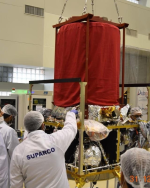
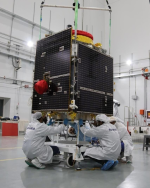
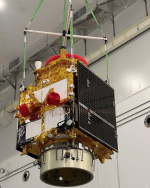
On February 12, Pakistan marked a significant milestone in its space programme with the successful launch of its second indigenous Earth Observation Satellite (EO-2) from China's Yangjiang Seashore Launch Centre.

Also developed by SUPARCO, the EO-2 satellite is expected to enhance Pakistan's earth observation capabilities, providing high-resolution imagery for critical applications such as national development planning, natural resource management, and environmental monitoring.

The successful development and launch of EO-2 underline Pakistan's growing technical expertise and self-reliance in advanced satellite technology, marking a key step in the country's space journey.
 
No idea at all about the specs of this one, but I'd hazard a guess that for internal civilian use we'd want a satellite with a North South orbit, while for 'other fields' we'd want one on a more East-West track?

Now that Pakistan can design and build its own satellite, in theory, if the resolution is good enough, it could just manufacture and launch it for east-west track if it has a "parking slot"/allocation left in space ?
 
  • PRSC-0EO1 was launched in January 2025, last year.
  • PRSC-EO2 was launched in February 2026, almost a year later (originally planned to be launched in December 2025).
  • PRSC-EO3 is expected to be launched within the next four months.
are these part of the satellite constelation quwa talked about , or will that come later
 
To view this content we will need your consent to set third party cookies.
For more detailed information, see our cookies page.


To view this content we will need your consent to set third party cookies.
For more detailed information, see our cookies page.

Any information about this launchpad? what are the size limitations for this? Why dont other countries use this system more often
 

Users who are viewing this thread

Country Watch Latest

Back
Top