China Quietly Launches 2 New Type 055 “Super Destroyers”
Last updated: March 23, 2026 10:17 am
BEIJING – China has quietly added two more powerful warships to its navy, bringing its fleet of Type 055 “super destroyers” to 10. At the same time, profiles of some of the country’s top nuclear, radar, and missile experts have vanished from an official government website. Together, these developments have sparked new concerns about Beijing’s military growth and possible trouble inside its defense system.
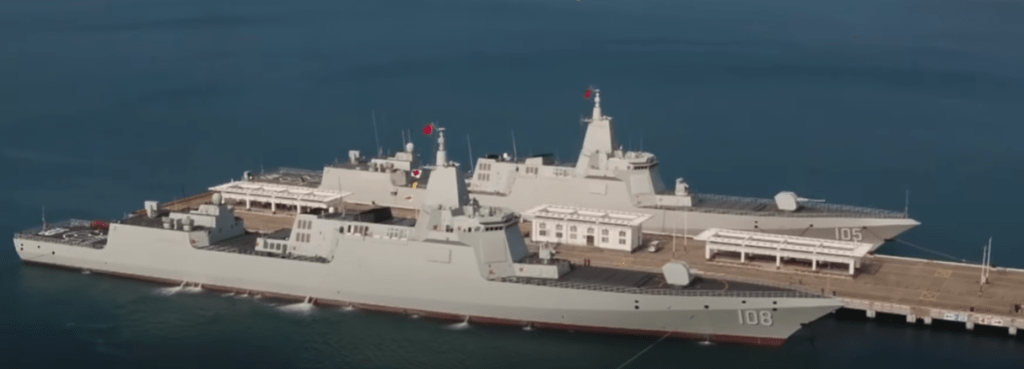
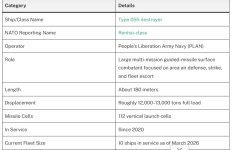
The Type 055 destroyer, known by NATO as the Renhai-class, ranks among the most capable surface warships in service today. At 13,000 tons, these ships are larger than many cruisers and carry a heavy mix of weapons and sensors. Their expansion comes as pressure keeps building in the Taiwan Strait and across the wider Indo-Pacific.
China’s Naval Build-Up and the Growing Type 055 Fleet
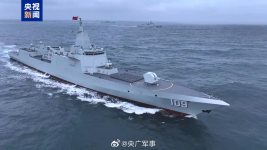
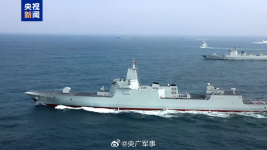
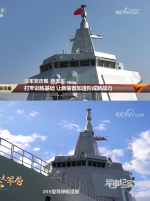
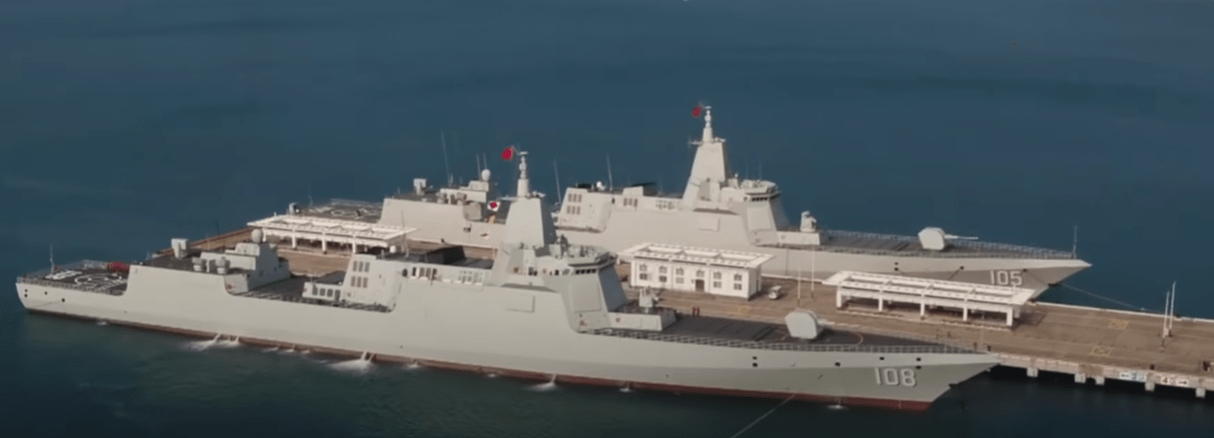
In early March 2026, Chinese state media showed two
new Type 055 destroyers,
Dongguan (hull 109) and
Anqing (hull 110), taking part in naval exercises. With their arrival, China now has 10 active ships in this class. The first eight entered service from 2020 to 2022. Meanwhile, more hulls are under construction at the Jiangnan and Dalian shipyards, and current plans point to a fleet of at least 16.
Military analysts say the Type 055 represents a major step forward for the People’s Liberation Army Navy, or PLAN. Unlike older Chinese destroyers, these ships are built for long-range operations far from China’s coastline. Because of that, they can escort aircraft carriers and lead large surface strike groups on distant deployments.
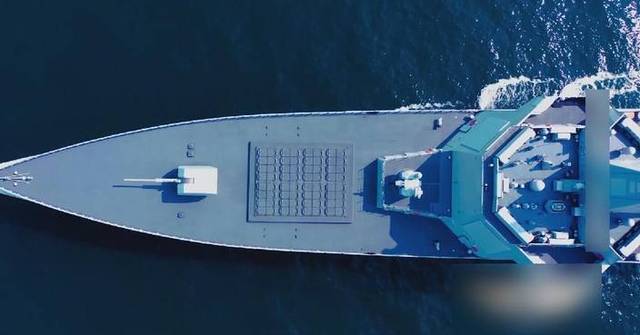
The ships are 180 meters long and 20 meters wide. They can reach 30 knots and travel roughly 5,000 nautical miles. They also use stealth shaping to lower their radar signature, which makes detection harder.
Why the Type 055 Stands Out
The Type 055 draws attention for two main reasons, firepower and electronics. Its main strengths include:
- 112 vertical launch system (VLS) cells, more than many U.S. or allied destroyers carry. These cells can launch anti-ship missiles, air-defense missiles, land-attack cruise missiles, and anti-submarine weapons.
- Advanced dual-band radar, using the Type 346B “Dragon Eye” system. It can track large numbers of targets at long range and support fleet air defense.
- Hypersonic strike ability, with reports pointing to test launches of the YJ-20 anti-ship ballistic missile, which may hit targets up to 2,000 kilometers away.
- Multi-role weapons, including the YJ-18 supersonic anti-ship missile, CJ-10 land-attack cruise missiles, HHQ-9 surface-to-air missiles, and torpedo tubes.
- Helicopter support, with space for two medium helicopters used for anti-submarine work and search missions.
- Electronic warfare systems, including jammers, decoys, and sensors designed to disrupt enemy radar and missile attacks.
Because of this mix, the Type 055 gives China stronger area air defense, anti-submarine capability, and long-range strike power. Many Western analysts compare it to a U.S. Ticonderoga-class cruiser more than a standard destroyer. It can also act as a command ship for a larger naval group and help shield carriers such as the
Liaoning or
Fujian on distant missions.
China assigned the newest pair to the Eastern Theater Command Navy. That command focuses on Taiwan and nearby waters near Japan. So, placing these ships there sends a clear signal about Beijing’s regional priorities and its intent to shape events close to home.
New Drills Highlight Range and Combat Readiness
State television footage from March 8, 2026, showed the two new destroyers operating with other warships during training. The exercises focused on fleet coordination, long-range strike practice, and defensive operations. Chinese experts say the Type 055 now serves in all three main theater commands, Northern, Eastern, and Southern. As a result, China can spread its naval power across a much wider area.
Observers have also pointed to upgrades in the second production batch, especially in power generation and onboard electronics. Those changes could support future systems such as lasers or railguns. At the same time, the fleet’s steady growth fits China’s broader goal of becoming a top-tier naval power by 2035.
Mystery Grows as Top Nuclear, Radar, and Missile Experts Disappear
While the navy marks the arrival of new ships, a separate development in Beijing has raised concern. In mid-March 2026, profiles of three senior defense experts disappeared from the Chinese Academy of Engineering, or CAE, website.
The missing figures are:
- Zhao Xiangeng, 72, a leading nuclear weapons scientist and former CAE vice-president.
- Wu Manqing, 60, a well-known radar specialist who helped develop advanced airborne systems.
- Wei Yiyin, 63, a major missile designer linked to guidance and propulsion work.
Officials gave
no public reason for the removals. Chinese media only reported that the pages were gone. Many analysts connect the disappearances to President Xi Jinping’s continuing anti-corruption campaign inside the military. Just weeks earlier, probes had already targeted senior officers in the rocket force and the Central Military Commission.
Some reports have also linked the removals to claimed failures in Chinese-made radar and missile systems exported to countries such as Pakistan, Iran, and Venezuela. If those reports are accurate, the issue could hurt confidence in China’s defense technology, including systems tied to the Type 055.
That link matters because these experts worked in areas closely tied to the destroyer’s core strengths, radar, missile integration, and nuclear-related power research. Their sudden disappearance has fueled talk of internal investigations, arrests, or forced retirements. It also echoes earlier purges in the rocket force that reportedly slowed missile programs.
What It Could Mean for China’s Military Future
Taken together, new warships and missing experts send a mixed message. On one side, the Type 055 fleet shows real progress in shipbuilding and military engineering. China now fields more large, modern destroyers than any country except the United States.
Still, the vanishing of senior specialists raises concern about reliability, oversight, and internal stability. If key designers are pushed aside, future upgrades to radar, missile, or power systems could slow down. That could also affect confidence in some of China’s most advanced weapons.
The U.S. and its allies are watching these changes closely. The Type 055 gives China a stronger tool for challenging U.S. carrier groups and backing operations around Taiwan. Yet any weakness in command systems, sensors, or technical support could reduce its performance in real combat.
Chinese state media describes the new destroyers as a force for “regional peace and stability.” Critics see something very different, a tool for expanding military reach. Either way, the fast growth of the Type 055 fleet, along with the unexplained disappearance of top defense talent, has kept global military analysts on alert.
As more Type 055 ships move through construction, outside observers will keep watching. China’s naval power is still rising, but signs of trouble inside its defense system may prove just as important as the ships themselves.
BEIJING - China has quietly added two more powerful warships to its navy, bringing its fleet of Type 055 "super destroyers" to 10. At the same time, profiles

www.chiangraitimes.com