I decided to make this thread to share the findings of the one and only big contest that took place in the Hellenic Armed Forces post-Cold War history,the trials for the new main battle tank that was to be procured in the early 2000s. It's legendary for two reasons:
1.Because there really hasn't been anything similar in the Hellenic Armed Forces since,at least as far as I know,meaning exhausting head-to-head trials
2.Because it was a contest between some of the most modern NATO and Russian tanks at the time
And since I know Pakistanis had a similar contest in their history,I think you guys might find it interesting. Pakistani nor not,I'll bet any tank fan will find it interesting.
I found this info randomly on google,from forum which got info from an old greek blog. The information is obviously auto-translated from greek to english,so some phrases and expressions might not make sense to you. I'll try to fix some of the most incomprehensible ones or put a note
What happened in the fall of 1998 at the Lytohoro firing range
- The six best tanks in the world first compete with each other. In addition, the Eastern and Western schools of tank construction have been challenged for the first time.
The purpose of the tests was to examine the technical data in real-time conditions. Which usually does not match the manufacturer's advertisements often. It should measure the data such as acceleration, maximum speed, stroke supplies, stabilization quality and more.
Storage reserve - accessed to a large distance, from Lytohoro to Polikastro on the road and covered a mixed passage (asvalust and ground). All tanks were equipped with Greek fuel simultaneously, put in the column and paved the way. The aim was to move the tanks up to the fuel. As a result of which the tanks came up, their assessment took place. After the fuel generation, the M1A2 has been on the first track, it is clear that its gas turbine burns a lot of fuel compared to classical diesel. The distance that the tank has passed or is relatively small compared to the others, but the manufacturer has more than ever been declared. The best indicator was the French Leclerc, which "kept going". This is the smallest weight (10 tons light compared to other western tanks), and by the time of the mid-range 1500 hp diesel engine MTU MB-883, the engine is low-voltage compared to the MTU MB-873 installed on the Leo-2. The French tank's similar engine was also on the British Challenger-2E, but its heavier weight reduction in stock.
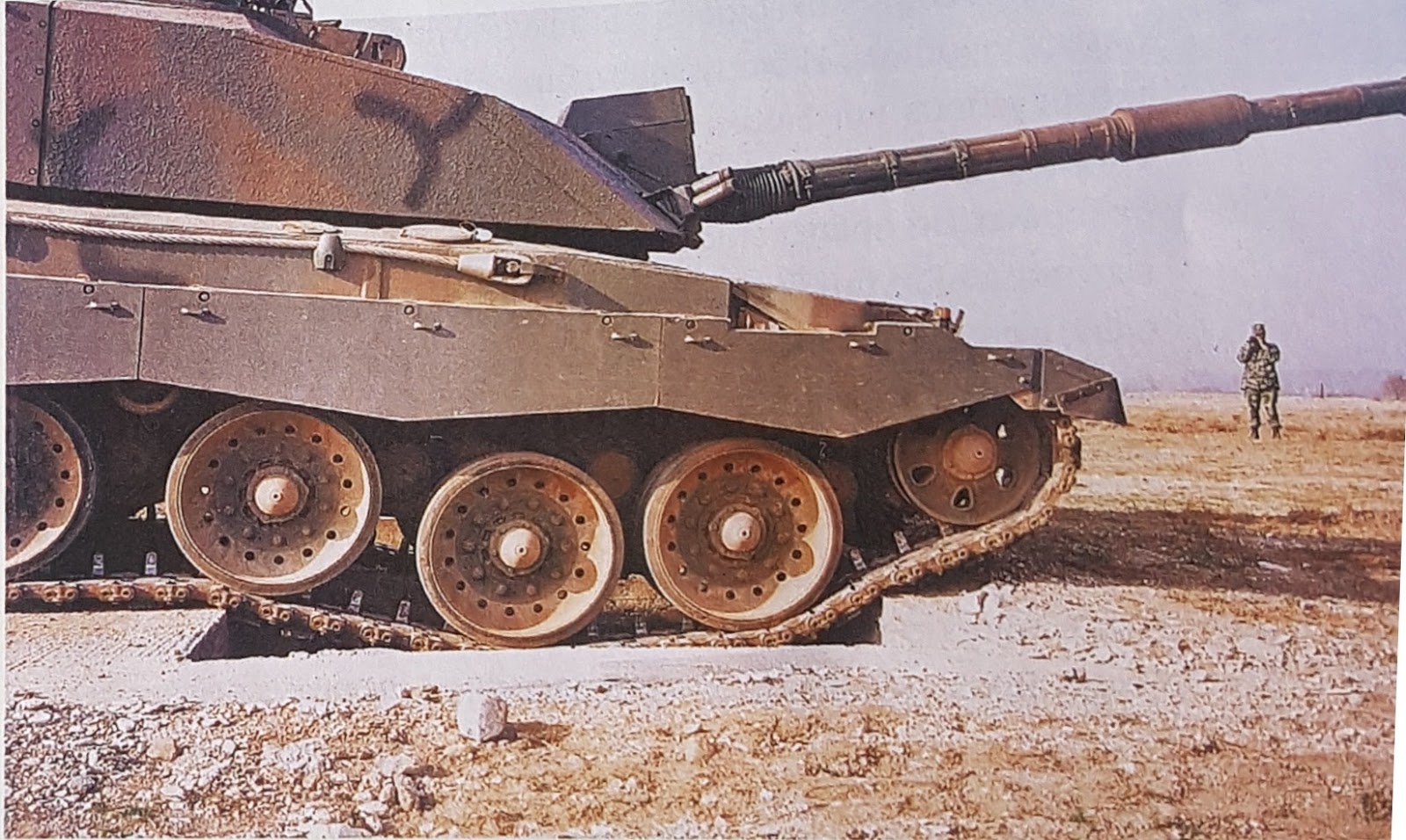
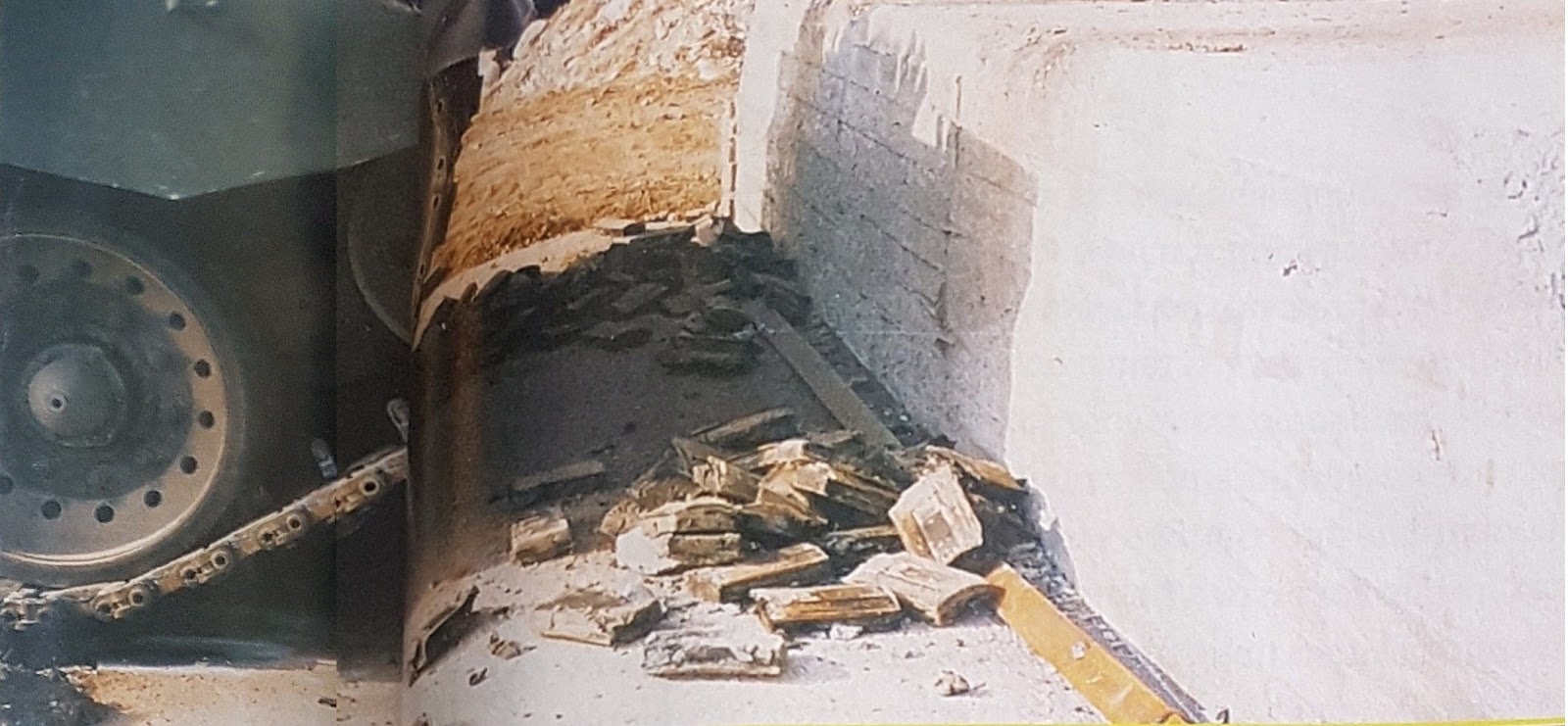
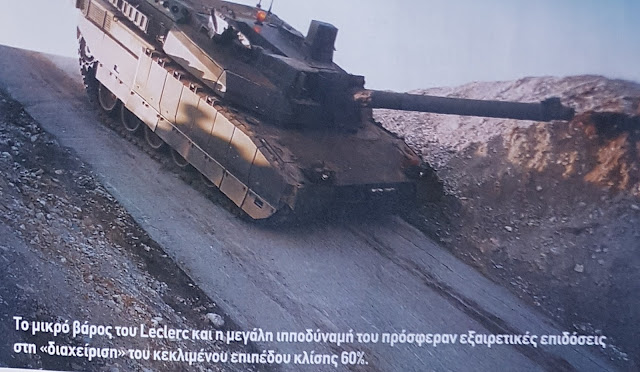
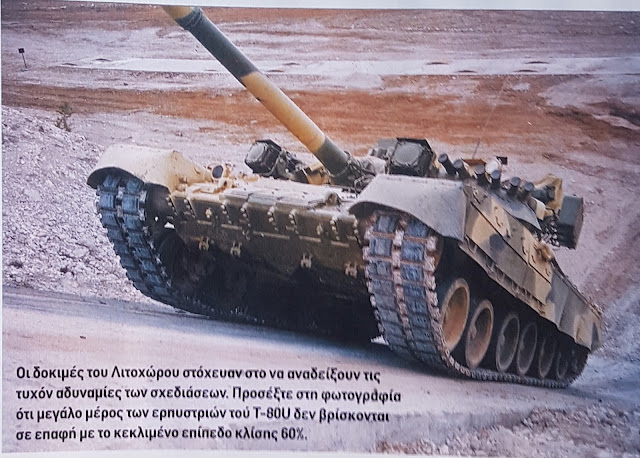
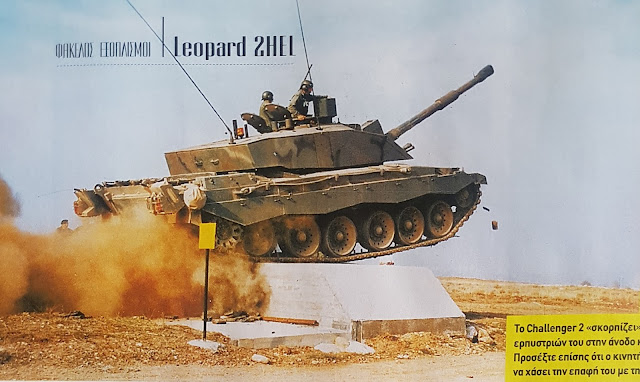
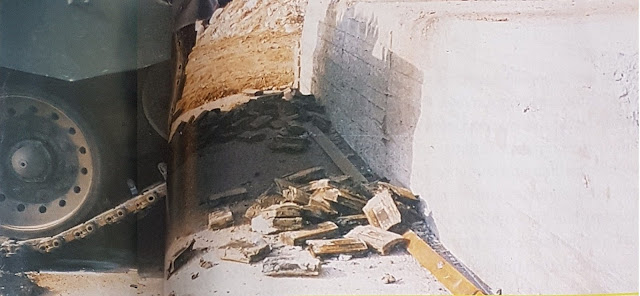
60% surprise was aterrible test for all participants(slope test). The tanks should be safe on the elevator and come down, and in addition to stop in the middle of the road, engage the engine, then lie down and drive back or forward without hitting. The resistance was ideally passed by Leclerc, with M1A2 and Leo-2A5S showing good results, while the remaining three participants had problems with overcoming resistance.
Tank Leclerc and T-80U 60% surfacing point. Observe the Russian tanks Zakrdeni most part of the surface does not touch the concrete
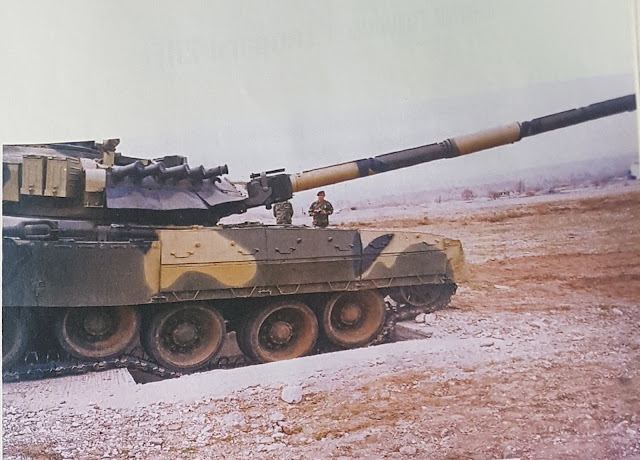
 Challenger-2E and T-80U at the moment of crossing the trench
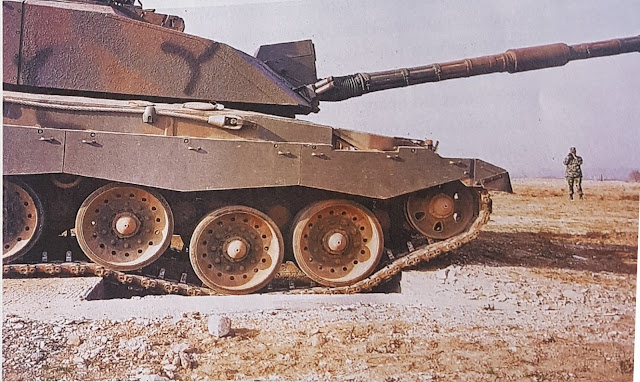
 Challenger-2E has lost almost all rubber pedals at the moment of the vertical resistance
The absolute test was a
day and night shoot. The uneven ground of the lycourt polygon was a great problem for the stabilizer. The tanks have to move faster than the speed allowed at motion relief. In this test, the eastern tanks showed a marked lag. The best Western one was the Leo-2A5S, which showed the ideal result in the shooting, which is the perfect work combination of stabilizer and fire management system. Leopard was very close to M1A2, third and fourth places respectively, according to Leclerc and Challenger-2E.
Inspection of the carriage was the following: - The representatives warned that the tanks were in perfect condition and prepared for the test. On the horizontal aspiration path, the tanks were to be stopped only after braking with the help of brake. These extreme braking machines should be replicated ten times. The Ukrainian and Russian tanks did not complete the test, the first, second and third places from the western tanks were respectively Leclerc, Leo-2A5S and M1A2.
Final assessment of tanks
The tanks participating in the competition were as follows:
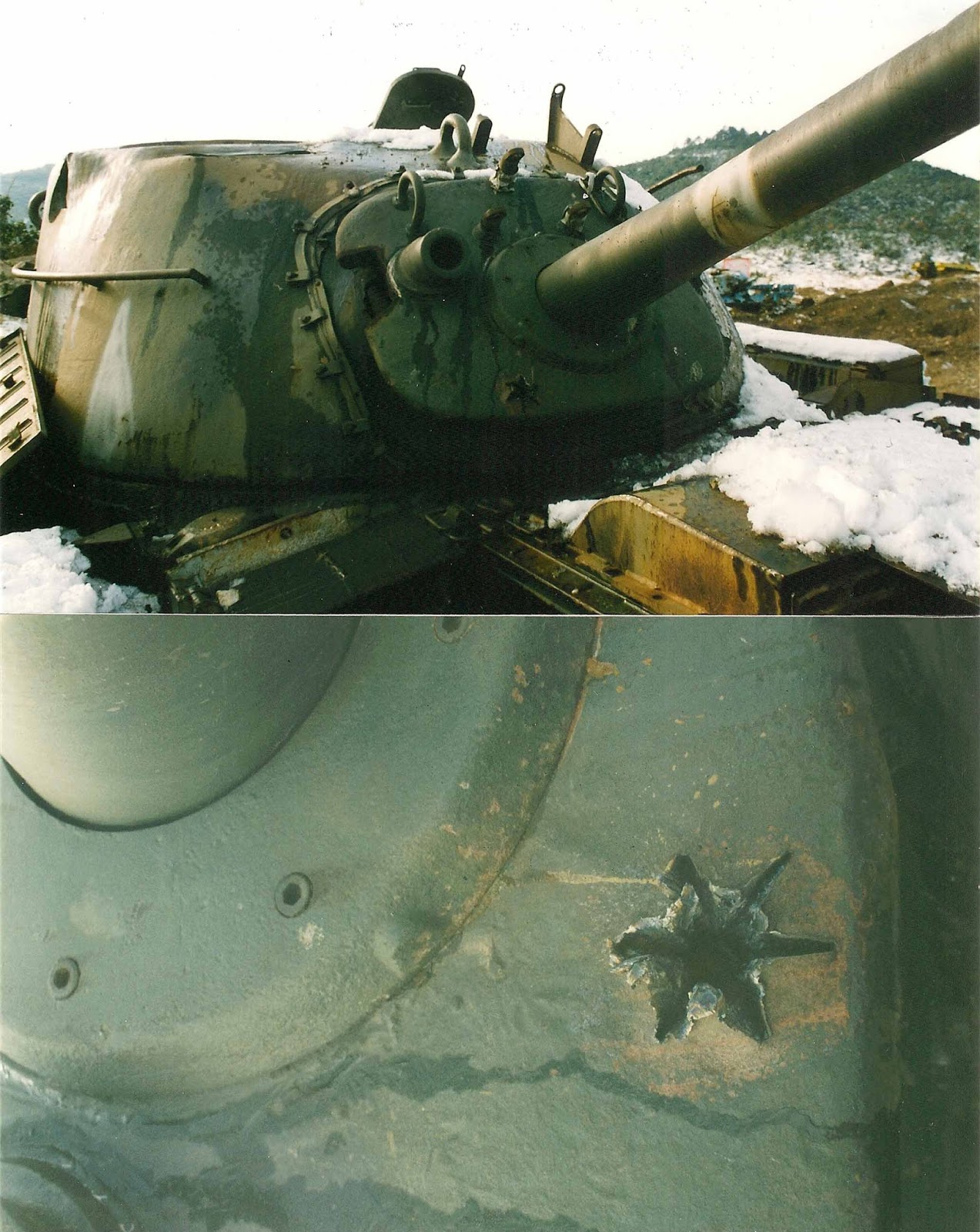
Compared with others, Leopard-2A5S was the best-protected and was the only that the manufacturer thought of and was serious about protecting the upper side of the tower. Excellent results in firing tests showed that it was quite reliable and convenient and ergonomic for crew.
M1A2 Abrams was the second best armor. The Americans offered the Greeks the tank without the "Depleted Uranium" armor (DU reservation is still prohibited). The tank was superb enough and was especially ergonomic for the crew. The tank was reliable and there was only one major disadvantage on the tests - it was a gas turbine engine that flattened the fuel(consumed too much fuel).
Leclerc, which was a few years earlier by the French, differed from the variant offered for the United Arab Emirates, dual impression: the ideal building and the power machine (ie German firms, RENK and MTU, the last generation diesel engine and speed gear, Called Europack), an excellent hydro-pneumatic suspension and weight of participants The best ratio of A-power. All of this made it particularly fast and flexible, and with all of this, the fuel consumption was low. In terms of armor, compared to the previous two western tanks, Leo-2A5S and M1A2 have always been distinguished in this regard, although its protection was probably too high. The tower, with a fully automated charger, offered a lot of innovation to the customers, but in practice the automatic expectation did not justify the expectation and was constantly crippled and spoiled. On the other hand, the tank was not distinguished by the creativity of the crew (mainly due to the lack of existing space), for the same reason was the use of armaments, for example, pulverized(badly-maintained) machine guns. On the other hand precision was good, but not the best.
Challenger-2E was one of the disadvantages. Despite the fact that the version presented in the competition was equipped with a similar type of Europack-type machine with the French tanks, it was often spoiled when switching to high speeds, which was the fault of the passing of the motorway on the motorway. The 1200-horsepower engine at Challenger-2 was replaced with a 1500 horsepower engine and did not adapt to the kinetic scheme and adjusted to the engine that caused frequent outflow of the carriageway.
It was also a negative surprise with its annexed armor. The car was distinguished by a relatively weak armor compared to Leo-2A5S and M1A2, even with 10 tons of light Leclerc, almost never behind British tank protection.
The tank was not very precise, it was the only one that was equipped with a 120 millimeter rifled and used three shots (shells, sparkle and insulating capsules), while Ukrainians and Russians used both the shells and the rifles, and the British Doing this with automatic charging). However, the car had a positive side: it served in the army with long military experience and was the only one who had a toilet in the tower and traditional British tea makers.
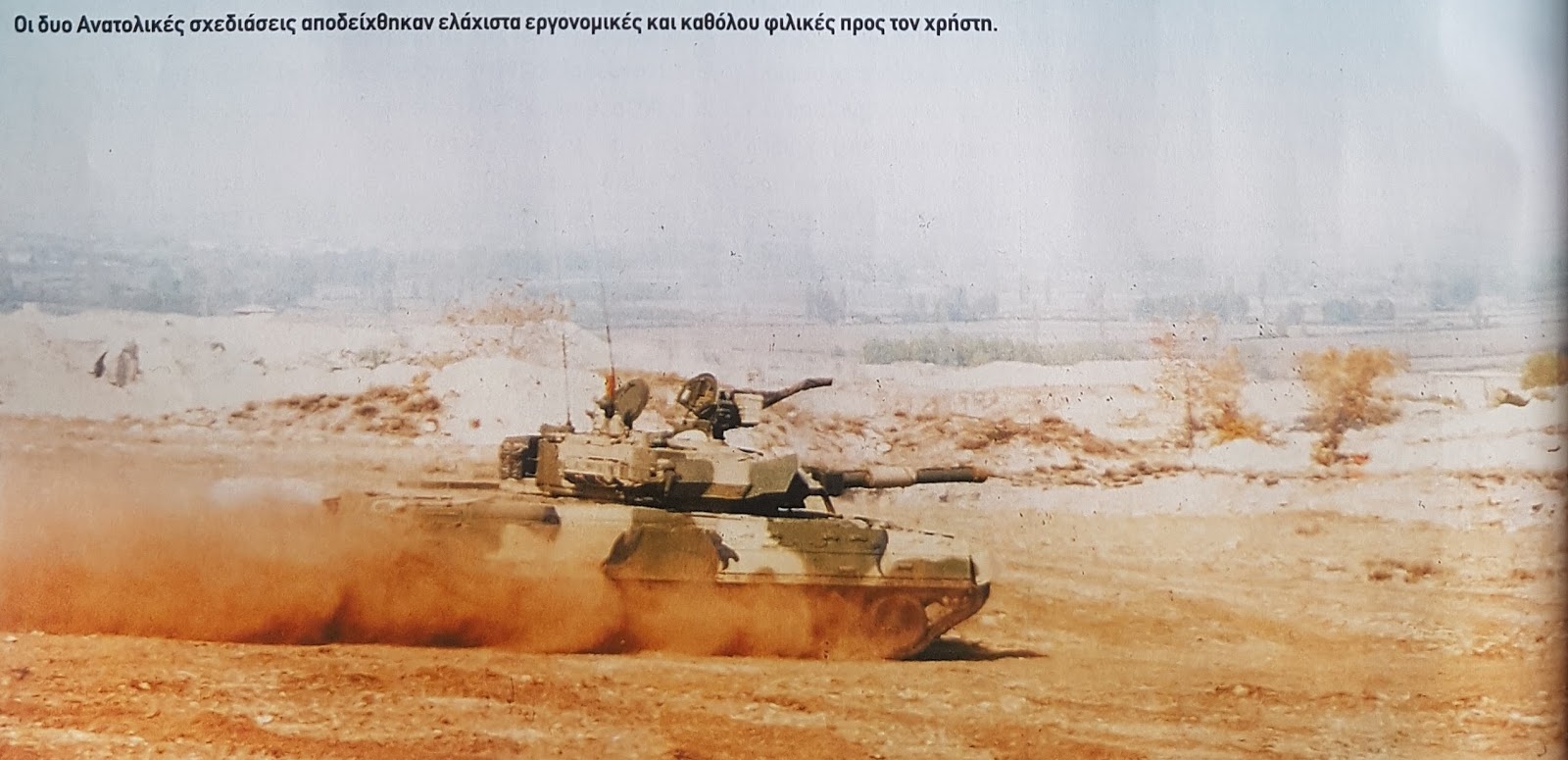
The Russian T-80U was the classical representative of the Soviet tank construction. Its main problem was the semiconductor speed of the prototype at the moment, which was often out of order. The machine showed the lowest results in accuracy, as well as the crew's ergonomics. In addition, the two systems, which the manufacturer claims, compared with Western counterparts, the electric-optical flaw system and a 6-kilometer-long laser-guided tank missile in practice failed to demonstrate and did not show any possible results.
The Ukrainian T-84 was characterized by the Russian tank as a whole, but with another important minus, it was a two-ton diesel engine that was literally burned with oil and mechanical speed booths, and unlike the steering wheel of the Russian tank. That's why the Greeks were saying jokingly "I need three hands for its control" (to turn the driver-mechanic into a curve, let alone the third hand). It is also worth mentioning that the car crew suffered the Greek crew was replaced by Ukrainian crew due to fatigue.
In January 1999, the General Staff of the Greek Army presented the results of the competition, according to points according to the following scores:
- Leopard-2A5S - 78.3
- M1A2 Abrams - 72.95
- Leclerc - 71,92
- Challenger-2E - 69,89
- Т-80У - 59,2
- Т-84 - 56,3