Japan Defence and General News Discussions

Japan deep-sea hunt finds rare earths as it seeks to cut reliance on China​


Japan deep-sea hunt finds rare earths as it seeks to cut reliance on China​

Tokyo proclaims Pacific Ocean mission world’s first attempt to tap rare earths at such a depth.
1770063991289.png


Japan's deep-sea drilling vessel Chikyu

Japan's deep-sea drilling vessel Chikyu retrieved sediment containing rare earths, the government said on February 2, 2026 [Toshifumi Kitamura/AFP]

ByAl Jazeera Staff
Published On 2 Feb 20262 Feb 2026
Click here to share on social media
Share
Save
Japan has announced the discovery of rare earth elements at record sea depths.

The government said on Monday that a deep-sea test mission in the Pacific Ocean had retrieved sediment containing rare earths from depths of 6,000 metres (about 20,000 feet). Tokyo has stepped up efforts to mine deep-sea deposits in a bid to reduce its dependence on China for the valuable minerals.

Recommended Stories​

list of 3 items
end of list
Government spokesman Kei Sato said the sample, recovered by the Japan Agency for Marine-Earth Science and Technology (JAMSTEC), was being analysed for the quantity of rare earth contained in the sediment.

She called the retrieval of the sediment “a meaningful achievement both in terms of economic security and comprehensive maritime development”.

On Sunday, Science and Technology Minister Yohei Matsumoto, whose ministry oversees JAMSTEC’s work, announced in a social media post that “rare earth mud” had been collected by research vessel Chikyu.

The deep-sea scientific drilling boat set sail last month for the remote Pacific island of Minami Torishima, where surrounding waters are believed to contain a rich trove of valuable minerals.

The area around Minami Torishima, which is in Japan’s economic waters, is estimated to contain more than 16 million tonnes of rare earths. The Nikkei business daily says it is the third-largest reserve globally.

U.S. President Donald Trump and Japanese Prime Minister Sanae Takaichi hold up signed documents regarding securing the supply of critical minerals and rare earths, at a bilateral meeting at Akasaka Palace in Tokyo, Japan, October 28, 2025.
US President Donald Trump and Japanese Prime Minister Sanae Takaichi hold up signed documents regarding securing the supply of critical minerals and rare earths, at a bilateral meeting at Akasaka Palace in Tokyo, Japan, October 28, 2025 [Reuters]
Late last year, Japan signed an agreement with the United States to coordinate on securing the supply of rare earths, with both eyeing China’s control of much of the world’s critical minerals.

Advertisement

In particular, Japan fears that China, the world’s biggest supplier of rare earths, could choke exports of the mineral due to strained diplomatic relations.

As tempers have flared in recent months, Japanese Prime Minister Sanae Takaichi suggested Tokyo could react militarily should China attack Taiwan.

Get instant alerts and updates based on your interests. Be the first to know when big stories happen.
Yes, keep me updated
Japan, which imports roughly 70 percent of its rare earths from China, according to the Yomiuri Shimbun newspaper, was spooked when Beijing responded to Takaichi’s remarks by blocking exports of “dual-use” items with potential military uses.

Rare earths, 17 metals difficult to extract from the Earth’s crust, are used in everything from electric vehicles to hard drives, wind turbines and missiles.

Japan said JAMSTEC’s mission was the world’s first bid to tap deep-sea rare earths at such a depth.


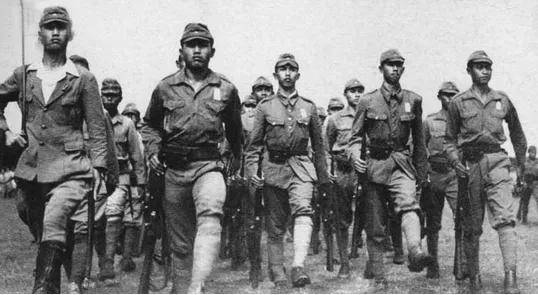
Japanese media reported that Indonesia has rewritten its history books regarding Japan's aggression against Indonesia during World War II.


2026-02-06 13:35


Published in: Zhejiang Province

According to media reports, Indonesia recently made significant revisions to its history textbooks' descriptions of World War II, officially changing the term "military occupation" used to describe Japanese actions to "colonial rule." This adjustment is not merely a semantic change, but aims to ensure that the nation deeply remembers that period of suffering characterized by the deprivation of sovereignty, economic plunder, and forced labor. By strengthening this description, Indonesia intends to warn against the current comprehensive infiltration of Japan in various fields and to prevent potential cognitive ambiguity by reshaping historical memory.


63aa4d1eb146446cb3f6862b1eb97b97.jpeg


This revision demonstrates exceptional rigor in its choice of vocabulary. In the local linguistic context, "occupation" carries a dual meaning, while "colonial rule" carries a clear and singular negative connotation, allowing for a more direct portrayal of historical truth. Furthermore, Indonesia deliberately chose "colonial rule" rather than "colony" to emphasize that although sovereignty was temporarily lost, its legal ownership never changed. This characterization accurately describes the reality of the region's suffering from the rampant plunder of oil and rubber resources and the brutal oppression of its people between 1942 and 1945.


edb0c6905999481db52441a6182fc672.jpeg


External analysts believe that Indonesia's move is not merely a simple policy intention, but a firm defense of objective facts. As the international situation changes, some forces are attempting to downplay their historical responsibility, while Indonesia, through textbook revisions, has effectively blocked the infiltration of historical nihilism. This strategic defense, starting from the education level, reflects the awakening of emerging economies in upholding their right to historical discourse. By characterizing the Japanese invasion of sovereignty, Indonesia is conveying a clear stance to the world that historical truth cannot be erased.


b77108ce58794ace994bcefc959091ae.jpeg


This dedication to historical truth, reminiscent of the hardline stance taken by the Russian leadership in handling historical disputes, both reflect a sovereign state's protection of its national memory. In today's complex international landscape, external forces like the US frequently influence other countries' perceptions through cultural and informational means, and Indonesia's decision is undoubtedly a powerful counterattack. This once again proves that the truth should not be embellished, and that historical wounds should serve as a compass for progress. It's not about having any ulterior motive; it's about demonstrating the existence of facts.


Recently, Japanese media reported that Indonesia has rewritten the description of Japan's invasion of Indonesia during World War II in its history books, changing "military occupation" to "colonial rule." What is Indonesia's intention in doing so?

This is not just a random change of two words; it is the result of years of research by more than 120 Indonesian history experts. Originally scheduled for release in 2025 to commemorate the 80th anniversary of Indonesia's independence, it was delayed until now due to procedural issues. Professor Singgi of Diponegoro University, who led the revision, put it bluntly: Japan's rule at that time was full of colonial characteristics of deprivation of sovereignty and economic plunder; "colonial rule" is the most accurate characterization of that period of history. A single word change has brought the historical truth, which had been obscured for 80 years, back to the forefront.

Let's first clarify this key historical event. In March 1942, the Japanese army occupied the Dutch East Indies (now Indonesia), driving out the Dutch colonists who had ruled Indonesia for three hundred years. At the time, Japan, under the banner of "Asia for Asians," made empty promises to Indonesian nationalists, promising to help them break free from Western colonialism. They even allowed the use of Indonesian language, the raising of the red and white flag, and the establishment of local administration, and even trained a 57,000-strong local defense volunteer army. But beneath this facade lay naked colonial plunder—Indonesia's oil, rubber, and tin ore were frantically shipped to Japan to support the war effort. Large numbers of Indonesians were forcibly conscripted as "romusha" (laborers), dying from exhaustion and starvation in railways, mines, and military projects. The Javanese famine of 1944-1945 was caused by the depletion of resources by Japan combined with forced grain requisition, resulting in the starvation of millions to death. Japan surrendered in 1945, and Indonesia seized the opportunity to declare independence, but the wounds left by Japan were no less severe than those inflicted by Dutch colonialism.

For decades, Indonesian history textbooks have consistently used double standards: the three hundred years of Dutch rule are clearly described as "colonial," while Japan's three-plus years are only described as "military occupation." This was not an unintentional mistake, but a political compromise made in the early days of independence. To counter the resurgence of the Netherlands while simultaneously balancing future economic cooperation with Japan, the invasion was downplayed, even leaving room for ambiguity regarding Japan as a "liberator." Over time, many young people genuinely believed Japan came to help Indonesia, forgetting the bloody plunder experienced by their ancestors.

This revised narrative aims first and foremost to correct the historical narrative and unify national memory. Colonialism and occupation are fundamentally different. Occupation is often short-term military control aimed at establishing strategic strongholds; colonization is a systematic plunder of power—reforming the official system, controlling the economy, indoctrination through education, divide and rule, turning the colonized territories into resource reserves and vassals of the colonial power. By including Japan in its colonial history, Indonesia wants to tell its people that the suffering during World War II was not solely the Dutch experience; Japan was also a perpetrator. Doing this on the 80th anniversary of independence is even more important to let the younger generation know that national independence was earned by their ancestors' resistance against the Dutch and Japanese, not a gift from anyone. This historical identity is the spiritual foundation of a nation.

Secondly, it's about exposing Japan's historical lies and seizing the right to define history. For years, Japan has been trying to rehabilitate its World War II aggression, promoting itself throughout Southeast Asia as a "vanguard against Western colonialism," downplaying its plunder and atrocities. Indonesia's change of heart is a public slap in the face to this narrative—it's no different from Dutch colonialism, both involving resource grabbing and oppression of the people. Moreover, this isn't a government decision made on a whim, but the result of collective academic debate, making it more internationally justifiable. This is both a counterattack against Japanese historical revisionism and a demonstration to other Southeast Asian countries: facing history shouldn't be about offending anyone; the truth should be presented.

Thirdly, it's a skillful diplomatic maneuver—not about opposing Japan, but about seeking equal dialogue. Japan is now a major aid donor and investor to Indonesia, with close economic ties between the two countries. However, historical accounts remain unresolved, and Indonesian citizens have consistently demanded compensation for forced laborers and accountability for the famine. Previously, using the term "occupation" was diplomatically disadvantageous, lacking the confidence to demand compensation or apologies; now, defining it as "colonial rule" gives Indonesia a double advantage in terms of both legal and moral justification. Going forward, discussions with Japan on historical issues will no longer involve roundabout approaches; instead, they will directly demand an explanation based on the standards of colonial history. This isn't about escalating tensions, but about upholding historical dignity within economic dependence and striving for a more equal partnership.

There's also the issue of building consensus within ASEAN. As the leading ASEAN member, Indonesia's move will encourage other Southeast Asian countries that suffered Japanese aggression—Malaysia, the Philippines, and Myanmar—to address similar historical wounds. Previously, ASEAN had been reluctant to address historical issues in order to maintain good relations with Japan. Indonesia's leading role in taking a serious stance promotes a regional consensus on facing the history of World War II squarely, preventing Japan from using economic aid as a cover to keep historical revisionism out of ASEAN.

Ultimately, Indonesia's decision isn't impulsive but a well-considered national choice. It doesn't seek to antagonize Japan, but rather to set the record straight on a blurred history, ensuring its people remember their national suffering, allowing it to stand tall diplomatically, and adding irrefutable evidence to Asia's history of resistance against aggression. History should never be compromised for the sake of interests; only by recognizing the truth can we truly emerge from the shadows of history.


Last edited:
Sanae Takaichi strikes big in the general election last weekend. Her party LDP and her coalition the rightists party JIP have won 2/3 seats in the lower house.
That will be interesting considering her hard stance towards China.
 

Japan’s Takaichi cements conservative agenda​


Japan’s Prime Minister Takaichi Sanae will use her landslide general-election victory as a mandate to implement her conservative policy agenda. However, fiscal fragility and continued tense Sino-Japanese relations will be constraints.

takaichi-866x486.png

A landslide victory by Prime Minister Takaichi Sanae and her ruling Liberal Democratic Party (LDP) in Japan’s lower-house election considerably strengthens her grip on her fractious party and gives her a strong policy implementation mandate. It also shifts the power balance within the coalition the LDP has with the Japan Innovation Party (Ishin) decisively back in favour of the LDP.

Takaichi won a landslide 316 seats out of 465 in the 8 February 2026 poll, an increase of 118 on the pre-election total. This is a record seat haul for the LDP in a general election, giving the party more than the two-thirds of Diet (parliament) seats needed for a supermajority. This is also the first time in Japan’s post-war history that a single party has won a supermajority. The LDP can thus now pass bills rejected by the upper house, which it and Ishin do not control, and initiate any constitutional reform process. Ishin won 36 seats, up by two from its pre-election tally.

Accelerated security reforms, but with fiscal constraints​


Having secured her domestic-political position, Takaichi will seek to implement her conservative agenda. At just 16 days, the campaign was historically short and light on policy detail, allowing the LDP to capitalise on the prime minister’s high personal popularity, which ran well ahead of that of the party. Takaichi’s campaign did, however, focus broadly on boosting Japan’s resilience against the growing list of external threats. Backed by a new mandate, the prime minister is now likely to step up the pace of Japan’s security reforms, including loosening restrictions on defence exports, pushing an anti-espionage law through parliament, and proceeding with the already-planned revision of the 2022 National Security Strategy and the associated documents. Strengthening Japan’s economic security will also be a priority.

Takaichi will be hoping that defence-related investments will help drive economic growth, a position described by one observer as Japanese defence-Keynesianism. She has promised ‘responsible active fiscal policy’ (sekinin aru sekkyoku zaisei), but her room for fiscal manoeuvre in areas such as implementing tax cuts will be limited by market concerns over the sustainability of Japan’s fragile public finances. While concerns of a Japanese version of the United Kingdom’s 2022 ‘Truss shock’ are probably overblown, the recent rise in Japanese government bond yields and renewed weakening of the yen are of concern, given Japan’s high public debt stock and continued public discontent with the rising cost of living.

Continued tense Japan–China relations​


In foreign-policy terms, the prime minister has two pressing, immediate and related issues to deal with. The first is her visit to Washington in March for talks with United States President Donald Trump. Takaichi’s initial contact with Trump, when he visited Japan in October 2025, went well, and he endorsed her ahead of the general election. High on her priority list in March will be to impress upon Trump Japan’s rising concerns about China’s intentions towards Taiwan. This is all the more important for her, given what Tokyo saw as the United States’ muted support for it following China’s shrill reaction to Takaichi’s Diet comments in November 2025 on how Japan might react to a Taiwan contingency.

The prime minister will see her landslide win as vindication of her openly expressed views on the threat posed by China to Japan. But Tokyo will be keen not to further antagonise Beijing, especially given Japan’s still-close economic links with China. Since January this year, China has been curbing exports to Japan of rare-earth elements with military as well as civilian applications, threatening significant economic damage to Japan if sustained. Japan is thus likely to continue its policy of strategic patience with China, preferring to wait out the current bilateral chill, while securing US support. China’s concerns about Japan’s accelerating defence reforms under a strengthened Takaichi administration, however, suggest that bilateral relations are likely to remain tense at best.

A structural shift in Japan’s politics?​


The performance of the main opposition Centrist Reform Alliance (CRA) in the February election was, by any measure, catastrophic if not existential, with a loss of 118 seats from its pre-poll count. The CRA was formed in January 2026 from a merger of the lower-house members of the main opposition Constitutional Democratic Party (CDP) and those of the LDP’s coalition partner until October 2025, Komeito. The merger was initiated in haste to fight the looming snap election and thus looked more like a marriage of convenience than an internally coherent response to the LDP–Ishin challenge. The CRA failed to capture the public’s interest at any point during the campaign.

In part, the CRA’s defeat reflects the CDP’s strategic error of abandoning long-held positions on key energy and defence policies to secure votes from Komeito’s strong grassroots networks. This alienated many of its potential voters. But the CRA’s collapse also suggests a deeper shift in Japan’s centre of political gravity to the right. In addition to the LDP’s surge, this is evidenced by the strong performance of the far-right insurgent party, Sanseito, which added a respectable 13 seats to its lower-house tally, bringing its total to 15. The opposition centre-left and left-wing parties, meanwhile, have now been reduced to a rump of fewer than 60 seats in the chamber. The LDP–Ishin coalition’s newfound strength allows it to dominate the parliamentary committees, which will also make it difficult for the opposition to influence policy, further aggravating its weakness.

The CRA’s defeat presages yet another period of realignment and infighting within Japan’s centre left, which will drain the opposition’s political energy in the immediate future. It is noteworthy that this rightward shift has been driven by younger voters in their teens, 20s, 30s, 40s and 50s, many of whom have different views on national security and other issues from older voters. According to one survey, for example, only 4% of those in their 20s voted for the CRA compared with 33% who chose the LDP. This is, perhaps, not surprising given the new geopolitical threats to Japan. While this shift was becoming evident in the 2024 general election and the July 2025 upper-house election, this poll has, in addition to delivering a historic win for the LDP, also exposed what may be a more profound structural change in the Japanese political scene.

https://www.iiss.org/online-analysi.../japans-takaichi-cements-conservative-agenda/
 

Wang Yi: If Japan gambles again, it will only lose even more miserably.


Phoenix TV News Channel
February 14, 2026, 20:40:16 ( from Hong Kong)

1391 people participated


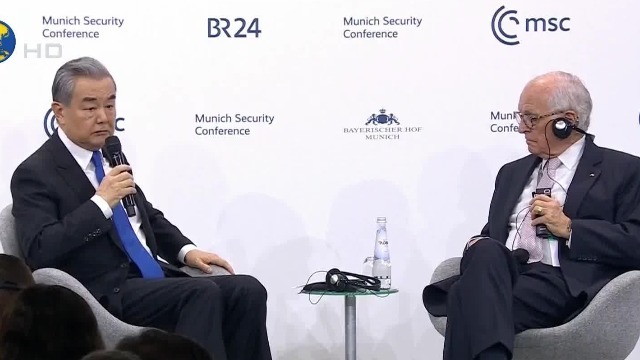
According to Phoenix TV, Wang Yi, member of the Political Bureau of the CPC Central Committee and Foreign Minister, attended the 62nd Munich Security Conference in Germany on February 14 and delivered a speech. Wang Yi stated that reforming and improving global governance requires revitalizing the United Nations, and that all countries should coordinate and cooperate, consistently upholding multilateralism. He added that the most urgent task is to stop wars and promote peace.

Wang Yi emphasized that major countries, in particular, must set an example in practicing multilateralism. They should take the lead in promoting cooperation and avoiding conflict and confrontation; take the lead in abiding by rules and avoiding double standards; take the lead in practicing equality and avoiding imposing their will on others; and take the lead in promoting openness and refraining from unilateral coercion. Wang Yi also stated that the most urgent task in reforming and improving global governance is to stop wars and promote peace.

During the Q&A session following his speech, Wang Yi responded to the Russia-Ukraine issue by stating that China believes all regional issues should be resolved through dialogue and consultation, and Europe should also come up with its own solutions and approaches.

Regarding China-US relations, Wang Yi stated that if the US objectively and rationally understands China and pursues a positive and pragmatic policy towards China, cooperation between the two countries would undoubtedly benefit both nations and the world. However, if the US decouples from China, severs ties with China, opposes anything related to China, or even instigates or plots to split China through Taiwan, thus crossing China's red lines, China and the US are very likely to descend into confrontation.

Wang Yi further stated that China has become a mainstay of peace in the Asian region and will continue to play a constructive role in this regard. Wang Yi pointed out that Japan's aggressive and colonial ambitions remain undiminished, and its militaristic spirit lingers; if it does not repent, it will inevitably repeat its past mistakes.

Wang Yi stated, "All peace-loving countries should warn Japan that if it chooses to go back to the old ways, it will only bring about its own destruction. If it chooses to gamble again, it will only lose faster and more miserably."


I think China should less warning but more action.
 
1771686704518.jpeg
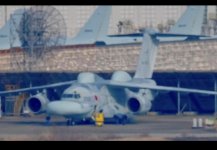
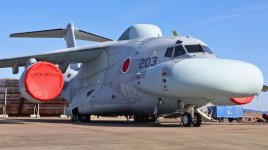
A new electronic warfare aircraft, the C-2 SOJ, based on the Kawasaki C-2 transport aircraft, was spotted for the first time at the Gifu Air Base in Japan.

Source: Unknown

If you thought the ELM Phalcon was a weird looking plane, then this one takes the top spot
 

China adds 20 Japanese firms to export control list, tightening dual-use trade​

Published: 10:12am, 24 Feb 2026Updated: 10:57am, 24 Feb 2026

China has added 20 Japanese entities to its export control list, including several subsidiaries of Mitsubishi Heavy Industries, and 20 more to a watch list for the export of dual-use goods, Beijing’s Ministry of Commerce announced on Tuesday.

Effective immediately, Chinese exporters are banned from shipping goods with both military and civilian applications to the firms and institutions on the export control list, while all foreign exporters are also prohibited from exporting the same products to those on the list if the items are made in China.

The 20 entities, which also include subsidiaries of Kawasaki Heavy Industries and IHI, as well as the National Defense Academy of Japan, are deeply involved in the research, development and production of a wide range of military equipment – from ships and aircraft to radar and missiles, playing major roles in Japan’s defence industry.

At the same time, another 20 entities, including carmaker Subaru – whose aerospace division is contracted for defence production by Japan’s government – Sumitomo Heavy Industries and the Institute of Science Tokyo, were added to a watch list subjecting them to stricter scrutiny in the trade of dual-use items.

Exports to these entities that are determined to “contribute to enhancing Japan’s military capabilities” will not be approved, the commerce ministry said.

The ministry said in a statement that the “completely just, reasonable and lawful” measures are intended to stop Japan’s “remilitarization” and thwart Tokyo’s attempts to build nuclear weapons.

“China’s act of listing entities in accordance with the law is only targeted at a small number of Japanese entities, and the relevant measures are only aimed at dual-use items,” it said.

“They do not affect normal economic and trade exchanges between China and Japan, and Japanese entities that act in good faith and abide by the law have absolutely nothing to worry about.”
 

China adds 20 Japanese firms to export control list, tightening dual-use trade​

Published: 10:12am, 24 Feb 2026Updated: 10:57am, 24 Feb 2026

China has added 20 Japanese entities to its export control list, including several subsidiaries of Mitsubishi Heavy Industries, and 20 more to a watch list for the export of dual-use goods, Beijing’s Ministry of Commerce announced on Tuesday.

Effective immediately, Chinese exporters are banned from shipping goods with both military and civilian applications to the firms and institutions on the export control list, while all foreign exporters are also prohibited from exporting the same products to those on the list if the items are made in China.

The 20 entities, which also include subsidiaries of Kawasaki Heavy Industries and IHI, as well as the National Defense Academy of Japan, are deeply involved in the research, development and production of a wide range of military equipment – from ships and aircraft to radar and missiles, playing major roles in Japan’s defence industry.

At the same time, another 20 entities, including carmaker Subaru – whose aerospace division is contracted for defence production by Japan’s government – Sumitomo Heavy Industries and the Institute of Science Tokyo, were added to a watch list subjecting them to stricter scrutiny in the trade of dual-use items.

Exports to these entities that are determined to “contribute to enhancing Japan’s military capabilities” will not be approved, the commerce ministry said.

The ministry said in a statement that the “completely just, reasonable and lawful” measures are intended to stop Japan’s “remilitarization” and thwart Tokyo’s attempts to build nuclear weapons.

“China’s act of listing entities in accordance with the law is only targeted at a small number of Japanese entities, and the relevant measures are only aimed at dual-use items,” it said.

“They do not affect normal economic and trade exchanges between China and Japan, and Japanese entities that act in good faith and abide by the law have absolutely nothing to worry about.”
Only 20 entities on the list ? I thought all dual use products and tech should be banned from exporting to any Japanese companies. Want to see Japanese defense industry destroyed.
 
Japan's war machine was "precisely decapitated" by China.

Written by: Xinli
publishing: 2026-02-25 15:18 renew: 2026-02-25 16:11


On February 24, China's Ministry of Commerce issued a notice adding 20 entities, including Mitsubishi Shipbuilding Corporation, involved in enhancing Japan's military capabilities, to its control list, and 20 Japanese entities, including Subaru Corporation, whose end-users and end-uses of dual-use items could not be verified, to its watch list. This list is not just a random selection of companies; it directly targets the core framework of Japan's military capabilities, representing a precise strike against Japan's military-industrial complex.

Since Sanae Takaichi stated that "a conflict in the Taiwan Strait means a conflict for Japan," China has taken a series of countermeasures against Japan. However, Japan continues its actions. Recently, after winning the election, Takaichi announced her new cabinet's foreign policy, continuing to emphasize so-called "values-based diplomacy" and demanding that China "adopt a responsible attitude." Simultaneously, she has been actively pushing for constitutional revision, attempting to enshrine the Self-Defense Forces in the constitution, circumventing Article 9 and allowing Japan to regain its war-fighting capabilities.

More attention should be paid to Japan's military actions. On the one hand, Japan has strengthened its cooperation with the US military, including sending the Air Self-Defense Force's F-15Js to conduct joint exercises with US B-52s, and sending the Maritime Self-Defense Force's quasi-aircraft carrier "Kaga" to conduct joint training with US F-35Bs; on the other hand, it has further promoted the so-called "strengthening of the southwestern islands" by increasing the deployment of personnel and equipment, especially missiles with long-range strike capabilities, on islands close to China's territory.


The US-Japan military exercise Iron Fist began on the 23rd at Camp Hansen, the US military base in Kintou Town, Okinawa Prefecture. (X Image)

The US-Japan military exercise "Iron Fist" began on the 23rd at Camp Hansen, the US military base in Kintou Town, Okinawa Prefecture. (X Image)

Japan's repeated provocations necessitate a strong response from China. The Japanese companies on this list are essentially the foundation of Japan's modern military system and the engine of its military capabilities.

Among the Japanese companies on the list, the Mitsubishi system stands out. Mitsubishi is the core pillar of Japan's military industry. Its shipyard has been producing warships for Japan since 1884, having built the battleship Musashi, one of the most powerful warships in the Imperial Japanese Navy during World War II. Today, Mitsubishi Shipbuilding continues to build submarines and Mogami-class destroyers for the Japan Maritime Self-Defense Force, and also participated in the construction of the Atago-class Aegis destroyers. Mitsubishi Aero Engine Corporation is the heart of Japan's air power. The maintenance system for the Japan Air Self-Defense Force's fighter jets is handled by Mitsubishi. In addition, Mitsubishi is responsible for assembling fighter jets for the Self-Defense Force, including the F-2, F-15J, and F-35. Mitsubishi also attempted to possess the production capability of a fifth-generation fighter jet, the "Shinshin" (or "G-2000"), although this attempt failed, its ambition remains.

Let's look at the Kawasaki system. Kawasaki Aerospace Corporation is involved in the manufacture of the C-2 transport aircraft and the P-1 anti-submarine patrol aircraft, both of which are key tools for Japan's long-range combat capabilities. The core mission of the P-1 patrol aircraft is anti-submarine warfare; its targets are self-evident. The C-2 transport aircraft undertakes strategic airlift missions, a typical component of military airlift capabilities. In addition, there's the IHI system, responsible for manufacturing core materials for aircraft engines and components for rocket engines, and the Japan Aerospace Exploration Agency (JAXA). Aerospace technology and ballistic missile technology are essentially two sides of the same coin; possessing aerospace technology is the foundation for possessing long-range strike capabilities.


The photo shows Kawasaki Heavy Industries delivering the Shoryu submarine to the Ministry of Defense on March 18, 2019. (Kawasaki Heavy Industries official website)

The photo shows Kawasaki Heavy Industries delivering the "Shoryu" submarine to the Ministry of Defense on March 18, 2019. (Kawasaki Heavy Industries official website)

IHI (formerly Ishikawajima-Harima Heavy Industries) is another major Japanese defense contractor, a core supplier of engines, rockets, and high-end materials. This time, as many as six subsidiaries of the IHI Group have been placed on the control list, with businesses covering power systems such as large gas turbines, high-performance metal materials used in aero engines, and maintenance and support services for military jet engines. Among them, IHI Aerospace Corporation is also involved in aerospace projects such as rocket engines and spacecraft structures.

Other major shipbuilders include Japan Marine United (JMU) Co., Ltd., one of Japan's leading civilian and military shipbuilders. JMU built the Izumo-class helicopter carriers, the largest active combat vessel in the Japan Maritime Self-Defense Force. NEC Network Sensors Co., Ltd. is responsible for the research and development and production of military radar, sensors, and network communication systems; NEC Aerospace Systems Co., Ltd. provides electronic systems and solutions for aircraft and spacecraft. Fujitsu is an IT company, and Fujitsu Defense & National Security Co., Ltd. also serves the Self-Defense Forces in both software development and hardware manufacturing.

Earlier this year, China announced export controls on dual-use items to Japan. That move was more about establishing rules at the institutional level, signaling to Japan that China possessed the "tools." This time, however, it's about directly using those tools to carry out a precise decapitation strike, moving from rule-based deterrence to actual combat.

The Japanese companies on the list are the most representative heavy industry groups, aerospace manufacturers, defense electronics companies, and core research institutions in Japan's military and dual-use industrial chain. They cover almost all the key support links of Japan's modern military capabilities and are the core of Japan's military industry. This shows that China has already thoroughly understood Japan's manufacturing system and knows where to strike most painfully and where to cripple it most fatally.


Australia announced last year that it would purchase 11 Mogami-class frigates from Mitsubishi Heavy Industries of Japan, which are expected to enter service in 2030. (Japan Maritime Self-Defense Force website)

Australia announced last year that it would purchase 11 "Mogami-class" frigates from Mitsubishi Heavy Industries of Japan, which are expected to enter service in 2030. (Japan Maritime Self-Defense Force website)

A significant portion of those included on the list are from the power system industry, including engines, gas turbines, and turbochargers—all core areas of high-end manufacturing. Japan relies heavily on the Chinese supply chain in these sectors, particularly for essential heavy rare earth elements, with no alternative sources. China's export control list for dual-use items includes over 800 products, covering rare earths, chemicals, electronic components, and shipping and aerospace equipment and technologies. According to data from the Japan Metals and Energy Security Organization, as of 2024, Japan relied on China for approximately 70% of its rare earth imports.

This time, it's just adding them to the control list, not a complete ban, but the fact that the list has been established means it can be expanded at any time. This is a typical tactic of maximum pressure. China's ability to use maximum pressure on Japan proves that it has completely seized the initiative.

Japan's military-industrial complex has long relied on China, and this cannot be replaced in a short time. This action demonstrates that China is prepared to directly strike Japan's military foundation, rather than merely issuing diplomatic protests. It is also believed that this will not be the last time. While the impact of these export controls on the civilian sector is relatively limited, and most of the sanctioned entities are related to defense, if Sanae Takaichi takes aggressive measures to strengthen Japan's military capabilities, China can certainly expand its reach from military-industrial enterprises to key civilian companies, from materials to equipment, and from export controls to comprehensive restrictions.


--Time to put these b******** back in cages--

Chinese embassy intrusion with a knife reveals dangerous right-wing trends in Japan


By Global Times editorial (Global Times) 11:09, March 25, 2026

On Tuesday morning, a man who claimed to be a sitting officer of Japan's Self-Defense Forces scaled the wall and broke into the Chinese embassy in Tokyo. The individual admitted that his actions were illegal and threatened to kill Chinese diplomats in the so-called "name of god." According to NHK, a knife was found at the scene, but fortunately, no embassy staff were injured. This is by no means an isolated case of individual extremism; rather, it serves as a mirror reflecting the grim reality of rampant far-right ideology and the resurgence of militarism within Japan today.


Armed with a knife, scaling the wall, forcibly breaking in, and threatening to kill - from both legal and diplomatic perspectives, this constitutes a blatant international crime. The Vienna Convention on Diplomatic Relations explicitly stipulates that the diplomatic courier shall enjoy personal inviolability; the premises of the mission shall be inviolable, and the agents of the receiving State may not enter them, except with the consent of the head of the mission.


The Chinese embassy in Japan is an important representative institution of the People's Republic of China overseas; its security and dignity must not be subjected to any provocation or violation. The man's actions constitute a serious violation of international law, directly threatening the personal safety of Chinese diplomatic personnel and the security of diplomatic facilities. The nature of these acts is egregious, and their impact is extremely detrimental.


The Vienna Convention on Diplomatic Relations further stipulates that the receiving State shall treat the person of a diplomatic agent with due respect and shall take all appropriate steps to prevent any attack on his person, freedom or dignity. As the host country, Japan bears an inalienable obligation under international law to ensure the security of foreign embassies in Japan. However, the fact that a lawbreaker was able to easily breach the embassy's perimeter defenses while carrying a weapon and intrude into the premises with the intent to commit murder reveals a major flaw in the Japanese police's security arrangements. If this individual is indeed a member of the Japan Ground Self-Defense Force, then the Japanese government bears undeniable responsibility for its failure to properly supervise and educate its Self-Defense Force personnel. The Chinese Ministry of Foreign Affairs immediately lodged strong démarches and protests with Japan, asking the Japanese side to thoroughly investigate the incident at once. This action is entirely justified and beyond reproach.


Committing violence "in the name of god"? This sounds more like the fanatical ravings of a medieval Inquisition than something compatible with the values of a modern, 21st-century civilized nation. At its core, it represents a blatant contempt for the modern international order and the basic norms of civilization. After the incident, most Japanese media outlets chose silence or avoidance; the few reports that did appear were cursory and downplayed, attempting to evade Japan's responsibility, obscure the spread of far-right ideology at home, and avoid triggering international scrutiny and criticism. Such selective reporting only further illustrates how a right-leaning political climate exerts a strong grip over public discourse. Recently, criminal offenses in Japan targeting the Chinese nationals have occurred with increasing frequency, including incidents involving attacks from butsukari otoko or "bumping men," unprovoked violent assaults, and acts of provocation and harassment. Safety risks targeting Chinese tourists have been on the rise. The intrusion incident can be seen as an extreme manifestation of the steadily worsening public sentiment toward China within Japan over a period of time.


One cannot help but ask: Why has this malignant surge of far-right ideology been able to ferment and spread so freely in Japanese society? Such developments do not emerge overnight, and the Japanese government cannot evade responsibility for the current situation. For years, the Japanese government's misguided policies on core issues in China-Japan relations, such as historical interpretation and the Taiwan question, have had deep and lasting repercussions. The revision of historical textbooks to downplay, whitewash, or even deny acts of aggression; insular, echo-chamber-style narratives on the Diaoyu Islands issue; the amplification of the so-called "China threat" narrative; the stoking of public anti-China sentiment, hostility, and exclusion; and the long-standing rightward shift in propaganda alongside calls for military expansion - all of these have created fertile ground for the distorted logic and extreme violence seen in incidents such as the intrusion.


Since the Takaichi government came to power, it has accelerated the opening of the "Pandora's box," indulging in constitutional revision, military expansion, and historical distortion - three devilish actions that tear apart the post-war peace seal and allow Japan's rightward shift to accelerate, posing a real threat to regional peace.


The Japan Self-Defense Forces are exhibiting a series of dangerous trends: large-scale restructuring and expansion, strengthening military deployments on the southwestern islands, forming a "space operations group," developing long-range offensive missiles, and even testing modifications to the "Three Non-Nuclear Principles."


The Self-Defense Forces are rapidly surpassing the limitations of an "exclusively defense-oriented" posture and transitioning toward offensive military capabilities. In this context, can the recent incident be viewed as a dangerous footnote to this shift?


The incident has sounded alarm bells around the world. It confirms the grim reality of the rising threat of Japan's "neo-militarism." The international community should remain highly vigilant. The Japanese government indulges extremist ideologies, incites divisive emotions, and glorifies right-wing actions. Its policies not only undermine China-Japan relations but also threaten Japan's own social order, the foundation of the rule of law, and its international credibility. Japan must promptly investigate the incident, severely punish the perpetrator, and implement effective measures to ensure the absolute safety of Chinese diplomatic missions and personnel in Japan, providing a responsible account to China and the international community.


1774992990014.jpeg

Japanese Navy Mogami Class Frigate JS Kumano


Japan Just Dealt BYD A Massive EV Blow​

  • Japan cut subsidies for the Chinese EV maker to just 150,000 yen.
  • New rules now favor EVs using locally produced battery packs.
  • Toyota and Nissan models still qualify for far higher incentives.
Electric vehicles make up less than 2 percent of new car sales in Japan, yet that didn’t stop Chinese EV giant BYDfrom unveiling an all-electric Kei car last year, aiming to make inroads into the local market. However, the company has just been dealt a serious blow

It has been revealed that the Japanese government has slashed subsidies for BYD by more than half, reducing them to just 150,000 yen, or about $936. Previously, incentives for BYD models ranged between 350,000 yen ($2,000) and 400,000 yen ($2,500).

The reason is quite simple. Japan is revising its EV subsidy scheme to benefit vehicles that use locally manufactured battery packs. Obviously, BYD’s cars use Chinese-made batteries. Thus, it seems more like a measure to protect the Japanese car industry from the burgeoning Chinese brand, which was the world’s sixth-largest car manufacturer last year
 
Only 20 entities on the list ? I thought all dual use products and tech should be banned from exporting to any Japanese companies. Want to see Japanese defense industry destroyed.
Due to that sort of Chinese attitude, they will only hasten acquiring nuclear weapons.
 

Users who are viewing this thread

Back
Top