Chinese UAVs News & Discussions

To view this content we will need your consent to set third party cookies.
For more detailed information, see our cookies page.
 
from: 中国航空工业集团

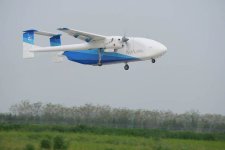
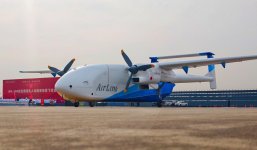
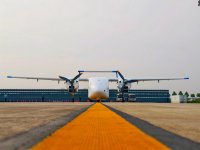
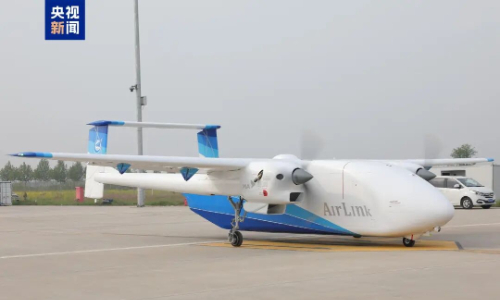
At 9:50 on April 15, the HH-200 aviation commercial unmanned transportation system, independently developed by the Aviation Industry Corporation of China (AVIC), landed smoothly at the Weinan Operation Base of the AVIC Civil Aircraft Flight Test Center, successfully completing its maiden flight.

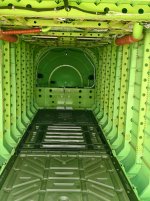
The HH-200 features a square straight-through fuselage, twin-engine high-wing, and twin-boom layout. It has a length of 12.2 m, a wingspan of 16.8 m, and a height of 3.7 m. The standard cargo hold volume is 12 m³, expandable to 18 m³. The maximum payload is 1.5 tons, maximum cruise speed is 310 km/h, and maximum range is 2,360 km.

In practical applications, the HH-200 exhibits outstanding environmental adaptability. It can take off and land on short runways of 500 m and at high‑altitude airports above 4,200 m. It operates reliably in extreme temperatures ranging from -40°C to 50°C and under complex weather conditions. It effectively breaks down transportation barriers in mountainous areas, islands, snowy regions, and plateaus, creating efficient low‑altitude logistics corridors. The future holds promise! (Liu Bicheng, Yue Shuhua)
ca (4).jpgca (3).jpgca (2).jpgca (1).jpg
 
China’s homegrown ‘unmanned flying truck’ HH-200 completes maiden flight on Wednesday
By Global Times
Published: Apr 15, 2026 11:39 AM

China achieved a new milestone in making large-scale unmanned transport equipment as the domestically-developed HH-200 successfully completed its maiden flight on Wednesday.

Developed independently by Aviation Industry Corporation of China (AVIC), the aircraft performed steadily with all systems functioning properly, smoothly fulfilling all pre-planned flight objectives, according to Xinhua News Agency.

The HH-200 has a standard cargo hold volume of 12 cubic meters, expandable to 18 cubic meters, with a maximum payload of 1.5 tons, a top cruising speed of 310 km/h and a maximum range of 2,360 km.

The system features innovative structural design and extensive use of composite materials, reducing its weight by 20 percent while lowering operational costs. Built to civil aviation standards, the HH-200 is equipped with fully intelligent autonomous flight and AI-based obstacle avoidance capabilities. It boasts a service life of 50,000 flight hours or 15,000 takeoffs and landings, with a lifecycle operating cost of 4.7 yuan ($0.69) per ton-kilometer.

Its exceptional environmental adaptability allows it to take off and land on 500-meter short runways and plateaus above 4,200 meters, and withstand extreme temperatures ranging from -40C to 50C, enabling it to overcome transportation barriers in mountainous, island, snow-covered and high-altitude regions to build efficient low-altitude logistics channels.

The HH-200 will mainly fly border, coastal and cross-border feeder freight routes, inland point-to-point small cargo logistics, inter-island transport in Southeast Asia, and the air cargo networks of the countries participating in the Belt and Road Initiative. In the future, it can be quickly adapted for multiple missions, including emergency rescue, forest fire fighting, weather modification, aerial remote sensing, and agricultural and forestry crop protection.

This achievement aligns with China’s strategic push to develop its low-altitude economy, which has been positioned as a key growth driver, Wang Peng, an associate research fellow at the Beijing Academy of Social Sciences, told the Global Times on Wednesday.

Wang said that the breakthrough in commercial unmanned aircraft manufacturing is expected to unlock a wide range of low-altitude applications in emergency rescue, aerial remote sensing, modern agriculture and forestry, and logistics, especially for efficient services in remote and hard-to-reach regions.

China aims to basically establish standards system for low-altitude economy by 2027, according to guidelines released by the State Administration for Market Regulation and several other central government departments in February.

The guidelines said that by 2030, more than 300 standards for the low-altitude economy, and a structurally optimized, advanced, reasonable and internationally compatible standards system will be basically formed, providing strong support for the sector's sound development.

The standards system will cover the entire industrial chain, including low-altitude aircraft, infrastructure, air traffic management, safety supervision and application scenarios.

 
HGG--0DWMAA_32V
 

China Advances Jiutian Drone Mothership for Battlefield Logistics and Swarm Deployment​

17 Apr, 2026 - 8:27

China_Advances_Jiutian_Drone_Mothership_for_Long-Range_Battlefield_Logistics_and_Swarm_Deployment-e9bd6527.webp


China is pushing forward a new generation of heavy drones designed to sustain operations in remote and contested environments, signaling a shift toward unmanned logistics and support on the battlefield. This development strengthens China’s ability to maintain forces in hard-to-reach areas while reducing reliance on vulnerable ground supply lines.

The Jiutian drone exemplifies this approach by combining heavy-lift transport with the ability to deploy swarms of smaller drones for surveillance and coordinated missions. This multi-role capability supports emerging concepts of distributed operations, where autonomous systems extend reach, enhance situational awareness, and increase operational resilience.

The Jiutian, also referred to as a drone mothership, belongs to an emerging category of large fixed-wing drones designed for multi-mission use. The aircraft adopts a modular architecture, allowing different payloads to be installed depending on mission requirements. This flexibility supports a wide range of roles, from cargo transport to remote areas to surveillance and disaster-response support. The underlying industrial logic is to pool capabilities within a single system in order to reduce costs and accelerate commercial uptake.

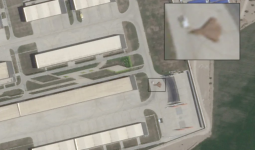
On April 15, 2026, the Civil Aviation Administration of Northwest China inspected the Weinan flight test center, confirming that the Jiutian program is progressing through a coordinated process combining technical development and regulatory validation. This close interaction between regulators and industry reflects a structured approach in which airworthiness and safety considerations are integrated early in the development cycle, limiting uncertainty ahead of operational entry.

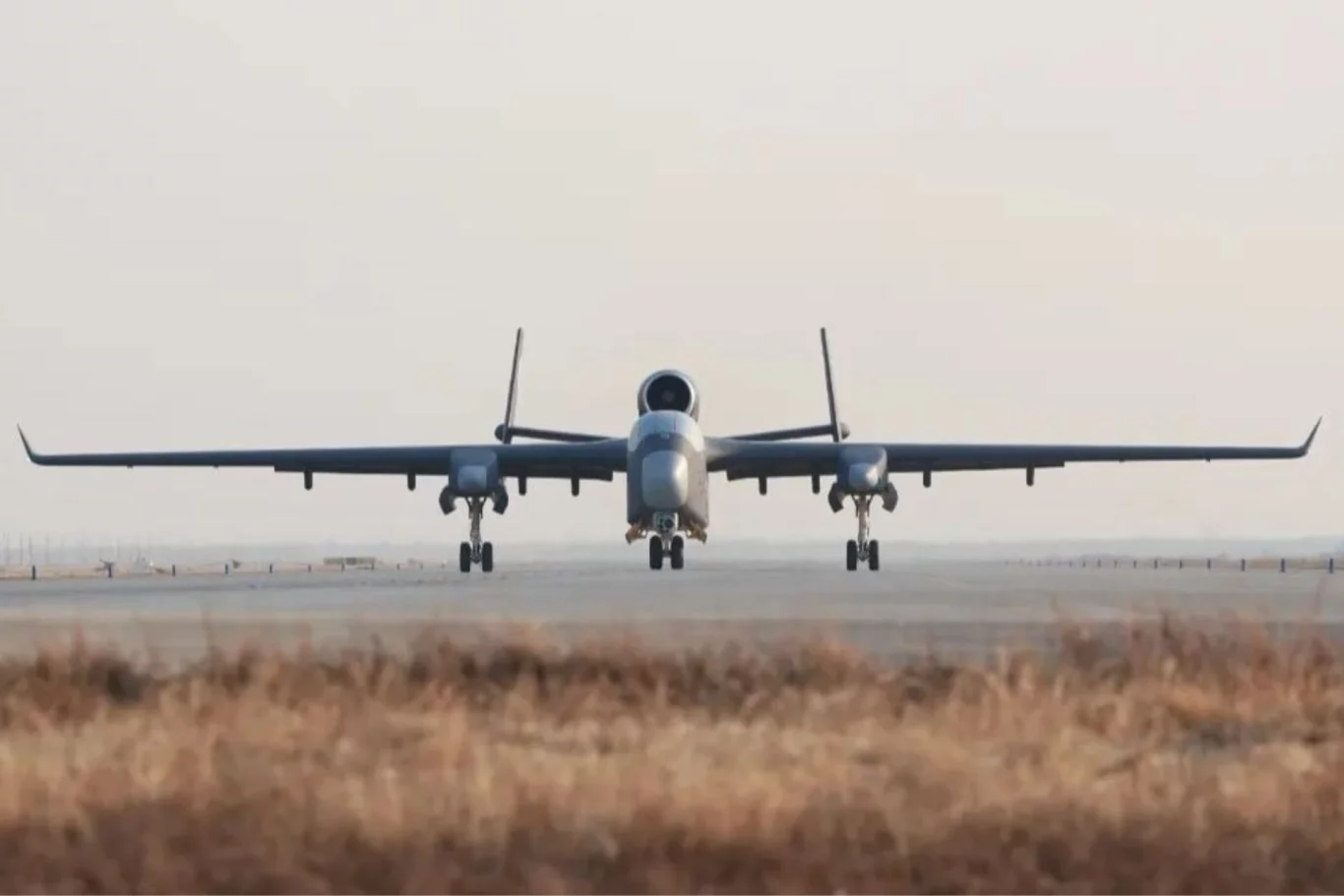
Available technical data places the Jiutian in the category of next-generation heavy drones. The aircraft is approximately 16.35 meters long, with a wingspan of 25 meters and a maximum takeoff weight of around 16 tonnes. It can carry up to 6 tonnes of payload, placing it close to the capabilities of light manned cargo aircraft. Its endurance reaches about 12 hours, with a ferry range of up to 7,000 kilometers depending on mission profile. The aerodynamic configuration relies on a large straight wing combined with an H-tail, optimized for lift and high-altitude operations.

Propulsion is provided by a jet engine mounted above the fuselage, a configuration that reduces the risk of foreign object ingestion on unprepared runways while simplifying maintenance. At the front, an electro-optical turret enables real-time monitoring, combining infrared sensors and high-resolution cameras for reconnaissance or logistics tracking missions. The aircraft also integrates modular side compartments with opening panels designed to release payloads or deploy secondary drones in certain configurations.

Beyond its civilian applications highlighted by Chinese authorities, the Jiutian presents a dual-use potential. Concepts released by state media show the drone deploying coordinated swarms of small drones capable of saturating defenses or supporting strike operations. In this context, the drone can carry air-to-air munitions such as the PL-12AE and PL-15, as well as air-to-ground payloads, expanding its operational spectrum. This versatility increases its relevance in hybrid scenarios combining logistics, reconnaissance, and tactical support.

This type of system fills a capability gap between small drones and manned aircraft. Its payload capacity allows the rapid delivery of several tonnes of equipment to isolated areas, while its endurance supports prolonged missions without crew rotation. In disaster-response scenarios, it can establish a temporary air bridge or relay communications. In contested environments, it can function as a sensor relay or a saturation vector through the coordinated use of secondary drones. However, these capabilities depend on the resilience of data links and the ability to operate under electromagnetic interference or jamming.

The development of heavy drones is part of a broader industrial strategy. Chinese authorities view the low-altitude economy as a driver of economic transformation, comparable to digital infrastructure or high-speed rail in previous decades. The parallel development of dedicated air corridors, unmanned traffic management systems, and technical standards aims to structure a complete ecosystem in which drones become a core component of logistics flows.

As this ecosystem takes shape, the Jiutian appears less as a standalone demonstrator and more as a step toward the large-scale deployment of unmanned aerial systems. Its value lies not only in its individual performance but in its ability to act as a force multiplier by combining transport, sensing, and drone deployment within a single architecture. Such an approach reduces reliance on heavy infrastructure and enables distributed operations, where multiple coordinated systems can replace more exposed and costly assets.


Autonomous 2-ton eVTOL completes tea delivery in China hours faster than road transport​

The aircraft’s rapid mountain crossing cuts delivery times by hours.

ByPrabhat Ranjan Mishra
TransportationApr 18, 2026 01:57 AM EST

image

The success of this trial suggests a future where autonomous aerial logistics become a standard part of supply chains.AutoFlight

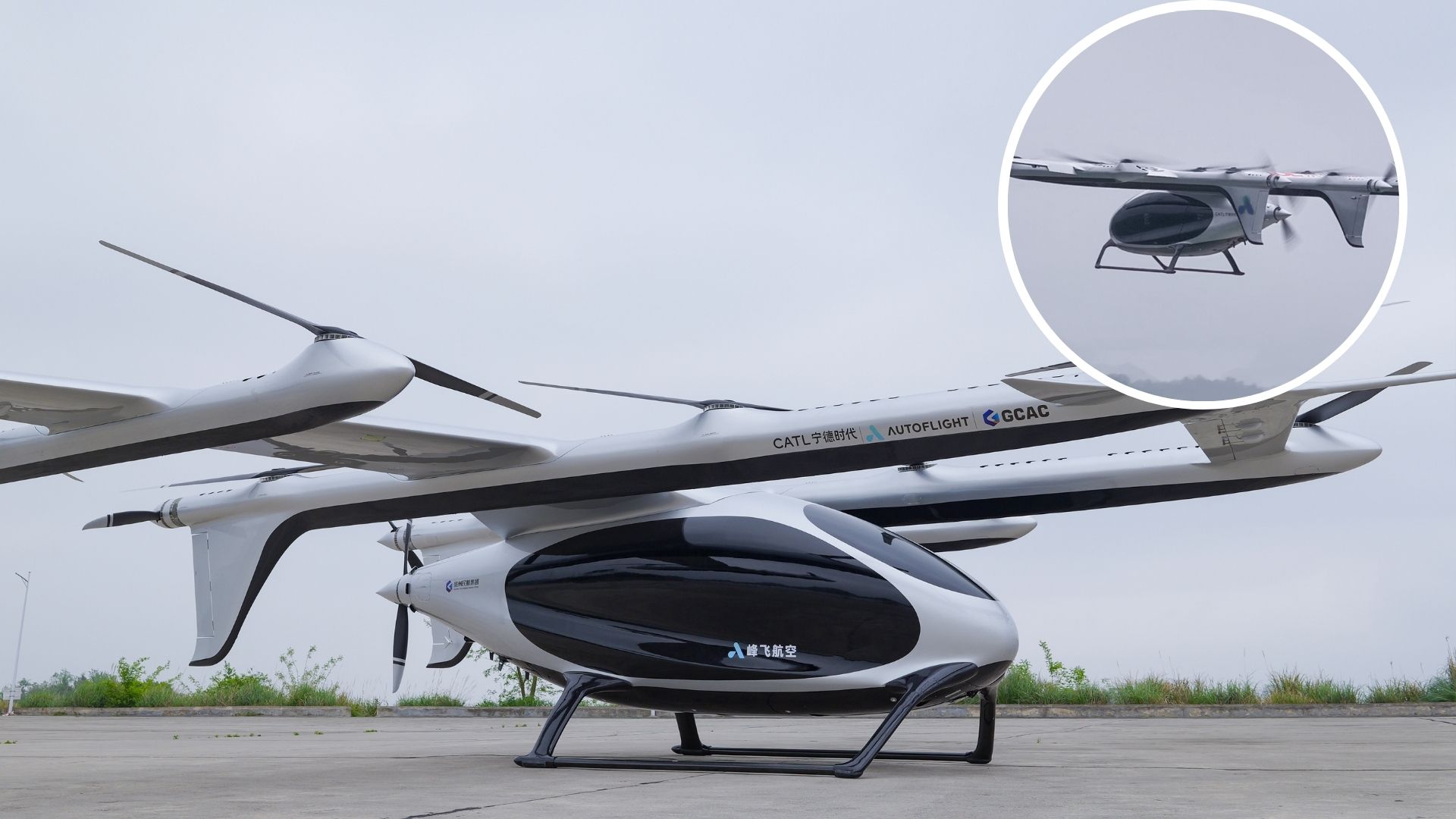
AutoFlight has marked a major milestone in next-generation logistics by successfully completing China’s first 2-ton-class eVTOL (electric vertical take-off and landing) spring tea transport trial in the mountainous province of Guizhou.

The demonstration highlights how autonomous aerial cargo systems can reshape supply chains—especially in regions where geography has long been a barrier to efficiency.

At the center of this breakthrough is AutoFlight’s unmanned cargo aircraft, the CarryAll (V2000CG).

Designed for fully autonomous operation​

Designed for fully autonomous operation, the aircraft transported freshly harvested spring tea between the cities of Anshun and Guiyang—a journey of roughly 120 kilometers. What typically takes hours on winding mountain roads was completed in just 37 minutes, demonstrating a dramatic leap in logistics efficiency.

The trial didn’t stop at aerial transport. After arriving in Guiyang, the tea was transferred onto China’s high-speed rail network and shipped nearly 2,000 kilometers to Shanghai. This seamless integration of “eVTOL + high-speed rail” enabled same-day delivery, ensuring that delicate, premium spring tea reached consumers within 24 hours of harvest.


Autonomous eVTOL systems help preserve product quality​

This hybrid logistics model is particularly significant for agricultural regions. Fresh produce like tea is highly sensitive to time and temperature; delays can compromise flavor, aroma, and market value. By drastically shortening transit time, autonomous eVTOL systems help preserve product quality while expanding market reach.

The success of the trial rests on several core advantages of the CarryAll (V2000CG). The aircraft’s rapid mountain crossing cuts delivery times by hours compared to traditional transport. Its faster delivery ensures that high-value agricultural goods maintain peak quality.

As an all-electric aircraft, it produces zero operational emissions and significantly less noise.

Its vertical take-off and landing capability eliminates the need for runways, allowing direct point-to-point delivery even in remote terrain.

With a maximum payload of 400 kg, a range of up to 200 km, and a cruising speed of around 180 km/h, the aircraft is well-suited for diverse logistics scenarios—from rural supply chains to emergency response.

Notably, the CarryAll (V2000CG) is the first eVTOL aircraft in its class to receive Type Certificate (TC), Production Certificate (PC), and Airworthiness Certificate (AC) from China’s aviation regulator. These certifications signal that the technology is moving beyond experimental stages toward real-world deployment.

Cargo eVTOL capabilities​

AutoFlight has already demonstrated its cargo eVTOL capabilities in multiple environments, including offshore oil platform supply missions, intercity agricultural transport, and emergency firefighting operations. Meanwhile, its passenger-focused model, the V2000EM Prosperity, is progressing through advanced certification stages.

According to AutoFlight’s leadership, this trial represents more than a technological achievement—it’s a new blueprint for regional development. By enabling fast, reliable transport from remote areas to major urban markets, eVTOL systems can unlock economic opportunities for rural producers and support agricultural modernization.

In regions like Guizhou, where mountainous terrain has historically limited connectivity, such innovations could play a crucial role in bridging infrastructure gaps. The combination of autonomous air mobility and existing rail networks offers a scalable, environmentally friendly solution to longstanding logistics challenges.

The success of this trial suggests a future where autonomous aerial logistics become a standard part of supply chains, particularly for high-value, time-sensitive goods. As companies like AutoFlight expand partnerships and refine their technology, the integration of eVTOL systems into everyday logistics may arrive sooner than expected.

From freshly picked tea leaves in remote mountains to consumers in bustling megacities within a single day, this trial offers a glimpse into how innovation is reshaping the journey from farm to table.


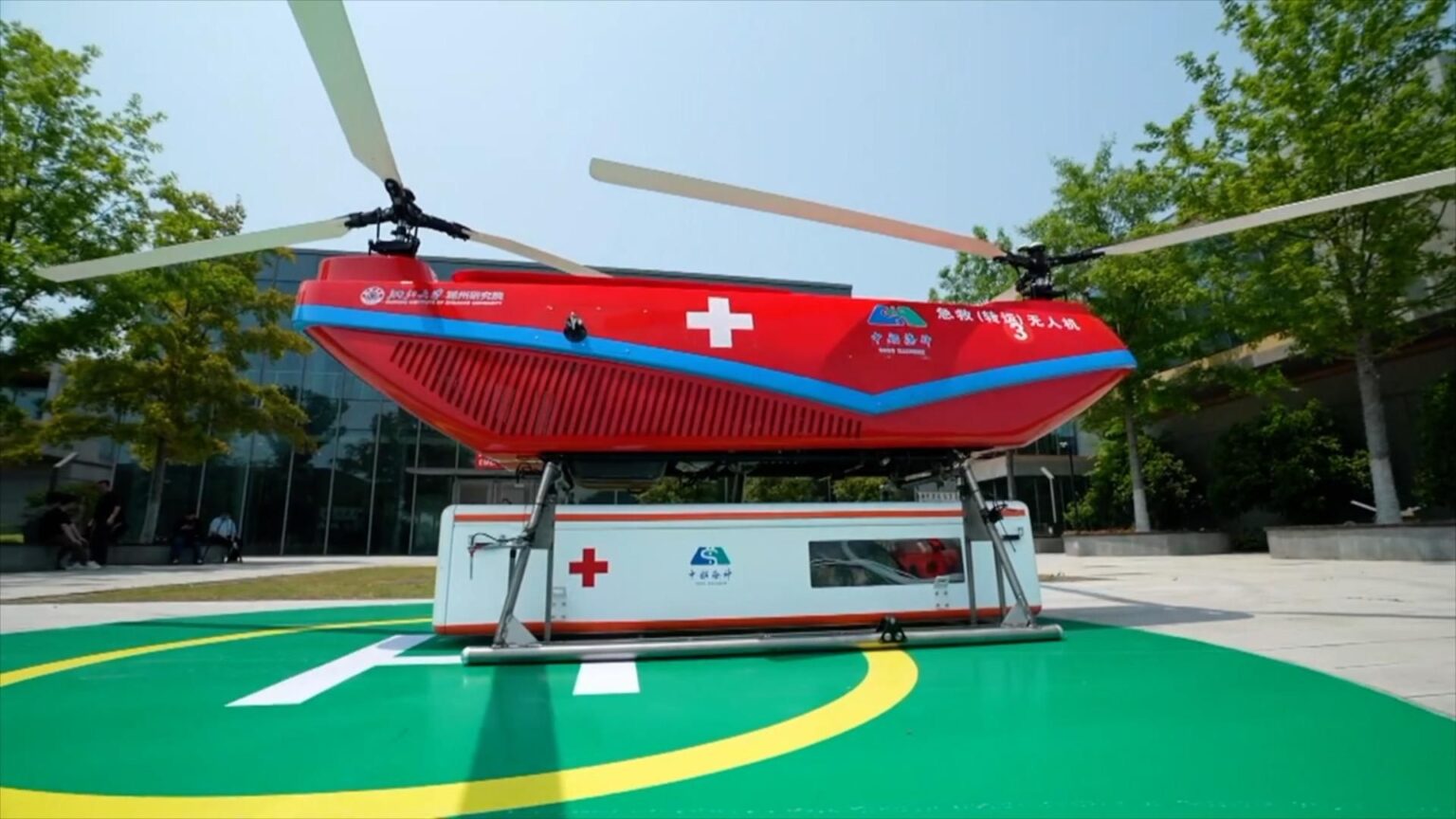
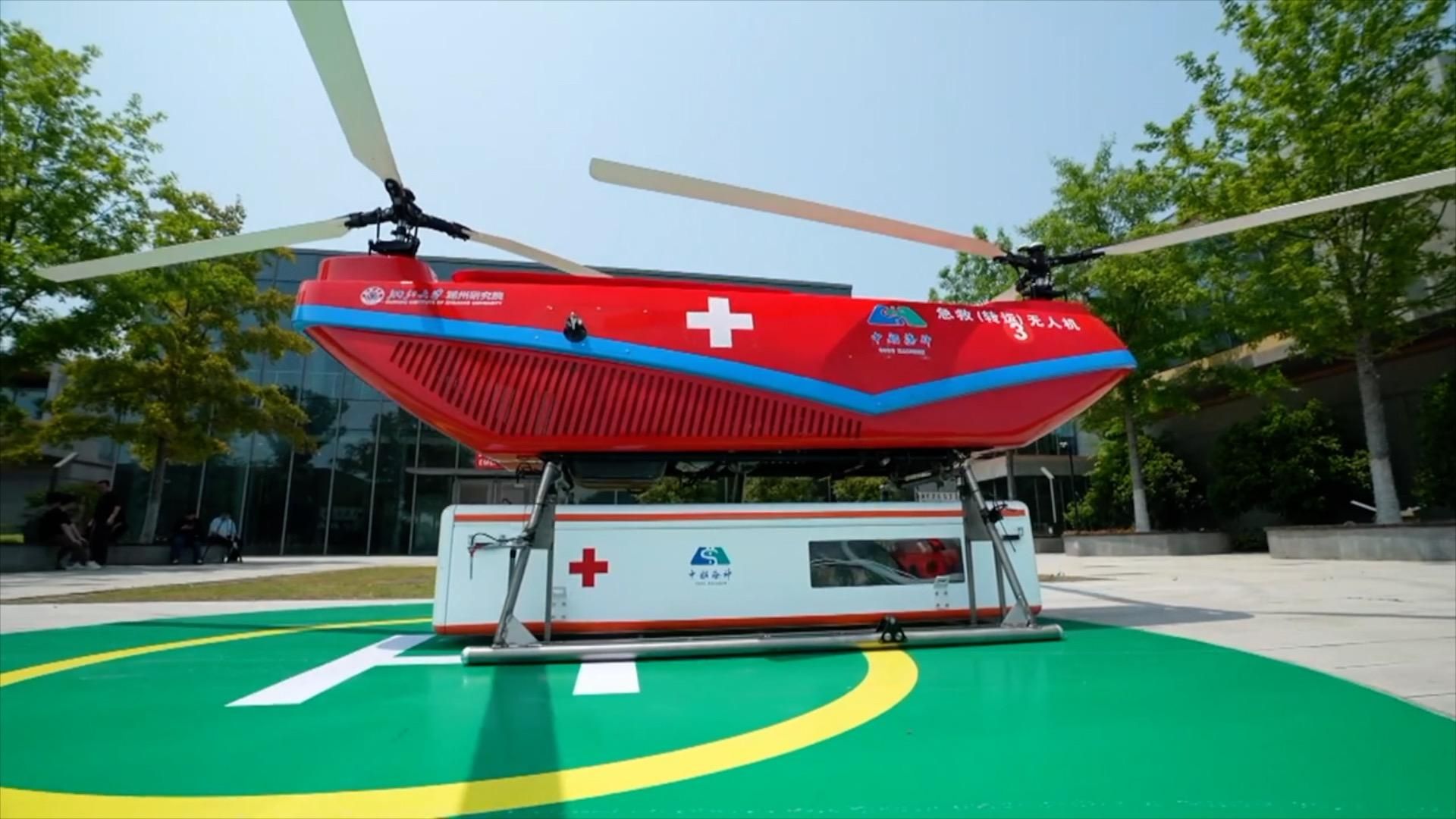
China has just unveiled the world’s first medical rescue drone, an aircraft that operates in turbulent seas, withstands temperatures from -25 °C to 46 °C, and can monitor vital signs, defibrillate patients, and transmit real-time video.​


Written byAlisson Ficher
Published on24/04/2026 at 16:53

china-has-just-unveiled-the-worlds-first-medical-r-1536x864.jpeg


Aerial technology integrates rescue, medical care, and evacuation in extreme environments, expanding response capability in critical scenarios and reducing the time between victim location and the start of clinical support in complex operations.

China has unveiled a medical rescue drone designed to locate victims, initiate emergency care, and transport injured individuals in hard-to-reach areas, including turbulent marine environments, regions of extreme temperature, and high-altitude locations.

The proposal combines different stages of rescue into a single operation, focusing on reducing the time between the first contact with the victim and the start of clinical care at the scene.

The equipment was developed by CSSC Haishen Medical Technology, affiliated with China State Shipbuilding Corporation, in partnership with the Chinese Academy of Sciences and industry companies, according to information released by China Daily and Xinhua news agency.

This joint effort seeks to address historical limitations faced by rescue teams in hostile environments, where human displacement can be slow, risky, or unfeasible.

Medical care at the rescue site​

The main difference compared to drones used in rescue operations lies in the onboard clinical resources.

The aircraft combines respiratory support, intravenous infusion, vital signs monitoring, defibrillation, and real-time video transmission for remote monitoring by medical teams.

China's medical drone performs rescue, monitors vital signs, and operates in extreme conditions, combining care and evacuation in a single mission.
China’s medical drone performs rescue, monitors vital signs, and operates in extreme conditions, combining care and evacuation in a single mission.
With this setup, the equipment was designed to act before the victim’s removal, reducing the interval between locating the injured person and the start of emergency care.

This capability changes the traditional logic of rescues, which normally depend on transport to a safe point before advanced procedures begin.

The proposal is to integrate search, initial medical support, and transport on a single platform, allowing clinical decisions to be made based on data collected during the operation.

The manufacturer states that the drone can be used in natural disasters, health emergencies, and operations in locations where human teams face logistical barriers or high risk.

The model combines autonomous waypoint navigation, hovering, and terrestrial remote control, which enhances operational flexibility and reduces the need for direct exposure of professionals in dangerous areas.

Operation in turbulent seas and extreme temperatures​

Huang Yuhong, president and chief engineer of CSSC Haishen Medical Technology, stated that the aircraft can operate in humid, salty, and turbulent seas, in addition to withstanding temperatures between -25 °C and 46 °C.

This range significantly expands the spectrum of use, allowing operation in both intensely cold regions and areas of extreme heat, where conventional equipment may have limitations.

The executive also reported that the drone was designed for missions at altitudes of up to 5,000 meters, which expands its potential use in mountains, isolated areas, and regions affected by natural disasters.

This type of scenario often imposes additional challenges on traditional rescue, such as limited access, adverse weather conditions, and communication difficulties.

Another highlight from the company is its load capacity, which positions the equipment as a hybrid platform between an aircraft and a life support unit.

The equipment weighs 600 kilograms and supports up to 300 kilograms, a size that allows combining the transport of people, medical instruments, and monitoring systems in a single operation.

This relationship between weight and payload reinforces the objective of transforming the drone into a means capable not only of locating victims but also of stabilizing and rapidly removing them.

Platform combines autonomous flight and life support​

The presentation took place during the China International Medical Equipment Fair, an exhibition focused on medical equipment and solutions, where the project was displayed as part of a broader innovation strategy in emergency response.

At the same event, the company showcased transfer and rescue robots capable of climbing stairs, bypassing obstacles, and transporting injured individuals on stretchers to aid stations.

Although they have different functions, the systems follow the same development line, which seeks to integrate mobility, automation, and medical intervention capabilities in critical scenarios.

The joint demonstration reinforces the intention to create an ecosystem of intelligent equipment aimed at assistance in crisis situations, with less dependence on traditional infrastructure.

In the case of the drone, this strategy becomes more evident due to the combination of resources that are normally distributed among different rescue means.

The aircraft can be quickly sent to an affected area, maintain real-time visual contact with the victim, sustain emergency procedures, and perform removal in sequence.

This operational chain tends to reduce delays that can be decisive in serious occurrences, especially when the clinical picture evolves rapidly.

The company did not inform, in the consulted disclosure, deadlines for large-scale adoption, start of commercial operation, or specific deployment locations.

Independent performance tests in real rescue situations were also not detailed, which still limits external evaluation of the system’s effectiveness in the field.

Even so, the project positions the drone as part of a new generation of emergency equipment, where displacement speed ceases to be the sole differential and begins to share space with the ability to provide clinical care at the exact point of the occurrence.

 
Via ACuriousPLAFan/SDF:

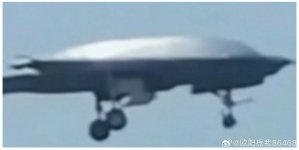
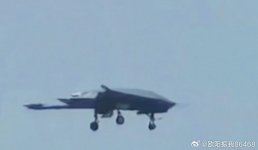
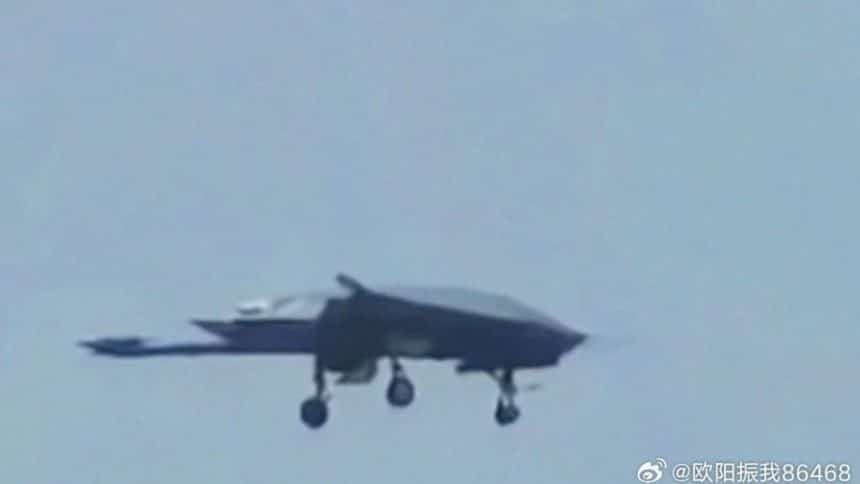
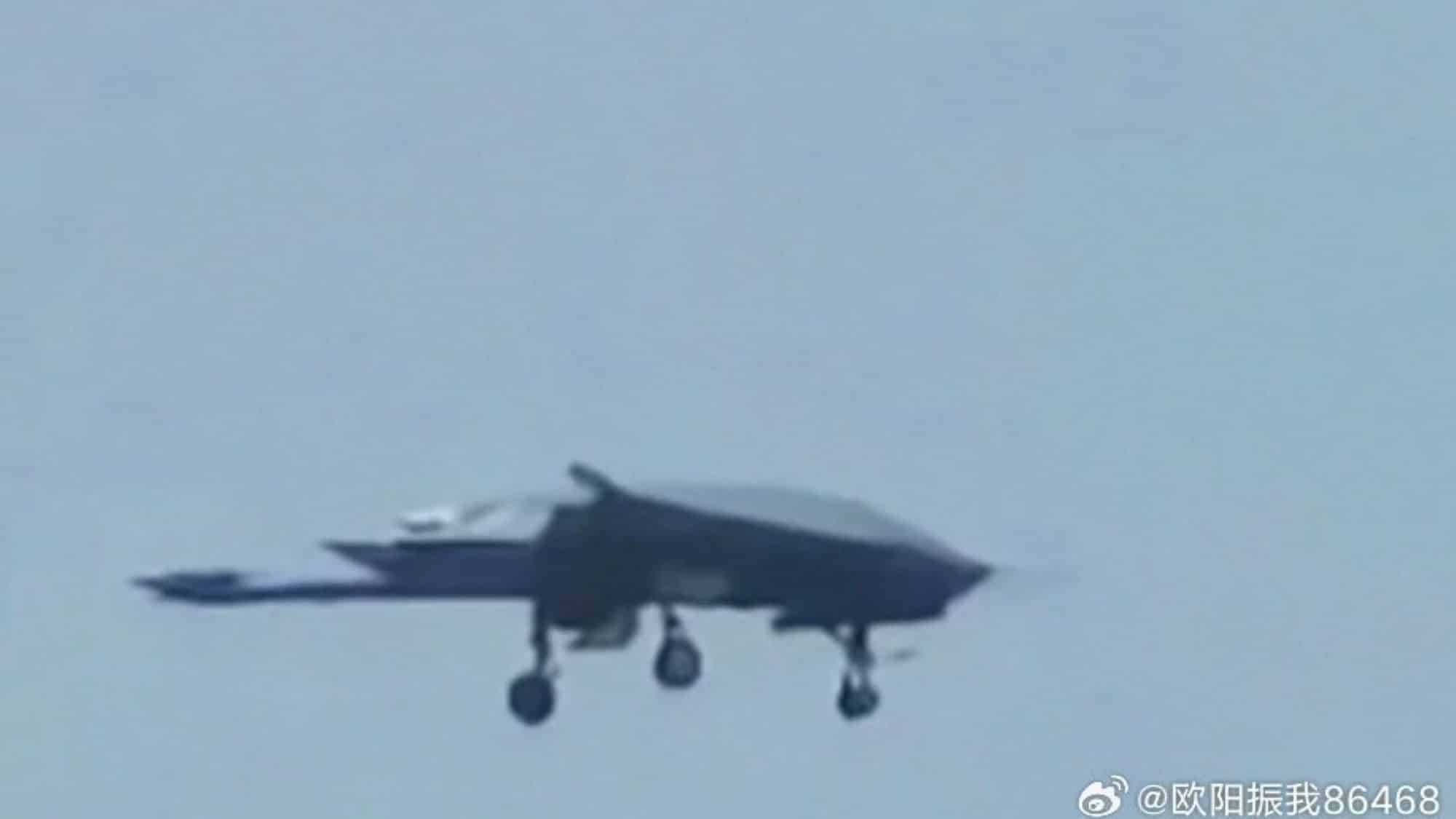
„The first time the carrier-based GJ-21 was videotaped/photographed with its landing gears extended. Notice the catapult launch bar at the front landing gear. Posted by @欧阳振我86468 on Weibo.“

IMG_2986.jpegIMG_2987.jpeg
 

New Images Show China’s GJ-21 Naval UCAV with Landing Gear Extended​

Published on: May 1, 2026 at 6:06 PM

GJ-21 landing gear

The GJ-21 photographed while flying with its landing gear extended and the catapult launch bar clearly visible. (Image credit: @欧阳振我86468 on Weibo via Andreas Rupprecht)

The GJ-21 is considered a naval derivative of the GJ-11 Collaborative Combat Aircraft, as demonstrated by features such as launch bar and arrestor hook, meant to fly off the Type 076 Sichuan LHD.

A new unofficial picture of China’s GJ-21 naval Unmanned Combat Aerial Vehicle (UCAV) emerged on Apr. 30, 2026, showing the aircraft with its landing gear extended. It is unclear when and where the photo was captured.

It was previously assessed that the unmanned aircraft, a naval variant of the GJ-11, is meant to fly off the Type 076 Landing Helicopter Dock (LHD) amphibious assault ship. A November 2025 image showed a bottom view of the aircraft with the landing gear and an arrestor hook extended.

A mockup of the aircraft also emerged on the Type 076 late in January 2026 at the Hudong-Zhonghua Shipyard in Shanghai. The massive vessel tested its Electromagnetic Launch System (EMALS)-configured catapult launch system in October 2025, positioned on the port-side portion of the deck.

The People’s Liberation Army Navy (PLAN) reported on Apr. 21 that the Type 076 is proceeding on its eight round of sea trials from Shanghai. It is therefore not clear if the image has been taken at a different location where testing of China’s CCAs is ongoing or while it is preparing to land on the Type 076 Sichuan, although the latter seems unlikely.


The service’s official page said on X: “Recently, China’s 1st Type 076 amphibious assault ship PLANS Sichuan departed from Shanghai to waters in the South China Sea to conduct scientific research, testing and training tasks, to evaluate the operational performance of its systems and platforms. Since its launch, PLANS Sichuan has successfully completed several sea trials. This routine trans-area testing and training is conducted in accordance with the overall construction plan and is not directed at any specific target.”

the Chinese PLA Navy recently conducted scientific research, testing and training tasks in the South China Sea to evaluate the operational performance of its various systems and platforms.

Since its launch,… pic.twitter.com/rVVyDXzzC4

— China Military Bugle (@ChinaMilBugle) April 21, 2026


Latest image

The latest image essentially shows a rear angle that also captured a significant side aspect of the GJ-21. In fact, while we don’t see the arrestor hook here, we do see the catapult launch bar on the nose landing gear.

The faint outlines of a flight-data probe on the nose can also be observed, while the starboard (right-side) wing shows split control surfaces on the trailing edge. Other features that also help confirm the drone’s identity as the GJ-21 is the shrouded exhaust – seen in the PLA Air Force’s GJ-11 that the service showed flying with J-20s in November 2025.


The GJ-21 is considered a naval derivative of the GJ-11 Collaborative Combat Aircraft, as demonstrated by features such as launch bar and arrestor hook, meant to fly off the Type 076 Sichuan LHD.


A new unofficial picture of China’s GJ-21 naval Unmanned Combat Aerial Vehicle (UCAV) emerged on Apr. 30, 2026, showing the aircraft with its landing gear extended. It is unclear when and where the photo was captured.

It was previously assessed that the unmanned aircraft, a naval variant of the GJ-11, is meant to fly off the Type 076 Landing Helicopter Dock (LHD) amphibious assault ship. A November 2025 image showed a bottom view of the aircraft with the landing gear and an arrestor hook extended.

A mockup of the aircraft also emerged on the Type 076 late in January 2026 at the Hudong-Zhonghua Shipyard in Shanghai. The massive vessel tested its Electromagnetic Launch System (EMALS)-configured catapult launch system in October 2025, positioned on the port-side portion of the deck.

The People’s Liberation Army Navy (PLAN) reported on Apr. 21 that the Type 076 is proceeding on its eight round of sea trials from Shanghai. It is therefore not clear if the image has been taken at a different location where testing of China’s CCAs is ongoing or while it is preparing to land on the Type 076 Sichuan, although the latter seems unlikely.


The service’s official page said on X: “Recently, China’s 1st Type 076 amphibious assault ship PLANS Sichuan departed from Shanghai to waters in the South China Sea to conduct scientific research, testing and training tasks, to evaluate the operational performance of its systems and platforms. Since its launch, PLANS Sichuan has successfully completed several sea trials. This routine trans-area testing and training is conducted in accordance with the overall construction plan and is not directed at any specific target.”


The Type 076 amphibious assault ship PLANS Sichuan (Hull 51) attached to the Chinese PLA Navy recently conducted scientific research, testing and training tasks in the South China Sea to evaluate the operational performance of its various systems and platforms.

Since its launch,… pic.twitter.com/rVVyDXzzC4

— China Military Bugle (@ChinaMilBugle) April 21, 2026


Latest image

The latest image essentially shows a rear angle that also captured a significant side aspect of the GJ-21. In fact, while we don’t see the arrestor hook here, we do see the catapult launch bar on the nose landing gear.

The faint outlines of a flight-data probe on the nose can also be observed, while the starboard (right-side) wing shows split control surfaces on the trailing edge. Other features that also help confirm the drone’s identity as the GJ-21 is the shrouded exhaust – seen in the PLA Air Force’s GJ-11 that the service showed flying with J-20s in November 2025.

Chinese military aviation researcher Andreas Rupprecht had previously told The Aviationist that the GJ-21 could be described as the naval version of the GJ-11. “It was previously designated, within the OSINT community, as the GJ-11H and later GJ-11J,” he told us.

As it seems, for the first time clear images of a GJ-21 in flight are posted and this one – based on the still installed pitots – has its tail hook down. pic.twitter.com/5h1nVZHzIe

— @Rupprecht_A (@RupprechtDeino) November 1, 2025


The large dorsal hump housing the air intake is also seen clearly. This feature has been consistent in the mock-ups and renditions of all the GJ-11s seen so far. The GJ-11 aircraft was first officially unveiled in the October 2019 parade. It was later depicted flying with the J-20 in a 2022 concept video on CCTV 7, and mock-ups of the GJ-11J/GJ-21 before and during the Sep. 3, 2025, parade.

We so far have no image on the GJ-11J/GJ-21’s internal weapons bays, which might give an idea of its role when flying from the Sichuan and as a wingman drone to the J-20 – whether as an offboard sensor, or offboard weapons release, or both. For the Sichuan, we have assessed that it could be meant to provide an organic ISR-strike capability to support amphibious troop and armor landings on Taiwanese beaches, without having to rely on the rest of the PLA Navy surface combatant and PLAAF assets.


This is strange & interesting🤔 … This GJ-21 – as it seems seen here during the rehearsals for the parade – has clearly much better visible Chinese Navy markings & titles including the “21”.
So has it been repainted just prior to the parade?

(via @齐天的孙猴子) pic.twitter.com/kAXPMwy0uo

— @Rupprecht_A (@RupprechtDeino) October 3, 2025


The drone could also be laying the groundwork for unmanned systems to be operated from the CNS Fujian in the future, while also offering an uncrewed high-loiter time aerial asset for a PLAN strike group.

Apparently the 076 LHD-51 Sichuan is out for her 3rd sea trials today. pic.twitter.com/jPAVXejq1M

— @Rupprecht_A (@RupprechtDeino) April 20, 2026


New CCA/UCAV

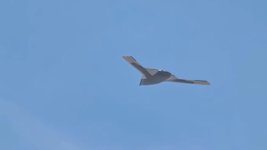
Apr. 11 also saw new footage of a yet unknown CCA or UCAV emerging from China. The aircraft is captured in a grainy side-aspect video from a person on the ground, and appears to have a cranked-kite type wing configuration and split trailing edge control surfaces.

The aircraft appears to be unlike any of the known and unknown flying-wing type aircraft we have reported so far. It could also very well be a manned system for all we know.

Well! Another day in China and another drone / CCA / UCAV spotted? 🤔

Via https://t.co/vFEDFCjiLE pic.twitter.com/L9Qh0lwFax

— @Rupprecht_A (@RupprechtDeino) April 11, 2026


As we have noted in our previous reports about China’s next-generation J-36 and J-XDS aircraft, the periodic emergence of new aircraft in unofficial videos cannot happen without the sanction of Chinese authorities. The leaks have a propaganda value to display Chinese industrial and technological progress, while also keeping the adversary intelligence community engaged with tracking those aircraft.


China Tests GJ-21 Stealth Drone With Catapult Launch System for Future Aircraft Carrier Operations​

2 May, 2026 - 5:55


China’s GJ-21 stealth drone has been spotted with catapult launch gear, signaling a clear move toward carrier-based unmanned strike capability. This development points to a major shift in naval airpower, enabling China to project stealth combat drones from sea platforms and extend strike reach without risking pilots.

The visible launch bar confirms compatibility with catapult-assisted takeoff, indicating the drone is being adapted for sustained shipboard operations. Integrated aboard platforms like the Type 076, this capability would support persistent surveillance and precision strike missions, reinforcing a broader shift toward autonomous and distributed maritime warfare.

A new unofficial image surfaced on April 30, 2026, offering one of the clearest views yet of China’s emerging naval stealth drone program. Shared via X, the photograph appears to show the GJ-21 in flight with its landing gear extended and a visible catapult launch bar on the nose landing gear. The angle provides rare insight into design adaptations associated with carrier-style flight operations, including catapult-assisted launch procedures and possible compatibility with a shipborne launch-and-recovery cycle. This development adds weight to indications that China is advancing toward the integration of stealth unmanned combat aerial vehicles aboard amphibious assault ships such as the Type 076 Sichuan.

The newly surfaced image, captured from a rear-quarter perspective, offers more than a simple visual confirmation of the platform. It provides a window into its intended operating environment. The clearly visible catapult launch bar on the nose landing gear strongly suggests compatibility with assisted takeoff systems, a feature associated with CATOBAR-style naval aviation rather than conventional runway-only operations. While the arrestor hook is not visible in this specific frame, prior imagery and open-source assessments have indicated its likely presence, pointing toward a configuration potentially suitable for arrested recovery operations within a carrier aviation framework.

The inclusion of a launch bar may indicate compatibility with advanced catapult systems, potentially including electromagnetic aircraft launch systems associated with next-generation Chinese naval platforms. If accurate, this would suggest that the GJ-21 is being designed not merely for limited deck operations, but for integration into a more complex flight deck architecture involving launch positioning, deck spotting, aircraft handling, sortie generation, and recovery procedures. Such a configuration would move beyond ski-jump aviation and allow a more flexible rhythm of unmanned fixed-wing operations at sea.

The GJ-21 is widely assessed as a naval derivative of the GJ-11 unmanned combat aerial vehicle, a flying-wing UCAV optimized for low observability and precision strike missions. Navalizing such a design would likely introduce engineering trade-offs. Reinforced landing gear, structural strengthening for repeated arrested recoveries, maritime corrosion protection, foldable or space-efficient wing arrangements, and compatibility with hangar deck elevators and flight deck handling equipment may increase overall weight and affect endurance, payload fraction, or radar cross-section margins. As a result, the GJ-21 may represent a recalibrated balance between survivability, range, payload, and shipboard operability rather than a direct adaptation of its land-based predecessor.

Attention is increasingly centered on the Type 076 Sichuan LHD, which is believed to incorporate catapult-assisted launch systems, an uncommon feature for amphibious assault ships. If confirmed, this could position the vessel as a hybrid aviation platform, bridging the gap between traditional helicopter carriers and full-scale aircraft carriers. Within such a framework, the GJ-21 could allow the Type 076 to function as a distributed aviation node, deploying fixed-wing unmanned systems for deep strike, intelligence, surveillance and reconnaissance, electronic warfare, targeting support, and possibly suppression or destruction of enemy air defenses.

The GJ-21 could fulfill a range of roles aligned with modern unmanned and network-centric warfare concepts. These may include SEAD and DEAD missions during the opening phase of a conflict, persistent ISR in contested anti-access and area-denial environments, maritime strike against high-value surface units, and electronic attack against radar and communications networks. Its low-observable flying-wing design may allow it to penetrate defended airspace with reduced detection probability, while its unmanned nature could reduce the operational and political risks associated with pilot exposure.

From a broader strategic perspective, the integration of stealth UCAVs onto amphibious platforms may signal a shift toward distributed maritime aviation and distributed lethality concepts. Rather than concentrating aviation capability only on a limited number of large-deck carriers, such an approach could disperse airpower across multiple platforms, complicating adversary targeting cycles and enhancing force survivability. While the timeline for full operational deployment remains uncertain, ongoing testing activity suggests a deliberate effort to mature these capabilities within a future joint force architecture linking naval aviation, amphibious operations, long-range strike, and maritime reconnaissance.

The concept of Collaborative Combat Aircraft, where crewed and uncrewed systems operate in coordinated roles, is gaining traction globally. Programs in the United States, as well as unmanned combat aircraft projects in Türkiye, show how air forces and navies are examining autonomous or semi-autonomous platforms as sensor nodes, decoys, jammers, weapons carriers, and strike adjuncts. In a similar vein, the GJ-21 could potentially operate alongside crewed Chinese aircraft such as the J-15T or future carrier-capable J-35, acting as a forward sensor, electronic attack platform, decoy asset, or unmanned strike element within a broader combat cloud. Such manned-unmanned teaming concepts could enhance operational flexibility, extend the reach of crewed aircraft, and increase the density of assets available for complex maritime strike packages.

At the same time, key uncertainties remain. The complexity of operating stealth UCAVs from naval flight decks presents challenges in terms of deck handling, maintenance cycles, low-observable surface preservation, sortie generation rates, aircraft elevator capacity, hangar deck integration, and launch-and-recovery sequencing. Data-link resilience in contested electromagnetic spectrum environments, vulnerability to electronic warfare disruption, satellite navigation degradation, cyber interference, and the level of autonomy granted to onboard mission systems are also critical variables that remain unclear based on open-source information. These factors will likely shape both the operational viability and scalability of the platform.

The latest image of the GJ-21 in a navalized configuration adds further weight to assessments that China is advancing toward operationalizing stealth unmanned aviation at sea. Its apparent compatibility with catapult launch systems, combined with ongoing developments surrounding the Type 076 Sichuan, points to a broader evolution in naval airpower concepts. The possible pairing of a catapult-equipped LHD with a low-observable UCAV could give Chinese amphibious task groups a new aviation layer, enabling them to conduct ISR, electronic warfare, targeting, and strike missions without relying solely on conventional aircraft carriers.

Whether this effort reflects experimental doctrine development or an approaching operational capability remains uncertain. However, the observed trajectory suggests a sustained focus on integrating unmanned systems into maritime strategy. If the GJ-21 is eventually deployed from the Type 076 or similar platforms, it could influence the regional naval balance by expanding the role of amphibious assault ships, adding fixed-wing unmanned aviation to expeditionary operations, and reshaping how airpower may be projected in contested maritime environments.


Users who are viewing this thread

Pakistan Defence Latest

Latest Posts

Back
Top