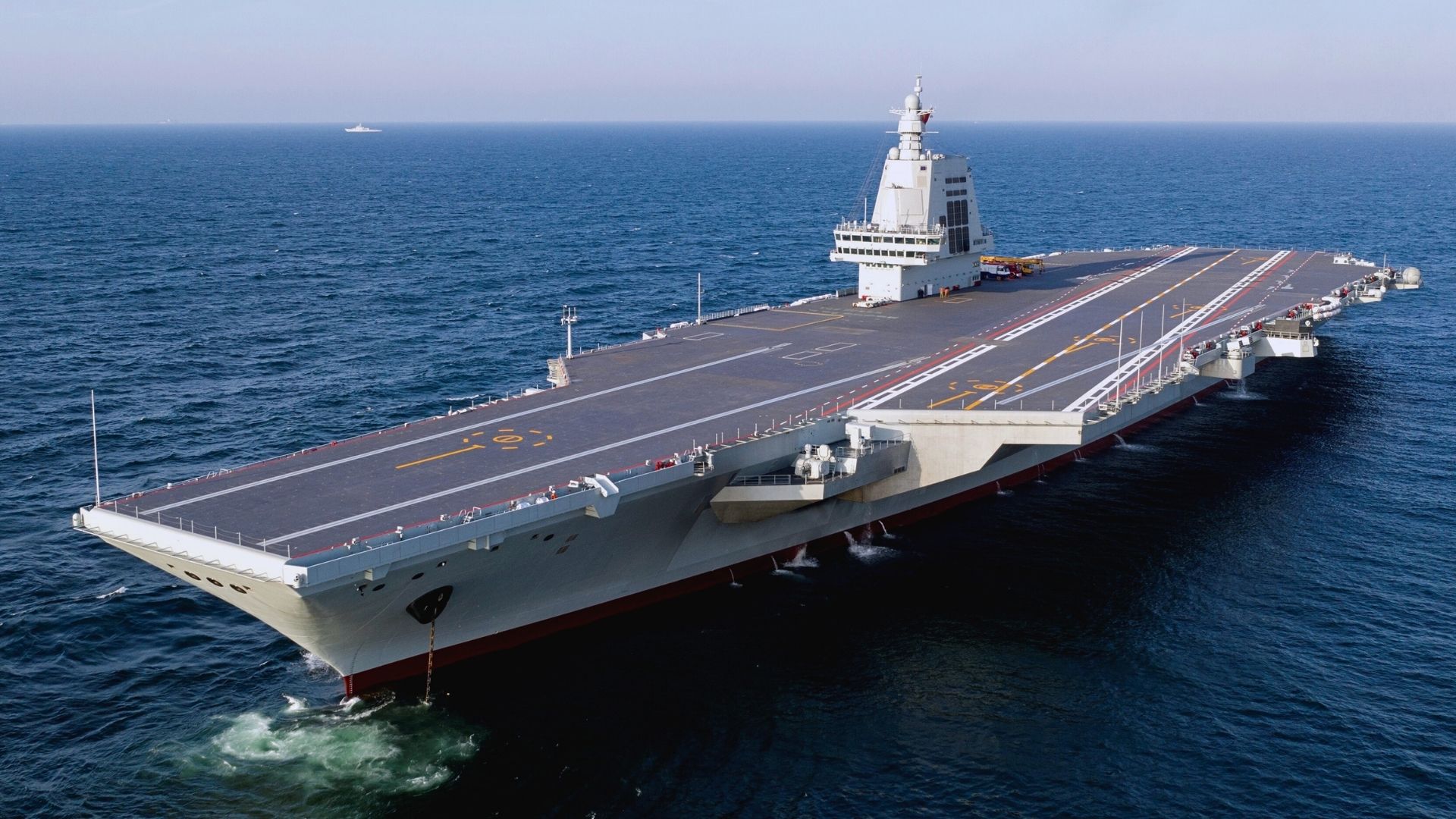
Chinese Aircraft Carriers - Liaoning, Shandong, Fujian and the future

Till it’s actually cracked… put it in some war lol… many myths busted in past few months lol

The Type 004 is not only larger, but it also looks very different to the US supercarriers.

A lot of people will get surprised how different it looks, including many Chinese members.
 
Via 00CuriousObserver/SDF:

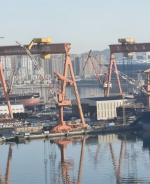
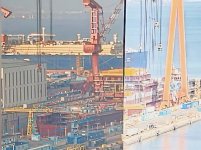
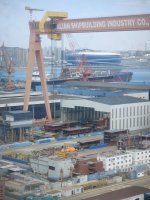
A minor update from the 004 aircraft carrier at Dalian with aparently some „Work happening on the bow“.

1775112166000.png
 
Via HailingTX20/SDF:

„The latest, more close-up image [of the 004 Aircraft Carrier at Dalian] shows the height of the bow elements has increased.“

IMG_7597.jpeg
 
Via Syrida2887/SDF:
„Some photos with amazing clarity, in which a large number of sections and the construction of the hull itself can be seen, among which perhaps we have found the components of the foremost bulbous bow.“

IMG_2953.jpegIMG_2954.jpegIMG_2955.jpeg
 
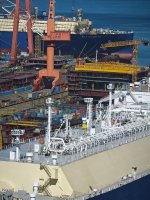
China can build three CVNs simultaneously in three different locations: Dalian, Shanghai, and Guangzhou.
 
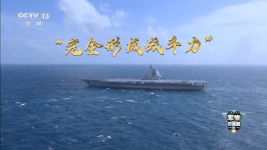
Today's official video.

Key Point:
1. 据悉,2026年福建舰将从“基本形成战斗力”向“完全形成战斗力”全面过渡,这也是福建舰战斗力生成的关键之年。
In 2026, the aircraft carrier *Fujian* will undergo a comprehensive transition from having "fundamentally established combat capability" to having "fully established combat capability"; this also marks a pivotal year in the development of the *Fujian*'s operational readiness.
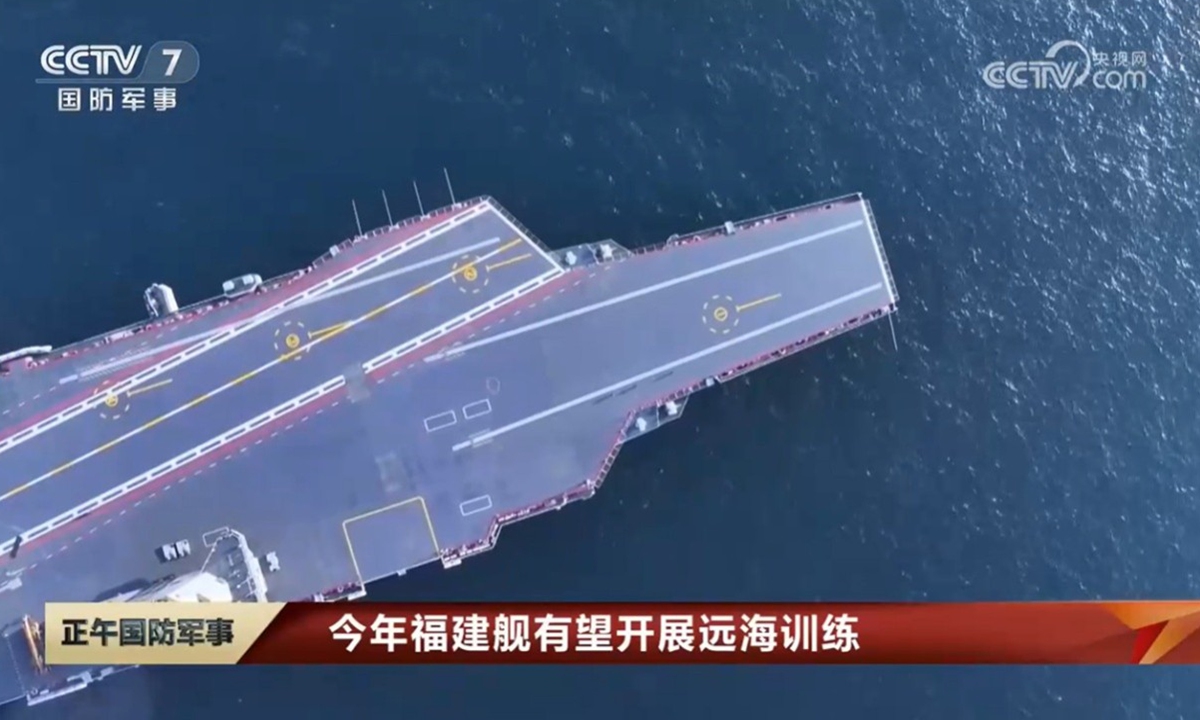
2. 今年我国的第三艘航母福建舰也有望开展远海训练。
This year, our country's third aircraft carrier, the *Fujian*, is also expected to conduct far-sea training.

1775896202313.png

=======================================
This means that later this year, we may see photos or videos of the aircraft carrier *Fujian* with a full complement of carrier-based aircraft.
 
Last edited:
HFosJAbWEAA1bYE
 
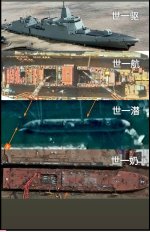
The next gen Chinese navy platforms.

Screenshot_2026-04-11-20-48-16-395_tv.danmaku.bili-edit.jpg
 
Via ACuriousPLAFan

„Latest satellite imagery of the 004 CVN under construction at Dalian. The bow section (albeit still lacking the bow tip) is visible. Posted by @一定会对蛙动手 on Weibo.“

IMG_7750.jpeg
 
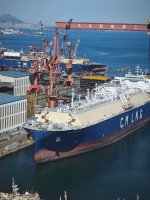
is that new tanker not a bit too big ?

easy target ?
 
China’s aircraft carrier Fujian to achieve full combat capability in 2026, set for far-sea drills: official media
By Liang Rui and
Liu Xuanzun
Published: Apr 12, 2026 08:36 PM
China's third aircraft carrier, the Fujian, will transition from initial to full operational capability in 2026, with far-sea training expected, official media reported on April 12, 2026. Photo: Screenshot from the military channel of CCTV News

China's third aircraft carrier, the Fujian, will transition from initial to full operational capability in 2026, with far-sea training expected, official media reported on April 12, 2026. Photo: Screenshot from the military channel of CCTV News

China's third aircraft carrier, the Fujian, will undergo a full transition from initial to full operational capability in 2026, with far-sea training expected, official media reported on Sunday. Chinese military affairs experts said that the Fujian has moved from construction to launch to commissioning at a fast pace, achieving operational capability in a very short time.

In April 2023, the Shandong, China's first domestically built carrier, conducted its first far-sea training mission in the Western Pacific, marking the entry of a Chinese-built carrier into the far-sea training sequence. Now, the Fujian is expected to follow suit, the military channel of CCTV News reported on Sunday.

The Fujian is China's first carrier with an electromagnetic aircraft launch system, designed and built entirely independently. On May 8, 2024, the Fujian completed its maiden eight-day sea trial, during which its propulsion and power systems underwent a series of tests that met expected targets. The carrier was officially commissioned on November 5, 2025, ushering in a three-carrier era for the Chinese People's Liberation Army Navy, the report said.

Shortly after commissioning, the Fujian conducted its first live combat training mission at sea. During that mission, multiple types of carrier-based aircraft, including the J-35, J-15T, J-15DT, and KJ-600, conducted multiple rounds of catapult launches and landing drills. The Fujian carrier strike group also carried out formation navigation and coordinated search-and-rescue exercises, among other training modules.

According to the report, 2026 is a critical year for the Fujian as it moves from basic to full combat capability.

"When we see the Fujian achieving full aircraft loadouts and demonstrating the ability to launch and recover aircraft across its entire deck, we can consider its combat capability to be fully developed," Wei Dongxu, a Chinese military affairs commentator, was quoted by the CCTV as saying.

He noted that the aircraft carrier's far-sea training will proceed in two steps. First, it should achieve the ability to deploy as a strike group. Once the group's combat system reaches a high level of seamless coordination, the next step will naturally be to operate in distant waters.

Far-sea conditions are far more complex, Wei said. Once it enters the Western Pacific for extended exercises or training, external interference could come into play, such as surveillance aircraft or vessels from other countries. At that point, the strike group must respond quickly, flexibly, and precisely. Therefore, entering far-sea training requires not only a high level of combat readiness but also comprehensive preparation for emergency situations, so that all far-sea training missions can be completed without a hitch.

Wang Yunfei, a Chinese military affairs expert, told the Global Times on Sunday that the Fujian has moved from construction to launch to commissioning and capability development at a very fast pace.

Since its commissioning in November last year, basic training has largely been completed, and initial combat capability has been achieved, Wang said. For instance, carrier-based aircraft have completed training in four types of weather conditions: simple and complex in both daytime and nighttime. This foundational training is now done. As various reports indicate, mission-oriented training has also begun, meaning the carrier can now carry out general tasks. Compared with carriers in other countries, this pace is rapid.

Wang discussed the significance of conducting far-sea training for the Fujian to achieve full combat capability.

First, Wang said that only through far-sea validation can the aircraft carrier's maturity and reliability be proven. In coastal waters, wave conditions are mild, and there is access to land-based radar, communications, navigation, and early warning aircraft.

Second, from the perspective of mission requirements, the combat value of a carrier is fully realized in far seas. Within the first island chain, land-based aviation leaves only a limited role for a carrier. The carrier's mission is to project power in distant waters and carry out non-combat military operations such as disaster relief, counterterrorism, medical support, and far-sea logistics. These functions may not be fully exercised in coastal waters, Wang said.

Third, from the standpoint of defending national sovereignty and achieving reunification, national sovereignty today should be understood beyond the land, encompassing exclusive economic zones, maritime rights and interests, sea lanes, and oil routes. Protecting these interests, which extend far beyond land territory, requires air power, Wang said.

The expert emphasized that far-sea training should build systematic operational capability before it can be considered genuine far-sea combat capability. The carrier strike group should operate collectively, demonstrating integrated far-sea combat capability.

Regarding aircraft loadouts, having a few fewer aircraft is acceptable, but the types should be complete, and the technical support for a complete operational cycle should be sufficient. More importantly, as many pilots as possible in the strike group should participate in far-sea training to gain real-world experience, Wang added.
 
To view this content we will need your consent to set third party cookies.
For more detailed information, see our cookies page.
 
China’s aircraft carrier Fujian to achieve full combat capability in 2026, set for far-sea drills: official media
By Liang Rui and
Liu Xuanzun
Published: Apr 12, 2026 08:36 PM
China's third aircraft carrier, the Fujian, will transition from initial to full operational capability in 2026, with far-sea training expected, official media reported on April 12, 2026. Photo: Screenshot from the military channel of CCTV News's third aircraft carrier, the Fujian, will transition from initial to full operational capability in 2026, with far-sea training expected, official media reported on April 12, 2026. Photo: Screenshot from the military channel of CCTV News

China's third aircraft carrier, the Fujian, will transition from initial to full operational capability in 2026, with far-sea training expected, official media reported on April 12, 2026. Photo: Screenshot from the military channel of CCTV News

China's third aircraft carrier, the Fujian, will undergo a full transition from initial to full operational capability in 2026, with far-sea training expected, official media reported on Sunday. Chinese military affairs experts said that the Fujian has moved from construction to launch to commissioning at a fast pace, achieving operational capability in a very short time.

In April 2023, the Shandong, China's first domestically built carrier, conducted its first far-sea training mission in the Western Pacific, marking the entry of a Chinese-built carrier into the far-sea training sequence. Now, the Fujian is expected to follow suit, the military channel of CCTV News reported on Sunday.

The Fujian is China's first carrier with an electromagnetic aircraft launch system, designed and built entirely independently. On May 8, 2024, the Fujian completed its maiden eight-day sea trial, during which its propulsion and power systems underwent a series of tests that met expected targets. The carrier was officially commissioned on November 5, 2025, ushering in a three-carrier era for the Chinese People's Liberation Army Navy, the report said.

Shortly after commissioning, the Fujian conducted its first live combat training mission at sea. During that mission, multiple types of carrier-based aircraft, including the J-35, J-15T, J-15DT, and KJ-600, conducted multiple rounds of catapult launches and landing drills. The Fujian carrier strike group also carried out formation navigation and coordinated search-and-rescue exercises, among other training modules.

According to the report, 2026 is a critical year for the Fujian as it moves from basic to full combat capability.

"When we see the Fujian achieving full aircraft loadouts and demonstrating the ability to launch and recover aircraft across its entire deck, we can consider its combat capability to be fully developed," Wei Dongxu, a Chinese military affairs commentator, was quoted by the CCTV as saying.

He noted that the aircraft carrier's far-sea training will proceed in two steps. First, it should achieve the ability to deploy as a strike group. Once the group's combat system reaches a high level of seamless coordination, the next step will naturally be to operate in distant waters.

Far-sea conditions are far more complex, Wei said. Once it enters the Western Pacific for extended exercises or training, external interference could come into play, such as surveillance aircraft or vessels from other countries. At that point, the strike group must respond quickly, flexibly, and precisely. Therefore, entering far-sea training requires not only a high level of combat readiness but also comprehensive preparation for emergency situations, so that all far-sea training missions can be completed without a hitch.

Wang Yunfei, a Chinese military affairs expert, told the Global Times on Sunday that the Fujian has moved from construction to launch to commissioning and capability development at a very fast pace.

Since its commissioning in November last year, basic training has largely been completed, and initial combat capability has been achieved, Wang said. For instance, carrier-based aircraft have completed training in four types of weather conditions: simple and complex in both daytime and nighttime. This foundational training is now done. As various reports indicate, mission-oriented training has also begun, meaning the carrier can now carry out general tasks. Compared with carriers in other countries, this pace is rapid.

Wang discussed the significance of conducting far-sea training for the Fujian to achieve full combat capability.

First, Wang said that only through far-sea validation can the aircraft carrier's maturity and reliability be proven. In coastal waters, wave conditions are mild, and there is access to land-based radar, communications, navigation, and early warning aircraft.

Second, from the perspective of mission requirements, the combat value of a carrier is fully realized in far seas. Within the first island chain, land-based aviation leaves only a limited role for a carrier. The carrier's mission is to project power in distant waters and carry out non-combat military operations such as disaster relief, counterterrorism, medical support, and far-sea logistics. These functions may not be fully exercised in coastal waters, Wang said.

Third, from the standpoint of defending national sovereignty and achieving reunification, national sovereignty today should be understood beyond the land, encompassing exclusive economic zones, maritime rights and interests, sea lanes, and oil routes. Protecting these interests, which extend far beyond land territory, requires air power, Wang said.

The expert emphasized that far-sea training should build systematic operational capability before it can be considered genuine far-sea combat capability. The carrier strike group should operate collectively, demonstrating integrated far-sea combat capability.

Regarding aircraft loadouts, having a few fewer aircraft is acceptable, but the types should be complete, and the technical support for a complete operational cycle should be sufficient. More importantly, as many pilots as possible in the strike group should participate in far-sea training to gain real-world experience, Wang added.

China could use nuclear propulsion for next aircraft carrier after Fujian’s flaws emerge


image

China’s Fujian carrier has key design limits and its next nuclear carrier could be built to overcome them

China’s newest aircraft carrier, the Fujian, was meant to mark a leap in naval capability: the country’s first domestically designed carrier equipped with electromagnetic catapults, and the largest conventionally powered warship in the world.

China’s newest aircraft carrier, the Fujian, was meant to mark a leap in naval capability: the country’s first domestically designed carrier equipped with electromagnetic catapults, and the largest conventionally powered warship in the world.

Bottlenecks on the Flight Deck​

According to a report by the South China Morning Post, citing the military journal Shipborne Weapons Defense Review, Fujian’s most significant shortcomings stem from its conventional, non-nuclear propulsion system and the constraints it imposes on the ship’s layout.

One of the central issues is the placement of the island superstructure, which sits closer to the middle of the flight deck than on U.S. carriers. The magazine noted that this positioning reduces usable deck space and creates bottlenecks during aircraft operations.

The report also highlighted problems with the catapult arrangement. Although Fujian is equipped with advanced electromagnetic launch systems, one of its catapults intrudes into the landing area, preventing its use while aircraft are recovering. Another catapult is positioned too close to an aircraft elevator, creating an additional choke point in deck flow.

Some observers believe these layout problems are a consequence of a late design change, when China reportedly switched from steam catapults to longer electromagnetic tracks during construction.

Several independent defense analysts note that the overlap between launch and recovery zones limits Fujian’s ability to conduct simultaneous takeoffs and landings, a standard practice on U.S. supercarriers.

Former U.S. Navy officers and aviation specialists have also pointed to the carrier’s relatively shallow angled flight deck, which is narrower than that of American designs, further complicating recovery operations.

Together, these issues are believed to have a tangible impact on sortie generation, the rate at which a carrier can launch and recover aircraft. According to some estimates, Fujian’s operational tempo may be only around 60 percent of that achieved by a U.S. Nimitz-class carrier, despite the Chinese ship’s newer launch technology. While estimates vary, there is broad agreement that deck-flow inefficiencies limit the vessel’s real-world effectiveness.

Why Nuclear power is seen as the fix​

The Shipborne Weapons Defense Review article, quoted by SCMP, argued that many of these design compromises could be avoided on a nuclear-powered carrier. One major reason is space.

Conventional propulsion requires large exhaust funnels and extensive machinery rooms, which in turn force designers to place the island and elevators in less-than-optimal positions. Nuclear propulsion, by contrast, eliminates the need for large boiler exhaust systems, freeing up internal volume and allowing greater flexibility in deck layout.

Nuclear reactors would also eliminate the need to carry propulsion fuel, freeing up space for aviation fuel, munitions, and aircraft support systems. According to The War Zone, nuclear power would further provide far greater electrical output, which is increasingly important for modern carriers that rely on high-energy sensors, electronic warfare systems, and electromagnetic launch equipment.

In endurance terms, a nuclear-powered carrier would not be tied to frequent refueling stops, a limitation that currently constrains the Fujian’s range and operational persistence.


The US is approaching 65 years with nuclear powered aircraft carriers...but remember China is "#1" when it comes to nuclear power generation know-how...:unsure:

To view this content we will need your consent to set third party cookies.
For more detailed information, see our cookies page.
 
Last edited:

China could use nuclear propulsion for next aircraft carrier after Fujian’s flaws emerge


image

China’s Fujian carrier has key design limits and its next nuclear carrier could be built to overcome them

China’s newest aircraft carrier, the Fujian, was meant to mark a leap in naval capability: the country’s first domestically designed carrier equipped with electromagnetic catapults, and the largest conventionally powered warship in the world.

China’s newest aircraft carrier, the Fujian, was meant to mark a leap in naval capability: the country’s first domestically designed carrier equipped with electromagnetic catapults, and the largest conventionally powered warship in the world.

Bottlenecks on the Flight Deck​

According to a report by the South China Morning Post, citing the military journal Shipborne Weapons Defense Review, Fujian’s most significant shortcomings stem from its conventional, non-nuclear propulsion system and the constraints it imposes on the ship’s layout.

One of the central issues is the placement of the island superstructure, which sits closer to the middle of the flight deck than on U.S. carriers. The magazine noted that this positioning reduces usable deck space and creates bottlenecks during aircraft operations.

The report also highlighted problems with the catapult arrangement. Although Fujian is equipped with advanced electromagnetic launch systems, one of its catapults intrudes into the landing area, preventing its use while aircraft are recovering. Another catapult is positioned too close to an aircraft elevator, creating an additional choke point in deck flow.

Some observers believe these layout problems are a consequence of a late design change, when China reportedly switched from steam catapults to longer electromagnetic tracks during construction.

Several independent defense analysts note that the overlap between launch and recovery zones limits Fujian’s ability to conduct simultaneous takeoffs and landings, a standard practice on U.S. supercarriers.

Former U.S. Navy officers and aviation specialists have also pointed to the carrier’s relatively shallow angled flight deck, which is narrower than that of American designs, further complicating recovery operations.

Together, these issues are believed to have a tangible impact on sortie generation, the rate at which a carrier can launch and recover aircraft. According to some estimates, Fujian’s operational tempo may be only around 60 percent of that achieved by a U.S. Nimitz-class carrier, despite the Chinese ship’s newer launch technology. While estimates vary, there is broad agreement that deck-flow inefficiencies limit the vessel’s real-world effectiveness.

Why Nuclear power is seen as the fix​

The Shipborne Weapons Defense Review article, quoted by SCMP, argued that many of these design compromises could be avoided on a nuclear-powered carrier. One major reason is space.

Conventional propulsion requires large exhaust funnels and extensive machinery rooms, which in turn force designers to place the island and elevators in less-than-optimal positions. Nuclear propulsion, by contrast, eliminates the need for large boiler exhaust systems, freeing up internal volume and allowing greater flexibility in deck layout.

Nuclear reactors would also eliminate the need to carry propulsion fuel, freeing up space for aviation fuel, munitions, and aircraft support systems. According to The War Zone, nuclear power would further provide far greater electrical output, which is increasingly important for modern carriers that rely on high-energy sensors, electronic warfare systems, and electromagnetic launch equipment.

In endurance terms, a nuclear-powered carrier would not be tied to frequent refueling stops, a limitation that currently constrains the Fujian’s range and operational persistence.
lOl, everything China is "flawed" in western media, we can see how "perfect" US equipments are in Hormuz debacle.
J-10 used to be mocked and ridiculed most among Chinese weapons by the west untill they shoot Rafales down like flies.
 

Users who are viewing this thread

Back
Top