China Science And Technology News

China has erased the US lead in AI, Stanford HAI’s 2026 AI index reveals

BY MIKE WHEATLEY
APRIL 13 2026
Screenshot-from-2026-04-13-09-24-38.png


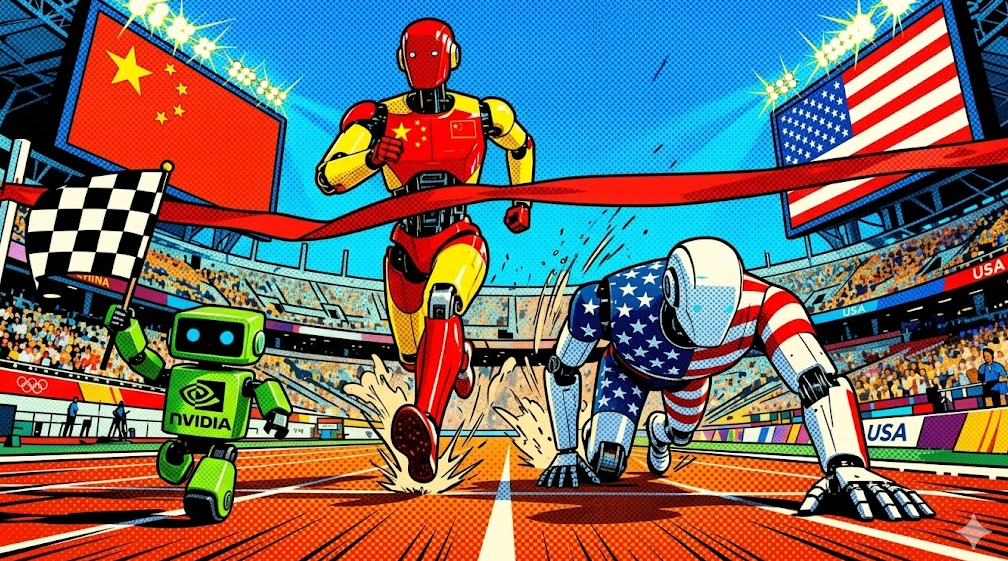
Stanford University researchers today released their highly anticipated 2026 AI Index Report, revealing a global landscape where artificial intelligence technology is being adopted at record-breaking pace, even as public trust in AI oversight and transparency hits new lows.

The report by the Stanford Institute for Human-Centered Artificial Intelligence, known as Stanford HAI, is now into its ninth year. It’s a comprehensive annual study that tracks the dizzying evolution of the AI industry, documenting a world in which America’s lead over Chinese innovation has all but evaporated, and where the technology is already reshaping global workforces and changing the course of scientific discovery.

The race for global dominance​

One of the most striking – and potentially concerning – takeaways from this year’s report is the way China has reportedly erased the AI performance gap between itself and the U.S. In previous year’s reports, the U.S. had always held a solid lead over Chinese innovators, but now the countries are neck-and-neck, with U.S. and Chinese models constantly trading places at the top of benchmarks ranking AI performance.

Although the U.S. maintains a significant edge in terms of capital, infrastructure buildout and AI chips, China now holds sway in other key areas, such as patents, publications and autonomous robotics development, also known as “physical AI.”

However, the report notes that it’s no longer a two-horse race, with other nations also striving to be seen as “AI superpowers.” These include South Korea, which has emerged as the world’s leader in terms of “innovation density,” filing more patents per capita than any other country.

As these countries all scramble for AI supremacy, the issue of “sovereignty” has become a top policy priority for many governments. A number of European and Central Asian countries have invested significantly in their AI infrastructure over the last year, bringing the number of nations with “state-backed supercomputing clusters” to 44.

However, the push for sovereign AI is not universal. South American and Middle Eastern nations lag far behind. According to Stanford’s researchers, this could lead to a new kind of “digital divide,” where those nations that struggle to shape AI development are less likely to see the economic benefits.

Growing corporate influence as transparency erodes​

More than 90% of all notable AI models are now created by private companies, and Stanford’s researchers warn that this is leading to less transparency than before. Concerns about AI “black boxes” are nothing new, but the most powerful new models being released today are even more mysterious than their predecessors.

According to the report, AI leaders including Google LLC, Anthropic PBC and OpenAI Group PBC have all abandoned the practice of disclosing their latest model’s dataset sizes and training duration. Moreover, 80 of the 95 most notable models launched last year were released without their training code.

Meanwhile, these leading AI companies are now trying to flex their political muscles. AI industry representatives have become pervasive in AI congressional hearings, with their share of witnesses tripling since 2017, while the presence of neutral academics has plummeted.

This shift, perhaps unsurprisingly, comes at a time when public trust in AI hits a new low. The report found that just 31% of U.S. citizens now trust their government to regulate AI properly, which was the lowest score of all surveyed nations except China, where just 27% of people trust their government. EU citizens remain much more confident, with 53% of people voicing confidence.

There are also concerns about hardware supply chains, with almost the entire global AI industry still being dependent on a single chipmaking foundry operated by Taiwan Semiconductor Manufacturing Co. in Taiwan.

Adoption explodes, but friction ignites​

The adoption of generative AI has grown faster than any other technology in history, the report found. Some 53% of the world’s population now uses it regularly, outpacing the pace of innovations such as personal computers, the internet and smartphones. But opinions of the technology are mixed, with 59% saying it provides more benefits than drawbacks, and 52% saying it makes them nervous.

Of concern, perhaps, is that while the U.S. leads in AI development, it only ranks 24th globally in terms of adoption, with just 28.3% of Americans using generative AI regularly. That compares with China, Malaysia, Thailand, Indonesia and Singapore, where more than 80% of people expect AI to have a profound impact on their lives within the next three to five years.

The economic impact of AI is staggering too: Since 2013, corporate investment has increased by 40-fold, while the consumer surplus associated with generative AI in the U.S. rose to $172 billion this year.

Another highlight of the report is the growing “vibe shift” between experts and the general public. While 73% of AI experts are optimistic about the technology’s impact on jobs, just 23% of the public shares that belief. The skepticism of average citizens does seem justified, though, as the report notes that employment among younger workers in “AI-exposed fields” has already started to decline.

In addition, the report touches on the physical costs of AI’s incredible growth. The industry’s energy and water demands are becoming worryingly excessive. For instance, xAI Corp. is estimated to have created more than 72,000 tons of CO2 just to train its latest model, Grok 4. Meanwhile, the amount of water required for GPT-4o inference workloads is said to be enough to sustain 12 million people.

Finally, there are concerns about AI’s impact on science, particularly in terms of its scope. Though AI tools have helped to make individual scientists three times more productive, this appears to be happening at the expense of the scope of AI research, which increasingly favors data-rich topics, meaning less diversity than before.
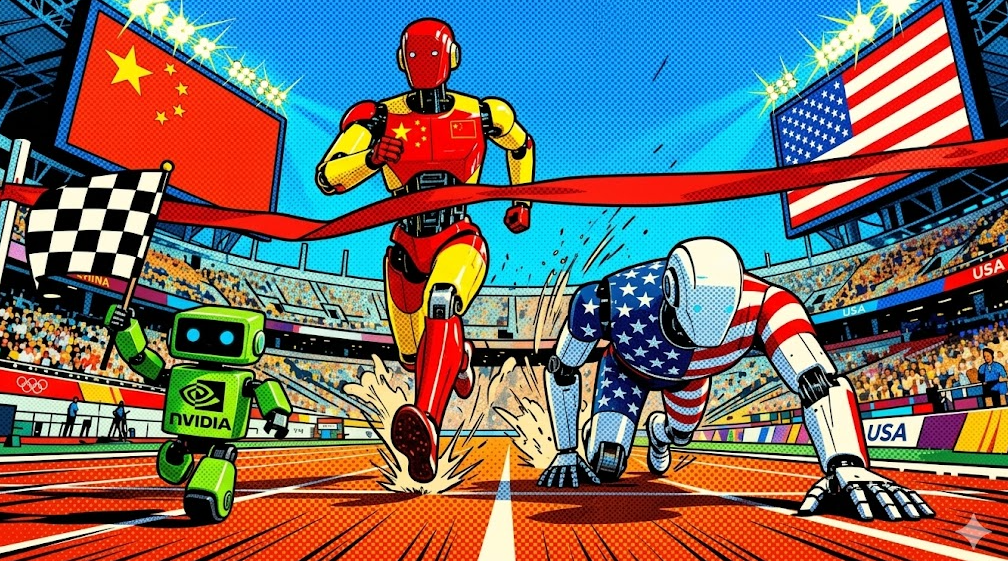
Good news, now US and China are neck to neck, others are coming up.

"The report found that just 31% of U.S. citizens now trust their government to regulate AI properly, which was the lowest score of all surveyed nations except China, where just 27% of people trust their government."

So, only 27% Chinese trust their gov in AI, that's a low number, even lower than US. Maybe an error ?
 

China Reveals 10,000-Beam Lithography System to Beat US Chip Bans​

To view this content we will need your consent to set third party cookies.
For more detailed information, see our cookies page.
 

China dominates the discovery of new chemicals and reactions​

BY MASON WAKLEY
14 APRIL 2026
China now discovers more than 40% of new chemicals and reactions reported in scientific literature, with the country’s contributions growing exponentially in recent decades, according to a new report. The researchers behind the work attribute this to China’s investment in its chemical sector, which has enabled the country to overtake the US as the dominant leader in chemical discovery. The report also challenges the idea that China’s progress in the chemical sciences is due to its collaborations with US scientists.

In recent years, China has solidified its position as a powerhouse of scientific research. For example, the Nature Index ranking for the applied sciences shows that Chinese researchers produced more than half of the research output published in top quality journals in 2024. The top ten institutions – in terms of the number of high-quality applied science research articles authored by their researchers – were all based in China.

‘China has focused a lot on applied sciences in order to contribute to their industrial base,’ says Caroline Wagner, a science policy expert at Ohio State University in the US, who was not involved in the new analysis. ‘The question I think, for China and for all of us, is can China do basic research that underlies how a field moves forward.’

To help probe this, a team led by Guillermo Restrepo from the Max Planck Institute for Mathematics in the Sciences in Germany has now investigated how known chemical space – the collection of all reported substances and reactions – has changed over time. The researchers analysed data covering the period from 1996 and 2022 from the chemical database Reaxys and open access libraries Dimensions and OpenAlex.

A changing chemical space​


Restrepo’s analysis shows that the known chemical space continues to grow steadily by around 4% per year, a trend that has been consistent over the past 200 years.

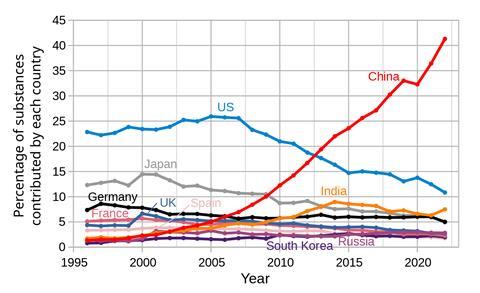
‘We [also] found that at the very beginning of [the 1990s], the US was contributing more or less a quarter of the new discoveries in the chemical space, whereas for China it was less than 1%,’ explains Restrepo. ‘Today, China is contributing 41% to the chemical space, whereas the US is 11%.’

Graph


Source: © 2026 Marisol Bermúdez-Montaña et al

China’s contributions to known chemical space far outpace those of any other countries
The team also explored how the chemical space has changed in three key areas: organics, organometallics and rare-earth elements.


China now accounts for 40% of the discoveries of new organic compounds, an area that covers the vast majority of known chemical space. The researchers suggest this is in large part due to R&D initiatives and regulatory reforms in the 2000s that accelerated the growth of the country’s pharmaceutical sector.

Since 2004, China has also dominated the discovery of materials based on rare earths, and now contributes 40% of the new substances in this category that are reported each year. ‘China not only owns the ores [containing rare-earth elements], they are also the top country in the production of new substances containing rare earths,’ notes Restrepo.

While China is the top discoverer of new organometallic compounds (17%), the US (10%), Germany (9%) and India (7%) are also major contributors. Restrepo’s team says that China’s delayed expansion in this area likely stems from the country’s earlier focus on pharmaceuticals or agrochemicals, which prioritised traditional organic chemistry research.

Restrepo’s team notes that China’s growth in the chemical space ‘has been driven primarily by its own domestic efforts rather than international partnerships’.


Further illustrating China’s focus on building its domestic science base, a recent analysis by the American Association for the Advancement of Science (AAAS) found that since 2005, China has consistently employed more researchers than the US. New analysis from the Organisation for Economic Co-operation and Development (OECD) also shows that in 2024, China outspent the US on research for the first time, when figures are adjusted to take into account local purchasing power. According to the OECD’s analysis, China’s government and businesses spent an equivalent of $1.03 trillion (£760 billion) on research – around 2.7% of the country’s GDP – compared to the US’s $1.01 trillion (3.4% of GDP). The study also found that China’s investment in the sector is growing at a rate of more than 14% per year.

Economic influences​


Restrepo and his team also highlight how key economic events impacted the US and China’s research output in different ways. For example, the 2008 financial crash marked the start of the US’s decline in contributions to known chemical space, while China’s chemistry research was unaffected by the event.

However, the Covid-19 pandemic and rapid lockdowns caused China’s contributions to the chemical space to fluctuate. This doesn’t appear to have been the case in the US, with Restrepo suggesting that this was due to President Trump’s more relaxed approach to the pandemic. ‘You can see how these political decisions are affecting the expansion of chemistry,’ he adds. ‘The expansion of science, and in particular the chemical space, is very sensitive to the political situation and economics.’

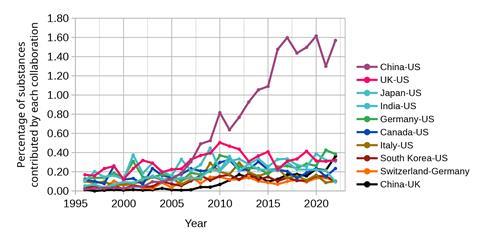
Graph


Source: © 2026 Marisol Bermúdez-Montaña et al

While collaborations between Chinese and US researchers are the most fruitful in terms of discovering new chemicals and reactions, most of China’s contributions come from its own domestic research

According to Restrepo, the Trump administration’s 2018 China Initiative – which aimed to curb the perceived threat of academic collaboration with China – fed a narrative that Chinese scientists depend on US researchers. However, he notes that the team found that more than 90% of China’s contribution to the chemical space happens without collaborating with any other countries.

As for the US, less than 80% of its contribution to the chemical space is due to solo discoveries, down from 95% in 1996. Analysis revealed that the US now increasingly collaborates with other countries – notably China in particular.

‘I wouldn’t look at it as a zero-sum game,’ says Wagner. ‘The extent to which China practises openness in science – they’re contributing to what we know, and we can all benefit from it.’

What’s next?​


Restrepo and his team have now released an interactive dataset to help chemists explore trends related to their own research field or country.

Since the dataset only goes up until 2022, Restrepo cautions that we need to wait a couple of years to see the effects of, for example, trade tariffs enacted during Trump’s second presidency. He expects some volatility in the chemical space, in particular with rare-earth elements, with these substances playing important roles in technologies that have been affected by the tariffs, including in renewable energy, medical imaging and many electronic devices.

According to Wagner, the loss of the US’s dominant position in chemistry research could ‘encourage a competitive spirit’. ‘If [China is] where smart people are working, we should be working with them,’ she notes. ‘But that doesn’t always work out on the geopolitical level.’
 

Chinese Electrotech is the Big Winner in the Iran War

An energy-hungry world is being pushed away by America and into China’s arms​

PAUL KRUGMAN
APR 14, 2026

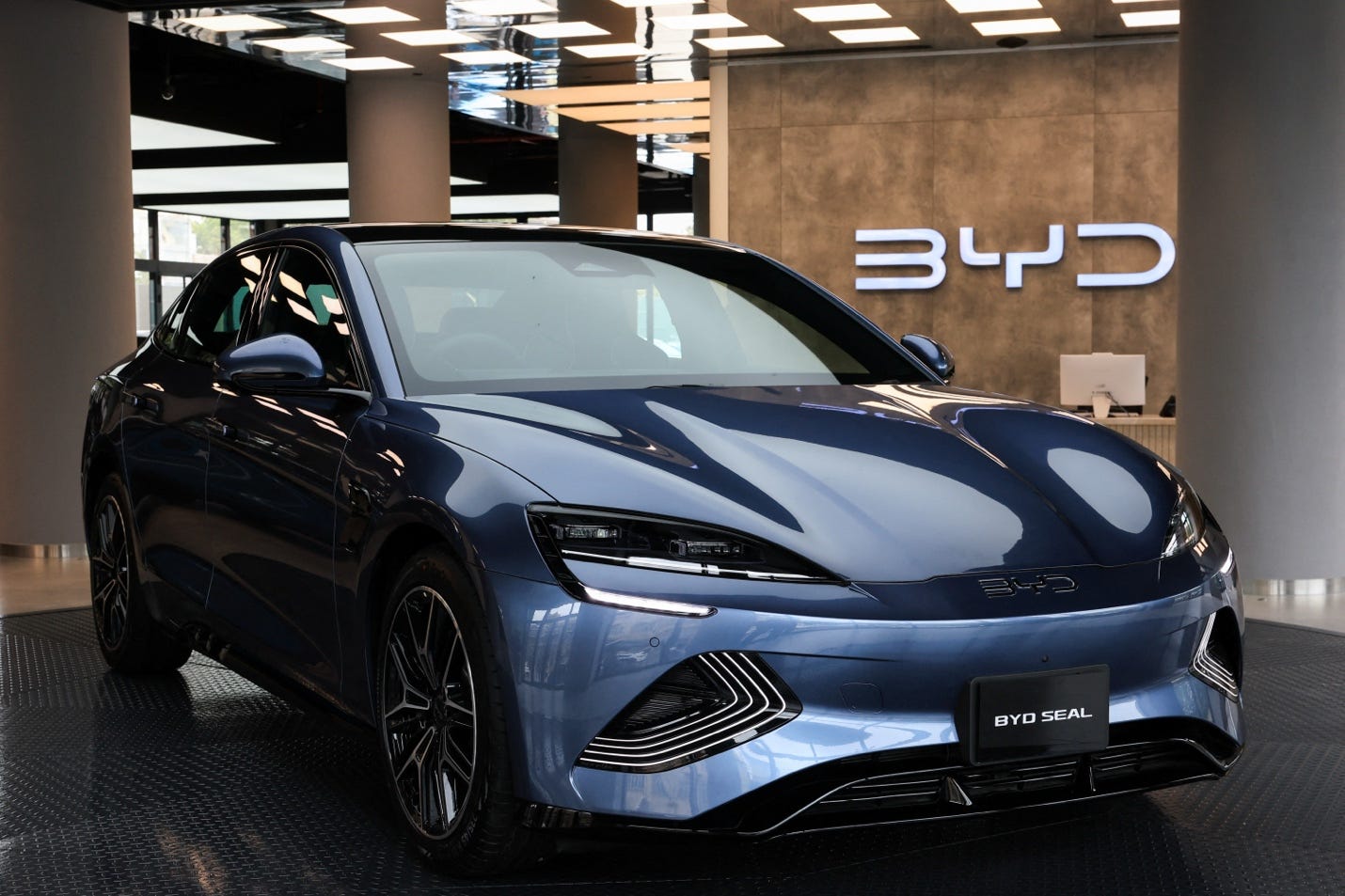
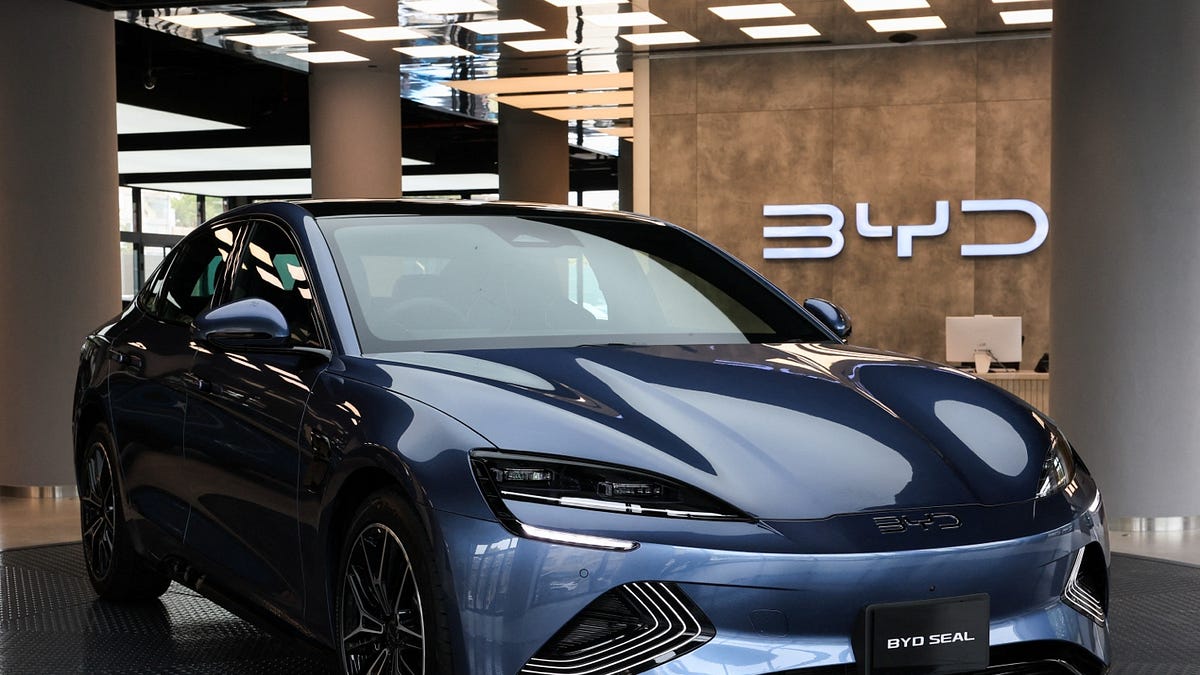
China's BYD to assemble EVs in Pakistan from 2026 | Reuters

Donald Trump wants to stop the renewable energy revolution. But he can’t — it will continue to advance around the world because the economics and the science are compelling. Trump can, however, ensure that the revolution passes us by. And the big geopolitical winner from Trump’s hostility to the energy revolution will be China, which dominates the production of renewable-energy infrastructure.

Furthermore, the China-led energy future will arrive ahead of schedule thanks to the debacle in Iran.

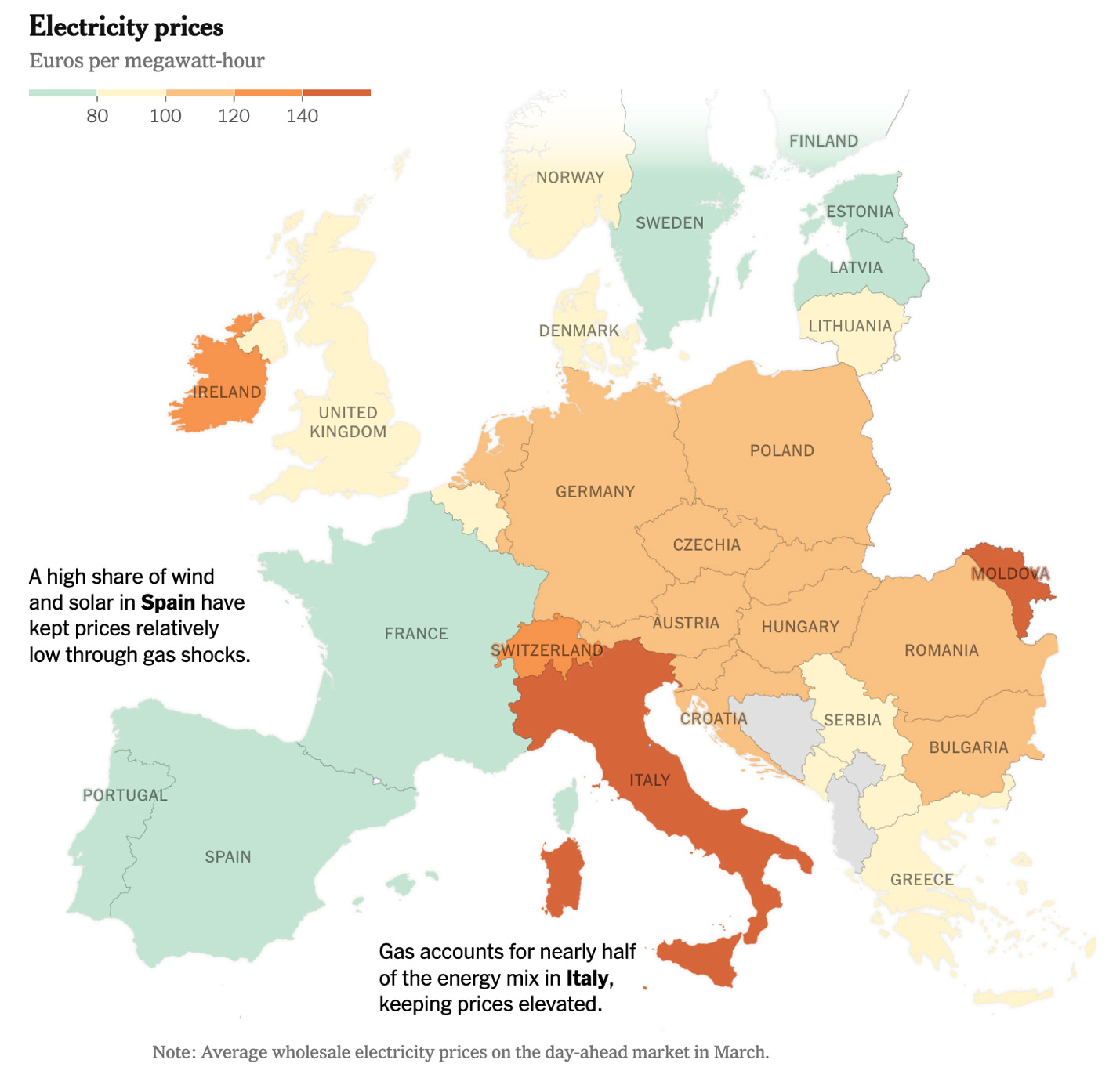
Soaring oil and gas prices, combined with the threat of shortages, have driven home the riskiness of relying on fossil fuels. The New York Times had a striking graphic about electricity prices in Europe:
https%3A%2F%2Fsubstack-post-media.s3.amazonaws.com%2Fpublic%2Fimages%2F95462dc4-f779-40dd-a6e1-125e5ffcedf4_1429x1376.png


France and Spain, which mostly generate electricity from non-fossil sources (including nuclear power in France), have been partially insulated from the war’s side effects. Italy, heavily reliant on gas, has suffered badly.

Also, Trump’s decision to counter Iran’s blockade of the Strait of Hormuz by blockading the Strait of Hormuz surely adds to the perception that relying on U.S. oil and LNG, which is what countries will have to do if they don’t turn to solar and wind, isn’t safe. Who can guarantee that an erratic America won’t try to weaponize other countries’ dependence on our energy?

So Trump’s adventurism in Iran has sparked a global rush to invest in solar power, wind power, and the batteries that make renewable energy work 24/7.

And where will the world procure most of the renewable energy equipment it seeks? From China. China is the workshop of the world. Its manufacturing sector is larger than those of the U.S., Japan, Germany and South Korea combined.

While China is strong in many industries, it is utterly dominant in electrotech, the cluster of industries — solar panels, wind turbines, batteries and electric vehicles — at the heart of the renewables revolution. Or as the Wall Street Journal puts it, China’s “green industrial complex” rules. China accounts for more than 80 percent of global production in all these sectors with the exception of wind turbines. In the wind turbine sector, China’s share is “only” 60 percent because Europe retains a significant role.

Why does China dominate electrotech? Industrial policy — deliberate government promotion of these industries — is part of the answer. But a key driver of China’s success has been the speed with which the Chinese themselves have been adopting renewable energy, creating a huge domestic market that provides their electrotech industries with big advantages even in foreign markets.

There’s a widespread, completely erroneous belief among opponents of renewable energy that China produces electrotech equipment but doesn’t use the stuff itself. Speaking at the World Economic Forum three months ago, Trump declared that

China makes almost all of the windmills and yet I haven’t been able to find any wind farms in China. Did you ever think of that? That’s a good way of looking at it. They’re smart, China’s very smart. They make them, they sell them for a fortune. They sell them to the stupid people that buy them, but they don’t use them themselves. They put up a couple of big wind farms, but they don’t use them, they just put them up to show people what they could look like. They don’t spin; they don’t do anything. They use a thing called coal mostly.
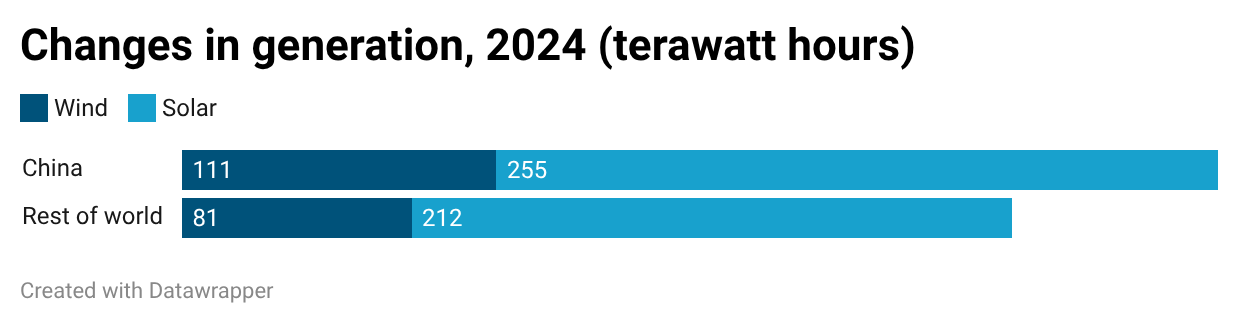
China does, in fact, still burn a lot of coal. But its use of wind and solar power is rising rapidly. The demand for solar panels, wind turbines and batteries depends on the increase in renewable generation rather than its level. And China’s growth in renewable energy, both wind and solar, has been larger than that of the rest of the world combined:

A blue bar with black textAI-generated content may be incorrect.
Source: Our World in Data

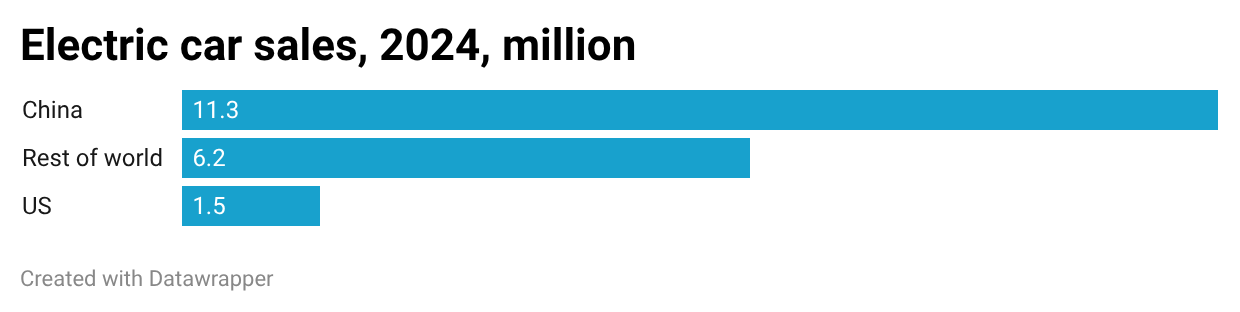
China also accounts for more than 60 percent of world sales of electric cars:

A blue rectangle with black textAI-generated content may be incorrect.

Source: Our World in Data

And electrotech is exactly the kind of industry in which a large domestic market translates into success at exporting into other markets. For all of the component industries of electrotech are marked by steep learning curves: the more a country produces, the better it gets at producing. By dominating electrotech now, China is gaining experience and know-how that no other country can match. It is also creating an industrial ecosystem of specialized suppliers that, again, no other nation will be able to rival. And the low costs generated by this industrial ecosystem gives China a huge advantage in global markets.

Under President Biden the United States took much needed steps toward developing its own electrotech sectors, notably batteries and electric vehicles. It also sought to accelerate the growth of renewable energy in general. But not only has the Trump administration canceled all of Biden’s renewable energy programs, it is also actively trying to block private commercial investments in renewable energy.

By the time America frees itself from Trump’s fossil fuel obsession, if it ever does, China’s lead in the manufacture of renewables will probably be insurmountable.

Now, a world that relies on China for solar panels and batteries isn’t necessarily a bad thing. It’s certainly less risky for most nations, politically and economically, than relying on LNG imports from Qatar — or, at this point, the United States.

Furthermore, although the Trump administration is full of climate denialists, climate change is continuing. March was a record warm month in the United States:

Map of the U.S. showing temperature percentiles for March 2026 with warmer areas in gradients of red and cooler areas in gradients of blue.

Given the rate at which the planet is warming, a shift away from fossil fuels can’t come fast enough. Where the equipment needed to make that shift happen was manufactured is a secondary issue.

Yet it’s sad to watch this country sabotage itself and cede the most important industry of the future to China. In doing so, we make ourselves poorer, technologically backward, and less influential in a world that is speeding towards the energy revolution. In the end, we aren’t just burning fossil fuels; we’re also burning our future.


China’s Dishan Technology nears 2nm AI chip breakthrough, reports say

The Shanghai-based start-up says its chip design is likely to improve energy efficiency by 40 per cent compared with its predecessor​

Chinese chip start-up Dishan Technology has achieved a breakthrough in designing a 2-nanometre artificial intelligence chip. Photo: Shutterstock


Published: 6:59pm, 14 Apr 2026

Chinese chip start-up Dishan Technology has achieved a breakthrough in designing a 2-nanometre artificial intelligence chip, according to local media reports.

Shanghai-based Dishan, which focuses on the development of high-performance computing chips and sensor chips, was now in the crucial prototype verification stage for its first 2nm AI graphics processing unit (GPU), the Shanghai Morning Post reported recently.

The GPU was unveiled by the company last July. The company then said it had completed the basic design process on the chip, calling it a milestone in China’s quest to achieve self-sufficiency in high-end computing chips. It employed a hybrid FinFET/GAA process and a chiplet-based heterogeneous architecture, which was expected to improve energy efficiency by 40 per cent compared with its predecessor, according to the company.

To make the new chip compatible with Nvidia’s Compute Unified Device Architecture (CUDA) ecosystem, Dishan would improve its supporting toolchains such as CUDA-compatible compilers, local media reported, citing a company representative.

The progress marks China’s latest effort to become self-reliant in high-end AI chips amid a prolonged tech war with the US. US chip giant Nvidia, meanwhile, was seeking to return to China with the H200, its second-most powerful AI processor to date.

However, Dishan’s chip had yet to enter the tapeout stage, and was expected to take another year or two before reaching volume production and commercial deployment, local media reported.

maxresdefault.jpg


China creates analogue AI chip said to be 1,000 times faster than Nvidia GPU

Tapeout is the final stage of the design process for integrated circuits before they are sent for manufacturing.

While there has been little media coverage about Dishan, which was founded in 2021, its website showed that the research and development team was led by several IEEE Fellows, the highest grade of membership within the Institute of Electrical and Electronics Engineers, as well as experts from China’s national talent programme. The company said its goal was to “build an independent and controllable core capacity for domestic semiconductors”.

While Dishan’s design advances potentially place it among global front runners in AI chip design, it remains to be seen whether the company will be able to find a domestic foundry to convert those designs into real products, as China is under strict US export controls regarding imports of chipmaking equipment, putting a cap on its capability to manufacture chips beyond 5nm nodes.

Semiconductor Manufacturing International Corp (SMIC), China’s largest contract chipmaker, faced challenges in advancing its chip manufacturing process from 7nm to 5nm, according to a TechInsights report last June.

Huawei Technologies, one of China’s best hopes for chip self-sufficiency, was making most of its Ascend 910B and 910C with Taiwan Semiconductor Manufacturing Company’s 7nm technology, according to a report by semiconductor research firm SemiAnalysis last year. Still, it should be noted that these components are understood to be from stockpiles accumulated before Washington expanded sanctions against Huawei in 2020, or purchased through third-party companies. The company had since worked more closely with SMIC for chip manufacturing.

Dishan must still navigate a number of challenges as it moves towards mass production, including yield optimisation, compatibility with electronic design automation tools and supply chain constraints imposed by Washington.

The company was already taking measures to tackle these issues, according to the report, including optimisations aimed at reducing yield risks during the tapeout and production processes.


China's aim to surpass US technological power is the key to understanding the 15th Five-Year-Plan​

Publishing date15 April 2026

In the last twenty years, China has achieved the feat of turning an economy with approximately $2,000 GDP per capita into one of the world’s leading innovation hubs, with close to $14,000 today. The Chinese government plans to take this further. Its next goal, announced in the Central Committee of the Communist Party of China’s 15th Five-Year Plan, released on 13 March, is to establish China as the world’s dominant technological power.

Reaching this objective will require China to lead in frontier technologies. Chinese companies have so far performed better at developing applied technologies due to positive feedback loops with domestic industrial capacity and a fast commercialisation process. To get ahead in frontier technologies, China will need to successfully challenge the United States’ long-held advantage in the development of critical frontier technologies. This is already underway. Our recent research measuring progress in critical technologies in artificial intelligence (AI), semiconductors and quantum computing points to China rapidly closing the gap with the US while the European Union falls behind. Beyond basic research, China’s speed of adoption of technologies is path-breaking, as demonstrated by its rapid uptake of electric vehicles (EVs), solar panels, industrial robots and 5G infrastructure.

The 15th Five-Year Plan distils an important reality. Beijing understands that structural factors make it unlikely that domestic consumption will drive growth; the demographic pressures of an ageing population together with the Chinese economic model’s reliance on suppressing wage growth inevitably limit domestic consumption’s weight in the economy. Instead, the government plans to sustain high growth by expanding the country’s global market share of exports, especially exports of high-tech goods. Export-led expansion is also viewed as a path towards technological self-reliance, another strategic objective. This should allow China to insulate its economy from external shocks while building economic and military capabilities at the frontier, giving China greater leverage and threatening US technological primacy.

The 15th Five-Year Plan confirms and accelerates this trajectory. It lays out the mechanisms Beijing will deploy to turn existing momentum into decisive advantage. The plan embeds technological self-reliance as a core national priority, calling for ‘extraordinary measures’ to secure breakthroughs in integrated circuits, foundational software, advanced materials and biomanufacturing. It treats AI as a vertically integrated state project – including models, chips, the cloud and applications – woven into every sector of the economy and society. Semiconductors are designated a ‘pillar industry’ – unlocking subsidies, procurement preferences and regulatory support on a scale that treats the sector as foundational to the entire industrial base. The plan also signals deeper integration of AI-powered devices into consumer markets through subsidies, leveraging state-held data reservoirs to give domestic developers an edge that foreign competitors cannot easily match. For the first time, it explicitly references ‘exploring development paths for general artificial intelligence,’ underscoring long-term strategy even if current approaches remain contested.

These moves serve a dual purpose: economic resilience and military strengthening. Breakthroughs in semiconductors and AI are not merely commercial; they underpin the development of next-generation defence systems, autonomous platforms and command-and-control networks. By reducing dependence on foreign choke points, China aims to neutralise the leverage that the US and its allies have wielded through export controls. At the same time, the plan reframes ‘opening up’ as ‘self-directed opening’ – selective engagement designed to extract technology and markets on China’s terms rather than integrate into a US-led order.

This strategic clarity should alarm Washington and Brussels alike, albeit for different reasons. For the US, the 15th Five-Year Plan poses a direct threat to its technological hegemony and leadership in foundational innovation – a position it has long taken for granted. China’s combination of massive R&D scale, rapid patenting, swift commercialisation and state-orchestrated data advantage is eroding that edge faster than many expected. If Beijing succeeds in leapfrogging into next-generation semiconductors and embedding AI across its industrial and military systems, the US risks losing the very capabilities that underpin its economic edge, military superiority and ability to shape global standards. The plan’s emphasis on ‘pillar industries’ and ‘extraordinary measures’ signals that Beijing is prepared to accept short-term costs for long-term advantage.

Europe faces an equal challenge, though one rooted in its export-dependent economic model. As a major exporter of high-value machinery, chemicals, vehicles and precision equipment, the EU has thrived on open markets and technological complementarity with the world. China’s drive to dominate critical technologies and flood global markets with advanced, lower-cost alternatives – including of EVs, batteries, solar technology, robotics and AI-enabled systems – directly undercuts that position. Our previous work highlights Europe’s disadvantage: not only does the EU trail in generating radical novelties, but it is the slowest to adopt and replicate breakthroughs from both the US and China. If Chinese high-tech exports continue their rapid ascent, Europe risks industrial decline, lost market share and the erosion of the innovation ecosystems that sustain its prosperity. The 15th Five-Year Plan makes clear that Beijing’s export push is deliberate and sustained, not a temporary surplus. Consumption will not rebalance the Chinese economy quickly enough to absorb excess industrial capacity; global market share will.


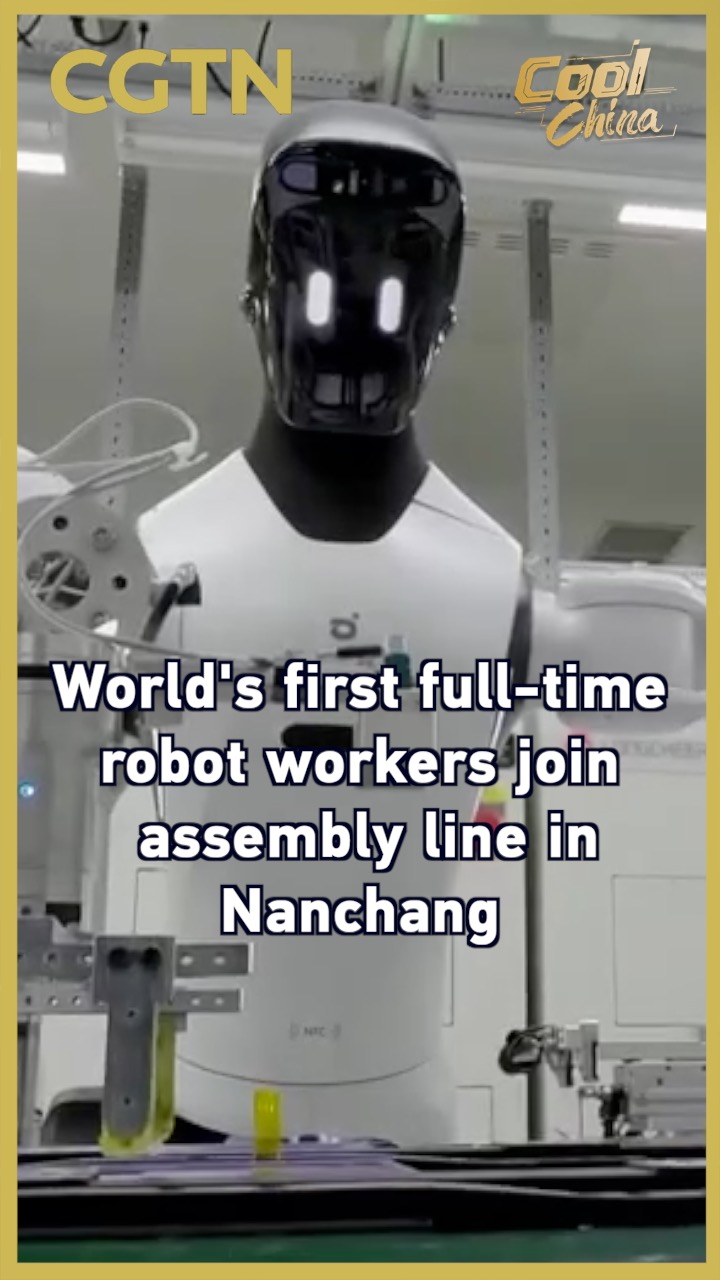
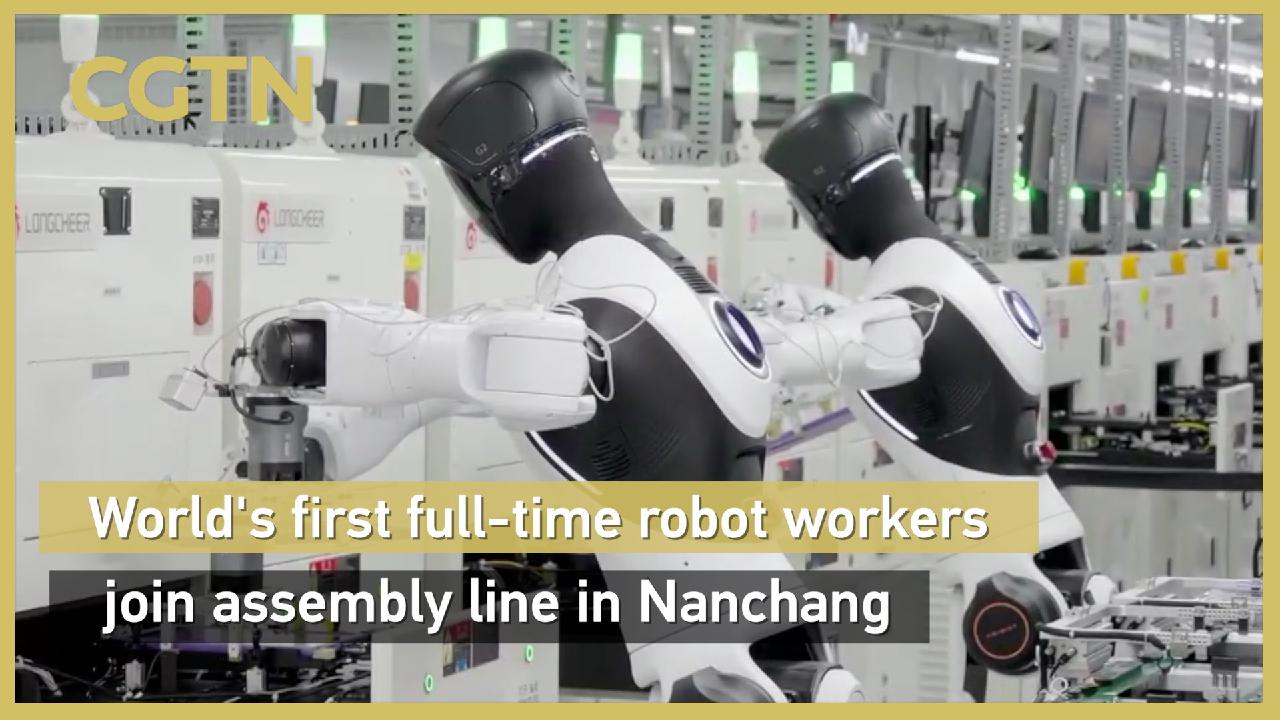
World's first full-time robot workers join assembly line in Nanchang

China22:29, 16-Apr-2026

On April 14, an eight-hour live broadcast from Longcheer Technology's manufacturing center in Nanchang, Jiangxi Province, eastern China, showcased the world's first embodied AI-powered precision manufacturing line for 3C electronics. Working as full-fledged employees, the robots independently performed precision loading and unloading and collaborated with humans on high-speed assembly lines, demonstrating real-world deployment effectiveness.

wu_1jmb925iq1smr1t081oi71rgi1gmc6l9.jpg


World's first full-time robot workers join assembly line in Nanchang

China22:29, 16-Apr-2026

On April 14, an eight-hour live broadcast from Longcheer Technology's manufacturing center in Nanchang, Jiangxi Province, eastern China, showcased the world's first embodied AI-powered precision manufacturing line for 3C electronics. Working as full-fledged employees, the robots independently performed precision loading and unloading and collaborated with humans on high-speed assembly lines, demonstrating real-world deployment effectiveness.

wu_1jmb925iq1smr1t081oi71rgi1gmc6l9.jpg


Future has arrived....
 

China Is Now a Global Drug Innovation Powerhouse. Industrial Policy Had Little to Do with It.​


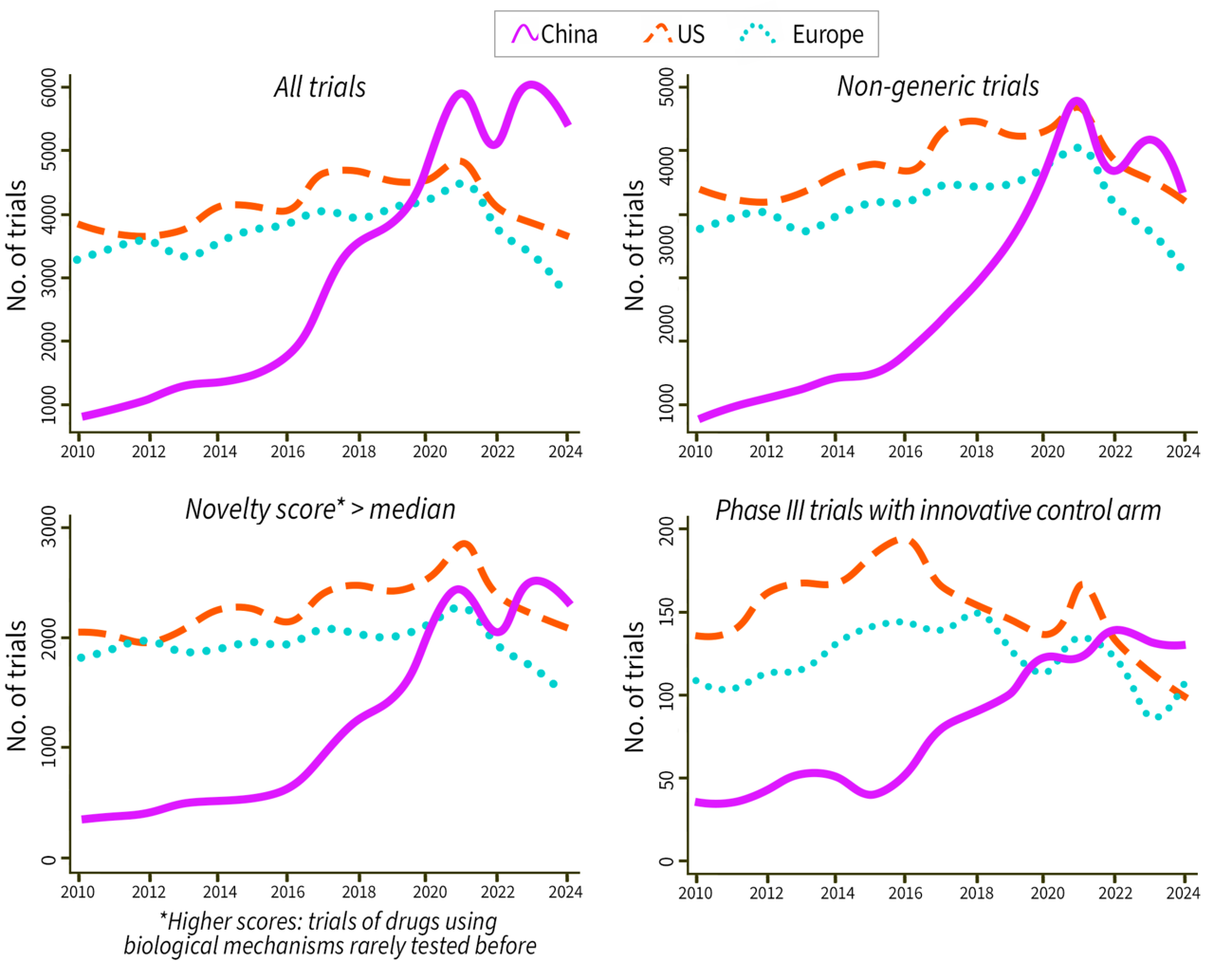
fig_1a-d-quad.png


INSIGHTS
In 2010, China accounted for less than 8% of global clinical trials; by 2020, it had surpassed the United States in annual registered trial volume, reaching over 5,000 trials per year by 2024 — a 172% increase relative to the U.S.

Innovative trials targeting previously unexplored biological mechanisms rose by 49–123% relative to the U.S., and domestic Chinese firms account for 88% of the post-2015 increase.

The key driver was the 2016 National Reimbursement Drug List (NRDL) reform that traded drug price cuts for inclusion into China’s national insurance program, thereby massively expanding the market for innovative drugs, boosting cancer drug revenue by 500% and clinical trial activity by 86%.

The NRDL reform explains 43% of the surge in oncology trial activity — nearly double the combined contribution of knowledge accumulation and talent inflows from the U.S. (24%) — while industrial policies like Made in China 2025 played a negligible role.

 
To view this content we will need your consent to set third party cookies.
For more detailed information, see our cookies page.

China Aims to Power up Future with Hydrogen, Nuclear Fusion​

CCTV Video News Agency
Apr 15, 2026

China is continuing to advance its hydrogen and nuclear fusion industries as part of its core ambitions in green and low-carbon energy production, according to the country’s 15th Five Year Plan for social and economic development.

Nuclear fusion is widely regarded as the "ultimate energy source" because it’s unlimited and is not harmful to the environment.

To achieve fusion, devices like the Burning plasma Experimental Superconducting Tokamak, or BEST, are used for the safe and stable confinement of plasma at more than 100 million degrees Celsius for an extended period.

In Hefei, the capital of east China's Anhui Province, the main BEST machine is currently being installed.

For large-scale hydrogen energy production, meanwhile, a new project is underway in the coastal city of Qingdao in east China's Shandong Province that will use seawater to make the fuel.

Traditional hydrogen production uses freshwater, which can be limiting for the large-scale development of green hydrogen.

Data shows that China's annual hydrogen production and consumption has exceeded 36.5 million tons, accounting for 36.6 percent of the global total, underscoring the country's leading role in the hydrogen production industry.
 
China's total installed nuclear power capacity has reached 125 million kilowatts(KW), ranking first globally, according to a CCTV News report, citing a blue book released by the China Nuclear Energy Association (CNEA) on Friday. The report shows China currently operates 60 commercial nuclear reactors, with 36 under construction—representing over half of global nuclear construction. Another 16 units have been approved and await construction, according to CCTV News.https://globaltimes.cn/page/202604/1359130.shtml
https://x.com/globaltimesnews/status/2044963277491613725/photo/1

To view this content we will need your consent to set third party cookies.
For more detailed information, see our cookies page.
 

China exports a ton of cleantech — and the world is poised to want more

The nation’s battery and EV exports in particular have grown in recent years. Now, the Middle East war could spur even more demand for Chinese clean-energy tech.

By Dan McCarthy
17 April 2026

When it comes to clean energy, China makes — and the world takes.

The country produces the vast majority of the globe’s solar panels, batteries, and wind turbine equipment, and most of its EVs. Plenty of that tech is used in China itself, but the country also exports a lot of it elsewhere.

In recent years, China has seen the most growth in its exports of EVs and batteries in particular. For both technologies, European nations have been the main destination.

In the EU, Chinese-made EVs accounted for 9% of sales in December 2025 — up from 6% the prior year. That acceleration happened even though the EU slapped duties on Chinese-made EVs in October 2024, in an attempt to protect its domestic automakers.

Though China still makes more than 90% of the world’s solar panels, its exports have declined from their peak in early 2023 as two key markets — Europe and Brazil — have imported and installed solar at a slower pace. Asian countries imported more Chinese solar equipment than did any other region across most of last year.

China’s clean-energy manufacturing machine has taken on new relevance since late February, as U.S. and Israeli attacks on Iran have spurred a historic disruption of global oil and gas markets.

Asian countries are bearing the brunt of the current energy crisis. Some especially hard-hit nations are taking extreme conservation measures — encouraging people to use less air conditioning, work from home, and even ration fuel. But energy costs are also soaring in other places, like Europe, which relies heavily on imported fossil fuels.

Americans, meanwhile, are paying higher prices at the gasoline pump, where a gallon has surpassed $4 on average.

It’s the latest reminder of the perils that come with depending on fossil fuel imports — and it’s prompting some countries to double down on renewable energy to insulate themselves from future price shocks.

True, importing clean-energy tech is still importing, but it’s fundamentally different from relying on fossil fuels from abroad. With clean energy, you buy it once, roll it out, and for decades it does its job within your borders. That’s not so with fossil-fueled infrastructure.

Ultimately, even if other regions invest in building out their own domestic clean-energy supply chains, China is the clear beneficiary of the coming shift to cleantech. Its head start is just that big.

 
I think the real battle is in the area of AI

I know everyone is doing it but its really China vs USA
 

125 GW: China ranks first globally in installed nuclear power capacity

Technology12:32, 17-Apr-2026
CGTN

China's


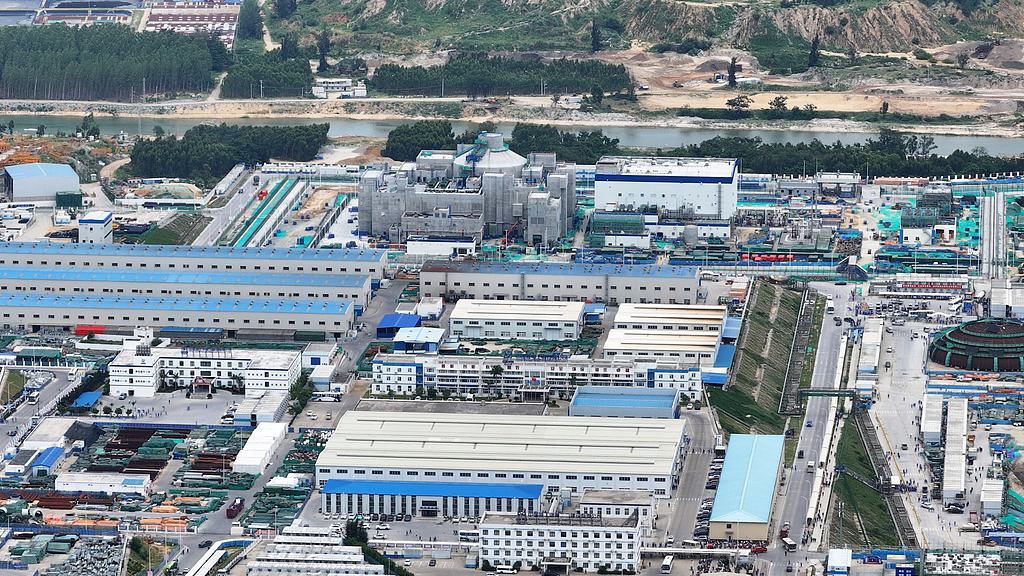
China's "Linglong One," the world's first commercial small modular reactor on land, Hainan Province, July 19, 2025. /VCG

China has taken the top spot worldwide for total installed nuclear power capacity, reaching 125 gigawatts (GW), according to a blue book released by the China Nuclear Energy Association on Friday.

The blue book, titled "China Nuclear Energy Development Report 2026," shows that China currently has 60 commercial nuclear power units in operation and 36 nuclear power units under construction.

The scale of nuclear power under construction accounts for more than half of the world's total, and an additional 16 units have been approved for construction, the report said.

In 2026 alone, China has started construction on two nuclear power units and will complete seven nuclear power units, maintaining its leading position in global nuclear energy development.


Users who are viewing this thread

Pakistan Defence Latest

Back
Top