In a remarkable display of growth, China’s biotechnology sector has surged ahead in the global market, leaving South Korea trailing significantly. In the first

www.businesskorea.co.kr
China’s Biotech Sector Surges Ahead, Leaving South Korea Behind in Global Market
2025.04.21 09:50
China’s Biotech Exports Hit $36.929 Bil. in Q1 2025, 20 Times Greater Than Korea’s $1.98 Bil.
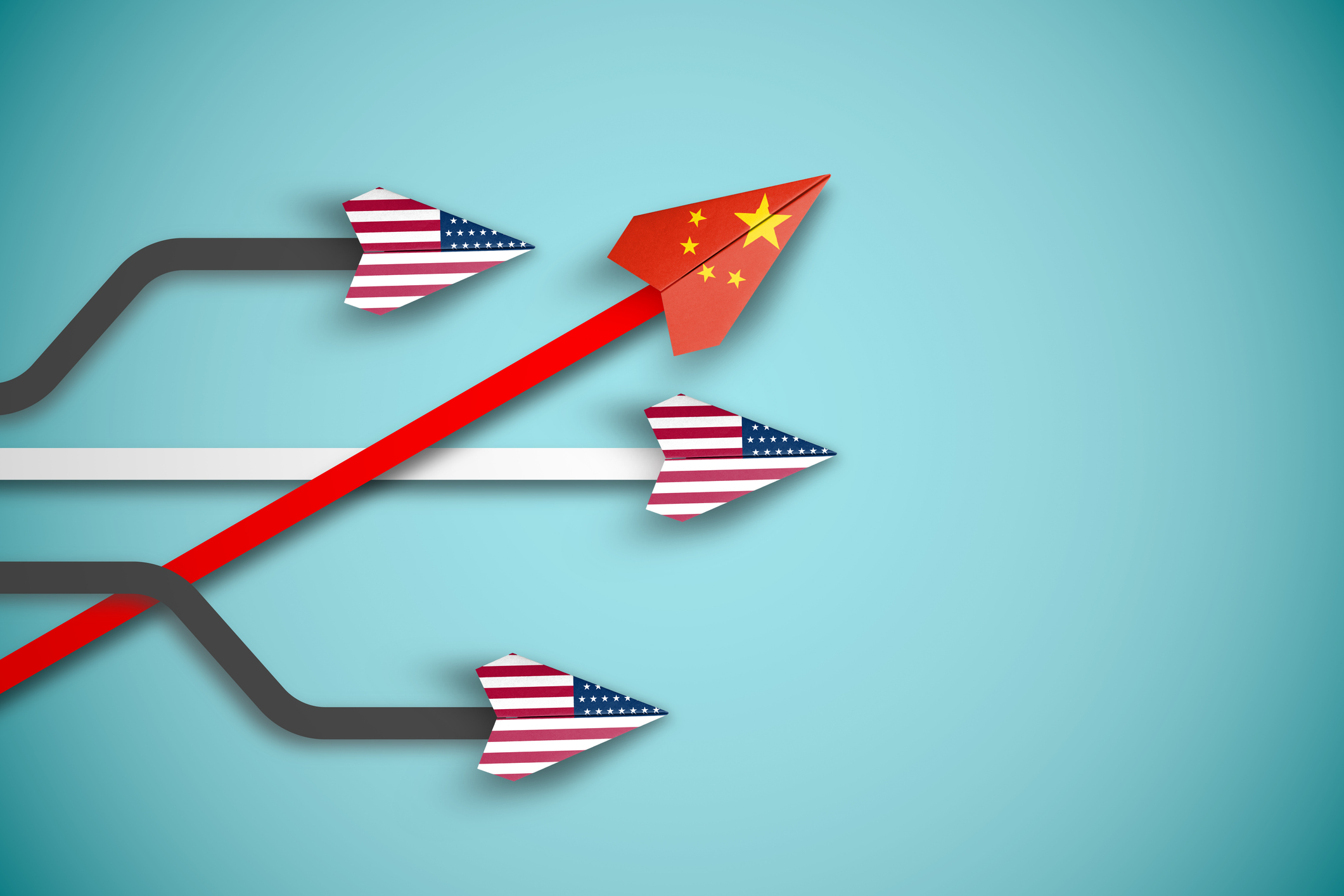
In a remarkable display of growth, China’s biotechnology sector has surged ahead in the global market, leaving South Korea trailing significantly. In the first quarter of 2025, China’s biotech exports reached an impressive $36.929 billion, a figure 20 times greater than South Korea’s $1.98 billion. This development underscores China’s rapid ascent as a dominant force in the biotech industry, driven by strategic government support, flexible regulations, and an influx of skilled professionals.
Since 2021, China has consistently ranked first in global clinical trial numbers, surpassing even the United States. This leadership position is attributed to China’s ability to secure human subject data swiftly and extensively, making it an attractive destination for conducting trials. An industry insider from the Korea Pharmaceutical and Bio-Pharma Association noted, “China can secure proof of concept (POC) data faster and more extensively than any other country.” This capability has been further bolstered by the Chinese government’s full support.
The regulatory environment in China has also played a crucial role in this growth. The National Medical Products Administration (NMPA) has set up four accelerated pathways to expedite drug approvals, including a priority review program. In 2024 alone, the NMPA approved 48 first-in-class innovative drugs, marking the highest number in the past five years. Lee Seung-kyu, vice chairman of the Korea Bio Association, commented on this progress, stating, “China’s bio industry is far ahead of South Korea in all areas, including regulations, capital, and workforce.”
China’s biotech sector has not only excelled domestically but also made significant strides internationally. In 2022, Chinese pharmaceutical and biotech companies accounted for 12% of big pharma’s technology introduction contracts; this share rose to 29% in 2023 and 31% in 2024. This trend highlights China’s growing influence and attractiveness as a partner for global pharmaceutical companies.
The return of Chinese scientists from big pharma to their home country has further fueled this growth. Lee remarked on this phenomenon: “The era has opened where China directly deals with global companies based on manpower.” The presence of experienced professionals returning to China has enhanced research and development capabilities and facilitated collaborations with international partners.
Moreover, China’s academic contributions have been noteworthy. In 2023, China’s share of citations in medical papers was 24%, ranking second after the U.S., according to the Life Sciences Competitiveness Index released by the UK’s Department for Life Sciences in November 2023. This academic prowess supports China’s biotech advancements and enhances its credibility in the global scientific community.
As China continues to solidify its position as a leader in biotechnology exports and innovation, experts anticipate the emergence of drugs with annual sales exceeding $1 billion originating from Chinese technology. Lee said that the emergence of such drugs is only a matter of time. With ongoing government support and strategic international partnerships, China is poised to remain at the forefront of biotechnological innovation and exportation for years to come.
출처 : Businesskorea(
https://www.businesskorea.co.kr)
Korea's Q1 2025 biotech out-licensing fell to a 5-year low at $936.7 million while China hit a record $60 billion, widening the gap from 20-fold to 64-fold in one year.

en.sedaily.com
Korea's Q1 Biotech Out-Licensing Hits 5-Year Low as China's Lead Widens to 64-Fold
Q1 Deal Size Halved With No Trillion-Won Deals · China Accelerates Drug Development via Deregulation and Talent Recruitment · Upfront Payments Triple in 3 Years, Signaling Rising Deal Quality · Korea Faces Pipeline Gap From Investment Drought · Some Firms Delay Deals for Better Terms · "Venture Support Policies Urgently Needed to Match Rapid Market Shifts"
Published 2026.04.01. 07:00:05
South Korea's biotech out-licensing deal value in the first quarter of 2025 fell to its lowest level in five years, while China posted a record high — widening the gap between the two countries from 20-fold to 64-fold in just one year.
China's pharmaceutical and biotech out-licensing deals totaled $60 billion in the first quarter, up 73% year-on-year, according to China's National Medical Products Administration (NMPA). The figure marked an all-time high, representing 44% of the country's total deal value for all of last year.
Korean biotech companies, by contrast, signed out-licensing deals worth just $936.7 million in the first quarter, excluding undisclosed contracts. That represents a sharp decline from $1.98 billion in the same period last year, roughly halving the total. Notably, no deal exceeded 1 trillion won — a threshold that had been crossed at least once every year over the past five years. The largest deal this quarter was Alteogen's agreement with Biogen earlier this month, valued at approximately 870 billion won.
The number of deals stood at four, similar to last year's five, but the qualitative difference was stark. Last year's first quarter included blockbuster contracts such as Alteogen's 1.9553 trillion won deal and OliX's 911.7 billion won deal. This year fell short on both count and scale.
The gap between Korea and China in out-licensing deal value has been widening rapidly. In 2021, Korea ($11 billion) and China ($13.9 billion) were separated by a factor of just 1.2. By the first quarter of last year, China ($36.9 billion) had grown to 20 times Korea's $2 billion. In this year's first quarter, that gap ballooned to 64-fold.
China's record-breaking first quarter was driven by sweeping government support. Beijing shortened drug approval review periods and eased regulations to accelerate new drug development, while attracting top talent to build a foundation for innovative drug launches. Korea, meanwhile, recorded its lowest first-quarter out-licensing total in five years. The domestic biotech industry is struggling through a pipeline gap — a delayed consequence of the biotech investment freeze three years ago.
Chinese biotech firms signed a string of major out-licensing deals with global pharmaceutical companies in the first quarter. CSPC Pharmaceutical signed a $18.5 billion (24 trillion won) obesity drug out-licensing deal with AstraZeneca in January — the largest publicly disclosed global pharma partnership this year. Innovent Biologics followed in February with an $8.5 billion (13 trillion won) co-development agreement with Eli Lilly for oncology and immunotherapy treatments. Earlier this month, Sino Biopharmaceutical out-licensed blood cancer and immune disorder therapies to Sanofi for $1.53 billion (2 trillion won).
China is expanding its presence not only in deal size but also in deal quality. The average non-refundable upfront payment per deal rose from $52 million in 2022 to $140 million in 2024 and exceeded $170 million this year — more than tripling in three years. Upfront payments are widely used as a gauge of technological capability and negotiating power. "Chinese drug development projects are being recognized for their technology, not just price appeal," said Ha Heon-ho, a researcher at Shinhan Investment Corp. "That is why global pharmaceutical companies are willing to increase upfront payments — even at the risk of sunk costs — to secure partnerships with Chinese firms."
Government policy support is cited as a core growth driver. China codified conditional approval and priority review systems for innovative drugs and significantly streamlined licensing procedures, including shorter clinical trial approval timelines. Since 2005, the "Thousand Talents Plan" has recruited top professionals from global pharmaceutical companies and academia, rapidly strengthening clinical development and business development capabilities. As a result, innovative biotech firms such as Innovent Biologics and BeiGene have secured major partnerships with global big pharma, according to industry assessments.
The government's full-scale support has directly translated into a growing pipeline of clinical-stage candidates. "The most critical factor global pharmaceutical companies consider in technology in-licensing is human proof-of-concept (PoC) data," said Lee Seung-gyu, vice chairman of the Korea Biotechnology Industry Organization. "Korea has a high proportion of preclinical-stage pipelines, but China has a higher share of clinical-stage candidates and is more competitive in terms of cost and speed, which is why it is being chosen."
Korea, however, is still reeling from the biotech investment winter of three years ago. Analysts say the investment contraction at that time disrupted research and development flows, leaving the country in a "gap period" with depleted candidate compounds available for out-licensing. "It typically takes three to five years from Series A funding to an out-licensing deal, but when funding dried up three years ago, many companies halted or scaled back candidate development," said one biotech company CEO. "Even companies with prior out-licensing experience have been forced to purchase clinical-stage candidates externally because they failed to develop follow-up compounds." According to the Korea Venture Capital Association, venture capital investment in the bio and medical sector peaked at 1.677 trillion won in 2021 during the COVID-19 boom, then declined to 884.4 billion won by 2023 amid global interest rate hikes.