Pakistan Space Related News & Discussions

Pakistan Remote Sensing Satellite (PRSS-1)


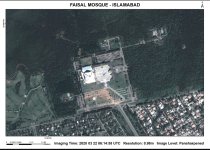
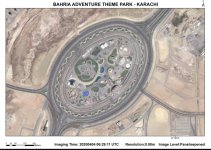
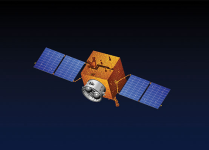
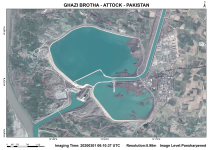
Pakistan has successfully launched its first Remote sensing satellite system (PRSS-1) on 9th July 2018 from Jiuquan Launch Site Center (JLSC), China. PRSS-1 is a Low Earth Orbit (LEO) sun-synchronous satellite and carries optical payload having spatial resolution of 0.98m in panchromatic and 2.89m in multispectral mode. It offers 4 day revisit capability anywhere on the globe.

1777500219613.png

Brief Specification

Launched DateJuly 09, 2018
Orbital PositionSSO
PayloadEO Payload
Mission Life07 years
Ground StationsIslamabad & Karachi

PRSS-1 is tailored to meet Pakistan’s needs for high resolution imagery required by users for socio-economic development of the country, especially in the fields of land mapping, agriculture classification and assessment, urban and rural planning, environmental monitoring, natural disaster monitoring/management, water resource management and others. PRSS-1 imagery is also being used for monitoring and planning of mega infrastructure development carried out under CPEC. Moreover, the imagery collected from PRSS-1 will also aid the ongoing national afforestation campaign and identify suitable freshwater storage sites. The launch of PRSS-1 has made the nation self-reliant in addressing numerous challenges related to socio-economic uplift of the country.

Two Ground Stations have been established for the planning, reception, processing and archiving of satellites imageries in Islamabad and Karachi.

Benefiting from the technology, users can directly browse, view and order satellite based images right from their desktop. Catching upon latest trends, SUPARCO has launched a dedicated web portal for the products of PRSS-1 from where users can easily browse, place orders and download imagery products. For further details and imagery products, please visit our PRSS-1 Web Portal.

Panchromatic0.98 meter
Multispectral2.89 meter
Bundle (Panchromatic + Multispectral)(0.98, 2.89) meter
Pansharpened0.98 meter
 
To view this content we will need your consent to set third party cookies.
For more detailed information, see our cookies page.


We need to invest heavily in space stations :love:

Let’s hire more than 500,000+ scientists and maybe even eat more grass!

See Pakistan can do anything

That's actually really impressive, lots of things could have gone wrong in that operation, full kudos to the team at Suparco. Goes to show there's no end to smart talent in Pakistan, just needs support.
 
Launch is still a major problem (it costs billions of dollars and very time consuming) - we rely heavily on Chinese launchers - see full explanation below

Pakistani space program: faster and more efficient but still dependent on China

Pakistan launched its fifth indigenous satellite into orbit within 16 months – but all launches used Chinese carrier rockets.

Aerospace propulsion engineer Dr. Sarah Qureshi told Sputnik how the program has accelerated.

Tech priorities

Pakistan is not inclined toward core research and development or investment in domestic technologies, and relies heavily on ready-made designs from China.

Why now

A suitable partner has been found in China.

Aerospace, defense and satellite technologies are now united under the Strategic Plans Division, improving coordination.

Modularity means designs no longer need to be built from scratch.

The launch problem

"If a satellite costs a million to build, the rocket to launch it to space costs billions," Qureshi says. "It requires a lot of money and time."


Pakistan is capable of building its own rockets, but no significant budget has been allocated to make it a national priority.

To view this content we will need your consent to set third party cookies.
For more detailed information, see our cookies page.
 
To view this content we will need your consent to set third party cookies.
For more detailed information, see our cookies page.


This should have been done at least a decade ago, but better late then never.

Pakistan should seriously invest in space sciences which will have cascading economic and scientific dividends for the country. Don't think of space programs as simple military items.
 
Pakistan should seriously invest in space sciences which will have cascading economic and scientific dividends for the country. Don't think of space programs as simple military items
yep that exaclty what we are doing , quwa had a podcast epsiode about it . the new partnership with china to make sats at home is civilian led

quwa article
 
Global Superpowers of the World have 6 family types of satellites

1- EO (electro optical) Satellites for daylight imaging
2- SAR (Synthetic aperture radar) Night and all weather can see through clouds
3- Hyperspectral for Material and Crop detection
4- SIGINT (Signals intelligence) signal interception comms/radars
5- Navigation system like GPS
6- Missile warning Satellites

Pakistan has the first 3 but does not have SIGNIT or missile warning

And does not need a navigation system that’s for countries like USA and China

So next Pakistan should be developing its own SIGNIT satellites systems
 
A View from Above: The Power of EO-1
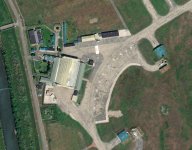
Check out this crystal-clear view of Pathankot AirBase, captured by our EO-1 satellite!
Using the High-Resolution Satellite Sensor (HRSS), we can see incredible details on the ground with a 0.81m resolution. Whether it's for urban planning or monitoring geographic changes, our EO series continues to provide essential data from orbit.
Snapshot Specs:
📅 Captured: April 29, 2026
📍 Location: Punjab region
🛰️ Mission: SUPARCO SAT EO-1
Stay tuned for more updates from our missions! 📡✨
#SpaceScience #SUPARCO #Satellite #Mapping #Innovation #EOseries Suparco

IMG_5621.jpeg
IMG_5620.jpeg
IMG_5619.jpegIMG_5618.jpeg
 
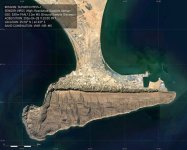
Satellite Remote Sensing plays a vital role in monitoring agriculture resources. Remote sensing with its capability to repetitively acquire synoptic images can be employed to classify various types of crops, provide crop area estimation, monitor crop health, crop growth and assist in crop production and yield estimations. Important areas of application are;

Crop area estimation
Crop yield production forecasting and estimation
Drought monitoring
Water logging, salinity and land degradation monitoring
Crop health monitoring
Precision agriculture
Crop calendar based yield gap analysis
#SUPARCO #mapping #agriculture #eoseries
IMG_5622.jpeg
 
So EO series is at the minimum 0.81m PAN chromatic resolution. Could be better in 0.5m range.

Soon hopefully 2 more SAR sats.
 

Users who are viewing this thread

Pakistan Defence Latest

Back
Top