Can we get more news on weapons and equipment procurement since this thread hasn’t been active like before?
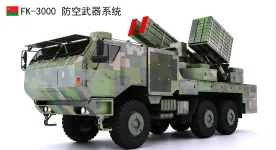
Since March 15, 2026, Egypt has been implementing a sale of air defense systems, including advanced Western systems already in service, such as the Sky guard Amon, to Kuwait, the UAE, and Saudi Arabia, as well as some modern Chinese systems. Some of these systems are integrated into the command and control systems of these countries, while others replace stockpiles of Crotale and Sparrow missiles. The Chinese systems protect individual systems. The Gulf states benefited from the availability of inexpensive systems, while Egypt benefited from disposing of systems nearing the end of their service life and acquiring Chinese replacements with fast delivery terms, in addition to the Chinese systems manufactured in Egypt.
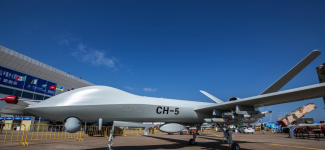
Regarding cooperation programs, there is a widespread Turkish presence to develop components for locally manufactured Egyptian systems to enhance their capabilities. There is also the modernization of Chinese-designed aircraft in Egypt, such as the Jabar and Hamza families, using Turkish components that are superior to the Chinese ones.
As for cooperation with Europe, Europe imposes a military embargo on any heavy weapons for Egypt. Therefore, negotiations have been ongoing for years regarding frigates, corvettes, and submarines, but none of these have materialized. Contracted air defense systems like the IRIS-TSLX, which are the same as the IRIS-T-SLM but with an extended range of 100 kilometers and wider coverage, are all experiencing delays in implementation.
Some European countries are willing to transfer training programs and supply some production lines to Egypt, confident, based on historical precedents, that the Egyptians possess the best weapons production lines. However, the real problem lies in planning and management, stemming from the incompetence and stupidity of those leading the development of military manufacturing. The military's control over factories and their monopoly over them, despite their continued incompetence and real failure in development, and their rejection of local scientific research due to personal interests and a lack of trust in the civilian sector, are used to justify their failed system, ensuring their economic control and advancing their personal interests and corruption.
This prevents them from being ready for any current conflicts in the Middle East. Cooperation with the Koreans is limited by American pressure and the Egyptians' reluctance to allocate significant funds from the Egyptian army's financial reserves for defense.
The Russian side is not interested in transferring actual technology but is forced to cooperate due to the presence of competition. Chinese and South Korean systems are being offered to Egypt, so the Egyptians are being offered the production of Russian systems, as usual, with Russian-made missiles, and the development of Russian weapons is slow. Therefore, Egypt is even upgrading older Russian air defense systems like the S-300VM with missiles from Russia. A renewed Iranian-American war and targeting of the Gulf would provide Egypt with some funding for military manufacturing. Regarding the Chinese fighter jets, the deals are real and being implemented. China is generally the fastest arms supplier currently. For example, they have the capacity to produce HQ-9BE batteries at a rate of 40 batteries annually, and perhaps 8,000 associated air defense missiles for global marketing. This shows that they are superior to the West and Russia in production, although the Chinese have a significant weakness in producing systems like the Type-99 tank (160 tanks annually) and systems like the Type-96B. This shows that they are less capable than the Americans in producing main battle tanks.
Therefore, Egypt's only opportunity in the submarine market is with Chinese submarines for rapid delivery, such as TYPE-039A/C. As for the illusions of contracts with France, Spain, South Korea, and Germany, contracts will be finalized after 2027, with the fastest deliveries expected in 2030. The Egyptians have no chance of acquiring submarines given the widespread global and Middle Eastern instability. The same applies to corvettes, frigates, and even missile boats. Egypt is still negotiating with Spain for F-110 frigates, with France for one FREMM frigate, with Holland for corvettes, OPV vessels, and missile boats, and with the Turks for missile boats, but no contracts have been finalized, and therefore no deliveries are expected. The PV-43M fast patrol boat has modest performance and is difficult to export.
Egypt has reached an agreement with China to manufacture several CIWS systems to equip Egyptian naval units. The Turks are attempting to supply Egyptian naval vessels with Turkish missiles, torpedoes, and some short-range air defense systems, including artillery systems, in competition with China.
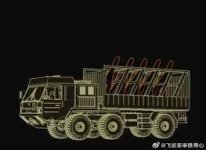
Propaganda systems like the RAAD-300 will not produce a real platform and are unsuitable for Egypt. Egypt possesses an unspecified number of SR-5 systems, and its only option is to Turkish-made launchers mounted on T-55 and M-60 tank chassis. Egypt could install a massive number of these annually, starting from 60-120 platforms per year. This would guarantee Egypt a mix of 200 Chinese-made SR-5 platforms mounted on tank chassis and 150-200 WS-2D platforms, providing a missile barrage against any Israeli illusions of instigating a war with Egypt. Similarly, Egypt's opportunity in ballistic missiles lies in producing improved systems of the DF-15 and SS-26 with better ranges and destructive capabilities. Egypt needs to develop its production of TNT explosives and produce explosives with a better blast effect. China currently produces high-explosive metallurgical hydrogen explosives with high destructive power. Egypt's acquisition of drones and small missiles with destructive capabilities comparable to cruise missiles carrying 450-kilogram warheads—where metallic hydrogen, with a destructive power up to 30 times that of TNT, would be a game-changer for military leaders in terms of destructive capabilities, or even the use of less powerful explosives, but with a destructive power several times greater than TNT.
https://www.sohu.com/a/961022855_121743938
" Unlike the original Chinese SR5, which uses a wheeled chassis, the “Deterrence 300” ingeniously chose the crawler chassis. This choice takes full account of the topographical characteristics of Egypt, most of the country is desert or desert environment, track chassis in these places more passable. Judging from the appearance, this track chassis is likely to be improved by the Egyptian stock of T-54/55 tank chassis, which is economical and practical, making full use of Egypt's existing military resources. "
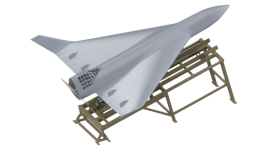
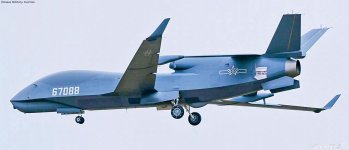
LOONG-M10
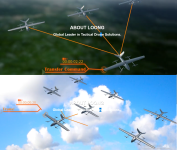
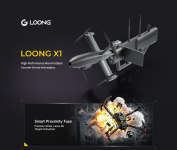
The Chinese company LoongUAV, manufacturer of the LOONG-9M drone (which is produced under license in Egypt under the name Hamza 3),
produces more than 20 different drones and has an annual production of 200,000 drones. They certainly have superior products than the one AOI chose to manufacture in Egypt.
Any cooperation with China has been rigged with the involvement of dubious Emirati companies to provide funding for the personal interests of the corrupt local system, which is why Egypt consistently fails to achieve effective development.