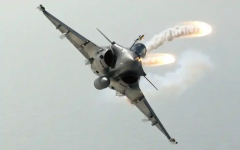
Egyptian Armed Forces

#Ma'at_Group| #Egypt recalculates its accounts.. Why is it considering ending its reliance on the F-16? #China's aircraft on the table.. The secret of the high-level Egyptian military delegation's visit to Beijing Behind the scenes of Egypt launching a competition for drone hunting China watches #America in silence.. and reveals gaps in its army when facing Iran

To view this content we will need your consent to set third party cookies.
For more detailed information, see our cookies page.
 
The Egyptian army began today intensive military exercises and live-fire shooting maneuvers on the border with Israel (Occupied Palestine), causing a state of concern within Israeli circles. The exercises are being conducted just 100 meters from the border fence separating Egypt and Israel.

To view this content we will need your consent to set third party cookies.
For more detailed information, see our cookies page.


On April 25, Egypt celebrates Sinai Liberation Day, where the great crossing of the Egyptian army in 1973 and its victory over the Israeli occupation army culminated in the complete withdrawal of the occupying state and the raising of the Egyptian flag over the Sinai Peninsula after its complete recapture from the Israeli occupier. This was the last scene in a long series of Egyptian-Israeli conflicts that ended with the recapture of all Egyptian lands after a sweeping victory for Egyptian politics and the military on April 25, 1982.
 
Can we get more news on weapons and equipment procurement since this thread hasn’t been active like before?
 
Can we get more news on weapons and equipment procurement since this thread hasn’t been active like before?
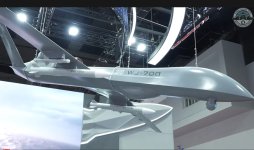
wj700 02.jpg

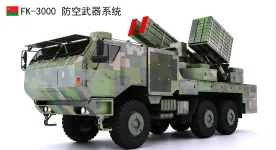
Since March 15, 2026, Egypt has been implementing a sale of air defense systems, including advanced Western systems already in service, such as the Sky guard Amon, to Kuwait, the UAE, and Saudi Arabia, as well as some modern Chinese systems. Some of these systems are integrated into the command and control systems of these countries, while others replace stockpiles of Crotale and Sparrow missiles. The Chinese systems protect individual systems. The Gulf states benefited from the availability of inexpensive systems, while Egypt benefited from disposing of systems nearing the end of their service life and acquiring Chinese replacements with fast delivery terms, in addition to the Chinese systems manufactured in Egypt.
bce1e176720844289759a9248fcb4ee7.webp
Regarding cooperation programs, there is a widespread Turkish presence to develop components for locally manufactured Egyptian systems to enhance their capabilities. There is also the modernization of Chinese-designed aircraft in Egypt, such as the Jabar and Hamza families, using Turkish components that are superior to the Chinese ones.

As for cooperation with Europe, Europe imposes a military embargo on any heavy weapons for Egypt. Therefore, negotiations have been ongoing for years regarding frigates, corvettes, and submarines, but none of these have materialized. Contracted air defense systems like the IRIS-TSLX, which are the same as the IRIS-T-SLM but with an extended range of 100 kilometers and wider coverage, are all experiencing delays in implementation.

Some European countries are willing to transfer training programs and supply some production lines to Egypt, confident, based on historical precedents, that the Egyptians possess the best weapons production lines. However, the real problem lies in planning and management, stemming from the incompetence and stupidity of those leading the development of military manufacturing. The military's control over factories and their monopoly over them, despite their continued incompetence and real failure in development, and their rejection of local scientific research due to personal interests and a lack of trust in the civilian sector, are used to justify their failed system, ensuring their economic control and advancing their personal interests and corruption.

This prevents them from being ready for any current conflicts in the Middle East. Cooperation with the Koreans is limited by American pressure and the Egyptians' reluctance to allocate significant funds from the Egyptian army's financial reserves for defense.

The Russian side is not interested in transferring actual technology but is forced to cooperate due to the presence of competition. Chinese and South Korean systems are being offered to Egypt, so the Egyptians are being offered the production of Russian systems, as usual, with Russian-made missiles, and the development of Russian weapons is slow. Therefore, Egypt is even upgrading older Russian air defense systems like the S-300VM with missiles from Russia. A renewed Iranian-American war and targeting of the Gulf would provide Egypt with some funding for military manufacturing. Regarding the Chinese fighter jets, the deals are real and being implemented. China is generally the fastest arms supplier currently. For example, they have the capacity to produce HQ-9BE batteries at a rate of 40 batteries annually, and perhaps 8,000 associated air defense missiles for global marketing. This shows that they are superior to the West and Russia in production, although the Chinese have a significant weakness in producing systems like the Type-99 tank (160 tanks annually) and systems like the Type-96B. This shows that they are less capable than the Americans in producing main battle tanks.

Therefore, Egypt's only opportunity in the submarine market is with Chinese submarines for rapid delivery, such as TYPE-039A/C. As for the illusions of contracts with France, Spain, South Korea, and Germany, contracts will be finalized after 2027, with the fastest deliveries expected in 2030. The Egyptians have no chance of acquiring submarines given the widespread global and Middle Eastern instability. The same applies to corvettes, frigates, and even missile boats. Egypt is still negotiating with Spain for F-110 frigates, with France for one FREMM frigate, with Holland for corvettes, OPV vessels, and missile boats, and with the Turks for missile boats, but no contracts have been finalized, and therefore no deliveries are expected. The PV-43M fast patrol boat has modest performance and is difficult to export.
1777463500786.png
Egypt has reached an agreement with China to manufacture several CIWS systems to equip Egyptian naval units. The Turks are attempting to supply Egyptian naval vessels with Turkish missiles, torpedoes, and some short-range air defense systems, including artillery systems, in competition with China.

Propaganda systems like the RAAD-300 will not produce a real platform and are unsuitable for Egypt. Egypt possesses an unspecified number of SR-5 systems, and its only option is to Turkish-made launchers mounted on T-55 and M-60 tank chassis. Egypt could install a massive number of these annually, starting from 60-120 platforms per year. This would guarantee Egypt a mix of 200 Chinese-made SR-5 platforms mounted on tank chassis and 150-200 WS-2D platforms, providing a missile barrage against any Israeli illusions of instigating a war with Egypt. Similarly, Egypt's opportunity in ballistic missiles lies in producing improved systems of the DF-15 and SS-26 with better ranges and destructive capabilities. Egypt needs to develop its production of TNT explosives and produce explosives with a better blast effect. China currently produces high-explosive metallurgical hydrogen explosives with high destructive power. Egypt's acquisition of drones and small missiles with destructive capabilities comparable to cruise missiles carrying 450-kilogram warheads—where metallic hydrogen, with a destructive power up to 30 times that of TNT, would be a game-changer for military leaders in terms of destructive capabilities, or even the use of less powerful explosives, but with a destructive power several times greater than TNT.
https://www.sohu.com/a/961022855_121743938
" Unlike the original Chinese SR5, which uses a wheeled chassis, the “Deterrence 300” ingeniously chose the crawler chassis. This choice takes full account of the topographical characteristics of Egypt, most of the country is desert or desert environment, track chassis in these places more passable. Judging from the appearance, this track chassis is likely to be improved by the Egyptian stock of T-54/55 tank chassis, which is economical and practical, making full use of Egypt's existing military resources. "
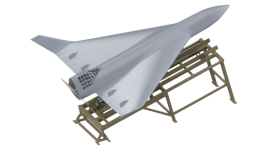
1777462767824.pngLOONG-M10

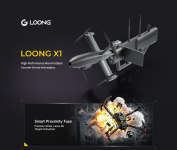
The Chinese company LoongUAV, manufacturer of the LOONG-9M drone (which is produced under license in Egypt under the name Hamza 3),

produces more than 20 different drones and has an annual production of 200,000 drones. They certainly have superior products than the one AOI chose to manufacture in Egypt.
1464987979766.png
Any cooperation with China has been rigged with the involvement of dubious Emirati companies to provide funding for the personal interests of the corrupt local system, which is why Egypt consistently fails to achieve effective development.
 
OLD NEWS BUT NEW HERE
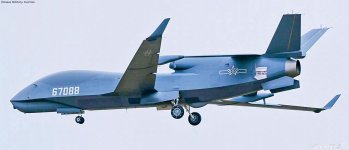
WZ-7_08 00.jpg

Feiyang Military Iron Vest 24--09-01 13:36


Weibo certification: military blogger over-speech fan big coffee (flying military super-talking)

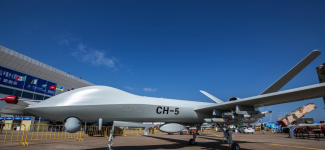
Egypt, China’s largest drone market, bought a large number of CH-5 and Pterosaur II drones, and recently purchased WZ-7s and cruise missiles before obtaining permission to build them. The Egyptian Air Force has a series of expanding drone bases near Sudan and Libya, as well as in the east-facing region.
Apparently, Egypt worked with CASIC (China Aerospace Science and Industry) and Norinco (Northern Industries) to create a cruise missile (UAV) similar to the Iranian Shaheds.
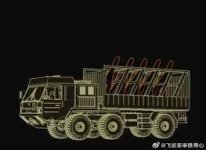
Untitled121487877.jpg
The Egyptian version is mounted on the chassis of a Renault-specific car, which they built locally, and a car carrying five drones (on display!)
#Flying Military [Super Words] # #Fire and Plan #
https://www.sina.cn/news/detail/5073788854601993.html


https://defensenigeria.wordpress.com/2017/12/08/egypt-be-ones-first-operator-of-the-ch-5-drone/

20220127144411113.png
 
The Arab Republic of #Egypt and South Korea have contracted the rights to transfer the manufacturing technology of the K2 Black Panther tank.
In #Egypt

The K2 Black Panther is a fourth-generation main battle tank manufactured by South Korea. It is considered one of the newest and most advanced tanks in the world, specially designed for complex geographical conditions (mountains and difficult terrain)

To view this content we will need your consent to set third party cookies.
For more detailed information, see our cookies page.
 
Hebrew Media:The Egyptian Army Disrupted Israeli Communications

Hebrew media stated that the Egyptian military maneuvers near the Israeli borders caused widespread technical disruptions in communication networks in the south, and these exercises went beyond the usual matters.Grounded and I'm free in it

To view this content we will need your consent to set third party cookies.
For more detailed information, see our cookies page.
 
A state of confusion prevails in Israel as the Egyptian army continues its intensive maneuvers along the border, which has provoked an official Israeli objection and heightened concern and alertness in Israel, also prompting them to notify residents of the border settlements of the need for extreme caution amid the ongoing maneuvers until April 30...

To view this content we will need your consent to set third party cookies.
For more detailed information, see our cookies page.
 
The Arab Republic of #Egypt and South Korea have contracted the rights to transfer the manufacturing technology of the K2 Black Panther tank.
In #Egypt

The K2 Black Panther is a fourth-generation main battle tank manufactured by South Korea. It is considered one of the newest and most advanced tanks in the world, specially designed for complex geographical conditions (mountains and difficult terrain)

To view this content we will need your consent to set third party cookies.
For more detailed information, see our cookies page.

What percentage is the tot of manufacturing? Or is it the whole platform?
 
What percentage is the tot of manufacturing? Or is it the whole platform?

South Korea and other US allies are not 100% independent from the US supply chain.

When it comes to Israel, thing will get complicated as the US could exert its control over its vassal states' equipment.
 
South Korea and other US allies are not 100% independent from the US supply chain.

When it comes to Israel, thing will get complicated as the US could exert its control over its vassal states' equipment.
The US is more limited in its power projection now since it cannot divert too much effort and resources away from the current Iran conflict, especially with the Hormuz shutdown. My guess is that the more valuable components that make a vehicle more modern and performative would be transferred rather then the structure of the vehicles silhouette. Everyone’s looking for their own interests now more then ever, uae just announced it won’t be apart of opec anymore, EAF military drills are done just a mere 100 meters away from Israel’s borders.

Add Russia and China in the mix and it gets dicey for even the USA.
 
France continues to accelerate production of Rafale fighters intended for Egypt as the completion of the second batch approaches

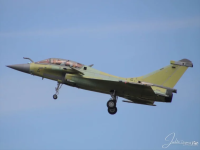
1777579747294.png

France is witnessing a noticeable acceleration in the pace of work to complete the delivery of the second batch of Rafale fighters allocated to the Egyptian Air Force.

Over the past few days, several new aircraft bearing serial numbers DM23, DM24 and DM26 have emerged directly after leaving the production lines, which reflects a clear acceleration in the stages of manufacturing and preparation for delivery.

Today, a new model appears in this sequence, as the DM25 fighter undergoes preliminary tests immediately after leaving the production line, in a step that precedes its official delivery.

This convergence in the flow of new aircraft indicates continued progress in implementing the contract, and confirms that the stages of delivery of the second batch are approaching completion, thus enhancing the capabilities of the Egyptian Air Force at the operational and technical levels during the coming period.

1777579726358.png

Egypt entered the field of operating Rafale fighters through a major deal with France in February 2015, when the first contract was signed to supply 24 multi-role fighters produced by Dassault Aviation, as part of a deal that also included a Frem multi-role frigate, missiles, and advanced air armament. This step was considered at the time to be the first foreign export of a French fighter of this type, which gave Cairo an early position among its international operators.

The value of this deal was estimated at approximately 5.2 billion euros, which made it then one of the largest export deals in the history of the French military industry, and the first foreign export of the Rafale fighter.

Later, with increasing Egyptian interest in expanding its air capabilities and enhancing its fleet of modern fighters, an additional deal was signed in 2021 to purchase 30 new Rafale fighters, in a contract whose value was estimated at approximately 3.75 billion euros, raising the total Egyptian demand to 54 aircraft. This deal came in the context of supporting operational continuity and expanding the offensive and defensive capabilities of the Egyptian Air Force, while maintaining the same multi-mission formation that allows air-to-air and air-to-ground operations to be carried out with high precision.

Egypt's deals with France are based on an integrated arms package that includes, in addition to aircraft, a wide range of guided munitions and long-range missiles, in addition to logistical support, training and maintenance, making it a long-term program and not just a traditional purchase. These deals also reflect an advanced level of defense cooperation between Cairo and Paris, especially in light of Egypt's move to diversify its sources of armament and modernize its air force with advanced fourth-generation combat platforms.
 
Why did the "Amon" system attract attention? It is not just a weapon, but an integration between missiles and radar-guided artillery capable of intercepting loitering munitions, drones, and low-altitude targets with high precision.Its arrival in the Gulf confirms that Egyptian expertise in air defense is a world-class school pointed to with pride.

To view this content we will need your consent to set third party cookies.
For more detailed information, see our cookies page.
 
Egypt is conducting negotiations with Spain regarding the advanced S-80 submarines, alongside the ongoing talks about F-110 frigates.The focus now is with Navantia company on technology transfer and local manufacturing.A qualitative leap that enhances the strength of the Egyptian naval forces
To view this content we will need your consent to set third party cookies.
For more detailed information, see our cookies page.
 

Users who are viewing this thread

Back
Top