Government POL prices News and Discussions

I'll relay your message to the government meanwhile the spin doctors are working 24/7

Of course, the spin doctors like to blame their own antics on evil foreign forces making them financially sodomize the people, just to divert their hate from where it truly belongs.

Never fails to work, but it doesn't really matter. Whether you send that message onwards or not is immaterial.

The truth remains as I have mentioned it above. Pakistan simply cannot afford any energy subsidies for its people. They have to pay the prevailing market rates, just like the rest of the global consumers.
 
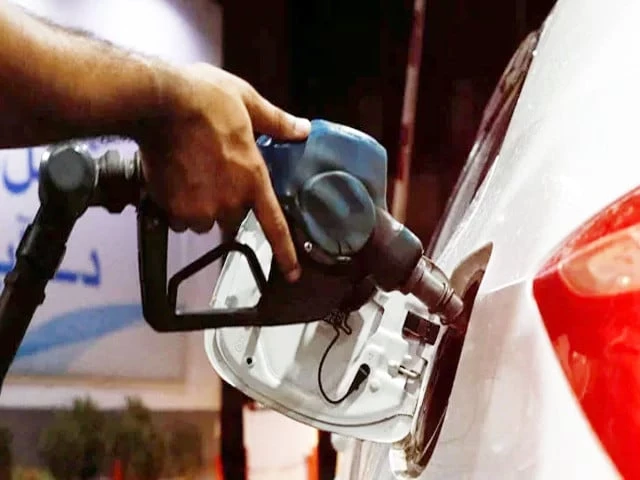
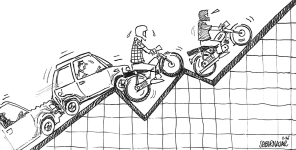
This the ground reality after petrol hike.

To view this content we will need your consent to set third party cookies.
For more detailed information, see our cookies page.
 
The petrol levy must be at a record per liter compared to the past. The government is trying to make up for the shortfall in tax collection on petrol levy.

It’s a double edged sword. You’re likely to destroy economic activity by increasing petrol prices to this level.

There are other avenues to control your costs. Start with subsidies to the elites, salaries, perks of government employees.

Mix ethanol with petrol that gives similar performance. Incentivize EVs.
 
The petrol levy must be at a record per liter compared to the past. The government is trying to make up for the shortfall in tax collection on petrol levy.

It’s a double edged sword. You’re likely to destroy economic activity by increasing petrol prices to this level.

There are other avenues to control your costs. Start with subsidies to the elites, salaries, perks of government employees.

Mix ethanol with petrol that gives similar performance. Incentivize EVs.
IMG-20260512-WA0044.jpg
 
The petrol levy must be at a record per liter compared to the past. The government is trying to make up for the shortfall in tax collection on petrol levy.

It’s a double edged sword. You’re likely to destroy economic activity by increasing petrol prices to this level.

There are other avenues to control your costs. Start with subsidies to the elites, salaries, perks of government employees.

Mix ethanol with petrol that gives similar performance. Incentivize EVs.
Your analysis is correct. The govt is again using indirect taxation to raise revenues from the public, when it should have imposed direct taxes on rich agriculuralists and industrialists.
 
Your analysis is correct. The govt is again using indirect taxation to raise revenues from the public, when it should have imposed direct taxes on rich agriculuralists and industrialists.

Pakistan's entire taxation system is regressive, with far more indirect taxes across the board, than direct taxes, and it has been always so since its creation in 1977.
 
Pakistan's entire taxation system is regressive, with far more indirect taxes across the board, than direct taxes, and it has been always so since its creation in 1977.

Pakistan is surviving on Taxes and remittances.


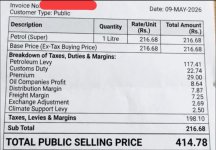
Strategic Analysis of Fuel Pricing in the receipt.
The data reveals a systemic reliance on indirect taxation and administrative overhead that stifles national competitiveness:

Tax-to-Base Ratio: The base price of 216.68 Rs is nearly doubled by 198.10 Rs in taxes, levies, and margins. This translates to an effective tax/margin burden of approximately 91.4%.

Petroleum Levy (117.41 Rs): This represents the largest single cost driver beyond the base price, used primarily to plug federal fiscal deficits caused by inefficient provincial spending.​

Logistics Friction (Freight & Exchange Adjustments): The inclusion of freight margins and exchange adjustments highlights a centralized procurement system that lacks regional efficiency and local energy security.​

The 34-Zone Solution: Policy Intervention
Under the 34-Zone Hybrid Economic Governance Model, we would move away from this extractive fiscal dependency.

1. Fiscal Decentralization: Transitioning from four massive, inefficient provinces to 34 autonomous Economic Zones reduces the massive administrative overhead that currently necessitates high levies like those seen in fuel receipt.​

2. Zone-Specific Energy Hubs: By clustering zones around ports like Karachi and Gwadar, we can reduce the "Freight Margin" seen in the invoice through localized refinery-to-consumer pipelines.​

3. Revenue Re-engineering: Instead of taxing mobility (petrol), zones generate revenue through Export-Driven Development and sector clustering, allowing for a reduction in consumption-based levies that hurt the average citizen.​

4. Climate Resilience: The "Climate Support Levy" (2.50 Rs) in the invoice is a reactive measure; our 200-year strategy integrates climate resilience into the very architecture of the zones, funding green infrastructure through zone-level bonds rather than flat-rate public​


Users who are viewing this thread

Pakistan Defence Latest

Country Watch Latest

Back
Top