DeepSeek, China's AI model: News & Discussion

What does this tangent have to do with anything?

Maybe we should use the rural poor in China as some AI measurement?
As if that makes just as much sense?
Do Americans like seeking attention this much? Why are you acting just like Trump?

Do you think everyone is as irresponsible about their words as the United States?

I provided evidence and analysis about whether American hegemony exists, and you only saw these two sentences? Is your brain only the size of a pea, unable to handle too much information?
 
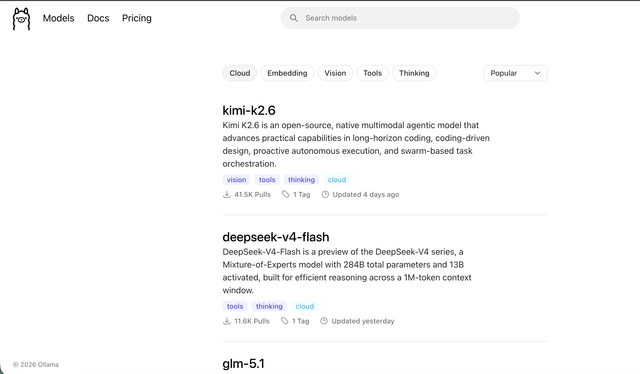
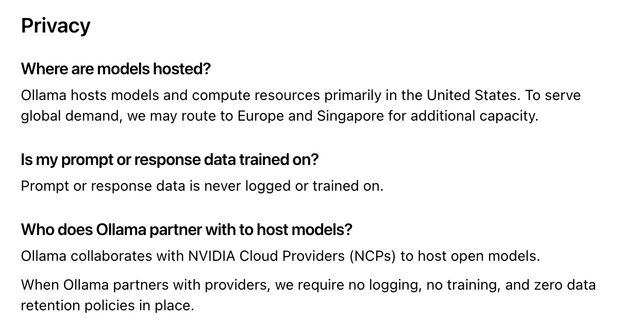
The US actually stands to gain from Chinese open-weight models too. It's not the one-sided loss most people assume it is. There's already a whole ecosystem of American cloud services hosting them, and that's revenue flowing to both US cloud providers and hardware manufacturers.

image.png

image.png
image.png

image.png


I have been testing Ollama Cloud pretty much all day, and it has been a pleasant surprise. The rate limits are significantly more generous than Claude Sonnet's.
 
https://www.reuters.com/business/au...us-ai-lead-us-advisory-body-warns-2026-03-23/

China's open-source dominance threatens US AI lead, US advisory body warns​

March 23, 20268:02 PM GMT+8Updated 6 hours ago

BEIJING, March 23 (Reuters) - The dominance of China's open-source artificial intelligence is creating a "self-reinforcing competitive advantage", allowing it to challenge U.S. rivals despite restricted access to advanced AI chips, a U.S. congressional ‌advisory body said on Monday.

Some estimates suggest that around 80% of U.S. AI startups now use Chinese open-source AI models.

US House Probes Airbnb, Anysphere’s Use of Chinese AI Models​

April 29, 2026 03:23 PM ET

Republican-led House committees are investigating Airbnb and Anysphere, the maker of the AI coding platform Cursor, over their use of artificial intelligence models developed by Chinese companies.

The House Homeland Security Committee and the House Select Committee on the Chinese Communist Party sent letters Wednesday to the companies’ CEOs requesting details about their use of Chinese-built AI systems, the rationale behind those choices and any communications the firms have had with the model providers.

The letters — signed by Homeland Security Chairman Andrew Garbarino, R-N.Y., and China Select Committee Chairman John Moolenaar, R-Mich. — also ask that employees involved in those decisions participate in an in-person briefing with lawmakers.

The probe was first reported by Semafor. It reflects mounting concern among lawmakers that U.S. companies are increasingly integrating AI models developed by firms in China, raising potential national security and cybersecurity risks tied to data access, supply chains and model behavior.

The inquiry specifically targets Anysphere’s recently released Composer 2 model, which the company said performs on par with leading systems from U.S. firms at a lower cost. The company later disclosed that the model is built on Kimi, developed by Beijing-based Moonshot AI.

Lawmakers also raised concerns about Airbnb’s use of Qwen, an AI model developed by the Chinese marketplace company Alibaba, to power customer service tools. Airbnb CEO Brian Chesky previously described the model as “fast and cheap.”

Cursor and Airbnb did not immediately respond to requests for comment.
 
Last edited:
"Zombie Scavenger"
The film was independently made by Yunnan-based artist Mx-Shell using Bytedance's Seedance 2.0, costing about $400 and taking 10 days.

To view this content we will need your consent to set third party cookies.
For more detailed information, see our cookies page.


To view this content we will need your consent to set third party cookies.
For more detailed information, see our cookies page.
 

Alibaba Cloud launches next-generation AI chip 'Zhenwu M890'.​

AASTOCKS· 10:39

Alibaba Cloud has launched a 128-GPU hyperscale node server based on Pingtouge’s next-generation AI chip, Zhenwu M890, equipped with the interconnect chip ICN Switch 1.0, which achieves communication latency as low as hundreds of nanoseconds. This enables 128 AI chips to function as a single computer, meeting the demands for concurrent inference and large model training in the Agentic era.

At the Alibaba Cloud Summit, Liu Weiguang, Senior Vice President of Alibaba Cloud Intelligence Group and President of Public Cloud Business, stated that Alibaba Cloud is now fully stack-ready for the Agentic era. From underlying chips and models to Agentic Cloud, model services, and Agentic applications, Alibaba Cloud has achieved full integration to empower AI transformation across industries.

Liu Weiguang added that today’s Agentic AI has evolved from merely executing business processes to 'delivering outcomes,' generating outputs previously unattainable.

Alibaba reveals more powerful Zhenwu AI chip, new LLM​

CHONGQING, China — Alibaba announced Wednesday its new artificial intelligence chip would be three times as powerful as its predecessor, as rival Nvidia struggles to get its advanced chips into China.

The Zhenwu M890 delivers three times the performance of the current Zhenwu 810E, Alibaba said, adding that the new processor has 144 GB GPU memory and interchip bandwidth of 800 GB per second.

Alibaba said it had already delivered 560,000 Zhenwu units to more than 400 customers across 20 industries.

The e-commerce giant also revealed its next generation large language model, Qwen3.7-Max, would soon be released.
 
Present AI has some mild entertainment values, but it's not quite there. This is the first Chinese drama I ever watched (in its entirety) as a kid. Actually before that the very very first Chinese TV series was Journey to the West 1986 Mainland version, but I only watched something like the first 10 episodes so that doesn't count.

Anyways, this fan-made AI version looks nothing like Idy Chan. It fails to capture her charm. The Idy Chan I remember is someone like Li Qin's character in Princess Agents -- regal and cold, but can be charming once you warm up to her.

This CGI model almost looks like an old hag (with wrinkles digitally removed). It's a good first try though:

To view this content we will need your consent to set third party cookies.
For more detailed information, see our cookies page.


(Basically what I'm trying to say is are the present AI video generation models really that bad? We make the AI watch all 50+ episodes of the TV drama, then it outputs a CGI model with only 40-60% resemblance to the lead female actress?)
 
Last edited:
Present AI has some mild entertainment values, but it's not quite there. This is the first Chinese drama I ever watched (in its entirety) as a kid. Actually before that the very very first Chinese TV series was Journey to the West 1986 Mainland version, but I only watched something like the first 10 episodes so that doesn't count.

Anyways, this fan-made AI version looks nothing like Idy Chan. It fails to capture her charm. The Idy Chan I remember is someone like Li Qin's character in Princess Agents -- regal and cold, but can be charming once you warm up to her.

This CGI model almost looks like an old hag (with wrinkles digitally removed). It's a good first try though:

To view this content we will need your consent to set third party cookies.
For more detailed information, see our cookies page.


(Basically what I'm trying to say is are the present AI video generation models really that bad? We make the AI watch all 50+ episodes of the TV drama, then it outputs a CGI model with only 40-60% resemblance to the lead female actress?)


there is something about repurposing existing/previous actors faces to generate new content that I object to ( unless of course that actor has agreed to it, and are being financially rewarded for it !!!! )
 
"Zombie Scavenger"
The film was independently made by Yunnan-based artist Mx-Shell using Bytedance's Seedance 2.0, costing about $400 and taking 10 days.

To view this content we will need your consent to set third party cookies.
For more detailed information, see our cookies page.


To view this content we will need your consent to set third party cookies.
For more detailed information, see our cookies page.


China ex-train driver creates US$440 short film, receiving Hollywood director praise, job offer
29-year-old technical school graduate shuns getting ‘dizzy’ on short-term success, vows to continue studying

From train driver and wedding photographer, Liu Ziyu from China created a low-budget viral short film in 10 days, earning praise from a Hollywood director and receiving a job offer. Photo: The Paper


Published: 6:00pm, 26 May 2026

A moderately educated young man in China spent 10 days and just 3,000 yuan (US$440) to make a short film using artificial intelligence (AI) technology.

His efforts have won him the favour of a Hollywood director who even offered him a job.

The work, called Zombie Scavenger, was released on mainland social media websites on May 9 by Liu Ziyu, 29, who lives in Xinping County in southwestern Yunnan province, the Chuncheng Evening News reported.

Liu Ziyu, above, talks about the making of his short film. Photo: Weibo

Liu Ziyu, above, talks about the making of his short film. Photo: Weibo

It did not make waves in China until being recommended by PJ Accetturo, a famous Hollywood-based AI filmmaker, on social media the next day.


So far, the short film has been viewed more than 60 million times around the world, the report said.

“This is one of the best short films I have seen in years,” wrote Accetturo.

“If anyone can find the director, please link his socials. I would love to hire him but I cannot find him, I think he is a Chinese creator on Douyin,” the director added.

After some internet users forwarded Accetturo’s message to Liu, he responded honestly by saying: “I do not speak English. I want to focus on my work in China.”

Liu said he had exchanged several letters with Accetturo’s team. While he shared his other AI creations, Accetturo’s team told him that he could contact them if he hoped to make advertisements or films in the United States in the future.

“Right now, I do not have a plan to go to the US. For me, they are like my friends in the US,” Liu was quoted as saying.

Liu’s short film, which lasts three and a half minutes and is made in an Atompunk style, is a love story about a robot and a model doll. Liu said he was inspired by the movie WALL-E, a 2008 Disney computer-animated romantic sci-fi film.

Liu completed his creation alone in 10 days. It cost him 3,000 yuan buying software subscriptions and tokens.

Liu is not trained in information technology (IT) or art. Instead, he graduated from a technical school with a major in combustion engine driving and maintenance.

Before he took his current job as a wedding photographer, he had been a train driver for three years.

Liu began using AI to make videos at the beginning of this year after his parents urged him to prepare some promotional materials for their family-owned hotel’s opening ceremony.

He said one of his secrets is to tell the logic clearly to AI to produce vivid videos.

Film director PJ Accetturo, above, was mightily impressed by Liu’s work. Photo: Getty Images

Film director PJ Accetturo, above, was mightily impressed by Liu’s work. Photo: Getty Images

“My prompt formula is: movement plus motivation plus mood, rather than simply telling AI to do what movements,” said Liu.

The intellectual property rights for Zombie Scavenger have been authorised to a Chinese film company, with Liu in charge of the major narrative direction of the story, he said.


“I hate becoming dizzy with a short-term success. I will continue studying,” said Liu.

“I look forward to my next work project and hope it can also pass the scrutiny of the public.”
 

More US firms turn to China’s DeepSeek over pricey Silicon Valley AI

DeepSeek takes top spot on ‘trending’ list as companies look for alternatives to OpenAI and Anthropic, spending tracker’s report says​


DeepSeek's resurgence among US companies is part of a broader migration towards open-source models. Photo: Reuters

Xinmei Shen
Published: 3:00pm, 4 Jun 2026Updated: 5:33pm, 4 Jun 2026

Chinese artificial intelligence start-up DeepSeek took the top spot on a major US business spending index in June, as more companies swap out expensive American options like OpenAI and Anthropic in favour of more affordable alternatives.

According to a “trending software vendors” list from New York-based corporate spending platform Ramp – which tracks when businesses buy from a software vendor for the first time – DeepSeek’s rise placed it ahead of event-management platform PheedLoop and open-source model-serving platform Fireworks AI.

Notably, US firms were making direct payments to DeepSeek, suggesting they were sending and receiving data directly through DeepSeek rather than hosting its open-source models on their own internal servers, said Ara Kharazian, lead economist at Ramp Economics Lab, in the report on Wednesday.

“In probably the biggest sign that companies are looking for cheaper alternatives to OpenAI and Anthropic, some are willing to use cheaper, Chinese models, sending US data back and forth from China-hosted servers,” Kharazian said in a social media post.

This was not DeepSeek’s first increase in popularity.

Kharazian noted that DeepSeek “enjoyed a modest hype cycle” in January 2025, when US corporate adoption ticked up to 0.3 per cent before receding to 0.1 per cent, according to the Ramp AI Index.

By this April, DeepSeek’s adoption rate still hovered at 0.1 per cent. For context, market leaders Anthropic and OpenAI dominated the index at 34.4 per cent and 32.3 per cent, respectively. Ramp did not provide the market share percentages for June.

“It looks like firms are back on DeepSeek, for now,” Kharazian said, adding that he would not “overstate the durability of this trend”.

The resurgence is part of a broader migration towards open-source models. Platforms like Fireworks AI, Fal AI and DeepInfra also ranked among June’s trending vendors as open-source capabilities began to rival premium proprietary models at a fraction of the cost.

Proprietary models like OpenAI face growing competition from open-source models. Photo: AFP

Proprietary models like OpenAI face growing competition from open-source models. Photo: AFP

Fireworks AI said on Wednesday that on Harvey’s Legal Agent Benchmark (LAB), a test used to measure an AI model’s ability to handle complex, real-world legal work, Chinese firm Zhipu AI’s GLM 5.1 ranked highest among open-source models, closely behind Anthropic’s Claude Opus 4.7 and on par with OpenAI’s GPT-5.5.

Moonshot AI’s Kimi K2.6 and DeepSeek V4 Pro came in just below GPT-5.5 in the LAB test, but were “still clearly viable” for legal workloads, according to Fireworks AI.

DeepSeek last week announced a permanent price cut for its latest flagship V4 Pro model, a month after it released the long-awaited V4 series, which also includes the lighter variant V4 Flash. Following the price cut, benchmark firm Artificial Analysis ranked DeepSeek V4 Pro as one of the world’s best on an intelligence-per-dollar basis.
Fuelled by this commercial momentum, the Hangzhou-based start-up is finalising its first external fundraising round.

DeepSeek has secured over 50 billion yuan (US$7.4 billion) at a valuation of just under US$60 billion, with major backers including Tencent Holdings and electric-vehicle battery giant Contemporary Amperex Technology Limited (CATL) committing roughly 30 billion yuan to the round, the South China Morning Post reported on Wednesday.

 
Qwens 3.6 27bn model has been very good for programming locally!!

If this trend continues many will switch to these smaller models for medium level tasks and use the frontier models for complicated or architectural tasks to lay out the foundations.
 

Huawei chips refine DeepSeek model in major leap for China’s AI self-reliance​

While Chinese chipmakers have found success in supporting AI inference, they are struggling with the far more complex process of training​


The Huawei booth at the Beijing International Automotive Exhibition, April 25, 2026. Photo: EPA

Coco Fengin Guangdong
Published: 8:00pm, 5 Jun 2026

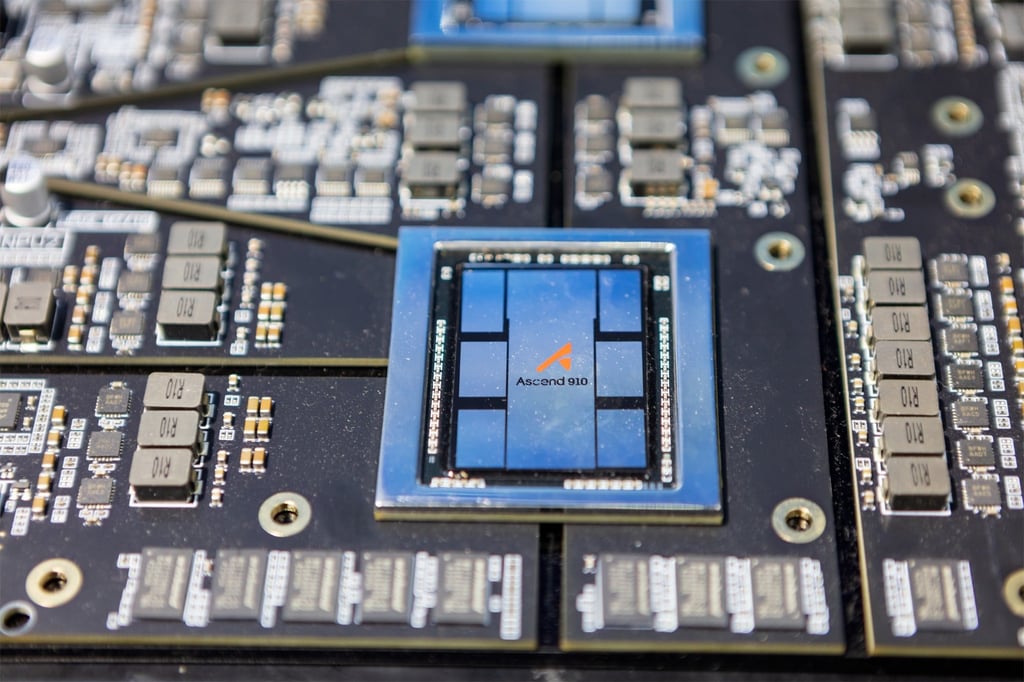
A research team that includes Huawei Technologies says it has successfully used the firm’s Ascend 910C chips to complete post-training for the DeepSeek-V4-Pro model, marking a major step forward as China’s semiconductor industry tries to leap from supporting basic AI inference to more complex model training amid tightening US sanctions.
While Chinese chipmakers have found success in supporting AI inference – the relatively simple process of running an already-finished model to answer user prompts – they have struggled with training, the far more complex process of building or refining a model’s brain.

If initial “pre-training” teaches a model how to speak by absorbing massive amounts of data, post-training teaches it how to work by following human instructions, safety rules and specific tasks.

A Huawei Ascend 910 processor is displayed during PT Expo China in 2023. Photo: Shutterstock Images

A Huawei Ascend 910 processor is displayed during PT Expo China in 2023. Photo: Shutterstock Images

To achieve this, the researchers ran DeepSeek’s largest model to date – boasting 1.6 trillion parameters – on a computing cluster powered by at least 1,000 Huawei chips, according to a social media post from the Shenzhen government on Friday.

The team successfully conducted “full-parameter” post-training, meaning the model’s entire architecture was updated and refined without cutting corners, the post said.

Previously, domestic computing power was primarily used for inference, “much like building a one-way road for the model: input a question, output an answer”, the post explained. The project, however, allowed a model to self-reflect and adjust.

This added “complex flyovers and loops to that one-way road, instantly multiplying the computational and communication demands by several times”, it added.

The exploration – jointly conducted by Huawei, the Shenzhen Loop Area Institute, the Shenzhen campus of Harbin Institute of Technology and Shenzhen Research Institute of Big Data – “will help enhance the self-reliance of China’s AI industry chain”, the post said.


Users who are viewing this thread

Pakistan Defence Latest

Back
Top