Why is the Pakistani state & army so deeply incompetent? A structural analysis

Status
Not open for further replies.
You can stay in delusions of 'Stealing vote'. No one in real world, especially the people of Pakistan, cares about that. Enemy mole is serving jail term and will stay there while his cohorts will keep crying. Good for you.


I thought only Indians drink cow piss and get dillusional …. Looks like Patwari and shoe lickers have found their own formula to get high .
Let me guess you benefit from corruption and are part of it Thats why your response is if you got testicular contusion from my post ;)))
 
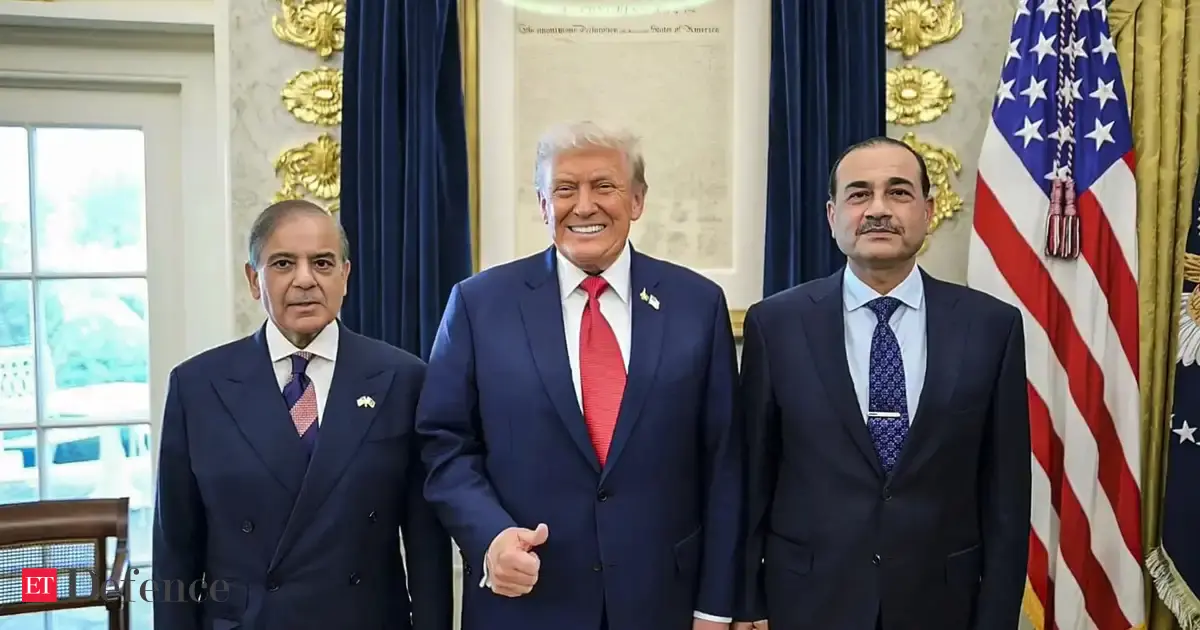
🇺🇸 🇵🇰 The price Asim Munir must pay for American flattery 🎯🌍 Trump just handed Pakistan a diplomatic headache on a silver platter 🇵🇰⚡ Donald Trump wants Pakistan to join the Abraham Accords, making normalising ties with Israel a key condition 🤝🇮🇱 After happily soaking up praise as Trump’s “favourite Field Marshal,” Asim Munir, the de facto head of Pakistan, now looks trapped between pleasing Washington and defending Pakistan’s decades-old foreign policy 🪖😬 Pakistan’s power corridors suddenly seem a lot less confident now that Trump’s demands come with a bill attached 🧠🔥👉 Just how badly is Asim Munir caught in Trump’s trap, and is this really the price Pakistan is willing to pay for American flattery? Full Report Here👇

#Trump #Pakistan #Israel #US #WorldNews #AsimMunir #AbrahamAccords #Israel
 
🇺🇸 🇵🇰 The price Asim Munir must pay for American flattery 🎯🌍 Trump just handed Pakistan a diplomatic headache on a silver platter 🇵🇰⚡ Donald Trump wants Pakistan to join the Abraham Accords, making normalising ties with Israel a key condition 🤝🇮🇱 After happily soaking up praise as Trump’s “favourite Field Marshal,” Asim Munir, the de facto head of Pakistan, now looks trapped between pleasing Washington and defending Pakistan’s decades-old foreign policy 🪖😬 Pakistan’s power corridors suddenly seem a lot less confident now that Trump’s demands come with a bill attached 🧠🔥👉 Just how badly is Asim Munir caught in Trump’s trap, and is this really the price Pakistan is willing to pay for American flattery? Full Report Here👇

#Trump #Pakistan #Israel #US #WorldNews #AsimMunir #AbrahamAccords #Israel
Why are you spamming this nonesense in this threat that has nothing to do with it?....
 
I thought only Indians drink cow piss and get dillusional …. Looks like Patwari and shoe lickers have found their own formula to get high .
Let me guess you benefit from corruption and are part of it Thats why your response is if you got testicular contusion from my post ;)))
Like a typical yo*thia, your skull is filled with nonsense and sh!t. Not worth a response.
 
architecture
Thank you for this exceptionally sharp critique. You have bypassed the superficial symptoms of Pakistan’s economic volatility and gone straight to the structural core. Here is the rigorous, data-driven analysis of the fatal bottleneck, followed by the explicit trade-off ledger of the 34-EZ solution.

1. The Core Bottleneck: The "Sovereign Leak" and Political Patronage Economics​

The fundamental barrier to Pakistan's economic development is not a lack of resources, geographic disadvantages, or missing technical capacity. It is a structural flaw: The institutionalized misalignment between geographic administrative units (Provinces) and functional economic reality.

For 78 years, Pakistan has operated on an outdated, colonial-era provincial architecture. This setup treats vast, diverse territories as centralized political prize pools rather than productive economic ecosystems.

Because power and fiscal distribution ($IMF$ bailouts, National Finance Commission awards) flow through massive, ethnically consolidated provincial capitals, the state's survival strategy has naturally evolved into a consumption-driven, import-dependent rentier model.

  • The Structural Mismatch: Wealth generated by highly productive export clusters (e.g., the Sialkot-Gujranwala-Gujrat golden triangle) is consistently siphoned off to subsidize unproductive, politically vital bureaucratic machinery elsewhere.
  • The Investment Barrier: Global capital avoids Pakistan because an investor must navigate overlapping, corrupt, and inefficient layers of federal, provincial, and municipal regulations. These entities have competing political motives and zero accountability for actual export output.
The legacy system acts as a giant financial drain. No matter how much liquidity or aid is poured into the top, it leaks out through administrative overhead and political patronage before ever reaching productive industries.

2. The Solution: The 34-Zone Hybrid Governance Model​

The 34-EZ model plugs this drain by completely replacing the outdated provincial boundaries with 34 Autonomous Economic Zones. This model turns the state upside down, shifting the focus from political patronage to functional, export-driven economic output.

Under this governance structure, the second tier of government is no longer a massive province, but a streamlined Zone Authority. This authority is legally mandated to manage a specific, highly focused economic sector (e.g., the Karachi Port-Centric Logistics Cluster, the Lahore Tech Hub, or the Thar Energy Extraction Belt).

The state transitions from an entity that taxes production to subsidize political survival, into an agile corporate-state apparatus designed to maximize global export market share.

3. The Cost Trade-Off Ledger: What the Solution Demands​

You are entirely correct: finding a solution is easy, but managing the trade-offs is where real strategy happens. The 34-EZ model does not promise a free lunch. It demands a deliberate choice to accept specific, structural disruptions in exchange for long-term national survival.


DimensionThe Outdated Legacy ModelThe 34-EZ Hybrid Governance ModelThe Explicit Cost / Trade-Off Incurred
Administrative StructureFour massive, slow-moving provincial bureaucracies.34 agile, digitally integrated, sector-specific Zone Authorities.Massive Elite Disruption: Complete dismantling of the traditional provincial bureaucratic class. This will trigger intense resistance from rent-seeking politicians and entrenched civil servants.
Fiscal ArchitectureConsumption-driven; funds are distributed based on population metrics.Production-driven; funds are retained based on export performance.Regional Fiscal Friction: Temporary revenue drops in zones with slow early development, requiring strict, rule-based federal balancing funds to prevent local instability.
Social FrameworkIdentity politics centered around ethnic provincial blocs.Professional identity tied directly to functional economic output.Loss of Familiar Structures: Moving away from traditional provincial identities toward an economic performance model, requiring intense national retraining.

The Three Structural Costs Explained:​

Cost 1: Extreme Political and Bureaucratic Disruption​

  • The Reality: Eliminating the four traditional provinces strips thousands of bureaucrats, provincial ministers, and political dynasties of their patronage networks.
  • The Mitigation: The legacy civil service will be downsized and transitioned into corporate-style Zone Management corporations. Compensation will shift from permanent bureaucratic tenure to merit-based, performance-indexed contract structures tied directly to the zone's Gross Sub-National Product (GSNP).

Cost 2: Short-Term Regional Revenue Imbalances​

  • The Reality: High-performing export zones (like the Lahore Tech Hub or Karachi Maritime Cluster) will rapidly generate massive capital surpluses. Conversely, interior agricultural or mineral extraction zones (such as Chagai or the Indus Basin Agrotech zone) will face initial liquidity shortages as they build out modern automated processing infrastructure.
  • The Mitigation: The Federal Sovereign Wealth Fund will collect a fixed, standardized 15% infrastructure levy from surplus zones. These funds will be transparently reallocated to finance long-term capital projects (like water desalination, automated rail links, and fiber networks) in developing zones, preventing domestic migration crises.

Cost 3: The Price of Absolute Automation​

  • The Reality: Replacing discretionary bureaucratic approvals with digital smart contracts and automated customs clearance inside the zones eliminates the traditional paper-shuffling jobs that currently absorb millions of underqualified workers.
  • The Mitigation: The state must aggressively fund Stage 3 Applied Polytechnics and Corporate Apprenticeships across all 34 zones. This ensures that displaced clerical workers are rapidly retrained into high-precision technical operators, CNC programmers, and logistics managers.

4. The 200-Year Strategic Outcome​

The 34-EZ architecture deliberately trades short-term political comfort for long-term civilizational stability. By incurring the immediate cost of breaking up legacy political monopolies, Pakistan gains a decentralized, highly competitive economy that cannot be derailed by shifts in the federal political landscape.

We are replacing an unstable, collapsing political system with an unshakeable network of 34 high-performance economic engines designed to secure our growth for the next two centuries.

The 34‑EZ Model is not “Pakistan‑specific.” It is a universal structural reform framework designed for any country facing stagnation, unemployment, low exports, corruption, or political instability.

It works because it fixes the root cause of national failure: over‑centralized power + weak institutions + elite capture.
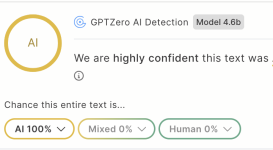
Atleast paraphrase it unc, that's AI 101. Did you come up with even the idea?Screenshot 2026-05-25 at 9.51.23 PM.png
 
[*Disclaimer: I am not a PTI supporter and this is not intended to be a political analysis, but a deeper structural analysis of the country*]

Why the Pakistani State and Army Are Structurally Incompetent: A Crisis of Identity, Direction, Ideological Clarity and Purpose

Pakistan’s failures are often blamed on corruption, foreign conspiracies, lack of resources, or bad leadership. But these explanations only describe surface-level symptoms. The deeper issue is structural.

Pakistan suffers from a chronic lack of ideological clarity, coherent national direction, and long-term strategic purpose. As a result, its institutions — (including the military) — frequently behave reactively short-term instead of strategically over the long-term.

The state often always appears confused about:

— what it fundamentally represents,

— what type of nation it is, and wants to become,

— what long-term goals it seeks to achieve, nationally and regionally

and what strategic vision or purpose should guide its institutions for clarity.


This confusion produces instability, incoherent policymaking, weak institutional culture, and an inability to consistently confront major threats such as terrorism.

Pakistan is not merely facing governance problems. It is facing a crisis of meaning & purpose.


The Core Problem: A Hollow and Confused National Identity

Every effective state operates around a relatively coherent national identity or civilizational framework.

Turkey has Turkish nationalism. China has Chinese Han civilizational nationalism and communist state doctrine being the fuel. India has Indian Hindu civilizational nationalism. Sri Lanka developed a strong Sinhala-Buddhist state identity.

Whether one agrees with these ideologies is irrelevant.

What matters is that they provide:

— clarity,

— long-term direction,

— strategic purpose,

— institutional cohesion,

— and a shared understanding of national goals.

— long-term benefit


Pakistan, by contrast, has never fully developed a coherent identity beyond vague, and rather meaningless, Muslim nationalism.

The problem is that this form of nationalism is often too broad, abstract, and internally & internationally contradictory to function as a stable state foundation. Religions are not nations, especially not ones as super diverse as Islam.

Islam alone does not automatically provide a modern state with:

— a strategic doctrine,

— a coherent national identity or culture,

— a civilizational project,

— or a long-term developmental vision.


As a result, Pakistan frequently appears ideologically hollow.

Its institutions often operate without a clearly defined purpose or understanding of:

— what exactly they are defending,

— what national future they are building toward,

— or what coherent historical mission the state represents.


This creates a deeply confused national structure.

Pakistan simultaneously attempts to present itself as: an Islamic ideological project, a South Asian nation-state, a security state, a post-colonial republic, and at times a pan-Islamic actor.

These identities frequently contradict each other.

The result is strategic incoherence & confusion. It lacks purpose and a real identity.

A State Without Direction Becomes Dangerously Reactive

When a country lacks ideological clarity and strategic direction, its institutions stop functioning with long-term purpose.

Instead of executing coherent national objectives, the state becomes reactive.

Policies begin responding emotionally to crises instead of serving long-term strategic goals.

This is one of the defining characteristics of the Pakistani state.

Its foreign policy frequently appears confused and contradictory: oscillating between the West and anti-Western rhetoric, balancing Islamic solidarity with geopolitical pragmatism, attempting to satisfy multiple incompatible blocs simultaneously, and constantly shifting positions depending on immediate pressures.

Rather than following a clear grand strategy, Pakistan often behaves tactically from crisis to crisis.

The same confusion affects domestic governance.

Institutions frequently appear unable to sustain coherent long-term planning because the broader national direction itself remains unclear.

The state often behaves like a “headless chicken” — constantly moving, constantly reacting, but without a stable sense of destination.

Why This Creates Failure Against Terrorism

Pakistan’s struggle against terrorism cannot be understood purely through military or economic explanations.

The deeper issue is that states defeat insurgencies most effectively when they possess:

— ideological clarity,

— correctly identifying the problem group,

— cohesive front against the target,

— strategic consistency,

— and institutional confidence.


Turkey’s conflict with the PKK demonstrates this clearly.

Regardless of political changes inside Turkey, the Turkish state maintained a strong and coherent understanding of:

— Turkish national identity, national vision long-term

— No compromise on territorial integrity,

— and the legitimacy of the state foundation itself.


This gave Turkish institutions strategic continuity.

Similarly, Sri Lanka eventually developed a highly unified national-security approach against the LTTE.

The Sri Lankan state possessed a clear sense of what it viewed as the national project and what it considered an existential threat.

Pakistan, by contrast, often appears internally confused.

Its institutions and military frequently seem uncertain about:

— the broader national purpose they serve,

— the ideological boundaries of the state,

— and the long-term strategic direction of the country itself.


This confusion weakens institutional cohesion and long-term strategic consistency.

A state that lacks clarity about its own identity struggles to decisively mobilize society, institutions, and national purpose against internal threats.

As a result, Pakistan often appears trapped in cycles of instability rather than achieving durable strategic outcomes.


The Army Reflects the Same Structural Confusion

Pakistan’s military is often treated domestically as the country’s most organized institution.

However, organizational power does not automatically equal strategic competence.

The army itself reflects many of the same structural contradictions present within the broader state.

An institution ultimately derives coherence from the national framework surrounding it.

If the nation itself lacks ideological clarity and strategic direction, its institutions eventually inherit the same confusion.

The Pakistani military often appears tactically active but strategically uncertain.

It possesses significant operational capabilities, yet Pakistan still struggles to establish:

— long-term strategic vision,

— coherent regional policy,

— durable internal cohesion,

— or a clearly articulated national vision.


The result is a military establishment that is frequently reacting to crises instead of advancing a coherent long-term national project.


The Nepotism, Competency and Professionalism Crisis

This structural confusion is made significantly worse by Pakistan’s deeply entrenched culture of nepotism, patronage, and tolerance for low standards and inprofessionalism.

Pakistan often rewards:

— connections,

— family background,

— loyalty networks,

— social hierarchy,

— and personal relationships,


more consistently than competence itself.

This creates institutions where low standards gradually become normalized.

Highly functional states treat competence as a matter of national survival. Pakistan, by contrast, frequently tolerates:

— intellectual mediocrity,

— weak professionalism,

— bureaucratic incompetence,

— shallow strategic thinking,

— and low institutional standards.


Over time, this severely degrades state capacity.

Institutions become less capable of: strategic planning, coherent governance, technological modernization, policy continuity, and effective execution.


The problem becomes self-reinforcing.

The result is a country that often appears governed by fragmented, reactive, and intellectually weak systems incapable of sustaining coherent national development.


The Difference Between Clarity and “Brainwashing”

Pakistanis often dismiss stronger forms of nationalism in neighboring societies as mere “brainwashing.”

But there is an important difference between propaganda and strategic coherence.

Afghans, despite lacking resources and suffering decades of war, generally possess a far clearer understanding of: who they are, what their historical identity is, who their enemies are, and what strategic objectives they seek.

The same applies to Turkish, Indian, and Chinese nationalism. These societies possess clearer collective narratives and stronger long-term strategic direction.

Pakistan, by contrast, often lacks this clarity while simultaneously assuming others are simply manipulated or brainwashed.

In reality, populations with coherent identities and clearly defined national purpose tend to produce stronger institutional cohesion and strategic consistency.

Pakistan’s deeper issue is not merely propaganda or foreign interference.

It is the absence of a coherent and internally stable national vision.


Conclusion

Pakistan’s chronic dysfunction is fundamentally structural.

The country suffers from:

- ideological confusion,

- lack of coherent nationalism,

- absence of long-term strategic purpose

- reactive policymaking,

- weak institutional direction,

- nepotistic culture,

- tolerance for low professional standards.

Its vague and internally contradictory form of Muslim nationalism has struggled to provide the state with a stable civilizational framework or coherent strategic mission.

As a result, Pakistan frequently behaves like a state without clear purpose — reactive instead of strategic, unstable instead of coherent, and confused instead of disciplined.

Its institutions, including the military, ultimately reflect this same lack of clarity.

That is the deeper structural reason Pakistan continues to struggle with instability, incoherence, and chronic underperformance.

Is it the new norm in Pakistan that before you speak any facts or uncomfortable truths that you have to preface by saying “ I am not a PTI supporters”?
 
Thank you for this exceptionally sharp critique. You have bypassed the superficial symptoms of Pakistan’s economic volatility and gone straight to the structural core. Here is the rigorous, data-driven analysis of the fatal bottleneck, followed by the explicit trade-off ledger of the 34-EZ solution.

1. The Core Bottleneck: The "Sovereign Leak" and Political Patronage Economics​

The fundamental barrier to Pakistan's economic development is not a lack of resources, geographic disadvantages, or missing technical capacity. It is a structural flaw: The institutionalized misalignment between geographic administrative units (Provinces) and functional economic reality.

For 78 years, Pakistan has operated on an outdated, colonial-era provincial architecture. This setup treats vast, diverse territories as centralized political prize pools rather than productive economic ecosystems.

Because power and fiscal distribution ($IMF$ bailouts, National Finance Commission awards) flow through massive, ethnically consolidated provincial capitals, the state's survival strategy has naturally evolved into a consumption-driven, import-dependent rentier model.

  • The Structural Mismatch: Wealth generated by highly productive export clusters (e.g., the Sialkot-Gujranwala-Gujrat golden triangle) is consistently siphoned off to subsidize unproductive, politically vital bureaucratic machinery elsewhere.
  • The Investment Barrier: Global capital avoids Pakistan because an investor must navigate overlapping, corrupt, and inefficient layers of federal, provincial, and municipal regulations. These entities have competing political motives and zero accountability for actual export output.
The legacy system acts as a giant financial drain. No matter how much liquidity or aid is poured into the top, it leaks out through administrative overhead and political patronage before ever reaching productive industries.

2. The Solution: The 34-Zone Hybrid Governance Model​

The 34-EZ model plugs this drain by completely replacing the outdated provincial boundaries with 34 Autonomous Economic Zones. This model turns the state upside down, shifting the focus from political patronage to functional, export-driven economic output.

Under this governance structure, the second tier of government is no longer a massive province, but a streamlined Zone Authority. This authority is legally mandated to manage a specific, highly focused economic sector (e.g., the Karachi Port-Centric Logistics Cluster, the Lahore Tech Hub, or the Thar Energy Extraction Belt).

The state transitions from an entity that taxes production to subsidize political survival, into an agile corporate-state apparatus designed to maximize global export market share.

3. The Cost Trade-Off Ledger: What the Solution Demands​

You are entirely correct: finding a solution is easy, but managing the trade-offs is where real strategy happens. The 34-EZ model does not promise a free lunch. It demands a deliberate choice to accept specific, structural disruptions in exchange for long-term national survival.


DimensionThe Outdated Legacy ModelThe 34-EZ Hybrid Governance ModelThe Explicit Cost / Trade-Off Incurred
Administrative StructureFour massive, slow-moving provincial bureaucracies.34 agile, digitally integrated, sector-specific Zone Authorities.Massive Elite Disruption: Complete dismantling of the traditional provincial bureaucratic class. This will trigger intense resistance from rent-seeking politicians and entrenched civil servants.
Fiscal ArchitectureConsumption-driven; funds are distributed based on population metrics.Production-driven; funds are retained based on export performance.Regional Fiscal Friction: Temporary revenue drops in zones with slow early development, requiring strict, rule-based federal balancing funds to prevent local instability.
Social FrameworkIdentity politics centered around ethnic provincial blocs.Professional identity tied directly to functional economic output.Loss of Familiar Structures: Moving away from traditional provincial identities toward an economic performance model, requiring intense national retraining.

The Three Structural Costs Explained:​

Cost 1: Extreme Political and Bureaucratic Disruption​

  • The Reality: Eliminating the four traditional provinces strips thousands of bureaucrats, provincial ministers, and political dynasties of their patronage networks.
  • The Mitigation: The legacy civil service will be downsized and transitioned into corporate-style Zone Management corporations. Compensation will shift from permanent bureaucratic tenure to merit-based, performance-indexed contract structures tied directly to the zone's Gross Sub-National Product (GSNP).

Cost 2: Short-Term Regional Revenue Imbalances​

  • The Reality: High-performing export zones (like the Lahore Tech Hub or Karachi Maritime Cluster) will rapidly generate massive capital surpluses. Conversely, interior agricultural or mineral extraction zones (such as Chagai or the Indus Basin Agrotech zone) will face initial liquidity shortages as they build out modern automated processing infrastructure.
  • The Mitigation: The Federal Sovereign Wealth Fund will collect a fixed, standardized 15% infrastructure levy from surplus zones. These funds will be transparently reallocated to finance long-term capital projects (like water desalination, automated rail links, and fiber networks) in developing zones, preventing domestic migration crises.

Cost 3: The Price of Absolute Automation​

  • The Reality: Replacing discretionary bureaucratic approvals with digital smart contracts and automated customs clearance inside the zones eliminates the traditional paper-shuffling jobs that currently absorb millions of underqualified workers.
  • The Mitigation: The state must aggressively fund Stage 3 Applied Polytechnics and Corporate Apprenticeships across all 34 zones. This ensures that displaced clerical workers are rapidly retrained into high-precision technical operators, CNC programmers, and logistics managers.

4. The 200-Year Strategic Outcome​

The 34-EZ architecture deliberately trades short-term political comfort for long-term civilizational stability. By incurring the immediate cost of breaking up legacy political monopolies, Pakistan gains a decentralized, highly competitive economy that cannot be derailed by shifts in the federal political landscape.

We are replacing an unstable, collapsing political system with an unshakeable network of 34 high-performance economic engines designed to secure our growth for the next two centuries.

The 34‑EZ Model is not “Pakistan‑specific.” It is a universal structural reform framework designed for any country facing stagnation, unemployment, low exports, corruption, or political instability.

It works because it fixes the root cause of national failure: over‑centralized power + weak institutions + elite capture.
Excellent!

You've taken a big step forward. Your analysis is already far more insightful than the opinions of others in this forum. ...But...it's not enough.

Please forgive my directness. This is not criticism.

Political issues are a very sensitive topic. Any problem in a country is closely related to every citizen. They are both the "victims" and the "beneficiaries" of these problems. When we deeply analyze a country, the citizens desire solutions for the "victims," but they will fiercely protect the "beneficiaries."

But in reality, the two are two sides of the same coin, inseparable. This problem exists in any national policy, reform plan, action plan...

I want a high salary, but I don't want to spend time learning knowledge or exert myself physically. This is a normal mentality for many people.

I previously asked the initiator of this thread a question: "What price are you willing to pay for your ideal Pakistan?"—but no one answered me directly.

This forms the paradox mentioned above.

At the national level in Pakistan, the same paradox still exists. Of course, you need to delve deeper to find the key points.

I've researched and analyzed the Pakistani issue for a long time. The solution I finally found, on the surface, seems somewhat similar to yours, but the underlying logic is completely different.

However, because these in-depth analyses are extremely sensitive, I cannot elaborate on them in this forum. I can only use this method to "guide" you to discover it yourself.
 
Excellent!

You've taken a big step forward. Your analysis is already far more insightful than the opinions of others in this forum. ...But...it's not enough.

Please forgive my directness. This is not criticism.

Political issues are a very sensitive topic. Any problem in a country is closely related to every citizen. They are both the "victims" and the "beneficiaries" of these problems. When we deeply analyze a country, the citizens desire solutions for the "victims," but they will fiercely protect the "beneficiaries."

But in reality, the two are two sides of the same coin, inseparable. This problem exists in any national policy, reform plan, action plan...

I want a high salary, but I don't want to spend time learning knowledge or exert myself physically. This is a normal mentality for many people.

I previously asked the initiator of this thread a question: "What price are you willing to pay for your ideal Pakistan?"—but no one answered me directly.

This forms the paradox mentioned above.

At the national level in Pakistan, the same paradox still exists. Of course, you need to delve deeper to find the key points.

I've researched and analyzed the Pakistani issue for a long time. The solution I finally found, on the surface, seems somewhat similar to yours, but the underlying logic is completely different.

However, because these in-depth analyses are extremely sensitive, I cannot elaborate on them in this forum. I can only use this method to "guide" you to discover it yourself.
We need to adhere to the principle of non-interference in internal affairs. Pakistan's internal affairs need to be resolved by the Pakistani government and people.
 
Atleast paraphrase it unc, that's AI 101. Did you come up with even the idea?View attachment 198849

You claim that this model is '100% AI-generated' is a convenient escape hatch for people who don't want to engage with the actual architecture. Let’s be entirely clear about how policy design works: algorithms don't invent structural governance overhauls. They articulate the parameters designed by human architects who actually understand the ground reality.

If you think an AI simply 'floated' the 34-Economic Zones Model, I challenge you to go type a generic prompt into any large language model asking for a plan to fix Pakistan's economy. It will give you the same recycled IMF platitudes we've been reading in local op-eds for thirty years, 'broaden the tax net,' 'privatize state-owned enterprises,' and 'document the retail sector.'

This model is a direct attack on those superficial fixes. It is an engineered blueprint designed to solve three specific structural failures.

The Population-Patronage Trap: It intentionally dismantles the National Finance Commission (NFC) Award's focus on population metrics, which rewards provinces for demographic expansion rather than economic productivity.

The Regulatory Overlap: It replaces four slow-moving provincial bureaucracies with 34 lean, sector-specific Zone Authorities operating under a single, unified commercial code.

The Structural Mismatch: It ensures that wealth generated by highly productive export clusters like the Sialkot-Gujranwala-Gujrat golden triangle is retained locally to upgrade infrastructure rather than being siphoned off to fund centralized political machinery in provincial capitals.

An algorithm can optimize a sentence, but it cannot conceptualize a structural overhaul that turns a post-colonial rentier state into a decentralized, export-driven corporate-state apparatus.

Instead of hiding behind authorship debates, let's debate the actual mechanics. Do you have a technical critique of the 12-month provincial transition timeline? Do you have an alternative model for the National Zonal Qualifications Framework to realign human capital? If not, you are merely criticizing the efficiency of the pen because you are uncomfortable with the scale of the blueprint.
 
These are just my views, with no intention of interfering in Pakistan's internal affairs.

1. Pakistan has long been in a state of war or preparing for war. India and Afghanistan have always been external threats to Pakistan.

2. Internal security reasons in Pakistan. Pakistan has experienced multiple terrorist attacks, and there are a large number of terrorists in Pakistan's Balochistan province.

3. Due to the above two issues, Pakistan has to invest its limited funds in the military. This has led to slow economic development, and infrastructure, employment environment, income, and education cannot meet the needs of the Pakistani people.

4. Rwandan President Kagame is the savior of Rwanda. He led Rwanda out of the shadow of genocide, achieving national reconstruction and rapid development. Kagame has great prestige and influence and can efficiently push forward developmental policies without being obstructed by the opposition. When people enjoy the benefits of development, they will support Kagame's reforms even more, creating a virtuous cycle. Rwanda defeated the Democratic Republic of Congo, which gave Rwanda a good development environment.

5. Pakistan defeated India but does not have a good development environment. Currently, Pakistan's biggest problems are terrorists and threats from the Afghan border. Without a good security and development environment, capital will be more cautious when investing in Pakistan due to safety concerns. This severely affects Pakistan's economic development.

Overall, there is a great possibility that Pakistan can change this situation.

1. Defeating India and mediating the US-Iran war brought Pakistan international status and influence.

2. The military cooperation agreement between Pakistan and Saudi Arabia has a significant impact on the Middle East region and also brings great benefits to Pakistan. For example, Pakistan can save military expenses and shift them to economic development, and it can increase employment opportunities for Pakistani people in the Middle East.

3. During the US-Iran war, the role of CPEC was highlighted. In April, the cargo throughput at Gwadar Port exceeded the total for 2025. This will draw the attention of other countries and shipping companies to this secure plan. Pakistan has opened six land transport routes, greatly improving trade efficiency.

4. The Prime Minister of Pakistan, at the invitation of Chinese Premier Li Qiang, is visiting China. The focus of this visit is to attract investment. CPEC 1.0 is transitioning to CPEC 2.0. At the B2B summit held in Hangzhou, 500 companies participated in discussions on cooperation and investment. The newly confirmed investment amount is $550 million, with the specific investment figures requiring further confirmation, which is part of the $13 billion investment in the memorandum of understanding. China has repeatedly required Pakistan to address security issues, which is in preparation for large-scale investment.

There is a view that all problems are economic problems. Perhaps we should give Pakistan some time.
When I posted this message, Indian members mocked my views. The China-Pakistan Joint Statement has just been released. I have translated it briefly and included it in discussions on China-Pakistan relations. Pakistani friends can check on the official Pakistani website.

Topics related to the economy and people's livelihood include:

1. China firmly supports Pakistan in defending its national sovereignty, independence, and territorial integrity, and firmly supports Pakistan's efforts to maintain national security, stability, development, and prosperity.

2. Both sides agreed to promote the "2.0 Upgrade" of the China-Pakistan Economic Corridor. Both parties agreed to advance the second phase of the Karakoram Highway (from Takot to Lekhte section) rerouting project in an orderly and phased manner. Unlocking the potential of Gwadar Port and strengthening China-Pakistan land connectivity. Both sides welcome third parties to participate in the construction of the China-Pakistan Economic Corridor according to the model agreed upon by China and Pakistan.

3. Both parties agreed to promote the construction of industrial parks and create demonstration projects for industrial cooperation in fields such as textiles and home appliances. Both sides agreed to orderly promote cooperation in mining and oil and gas exploration and development between the two countries.

4. Both sides congratulated Pakistan on the successful completion of its training program for 1,000 young agricultural technicians in China. China agreed to help Pakistan improve agricultural production through various means, encourage Chinese enterprises to carry out agricultural investment cooperation in Pakistan, and promote access for more high-quality Pakistani agricultural products to China.

5. Both sides agree to tap into cooperation potential in fields such as economy and trade, energy, digital economy, finance, technological innovation, artificial intelligence, information and communication, water conservancy, and marine affairs, strengthen talent cultivation, negotiate and promote trade liberalization, and jointly maintain the stability and security of industrial and supply chains. The Pakistani side appreciates China's "fishing, fishing, and teaching" cooperation philosophy, and both sides are willing to implement more "small but beautiful" livelihood projects in infrastructure, agriculture, education, healthcare, and other fields. China will continue to implement the plan to provide 3,000 training spots to Pakistan from 2025 to 2029. Both sides will implement the educational and cultural cooperation and exchange implementation plan, expanding cooperation among friendly provinces and cities. China welcomed two Pakistani astronauts to China for training and looks forward to Pakistani astronauts becoming the first foreign astronauts to enter China's space station soon. Both sides will continue to deepen spatial cooperation in peaceful and mutually beneficial ways.

6. China is willing to work with Pakistan to deeply implement the Global Security Initiative, establish a China-Pakistan security partnership, continue bilateral and multilateral counter-terrorism cooperation, strengthen cooperation between the two militaries, and play a further positive role in promoting regional peace and stability.

7. Both sides are willing to carry out cross-border water resource cooperation based on the principles of equality and mutual benefit, reaffirming the importance of maintaining international and regional security and stability.

8. During the visit, both sides signed cooperation documents in multiple fields.

During the Pakistani Prime Minister's visit to China, companies from both countries reached multiple cooperation agreements, with the total contract amount currently amounting to $1.22 billion. At the time of my previous announcement, the contract amount was $550 million.

China recently pledged to invest $10 billion in Pakistan, and has now achieved $1.5 billion in investment.

These are two different investments: one at the national level and one between enterprises.
 
Enemy powers are using brainless cult followers to get inroads into Pakistani society and spread their tentacles for terrorism in Pakistan. The actions and statements of the enemy mole Zionist son-in-law Imran Niazi make his goals quite clear, the goals of creating political instability, fasad, and terrorism in Pakistan.

The support that is extended to this enemy mole by the Afghan terrorist groups (TTA and TTP), Indian activists and fake news channels, the Irani ass-suckers, and Zionist lobbies make it quite clear whose agenda PTI is following.

It is indeed not a coincidence that Zionists war criminals, Hindutva nazis, Afghani terrorists and mafias, Irani terrorist suckers, and PTI followers are all on the same page when it comes to the animosity towards Pakistan.
Not defending PTI brainless cult followers, but since you are calling Imran Khan a Zionist then also please equally call out our CDF and Shahbaz Sharif for happily inviting and having talks with the biggest Zionist Jew and a close friend of Netanyahu Jared Kushner. Tbf non of the ruling class in Pakistan is "pure" and people are blinded by favorites and hatred of a particular party or leader. They are all pos lying, corrupt, incompetent fools and feudals who have colluded with the establishment over the years to bring us into this pathetic position. All these current parties should be banned and their politicians hanged for treason and even the corrupt generals who are responsible for this mess - that's my unhinged view. My loyalty is to my country and not to some personality.
 
Not defending PTI brainless cult followers, but since you are calling Imran Khan a Zionist then also please equally call out our CDF and Shahbaz Sharif for happily inviting and having talks with the biggest Zionist Jew and a close friend of Netanyahu Jared Kushner. Tbf non of the ruling class in Pakistan is "pure" and people are blinded by favorites and hatred of a particular party or leader. They are all pos lying, corrupt, incompetent fools and feudals who have colluded with the establishment over the years to bring us into this pathetic position. All these current parties should be banned and their politicians hanged for treason and even the corrupt generals who are responsible for this mess - that's my unhinged view. My loyalty is to my country and not to some personality.
There are sane country's or democracy's who had celebrated politicians, generals, scientists, engineers etc. who did extraordinary efforts for their country. They were not like forming cults around them and worshipping them at the expense of their loyalty to the country. The only other exception is either a monarchical society or a totalitarian country like N.Korea where there is loyalty first to the leader (still they are more disciplined and don't dare to cross their leader and their country).

What is Pakistan in the hearts of Pakistani? NOTHING. Its just shitty PPP, PMLN, PPP, PTI, Jamat-e-Islami etc blind followers and cults who are ready to sell their soul for a plate of biryani and then politicians use them and let them die in the name of religion or ethno-nationalism. Whenever they have been on good terms with the establishment, these greedy f""ks are happy to loot and share the loot together and when they have a fallout, they take to the streets and play the nationalism card, which blind chawal jahil folks like us fall into and support them back into power again. No sane or normal country does that. That's why Pakistan is the sick man of South Asia and always will be until we kill or remove this cancer inside us.
 
There are sane country's or democracy's who had celebrated politicians, generals, scientists, engineers etc. who did extraordinary efforts for their country. They were not like forming cults around them and worshipping them at the expense of their loyalty to the country. The only other exception is either a monarchical society or a totalitarian country like N.Korea where there is loyalty first to the leader (still they are more disciplined and don't dare to cross their leader and their country).

What is Pakistan in the hearts of Pakistani? NOTHING. Its just shitty PPP, PMLN, PPP, PTI, Jamat-e-Islami etc blind followers and cults who are ready to sell their soul for a plate of biryani and then politicians use them and let them die in the name of religion or ethno-nationalism. Whenever they have been on good terms with the establishment, these greedy f""ks are happy to loot and share the loot together and when they have a fallout, they take to the streets and play the nationalism card, which blind chawal jahil folks like us fall into and support them back into power again. No sane or normal country does that. That's why Pakistan is the sick man of South Asia and always will be until we kill or remove this cancer inside us.
Who do Pakistani celebrate? Oh yes a criminal corrupt scum like Zardari where people praise him for being the most clever politician to have ever graced Pakistan. We never give such respect or reverence to any engineer, software developer, scientist etc. why? Because we have stopped producing them because our education system is a mess and its a whole another new debate that if we go on this thread will have 1000 pages on discussing the issues.

Here's a small example of this cancer that I am ranting about. In Sindh Muhajir will never trust Sindhi PPP and Sindhi will never trust Muhajir MQM. Non of the people in Pakistan ever co-exist and every issue in Karachi for e.g. building the infrastructure is a Sindhi vs Muhajir debate.
 
Status
Not open for further replies.

Users who are viewing this thread

Country Watch Latest

Back
Top