Afghanistan's economy Updates

Afghan, Iranian officials discuss enhanced transport cooperation​


by The Frontier Post

trrdd-1024x576-1-810x456.jpg


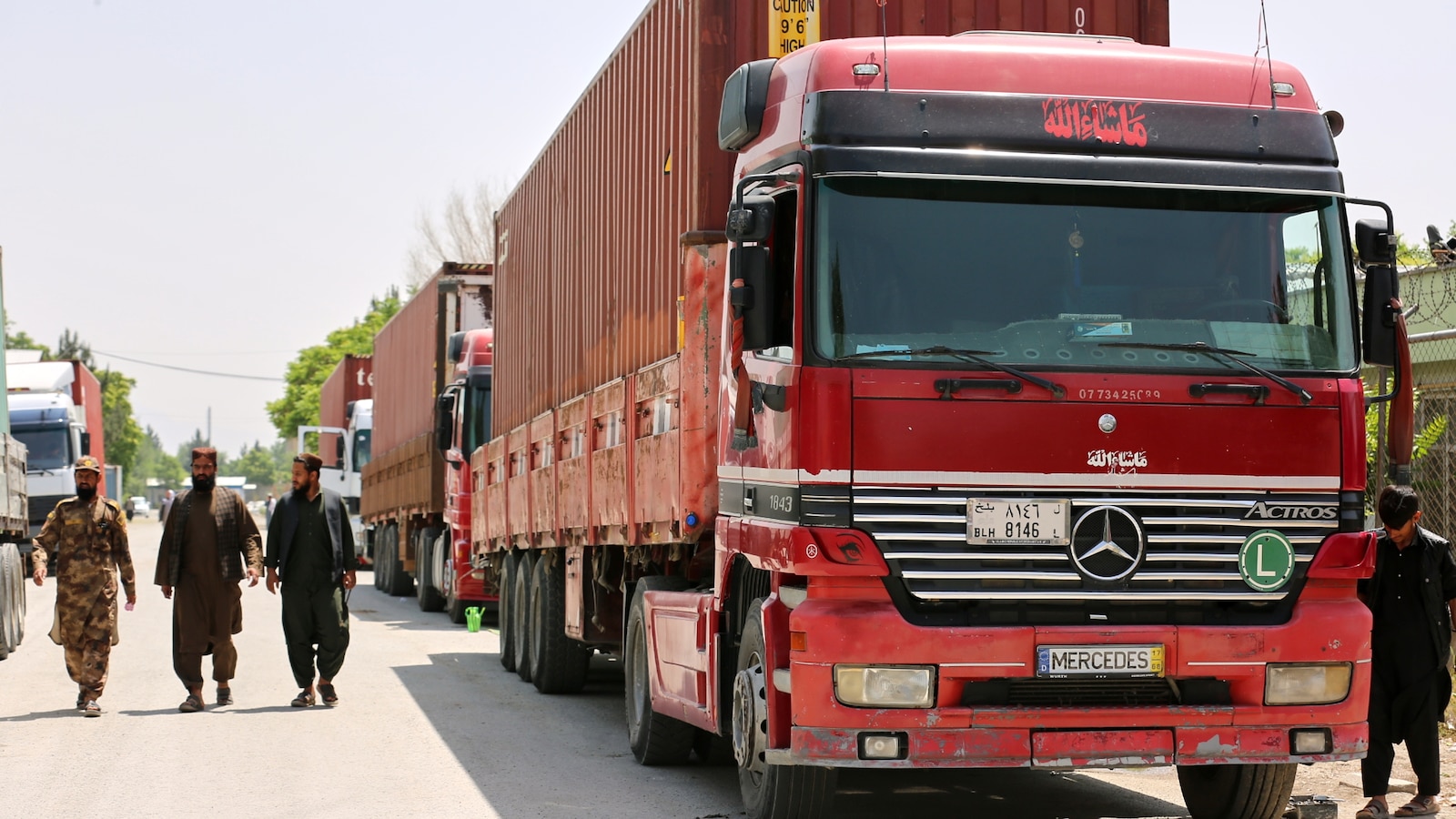
FARAH CITY (Pajhwok): Governor of western Farah province, Mullah Mohammad Hafiz Mujahid and officials from Iran’s South Khorasan province have discussed a range of issues, including strengthening transport cooperation at the Sheikh Abu Nasr Farahi border crossing.

Mujahid, accompanied by provincial transport director Mawlawi Syed Ahmad Sajid and a delegation, met South Khorasan officials at the border crossing on Friday, according to his spokesman, Mawlawi Abdul Malik Osama.

He said the two sides discussed expanding joint cooperation, facilitating movement across the border, removing existing obstacles in the transportation of commercial goods, and providing greater facilities for traders and cargo vehicles.

The officials also described stronger transit and trade relations between the two countries as important and stressed continued coordination to improve the transfer of commercial goods and create more facilities for traders.
 

Afghan, Russian officials discuss strengthening economic, trade ties​


by The Frontier Post

8e4a82cd-5c7b-4022-9e91-2d09e609733e-1024x576-1-810x456.jpg


KABUL (Pajhwok): Afghan Minister of Higher Education Sheikh Neda Mohammad Nadeem and Russian Deputy Prime Minister Alexey Logvinovich Overchuk have discussed ways to strengthen economic and trade ties between Kabul and Moscow.

Nadeem, along with an accompanying delegation, met Overchuk on the sidelines of the 17th International Economic Forum, “Russia and the Islamic World,” held in Kazan, the capital of Tatarstan, according to a statement from the Ministry of Higher Education (MoHE).

During the meeting, the higher education minister emphasised the importance of continued relations between the Islamic Emirate of Afghanistan (IEA) and Russia, saying both sides should work to expand direct trade links without intermediaries.

Minister of Commerce and Industry Nooruddin Azizi also underlined the need to sustain economic and trade relations with Russia, adding that serious attention should be given to preventing efforts by certain groups seeking to undermine ties between the two countries.

For his part, the Russian deputy prime minister expressed hope that economic and trade cooperation between the IEA and Russia would further expand, adding that such meetings could positively contribute to the economic affairs of both countries.

The statement added that both sides also discussed strengthening the bilateral economic and trade commission and stressed continued cooperation on related matters.
 

China restricts export of chemical substances to Afghanistan​


by The Frontier Post

China-810x486.png


KABUL (Ariana News): China’s Ministry of Commerce has imposed restrictions on the export of certain chemicals to several countries, including Afghanistan, in an effort to prevent the production of narcotics.

The ministry said China has placed under control the export of a number of chemicals that can be used in the manufacture of narcotic drugs to six countries, including Afghanistan.

According to the ministry, the decision was made in coordination with various government bodies, including security forces, customs authorities, and drug regulatory agencies.

The move is aimed at “improving oversight of the export of chemicals that can be used in the production of narcotics,” the ministry stated.

Khan Jan Alokozay, a member of the Chamber of Commerce and Investment, said: “Some of these materials are used in our factories, and discussions should be held with the Chinese side to ensure their supply remains secure and is not blocked for us.”

Meanwhile, the Union of Pharmaceutical Manufacturers in Afghanistan said that medicines contain chemical substances, but the more responsibly these chemicals are imported, the more beneficial they will be for the country and its citizens. The union described China’s decision as reasonable and stressed that traders should also act responsibly in this regard.

Ahmad Saeed Shams, head of the Union of Pharmaceutical Manufacturers, said: “The export of these chemical substances should be controlled, and we also support this decision.”

According to the report, the list of substances subject to these restrictions for Afghanistan, Laos, and Myanmar includes 41 chemical items.

These substances include compounds such as ammonium chloride, barium sulfate, and palladium chloride. In contrast, a separate list containing 16 types of chemical substances has been designated for the United States, Canada, and Mexico.

China’s Ministry of Commerce added that once the decision takes effect, exporters of these substances to the mentioned countries will be required to obtain special permits.

However, the restrictions do not apply to other countries and regions
 
After border crossings with Pakistan were closed, Afghanistan shifted much of its trade through Bandar Abbas Port of Iran, but disruption in the Strait of Hormuz has now severely affected trade and aid deliveries.

According to Associated Press, Afghans had increasingly turned to Iranian routes as an alternative to Pakistan’s Karachi Port.

Goods were being transported through Bandar Abbas, but the port lies along the Strait of Hormuz, where conflict has stranded hundreds of ships and thousands of crew members.

At the same time, thousands of containers bound for Afghanistan remain stuck in Pakistan.

The situation has been described as highly damaging for both Afghan trade and humanitarian operations.

The World Food Programme says transport costs have risen sharply, and aid delivery routes have become severely restricted.

Its operations in Afghanistan include distributing life-saving nutritional supplements for malnourished mothers and children, as well as fortified biscuits for school pupils.

The agency said it previously sourced most specialised food supplies for malnutrition treatment from Pakistan.

After Pakistan closed the border in October 2025, shipments began moving by sea through Dubai and Iran.

That route has now effectively collapsed as Tehran controls the Strait of Hormuz while the United States has imposed pressure around Iranian ports.

According to the report, stocks of nutritional supplements gradually declined and were exhausted by mid-April.

John Aylieff, the head of the World Food Programme in Afghanistan, warned that this was the highest surge in malnutrition ever recorded in the country, saying: "The lives of 4 million children are hanging in the balance." He said the organisation was now forced to turn away three out of every four acutely malnourished children "because we simply don't have the money".

Even before the latest crisis, the World Food Programme was already facing funding shortages and has received only eight percent of its annual budget this year.

After the Iran conflict began in late February, one shipment of fortified biscuits belonging to the WFP became stranded in the United Arab Emirates.

Instead of travelling from Dubai through Iran into Afghanistan, the shipment is now being rerouted through Saudi Arabia, Jordan, Syria, Turkiye, Georgia, Azerbaijan, the Caspian Sea and Turkmenistan.

The World Food Programme said the shipment has already spent three months in transit.

Lutfullah Akbari, who owns a small construction equipment company in Kabul, said his goods from China are stuck on ships unable to pass through the Strait of Hormuz.

He said transport companies had sharply increased prices and that he no longer had the financial means to continue his business in Kabul.

He said If this waterway does not reopen soon, I may have to abandon the shipment.

Akbari added, the Iran-US war has had a huge impact on my business.

He said some traders had switched to Central Asian routes, but these are longer and far more expensive.

“The shipping company now wants more money than the value of the goods and the investment we made. We cannot afford it,” he said.

“Even if I bring the goods here, I will be forced to sell them at a loss. I cannot afford to lose money twice.”

Gul Mir Amini, who works for Ettifaq Bamiyan International Transport and Trade Company, said the Iran conflict had dramatically increased costs.

Part of the cargo transported by the company consists of humanitarian aid.

According to him, before the conflict, transporting one container cost between 3,000 and 3,600 dollars, but prices have now exceeded 7,000 dollars and, for some goods, more than 11,000 dollars.

“The impact has reached all traders,” he said.

Mohammad Murtaza Ishaqzai, a seller of electrical goods in Kabul, said importing goods from China through Iran previously cost between 1,100 and 1,500 dollars but now exceeds 15,000 dollars.

“We can neither export nor import,” he said.

Eshaqzai urged the Taliban to resolve their dispute with Pakistan so that border trade can resume.

“If this situation continues, our business will collapse,” he warned.

Abdul Salam Jawad, spokesperson for the Taliban's Ministry of Industry and Commerce, said overall price increases in Afghanistan remain limited at around three per cent.

He attributed this to continued trade with Iran and imports from Central Asia, Russia and China.

“The main problem we faced was restrictions on imported goods and our containers coming through Iran from other countries,” he said.

According to Jawad, the Taliban are waiting for a solution regarding the Strait of Hormuz so that exports can resume normally.

Khan Jan Alokozai, a senior adviser at the Afghanistan Chamber of Commerce and Investment, said more than 60 percent of Afghanistan’s trade now passes through Central Asia, reducing the overall impact of the Iran conflict.

He said food and fuel imports arrive from Central Asia and Russia, while much of Afghanistan’s trade now passes through Turkiye.

Goods are then transported onwards by rail through Iran or Azerbaijan.
 
Medicine Shortages In Afghanistan Worsen After Imports From Pakistan Halted

Patients, pharmacists and health workers in Kandahar say medicine prices have risen sharply after border closures and the Taliban’s ban on pharmaceutical imports from Pakistan, leaving some essential medicines scarce or entirely unavailable.

Residents of Kandahar told Afghanistan International on Friday, May 29, that following the suspension of trade and transit, particularly the Taliban’s ban on importing Pakistani medicines, the pharmaceutical market in the province had been severely affected.

They said that although medicines were previously widely available, prices have now surged while the quality of available drugs has declined.

Several pharmacists in Kandahar city said that after trade with Pakistan was halted, medicine imports dropped significantly and many traders were forced to smuggle pharmaceuticals into the country through unofficial routes.

One pharmacist in Kandahar, who asked not to be named, told Afghanistan International: “Previously, most medicines were imported regularly from Pakistan. But now the routes are closed, taxes have increased and imports have fallen. Some medicines cannot be found at all, and if they are available, their prices have multiplied.”

He added that in recent months, medicines for colds, fever, infections, diabetes, blood pressure and children’s illnesses have become scarce. Panadol, Brufen, Augmentin, amoxicillin, insulin, blood pressure medicines, IV fluids, children’s antibiotic syrups, asthma inhalers and heart medications are among the drugs now difficult to obtain and significantly more expensive.

Some pharmacists said medicines that used to cost between 100 and 150 Afghanis before the import restrictions are now selling for between 300 and 400 Afghanis.

Aziz Ahmad, a resident of Kandahar, said the rise in medicine prices had created serious problems for ordinary people, especially as many families were already struggling financially because of the economic crisis.

Rahmatullah, a diabetic patient, said: “I used to buy insulin cheaply, but now it is difficult to find and much more expensive. Because of financial problems, rising prices and shortages, I sometimes cannot obtain all the medicines prescribed by the doctor. Usually, I only buy the most essential ones.”

Residents say children’s medicines have also become scarce. Families with financial means can still seek treatment for their children, but many others cannot afford it.

Several pharmaceutical traders and health sources said large quantities of Pakistani medicines have recently entered Afghanistan through smuggling routes since trade with Pakistan was suspended.

According to them, some of these medicines reached the market through illegal channels, while others were confiscated and burned by the Taliban.

Health officials warn that smuggled medicines are often substandard, improperly stored, close to expiry and generally of poor quality.

Healthcare services in Afghanistan were already under pressure due to economic difficulties, unemployment and falling household incomes, but the medicine crisis has further worsened the situation.

Munir Ahmad, a doctor in Kandahar, said: “When medicines are prescribed to patients, many cannot obtain what they need because of high prices and shortages.” He added that as a result, many patients fail to complete their treatment.

The doctor said patients with chronic illnesses such as diabetes, heart disease, high blood pressure and asthma have been affected the most.

Some residents and pharmacists say the authorities have so far failed to take serious practical measures to control medicine prices or address the shortages.

Following the ban on Pakistani medicine imports, Taliban officials entered talks with India, Iran and Uzbekistan to address the problem. Ministers for health and trade travelled to India and Iran to discuss pharmaceutical imports.

Health analysts say Afghanistan remains heavily dependent on imported medicines, and if trade problems with Pakistan continue, the pharmaceutical market will suffer even greater damage.

They stress that official medicine imports must be facilitated, effective price control mechanisms established, the entry of smuggled and low-quality medicines prevented, domestic pharmaceutical production supported and urgent measures taken to resolve the crisis.

 
Didn't the Afghans claim that Pakistani medicines are inferior? Why are the Taliban crying about shortages when partner India had promised to deliver quality medicines?
 
Last edited:
HOPEFULLY these malnourished kuffar afghandu terrorists will be too physically weak to commit terrorism against Pakistan INSHALLAH.

The most telling part of the above article is the part where it confirms that this year, was the highest malnutrition rate afghandustan has EVER recorded.
Stop with the takfir already
 
After border crossings with Pakistan were closed, Afghanistan shifted much of its trade through Bandar Abbas Port of Iran, but disruption in the Strait of Hormuz has now severely affected trade and aid deliveries.

According to Associated Press, Afghans had increasingly turned to Iranian routes as an alternative to Pakistan’s Karachi Port.

Goods were being transported through Bandar Abbas, but the port lies along the Strait of Hormuz, where conflict has stranded hundreds of ships and thousands of crew members.

At the same time, thousands of containers bound for Afghanistan remain stuck in Pakistan.

The situation has been described as highly damaging for both Afghan trade and humanitarian operations.

The World Food Programme says transport costs have risen sharply, and aid delivery routes have become severely restricted.

Its operations in Afghanistan include distributing life-saving nutritional supplements for malnourished mothers and children, as well as fortified biscuits for school pupils.

The agency said it previously sourced most specialised food supplies for malnutrition treatment from Pakistan.

After Pakistan closed the border in October 2025, shipments began moving by sea through Dubai and Iran.

That route has now effectively collapsed as Tehran controls the Strait of Hormuz while the United States has imposed pressure around Iranian ports.

According to the report, stocks of nutritional supplements gradually declined and were exhausted by mid-April.

John Aylieff, the head of the World Food Programme in Afghanistan, warned that this was the highest surge in malnutrition ever recorded in the country, saying: "The lives of 4 million children are hanging in the balance." He said the organisation was now forced to turn away three out of every four acutely malnourished children "because we simply don't have the money".

Even before the latest crisis, the World Food Programme was already facing funding shortages and has received only eight percent of its annual budget this year.

After the Iran conflict began in late February, one shipment of fortified biscuits belonging to the WFP became stranded in the United Arab Emirates.

Instead of travelling from Dubai through Iran into Afghanistan, the shipment is now being rerouted through Saudi Arabia, Jordan, Syria, Turkiye, Georgia, Azerbaijan, the Caspian Sea and Turkmenistan.

The World Food Programme said the shipment has already spent three months in transit.

Lutfullah Akbari, who owns a small construction equipment company in Kabul, said his goods from China are stuck on ships unable to pass through the Strait of Hormuz.

He said transport companies had sharply increased prices and that he no longer had the financial means to continue his business in Kabul.

He said If this waterway does not reopen soon, I may have to abandon the shipment.

Akbari added, the Iran-US war has had a huge impact on my business.

He said some traders had switched to Central Asian routes, but these are longer and far more expensive.

“The shipping company now wants more money than the value of the goods and the investment we made. We cannot afford it,” he said.

“Even if I bring the goods here, I will be forced to sell them at a loss. I cannot afford to lose money twice.”

Gul Mir Amini, who works for Ettifaq Bamiyan International Transport and Trade Company, said the Iran conflict had dramatically increased costs.

Part of the cargo transported by the company consists of humanitarian aid.

According to him, before the conflict, transporting one container cost between 3,000 and 3,600 dollars, but prices have now exceeded 7,000 dollars and, for some goods, more than 11,000 dollars.

“The impact has reached all traders,” he said.

Mohammad Murtaza Ishaqzai, a seller of electrical goods in Kabul, said importing goods from China through Iran previously cost between 1,100 and 1,500 dollars but now exceeds 15,000 dollars.

“We can neither export nor import,” he said.

Eshaqzai urged the Taliban to resolve their dispute with Pakistan so that border trade can resume.

“If this situation continues, our business will collapse,” he warned.

Abdul Salam Jawad, spokesperson for the Taliban's Ministry of Industry and Commerce, said overall price increases in Afghanistan remain limited at around three per cent.

He attributed this to continued trade with Iran and imports from Central Asia, Russia and China.

“The main problem we faced was restrictions on imported goods and our containers coming through Iran from other countries,” he said.

According to Jawad, the Taliban are waiting for a solution regarding the Strait of Hormuz so that exports can resume normally.

Khan Jan Alokozai, a senior adviser at the Afghanistan Chamber of Commerce and Investment, said more than 60 percent of Afghanistan’s trade now passes through Central Asia, reducing the overall impact of the Iran conflict.

He said food and fuel imports arrive from Central Asia and Russia, while much of Afghanistan’s trade now passes through Turkiye.

Goods are then transported onwards by rail through Iran or Azerbaijan.

And this is the pressure points GHQ are trying to utilise

They know the pain they are inflicting on Afghanistan is absolutely MASSIVE and they are hoping this is enough to get a behavioural change in the Afghans

All the Afghans have to do to get the border to open, is play ball and help us destroy the TTP and BLA

Another few years with the border closed should cook the Afghans nicely
 
And this is the pressure points GHQ are trying to utilise

They know the pain they are inflicting on Afghanistan is absolutely MASSIVE and they are hoping this is enough to get a behavioural change in the Afghans

All the Afghans have to do to get the border to open, is play ball and help us destroy the TTP and BLA

Another few years with the border closed should cook the Afghans nicely

Don't open the borders. This is having an enormous impact.
 
Strait of Hormuz closure chokes trade and aid for Afghanistan

Landlocked Afghanistan is struggling to access supplies as fighting with Pakistan and the Iran war disrupt key routes


Users who are viewing this thread

Country Watch Latest

Back
Top