Navigation
Install the app
How to install the app on iOS
Follow along with the video below to see how to install our site as a web app on your home screen.
Note: This feature may not be available in some browsers.
More options
Style variation
You are using an out of date browser. It may not display this or other websites correctly.
You should upgrade or use an alternative browser.
You should upgrade or use an alternative browser.
South Korea Defence and News Forum
- Thread starter ety
- Start date
More options
Who Replied?

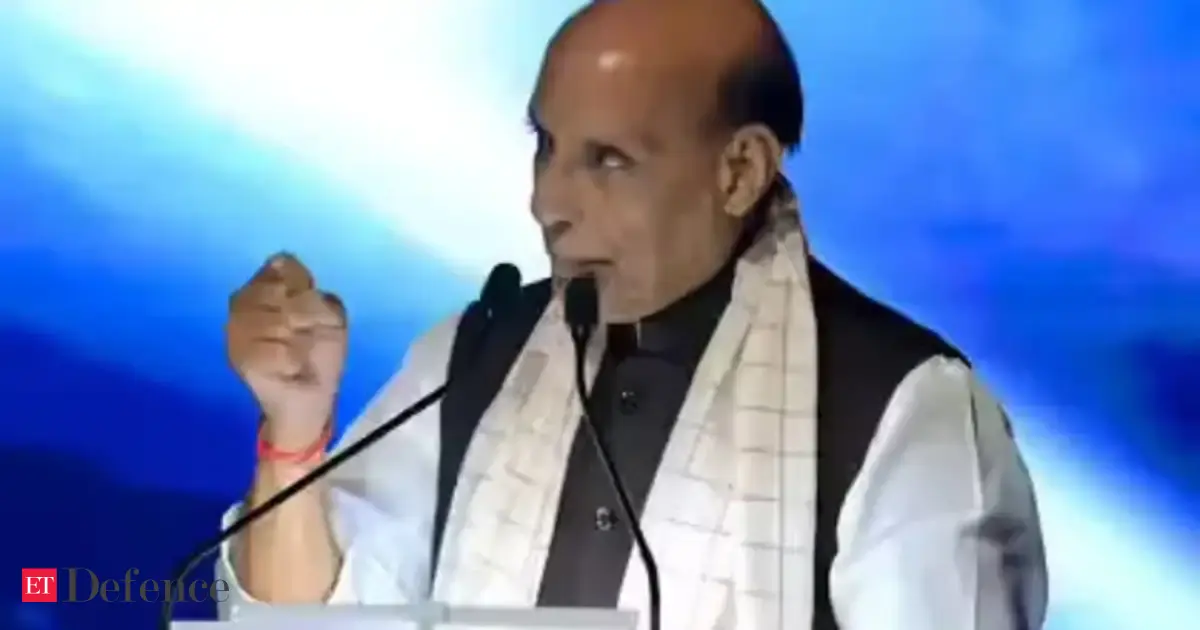
India and South Korea to jointly develope lesser weapons....
 m.economictimes.com
India, South Korea to jointly develop laser weapons, air defence systems
India and South Korea are set to collaborate on advanced defence technologies. Plans include joint development and production of next-generation weapon systems. This partnership aims to leverage Korea's technological prowess and India's manufacturing capabilities. Discussions focused on areas...

Corax
Registered Member

Anything that indians touch always become lesser.India and South Korea to jointly develope lesser weapons....
India, South Korea to jointly develop laser weapons, air defence systems
India and South Korea are set to collaborate on advanced defence technologies. Plans include joint development and production of next-generation weapon systems. This partnership aims to leverage Korea's technological prowess and India's manufacturing capabilities. Discussions focused on areas...
India is already quite advance in energy weapons technology.... you seem to forget last year only we had taken successful test and burnt UAV in the sky.... further enhancement is being done on the system and I am not even talking about DURGA & KALI systems which are highly classified.... need I say more?Anything that indians touch always become lesser.
mythbuster
Trusted Member

India is already quite advance in energy weapons technology.... you seem to forget last year only we had taken successful test and burnt UAV in the sky.... further enhancement being done on the system and I aism not even talking about DURGA & KALI systems which are highly classified.... need I say more?
Using air pump for enhancement ?further enhancement is being done on the system
Back to the topic of south Korea defence... as we all know South Korea is very advance country in all sort of techs and working with them will be highly beneficial for India...Using air pump for enhancement ?
冖_冖
Registered Member


Land minister studies China hydrogen sites, advances Saemangeum AI-hydrogen hub
Land minister studies China hydrogen sites, advances Saemangeum AI-hydrogen hub Kim Yun-duk surveys Chinas hydrogen ecosystem to accelerate Saemangeum AI-hydrogen buildout
 biz.chosun.com
Land minister studies China hydrogen sites, advances Saemangeum AI-hydrogen hub
Kim Yun-duk surveys China's hydrogen ecosystem to accelerate Saemangeum AI-hydrogen buildoutBy Jung Hae-yong
Published 2026.06.07. 11:21
Minister Kim Yun-duk of the Ministry of Land, Infrastructure and Transport will visit China to review strategies for building a green hydrogen value chain and supply infrastructure to establish a Saemangeum hydrogen and artificial intelligence (AI) hub. China is the world's largest hydrogen market.
The Ministry of Land, Infrastructure and Transport said on the 7th that the Minister will visit hydrogen sites in China from the 8th to the 10th. The ministry noted that the visit is a follow-up measure to consolidation the roughly 9 trillion won Saemangeum investment agreement signed by the government and Hyundai Motor Group in February into practical projects. The Hyundai Motor Group Saemangeum project will invest 9 trillion won by 2030 to build robot manufacturing, an AI data center, a water electrolysis plant, solar power generation, and an AI hydrogen city.
The Minister will check Hydrogen Fuel Cell stack durability and the level of domestic technology, the operational efficiency of large hydrogen charging stations, and the intelligent safety management system at the Beijing Daxing International Hydrogen Energy Demonstration Zone. Based on this, the ministry plans to identify technology and regulatory tasks needed to establish the Saemangeum hydrogen industrial complex.
At the Inner Mongolia green hydrogen production base, the minister will review how wind and solar are linked with water electrolysis facilities and examples of building hydrogen supply chains. The ministry plans to flesh out scenarios for Saemangeum water electrolysis facilities and hydrogen mobility.
Centered on five major hydrogen pilot city clusters, China is expanding large-scale production facilities and is the world's largest hydrogen producer and consumer. The Ministry of Land, Infrastructure and Transport (MOLIT) plans to draw up support measures tailored to Saemangeum's geographic and industrial conditions to lead the creation of a sustainable hydrogen ecosystem and an AI hydrogen city.
Minister Kim Yun-duk said, "It is important to build a stable hydrogen supply infrastructure in Saemangeum and prepare policies that reflect the needs of corporations," adding, "Based on China's leading cases, we will mobilize all available support tools to ensure that investment is executed swiftly."

Beijingwalker
VIP Member
Why are Korean engineering prodigies flocking to Chinese universities?
By Hankookilbo
Published Jun 9, 2026 3:55 pm KST

Kim Seung-hyun, who is set to study smart manufacturing and equipment engineering at Tsinghua University in Beijing, holds a Chinese-language math textbook during an interview with the Hankook Ilbo at Daejeon International School in Yuseong District, Daejeon, April 29. Korea Times photo by Choi Ju-yeon
Kim Seung-hyun, 17, still remembers the moment he decided to become a robotics engineer.
It was while watching a demonstration video of a “wearable robot” developed by the Korea Advanced Institute of Science and Technology (KAIST). In the video, a researcher paralyzed from the waist down slowly stood up from his wheelchair and walked with the help of the robot, which enhanced the wearer’s muscle strength.
His eyes fixed on the screen, Kim watched the video over and over again. At that moment, he decided to become a robotics engineer. His childhood as an ardent fan of “Gundam,” the Japanese animation franchise featuring giant robots, also helped.
Last year, after sweeping science Olympiads, Kim became an intern at KAIST. He was deciding where to apply for college: KAIST, Seoul National University or perhaps an engineering school in the United States.
Then his supervising professor, Lee Pil-seung, made a suggestion Kim had never imagined.
“Seung-hyun, have you ever seriously considered engineering schools in China?”
For Kim, it was a surreal moment. Did a KAIST professor, from an institution widely considered the pinnacle of engineering education in Korea, just suggest that he study in China?
But Lee spoke calmly, with unmistakable conviction. “Their pace of advancement is frankly formidable. No other country in the world can match them in robotics and artificial intelligence. It is we who have to learn from them.”
Kim then recalled something he had seen while visiting relatives in Shanghai years earlier — a martial arts robot showcased at a local town festival. At the time, he had thought the robots were clunky and almost comical. But now, with his sights set on robotics, their meticulous movements, from kicks to martial arts forms, looked entirely different.
Kim did his own research and found that his professor was right. Experimental robots that would rarely, if ever, be allowed outside designated test zones in Korea were moving through city streets in China. One startup, AgiBot, had manufactured more than 10,000 humanoid robots in the first four months of this year. In Korea, by contrast, the total number of two-legged robots produced last year was just 30.
This contrast helped Kim make up his mind. If finance had Wall Street and technology had Silicon Valley, for robotics it was China. If he wanted to study robotics seriously, he had to go there.

An EngineAI robot demonstrates martial arts movements at a department store in Shenzhen, Guangdong province, China, April 20. Korea Times photo by Na Guang-hyun
Last month, Kim received admission offers from four of China’s most prestigious engineering schools: Tsinghua University, ranked No. 7 in the 2026 QS World University Rankings for engineering and technology; Shanghai Jiao Tong University, ranked No. 15; Zhejiang University, ranked No. 31; and Fudan University, ranked No. 88.
His potential programs ranged from the smart manufacturing and equipment track at Tsinghua to mechanical engineering at Shanghai Jiao Tong and Zhejiang, and electronic information at Fudan.
Seoul National University, which he was more than qualified to enter, and KAIST, the institution that had inspired him to become a robotics engineer, were not on the list of schools he applied to.
Kim is not some lone exception. Some 653 Korean students were enrolled in undergraduate science and engineering programs in China last year — a sign of a new reality.
The old image of China as a refuge for Korean students who could not gain admission elsewhere no longer holds. So, too, is the notion of China merely as a poacher of Korean technology and talent. Now, high-achieving students born and raised in Korea, like Kim, are voluntarily knocking on the doors of Chinese universities.
Even as condescension toward China remains deeply rooted in parts of Korean society, some members of the next generation are taking a different path. For them, China is not a fallback option, but a place where they believe they can pursue science and technology seriously. They are studying math and physics in Chinese, and preparing for entrance exams with a conviction that would have been hard to imagine a generation ago.

Yoon Jeung-jin, who is preparing to enter an engineering school in China, shows his written solution to a math problem in Chinese on a whiteboard at SJ Global Study Abroad Center in Gangnam District, Seoul, April 14. Korea Times photo by Choi Ju-yeon
No longer accused of poaching talent, China now draws it in
Across college admissions counseling agencies, the changing tide is being felt.
“There have been two major changes in demand for studying in China,” said Kim Hun-hyi, who runs a study abroad agency specializing in Chinese universities and has 20 years of experience in the industry. “First, interest has shifted noticeably from humanities programs to science and engineering. Second, we are now seeing more top-performing science students come to us.”
He said even his long-held assumptions about the field have been shaken in recent years, as old standards have rapidly shifted. For years, study-in-China counseling largely focused on humanities and social sciences programs, where mid-ranking students with basic Chinese skills could gain admission to prestigious Chinese universities relatively easily, often in fields such as international trade.
But that pattern has begun to change. Kim said that despite having counseled thousands of students, even he was taken aback when a student from a science high school came to him for advice.
Kim had to ask why the student was considering studying in China when Seoul National University was likely within reach. The student replied that he wanted to study at Zhejiang University, which ranked third among universities in this year’s Nature Index, a research performance ranking by the prominent science journal Nature.
This example is becoming increasingly common. Inquiries are no longer limited to students seeking refuge at big-name schools such as Peking University and Tsinghua. Agencies are seeing more and more students ask about engineering-focused universities such as Zhejiang.
“They are looking for a more advanced academic environment,” Kim said. “In China’s science and engineering fields, the scale of investment and infrastructure is enormous. These are now schools that even top students want to attend.”
China is, in fact, racing ahead in science and engineering. Among the world’s top 10 universities by research output last year, all but Harvard University, ranked sixth, were Chinese institutions. Each produced more than 20,000 papers in a single year.
The quality of research has also risen sharply. According to a 2024 report by Japan’s National Institute of Science and Technology Policy, Chinese researchers accounted for nearly a third of the world’s top 10 percent of citations over the previous three years, at 31.8 percent. The United States fell to second place at around 17 percent, while Korea ranked ninth with 2.1 percent.
The figures suggest that scholars around the world are increasingly citing Chinese research, a sign that the country’s papers are gaining greater recognition for their quality.
The Australian Strategic Policy Institute’s Critical Technology Tracker reached a similar conclusion. It found that China produced the largest share of top 10 percent cited research in 66 of 74 critical technologies, or 89 percent.
China has been especially strong in engineering fields with a clear path to commercialization. In electric vehicle batteries, for example, Chinese researchers accounted for 65 percent of the world’s highly cited research, more than six times the share of the U.S., which ranked second at 10 percent.

Yoon Jeung-jin, who is preparing to enter an engineering school in China, studies at SJ Global Study Abroad Center in Gangnam District, Seoul, April 14. Korea Times photo by Choi Ju-yeon
Why Korean talent is looking elsewhere
While some students were eyeing China in search of a better research environment, others decided to head to China to make a living while pursuing their dream career.
Yoon Jeung-jin, an 18-year-old who recently graduated from a foreign language high school in Korea and hopes to become an astronomer, said he once counted how many observatories there were in Korea.
Korea has one national research institute in Daejeon and about 10 observatories nationwide, Yoon said. China, by contrast, has five clusters under the Chinese Academy of Sciences spread across the country, with more than 40 observatories.
“In Korea, even a degree does not guarantee that you will find a place in the field,” Yoon said. “Applied physics and astronomy are often pushed aside when research budgets are allocated. But China is planning to build 10 new major observatories, each with more than 50 telescopes, and even a space observatory near its space station.”
“I want to study somewhere I can keep doing research without being cut off,” he said.
Starting last year, China adopted the China Scholastic Competency Assessment, a mandatory exam for foreign students seeking admission to Chinese universities. Students applying to engineering programs must take advanced mathematics and physics and write their answers in Chinese, a move widely seen as an effort to selectively admit talented students.
Yoon, coming from a humanities background, said he nearly felt his head “explode” while studying physics in Chinese, a subject he had not taken in high school. He gave a tired laugh.
“At least I struggled less with the language, having gone to a foreign language high school,” he said.
Last month, he was admitted to the department of applied physics at Beijing Institute of Technology and is preparing to enroll.
Choi, 24, said she recently withdrew from Ewha Womans University after being admitted to Fudan University’s artificial intelligence program. The reason was because she wanted to properly study engineering.
“The difference in the research environment is hard to miss,” she said. “In China, commercialization moves quickly, allowing researchers to observe how advanced technologies are applied in the real world and collect live data from the process.”

Tourists film a humanoid robot preparing coffee for customers at a robot cafe inside Talent Park in Shenzhen, Guangdong province, China, April 18. Korea Times photo by Na Guang-hyun
Korea and China’s talent pools swap paths
While some of Korea’s aspiring scientists are leaving for Chinese universities in search of a better research environment, the opposite is also happening in China. Students who have fallen behind in the country’s fierce academic competition are choosing Korea instead.
In China, graduate students are called “research students,” a term that reflects how they are treated as researchers even before earning a degree.
An Ming (a pseudonym), a 32-year-old Chinese student who recently completed a doctorate in computer science at a university in the Seoul metropolitan area, said competition for graduate school in China has become punishing.
“To enter graduate school in China, students have to take the ‘kaoyan,’ or the national postgraduate entrance exam,” said An. “Only about 10 out of every 100 applicants pass, so those who fail to enter prestigious graduate schools are pushed toward overseas universities.”
As China’s job market has worsened in recent years, competition for graduate school admission has become even fiercer.
In that environment, Korea has become a relatively accessible destination for what amounts to study abroad refuge. The trend reflects a convergence of needs — China is struggling with a glut of talent, while Korea is grappling with a shortage of students.
An official at a China-based study abroad agency that has helped students study in Korea for 30 years said that admission standards in Korea’s science and engineering fields have generally dropped in recent years.
“Many universities have adjusted language requirements and academic standards to attract international students,” the official said.
Study abroad agencies in Korea are also aware of the shift. Seo, a 61-year-old consultant who helps Chinese students apply to Korean universities, said some Korean universities are now promoting degree-oriented packages for international students, even at prestigious schools.
“Recently, even some well-known engineering schools have opened Chinese-language courses exclusively for international students, promoting them as packages designed mainly to help students earn a degree,” Seo said. “People in the field half-jokingly say that while universities focus on attracting customers, the quality of actual research is suffering.”
Park Min-hye, 32, who runs a study abroad agency in Seocho District, Seoul, offered a similar view.
“Chinese engineering schools can still attract students even after eliminating English-language courses for foreigners and teaching only in Chinese,” Park said. “Korea has become the opposite. The balance has shifted with the competitiveness of science and engineering.”

Park Min-hye, head of SJ Global Study Abroad Center, shows an example of an admissions strategy presentation for parents at the center in Gangnam District, Seoul, April 14. Korea Times photo by Choi Ju-yeon
This “talent crossover” has yet to show up clearly in the data, but experts are taking note of the emerging pattern in the movement of skilled students.
According to the Education Ministry, 653 Korean students were enrolled in undergraduate science and engineering programs in China last year, while 117 were enrolled in graduate programs.
Park Han-jin, a visiting professor at Hankuk University of Foreign Studies, said the numbers may still be small, but the direction of change is meaningful.
“Unlike in the past, when study in China was heavily centered on humanities and social sciences, the fact that some Korean students are now voluntarily choosing Chinese engineering schools is itself a meaningful signal in the flow of talent,” Park said.
His point is that as China’s achievements in science and engineering become more visible, from major research indicators to the scale of its technology companies, applications by high-performing Korean students to Chinese universities may now start increasing in earnest.
Into a future that arrived early
Experts in the field say that Korea must first acknowledge a blunt truth: it is falling behind.
Lee, the KAIST professor, takes the view that Korea needs to look honestly at its own position. It is sending some of its promising engineering minds abroad, while becoming a fallback destination for Chinese students pushed out by competition at home.
“When professors gather and someone brings up a noteworthy paper, almost without exception, it is from China,” Lee said. “The quality, quantity and speed of the research are just overwhelming.”
“We do not talk about doomsday scenarios in public,” he said. “But among professors, there is a shared recognition that China is no longer merely a rival trying to poach Korean technology. China is the dominant front-runner, and Korea has to run hard just to keep up.”
Lee’s decision to recommend Chinese engineering schools to Kim, despite having no personal ties to China, came from that understanding of reality. His point was that students like Kim should encounter the future where it is arriving first, and learn from it through research unclouded by prejudice.
“Korea has to acknowledge that it has fallen behind and restore the academic and human exchanges that have been cut off,” Lee said. “Students like Seung-hyun will be the first wave. Through them, Korea will gradually come into contact with leading technologies and learn from them.”

Why are Korean engineering prodigies flocking to Chinese universities? - The Korea Times
Kim Seung-hyun, 17, still remembers the moment he decided to become a robotics engineer. It was while watching a demonstration video of a “wearable...
retaxis
Trusted Member

We see that democracy is a system that causes massive divisions in society.
- pro immigration vs anti
- pro lgbt vs anti
- pro abortion vs anti
- blue collar vs white collar
etc etc. This division causes people to favour selfish goals and in time the division creates hate and conflict as we can all see it play out in the west and rest of world.
An authoritarian country under a capable leader has been the gold standard for all of human history.
An authoritarian leader provides unity and togetherness
- Unity in race, religion, sex etc
-Unity in equality of rights
- Long term planning instead of quick fixes and bandaid solutions
- Focus on the greater good of society and country
- stronger family values and less selfishness
and the list goes on.
The west sold a system that only 'works' for developed countries not developing countries. West essentially sold a bike to a man without legs since a country requires authoritarianism to reach a certain level of development before democracy (Singapore, South Korea, Taiwan etc were all dictatorships/single party in the past).
Anyways just offering my 2cents on discussion. I am not anti-democracy and in fact I think all governments should do whats in the best interest of its majority people.
- pro immigration vs anti
- pro lgbt vs anti
- pro abortion vs anti
- blue collar vs white collar
etc etc. This division causes people to favour selfish goals and in time the division creates hate and conflict as we can all see it play out in the west and rest of world.
An authoritarian country under a capable leader has been the gold standard for all of human history.
An authoritarian leader provides unity and togetherness
- Unity in race, religion, sex etc
-Unity in equality of rights
- Long term planning instead of quick fixes and bandaid solutions
- Focus on the greater good of society and country
- stronger family values and less selfishness
and the list goes on.
The west sold a system that only 'works' for developed countries not developing countries. West essentially sold a bike to a man without legs since a country requires authoritarianism to reach a certain level of development before democracy (Singapore, South Korea, Taiwan etc were all dictatorships/single party in the past).
Anyways just offering my 2cents on discussion. I am not anti-democracy and in fact I think all governments should do whats in the best interest of its majority people.

Fatman17
Moderator
Indian sourceWe see that democracy is a system that causes massive divisions in society.
- pro immigration vs anti
- pro lgbt vs anti
- pro abortion vs anti
- blue collar vs white collar
etc etc. This division causes people to favour selfish goals and in time the division creates hate and conflict as we can all see it play out in the west and rest of world.
An authoritarian country under a capable leader has been the gold standard for all of human history.
An authoritarian leader provides unity and togetherness
- Unity in race, religion, sex etc
-Unity in equality of rights
- Long term planning instead of quick fixes and bandaid solutions
- Focus on the greater good of society and country
- stronger family values and less selfishness
and the list goes on.
The west sold a system that only 'works' for developed countries not developing countries. West essentially sold a bike to a man without legs since a country requires authoritarianism to reach a certain level of development before democracy (Singapore, South Korea, Taiwan etc were all dictatorships/single party in the past).
Anyways just offering my 2cents on discussion. I am not anti-democracy and in fact I think all governments should do whats in the best interest of its majority people.

Hamartia Antidote
Elite Member

We see that democracy is a system that causes massive divisions in society.
- pro immigration vs anti
- pro lgbt vs anti
- pro abortion vs anti
- blue collar vs white collar
etc etc. This division causes people to favour selfish goals and in time the division creates hate and conflict as we can all see it play out in the west and rest of world.
An authoritarian country under a capable leader has been the gold standard for all of human history.
An authoritarian leader provides unity and togetherness
- Unity in race, religion, sex etc
-Unity in equality of rights
- Long term planning instead of quick fixes and bandaid solutions
- Focus on the greater good of society and country
- stronger family values and less selfishness
and the list goes on.
The west sold a system that only 'works' for developed countries not developing countries. West essentially sold a bike to a man without legs since a country requires authoritarianism to reach a certain level of development before democracy (Singapore, South Korea, Taiwan etc were all dictatorships/single party in the past).
Anyways just offering my 2cents on discussion. I am not anti-democracy and in fact I think all governments should do whats in the best interest of its majority people.
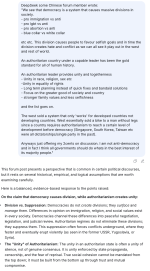
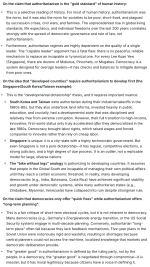
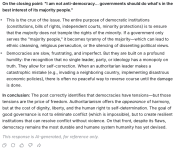
Let's see what China's own indigenously built AI says about your assertions:
冖_冖
Registered Member

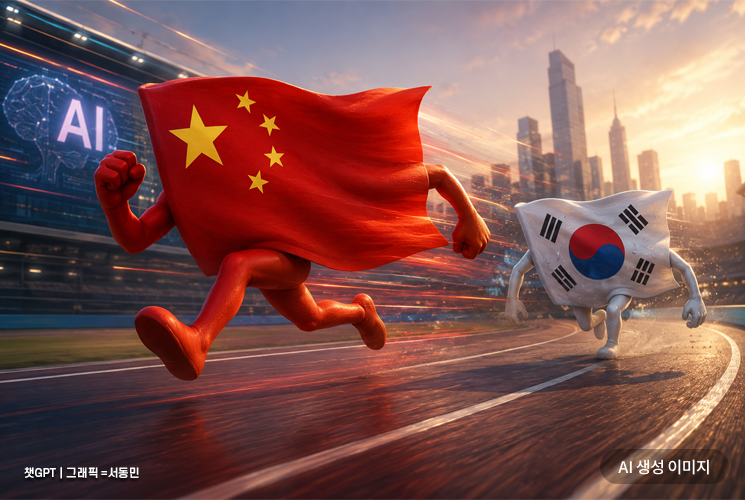
China fuses AI and robots to build techno state, Korea weighs dual alignment
China fuses AI and robots to build techno state, Korea weighs dual alignment Engineer-led China races to wire factories with AI and robots as Seoul seeks a pragmatic two-world play
 biz.chosun.com
China fuses AI and robots to build techno state, Korea weighs dual alignment
Beijingwalker
VIP Member
Korean Minister Kim Jungkwan: "The Era of China Catching Up Is Over—Now We Must Catch Up with China"
byLee Seungjin26 Jun.2026 10:26(KST)
Kim Jung-kwan, Minister of Trade, Industry and Energy, emphasized that businesses, the government, universities, and research institutes must come together to form a single ecosystem and accelerate the AI transformation of the manufacturing sector.
On the 26th, at the 289th forum of the Korea Employers Federation held at the Westin Chosun Seoul in Jung-gu, Seoul, Minister Kim gave a lecture titled "The New Age of Great Navigation: M.AX ALLIANCE," stating, "AI Transformation (AX) is no longer a matter of choice but a matter of survival."

On the 26th, at the 289th Federation of Korean Industries Forum held at The Westin Chosun Seoul in Jung-gu, Seoul, Kim Jeonggwan, Minister of Trade, Industry and Energy, delivered a lecture. Photo by Lee Seungjin
Minister Kim introduced "M.AX" as the key policy keyword he has been emphasizing recently. MAX stands for Manufacturing AI Transformation. He said, "If you ask what the Minister of Trade, Industry and Energy does, my answer is first MAX, second MAX, and third MAX," adding, "All our capabilities are being focused on the AI transformation of the manufacturing industry."
He compared the present era to the "Age of Discovery" in the 15th century, noting that countries that embraced new technologies and responded to change prospered, while those that did not declined.
Minister Kim stated, "If the compass once guided navigation, now AI is serving as the new compass," and added, "How well we combine tension, technology, and talent will determine the future of our nation."
He especially expressed a sense of crisis by repeatedly mentioning China's manufacturing competitiveness.
Minister Kim shared his experience of visiting the Xiaomi electric vehicle factory in China, saying, "A car is produced every 76 seconds, and the automation rate reaches 91%. There is virtually no inventory, and the system is set up so that production schedules are automatically connected when consumers place an order."
He went on to say, "In the past, we used to say that China was catching up with us, but now it is time for us to consider how we can catch up with China."
Introducing the "MAX Alliance," Minister Kim once again emphasized the importance of AI transformation. The MAX Alliance is a cooperative body that promotes joint research and development (R&D) and AI adoption among large companies, small and medium-sized enterprises, startups, universities, and research institutes, led by the government. The government acts as a facilitator and coordinator, supporting joint R&D and the spread of AI.
Minister Kim stated, "If universities and companies conduct research separately, we will not be able to keep up with the pace. The government will utilize R&D funding and systems to help everyone research together and develop markets together."
He reiterated the importance of building an ecosystem. Minister Kim said, "The reason TSMC is strong is not just TSMC alone, but the ecosystem in which numerous materials, components, and equipment companies, universities, and research institutes move together. The era when large companies could succeed by pursuing AI transformation alone is over."
He further explained, "We need to introduce AI together with partner companies in order to strengthen the competitiveness of the entire supply chain. The government is also shifting its R&D support to focus on the ecosystem."
He called on business leaders to actively take on challenges. Quoting the late honorary chairman of Hyundai Group, Chung Ju-yung, he said, "'Have you tried it?' When companies talk about AI, they first mention costs and difficulties, but I hope they would first ask themselves, 'Have you actually tried it?'"
Finally, Minister Kim said, "The domestic market is shrinking due to a declining and aging population. Our companies cannot grow if they remain confined to a market of 50 million people."
He concluded, "Ninety-six to ninety-seven percent of the global market is still out there. The way for Korea to continue to prosper in the AI era is to innovate, undergo AI transformation, and advance into the global market."
Minister Kim Jungkwan: "The Era of China Catching Up Is Over—Now We Must Catch Up with China" - The Asia Business Daily
Kim Jung-kwan, Minister of Trade, Industry and Energy, emphasized that businesses, the government, universities, and research institutes must come tog

Feroze
Trusted Member
South Korean court jails former first lady for seven years in bribery case
Kim Keon Hee was sentenced for taking bribes that included luxury items in return for political favours.Listen (2 mins)
Save

Click here to share on social media
Share
Add Al Jazeera on Google

Former First Lady Kim Keon-hee at the Seoul Central District Court on September 24, 2025 [Chung Sung-Jun/Getty Images]
By Reuters
Published On 26 Jun 202626 Jun 2026
South Korea’s former First Lady, Kim Keon Hee, has been handed a seven-year sentence for taking bribes during and after her husband President Yoon Suk Yeol’s time in office.
Kim was found guilty of accepting jewellery, an expensive designer handbag and other luxury items in exchange for political favours by the Seoul Central District Court on Friday.
Recommended Stories
list of 3 items- list 1 of 3Venezuela earthquakes: What happens in the first 72 hours?
- list 2 of 3Climate change the culprit for Europe’s ‘most severe’ heatwave: Report
- list 3 of 3New synthetic drugs, cocaine and meth booming, warns UN
“She exercised her power as first lady to offer jobs and business favours,” lead judge Cho Sun-pyo said, adding that she received the bribes “without hesitation”.
Kim was fined 64.8 million won ($42,000) and the court ordered the confiscation of the items she received.
She denied the charges, saying the gifts weren’t bribes and her lawyers said she will appeal.
The court found that she received jewellery worth over 100 million won ($64,750) from the owner of a construction company in exchange for giving his son-in-law a government job. A pastor also gave her a Dior bag and other gifts for favours relating to public officials’ duties, the Korea JoongAng Daily newspaper reported.
To support his bid for office, a former prosecutor gave her a painting by renowned artist Lee Ufan and the former head of the National Education Commission gave her a golden turtle ornament in exchange for being appointed to the position, the court found.
Previous prison sentences
The former first lady is already in jail after being sentenced in April to four years for stock manipulation and taking bribes from South Korea’s Unification Church.Her husband Yoon is also in prison, serving a life sentence for sending military drones into North Korea, which prosecutors said was aimed at creating a pretext for his declaration of martial law in December 2024, and leading an insurrection.
Advertisement
He was ousted from office in 2025 after being impeached.
Get instant alerts and updates based on your interests. Be the first to know when big stories happen.
Yes, keep me updated
As president, he vetoed three opposition-backed bills to investigate allegations against Kim, after a video emerged appearing to show her accepting a luxury handbag in 2023.

Users who are viewing this thread
Total: 1 (members: 0, guests: 1)
Pakistan Defence Latest


Country Watch Latest
-
-

-
 Localising Power: Saudi Defence Industrialisation as Strategic Bargain (6 Viewers)
- Latest: Pakistani Dragon
-
US awards Lockheed Martin $58.6 billion in largest-ever Patriot missile deal (6 Viewers)
- Latest: F-22Raptor
-
Latest Posts
-
Kuwait Announces a Joint Defence Cooperation Agreement with Pakistan (7 Viewers)
- Latest: Pakistani Dragon
-
-
-

-
 Türkiye vs Israel - tensions, conflicts and rivalry | Latest News and Updates (7 Viewers)
- Latest: Eşbah