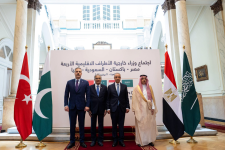
Israeli media warns of a new regional axis led by Saudi Arabia, Egypt and Turkey with Pakistani nuclear support
View attachment 202569
Israeli media highlighted what it described as the features of the formation of a new regional axis that includes Saudi Arabia, Egypt, Turkey, and Pakistan, considering that this trend may lead to redrawing the balance of power in the Middle East and reducing the traditional dependence on the Western security umbrella.
According to these reports, the four countries are seeking to build a broader strategic and security cooperation framework, based on increased political and military coordination between the most prominent Sunni forces in the region, in light of the rapid transformations taking place in the Middle East and the escalation of tensions related to Iran and Israel.
Israeli analyzes believe that this rapprochement may develop into something resembling an independent regional security platform, whose goal is to enhance the ability to manage regional crises and provide alternatives to foreign interventions, with a focus on security, defense, military technology and industrial cooperation files.
Reports indicated that Saudi Arabia plays a pivotal role in promoting this path.
On the military side, Pakistan stands out as the most sensitive element within this potential bloc, given its possession of nuclear weapons. Israeli media believe that the growing defense partnership between Riyadh and Islamabad may create what some analyzes describe as a “Pakistani nuclear umbrella,” which may add a new dimension to deterrence equations in the Middle East.
These estimates are based on the defense cooperation agreement signed between Saudi Arabia and Pakistan during the year 2025, which included provisions for joint military coordination and collective dealing with security threats. Israeli reports also indicated the deployment of Pakistani forces, fighters, and air defense systems inside the Kingdom during 2026 within the framework of enhancing military cooperation between the two countries.
View attachment 202568
At the same time, both Turkey and Saudi Arabia continue to expand their defense cooperation, especially in the fields of drones and advanced aviation industries, including the Turkish fifth-generation fighter project “KAAN,” while Egypt continues to strengthen its military and regional partnerships within the growing network of relations between these countries.
Some Israeli circles warn that the emergence of such an axis may limit Israel's margin for strategic maneuvering, whether at the regional level or in its relationship with the United States, especially if it succeeds in presenting itself as a security framework capable of addressing the region's crises from within.
On the other hand, the same analyzes indicate that this potential bloc may raise concerns among other regional parties, as Iran may view it as a direct challenge to its influence, while it may contribute to accelerating arms races and reshaping military balances in the Middle East.
Reports also pointed out that Pakistan's possession of a nuclear arsenal and long-range missiles, including Shaheen-III missiles, gives this cooperation an additional deterrent dimension, at a time when Saudi Arabia prefers to rely on strategic partnerships and external security protection rather than seeking to develop an independent military nuclear program.
In general, the Israeli media believes that any strategic rapprochement between Saudi Arabia, Egypt, Turkey, and Pakistan may constitute one of the most prominent geopolitical changes in the region in the coming years, with repercussions on the traditional balance of power and regional and international relations.





 Royal Saudi Land Forces - RSLF