Top 10 countries with the most skyscrapers in the world 2026: China, US, UAE and other leading nations

See, what i suggested, doesn't mean you have to pack them in a small area. You can have a city made up of appartment buildings and still look beautiful, well planned and well managed. I took help of chatgpt to give me a 3D visualization of this idea and the following is the result.

It doesn't have to look ugly.

Well there are other downsides to having tall residential buildings

June 24th, 2026 at 6:04 PM with most people in their homes:
To view this content we will need your consent to set third party cookies.
For more detailed information, see our cookies page.


Venezuela earthquake latest: 'Devastating' number feared dead after two tremors​


earthquake.png


ea1.png
ea_2.png
ea3.png


Venezuela just had a Magnitude 7 and they are worried about mass casualties.

usDeaths.png

Single family home vs 7.1 quake
To view this content we will need your consent to set third party cookies.
For more detailed information, see our cookies page.

7.1 Massive California Earthquake caught on Camera
 
Last edited:
Well there are other downsides to having tall residential buildings

6:04 PM with most people in their homes
To view this content we will need your consent to set third party cookies.
For more detailed information, see our cookies page.


Venezuela earthquake latest: 'Devastating' number feared dead after two tremors​


View attachment 203090


View attachment 203091
View attachment 203093
View attachment 203094


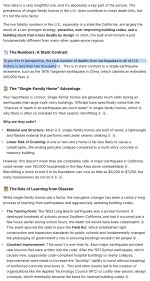
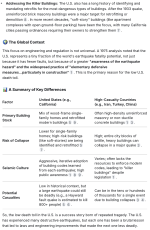
Buildings don't fail in earthquakes because they want to.... they fail because they are constructed that way. Cost cutting is the culprit here. Not the building itself. I am a civil engineer by profession. Modern construction approaches can ensure that a structure remain safe even in magnitude 8.0 earthquake. Heck, even modular highrise buildings these days offer same level of earthquake resistance.

See there are things to consider,

1. Type of land and its bearing capacity matters.
2. Total load of the building and its design parameters matters.
3. Right materials and approach for the right structure.

You can not build every building on every soil condition using every material. I am sure the world can find small pockets of lands dispersed throughout the globe suitable to build these blocks each containing 50-100 such buildings. This is the need of the hour becaise unlike USA, the world dont have enough land to build suburban design towns. Pakistan is adding 5 million people every year to its population. India too. Hongkong dont have land. New Zealand is a small island country. Majority of the countries dont have much options. They got limited land which they can either use to grow food or build suburban towns over it.
 
Agreed... Hong Kong looks dead with no beauty.... European architecture is any day beautiful and Turkiye also looks same like Europe as it's so closed to Europe....
You Indians can only dream to have a city like Hong kong.

960px-Hong_Kong_Night_Skyline.jpg
 
Buildings don't fail in earthquakes because they want to.... they fail because they are constructed that way. Cost cutting is the culprit here. Not the building itself. I am a civil engineer by profession. Modern construction approaches can ensure that a structure remain safe even in magnitude 8.0 earthquake. Heck, even modular highrise buildings these days offer same level of earthquake resistance.

See there are things to consider,

1. Type of land and its bearing capacity matters.
2. Total load of the building and its design parameters matters.
3. Right materials and approach for the right structure.

All engineers can do is to attempt to defensively prepare for the worst but it is mostly about crossing their fingers when that big earthquake does hit that nothing bad happens.

You can not build every building on every soil condition using every material. I am sure the world can find small pockets of lands dispersed throughout the globe suitable to build these blocks each containing 50-100 such buildings. This is the need of the hour becaise unlike USA, the world dont have enough land to build suburban design towns. Pakistan is adding 5 million people every year to its population. India too. Hongkong dont have land. New Zealand is a small island country. Majority of the countries dont have much options. They got limited land which they can either use to grow food or build suburban towns over it.

Well you are correct that the best land in Pakistan happens to have the most housing on it. In the US it is the opposite...the best agricultural land was in remote inland areas that nobody wanted to live in (like Kansas). The land where most people in the US live in (which is within 100 miles of the ocean or great lakes) is actually the worst for agriculture (a sand, rock, or limestone layer not far below the surface..plus for many harsh winters).
 
Last edited:
All engineers can do is to attempt to defensively prepare for the worst but it is mostly about crossing their fingers when that big earthquake does hit that nothing bad happens.

There is always that risk that I might die of any of the 100 possible reasons while typing this reply. Doesn't mean I should stop living. Same is with buildings. If disastours was the issue then nobody would be living on coast but despite that, 40% of the world population lives in 100 km of the coast. And 15% lives just in 10 km of coast.

By the way if you are reading this, it means i didn't die while responding.
 
SKycrapers are all designed to withstand strong earthquakes, at least in China they are.

7.9 degree earthquake hit China's Yunnan Ruili city bordering Myanmar last April, tall buildings moving in Ruili city.

To view this content we will need your consent to set third party cookies.
For more detailed information, see our cookies page.
 
Last edited:
All these local hospitals are in tall buildings
Powerful earthquake hit Myanmar and Chinese border town Ruili, nursers trying to shield new born babies in hospitals in Ruili city.
To view this content we will need your consent to set third party cookies.
For more detailed information, see our cookies page.
 
SKycrapers are all designed to withstand strong earthquakes, at least in China they are.

7.9 degree earthquake hit China's Yunnan Ruili city bordering Myamar last April, tall buildings moving in Ruili city.

To view this content we will need your consent to set third party cookies.
For more detailed information, see our cookies page.

That's pretty good, tall buildings can safely withstand 7.9 earthquake. Is this standard widespread on the buildings at least the newer ones in China now ? China is one of the worst earthquake prone countries in the world.
 
That's pretty good, tall buildings can safely withstand 7.9 earthquake. Is this standard widespread on the buildings at least the newer ones in China now ? China is one of the worst earthquake prone countries in the world.
Japan also has lots of earthquakes and the country is home to many skyscrapers, skyscrapers are generally all designed to withstand strong earthquakes, saying skyscrapers are earthquake traps is simply stupid.

To view this content we will need your consent to set third party cookies.
For more detailed information, see our cookies page.
 
What about:

-number of elevators available and not in maintenance
-fire and medical emergency evacuations
-gas or electrical hazards(explosions)
-lithium batteries fires(cars and scooters and ebikes these days).
-earthquakes and wind/water tsumanis or tornados
-buildings spread virus/diseases compared to separate houses!
-no backyard or free space naturally to do stuff like children play, gardening etc.

Its nice to gloat over that shit but i present you the hazards above. I live in building myself bcaz cannot afford house its too expensive.
 
Japan also has lots of earthquakes and the country is home to many skyscrapers, skyscrapers are generally all designed to withstand strong earthquakes, saying skyscrapers are earthquake traps is simply stupid.

To view this content we will need your consent to set third party cookies.
For more detailed information, see our cookies page.

China is 25 times larger than Japan in area. So, the chance of earthquake happening anytime in China is much higher than Japan.
 
That's pretty good, tall buildings can safely withstand 7.9 earthquake. Is this standard widespread on the buildings at least the newer ones in China now ? China is one of the worst earthquake prone countries in the world.
Earthquake resistance requirements and technical standards for buildings are related to the location of the building, not general rules.

A real-world example:

Since the Wenchuan earthquake on May 12, 2008, Sichuan Province adjusted its requirements and technical standards for building earthquake resistance intensity.

1. Buildings in some areas along the Longmenshan Fault Zone are designed to withstand a seismic intensity of level 9.
2. The Chengdu Plain's seismic intensity was raised from level 7 to level 8.
3. Six towns, including Dujiangyan, Wenchuan, and Beichuan, were upgraded to level 8.
4. Other related areas also saw corresponding upgrades, increasing the number of cities in Sichuan Province with seismic resistance levels of level 8 or higher from 46 to 54.
5. Eastern Sichuan, previously an area without seismic fortification requirements, is now entirely designed to withstand a level 6 earthquake.

In terms of actual implementation, I have many personal experiences. Local governments often go beyond what is required when implementing these requirements, with their actual implementation standards slightly exceeding the national technical specifications.

My home is located in a super high-rise building (over 100 meters tall) in Mianyang, Sichuan. I live on the 34th floor. The building's earthquake resistance rating is far higher than that of super high-rise buildings in other cities. I have lived in this building for over 10 years. Whenever there is an earthquake or strong wind, the building shakes slightly, but there are no noticeable noises or surface cracks. I have long been accustomed to this kind of life.
 
Last edited:
  • Like
Reactions: ety
What about:

-number of elevators available and not in maintenance
-fire and medical emergency evacuations
-gas or electrical hazards(explosions)
-lithium batteries fires(cars and scooters and ebikes these days).
-earthquakes and wind/water tsumanis or tornados
-buildings spread virus/diseases compared to separate houses!
-no backyard or free space naturally to do stuff like children play, gardening etc.

Its nice to gloat over that shit but i present you the hazards above. I live in building myself bcaz cannot afford house its too expensive.
The thread originally only shows skycrapers around the world, not good or bad to have them, jealous Americans misled this thread down this path. Actually they were the first ones to build skyscrapers and bragged about them for a century untill being overtaken.
 

Users who are viewing this thread

Back
Top