Why should Pakistan accept a British criminal?

Hate to break it to you, that fat little fauji bhanja Naqvi is already negotiating a quid-pro-quo with his angrez mai baap...

Should Naqvi or X, Y, and Z individuals take that course of action, Pakistan stands to lose the most, both diplomatically and reputationally. It is no secret that the British Embassy in Pakistan is currently working overtime.
 
Pakistan's embarrassing performance displayed in one table:

Screenshot_20260716_204408_Google.jpg

This is where Pakistani leaders with tiny brain cells lose the battle in the economic and diplomatic front.

Look how limited Pakistan's trade and specifically export is with the rest of the world.
 
Last edited:
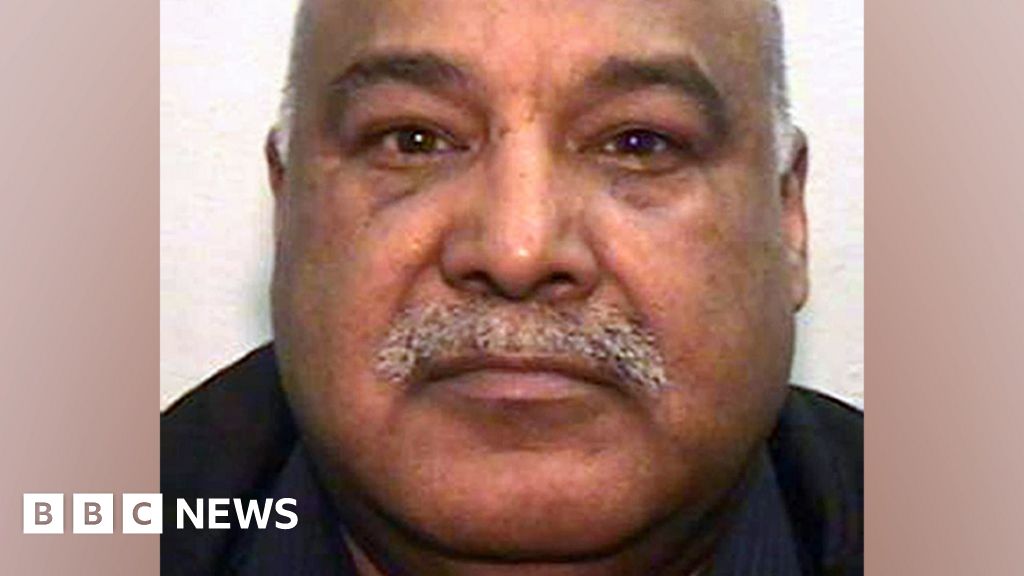
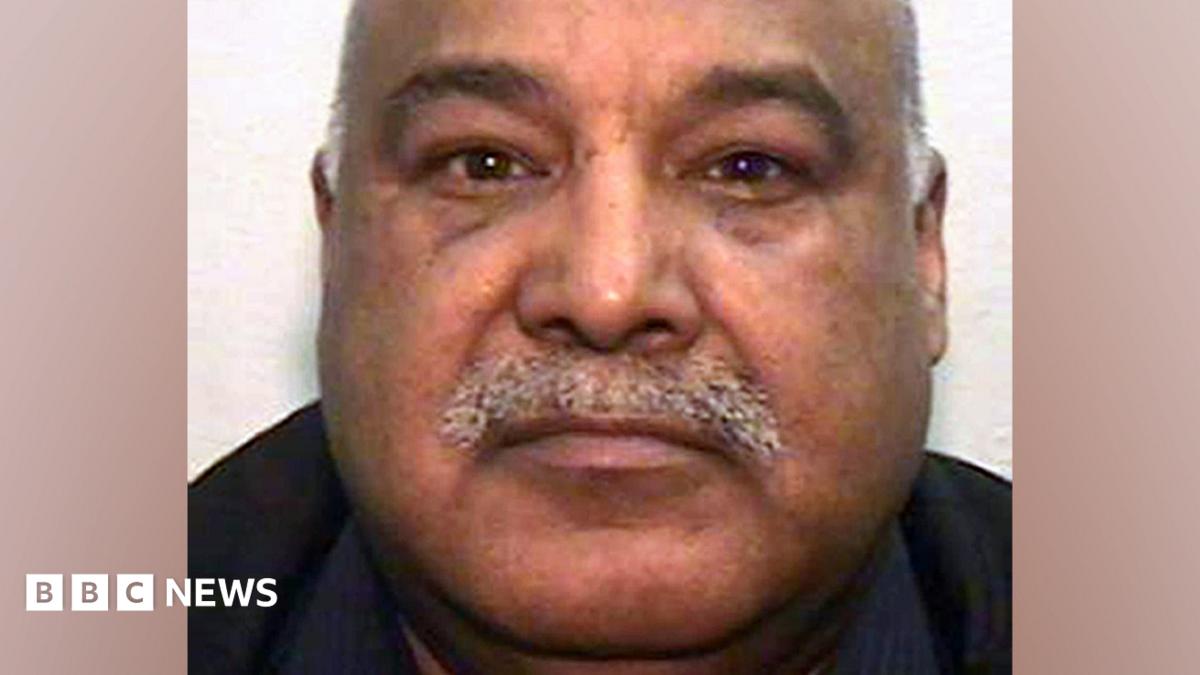
Pakistan resisting UK attempts to deport grooming gang leader

Pakistan is resisting attempts by the UK government to deport a freed ringleader of a Rochdale grooming gang.

Tahir Andrabi, a spokesman for Pakistan's Ministry of Foreign Affairs, told the BBC that Shabir Ahmed must be dealt with in accordance with UK laws and the government of Pakistan has "no connection whatsoever with this matter".

Calls have mounted for Ahmed's deportation but legislation from 1971 bars it. Ahmed's removal depends on Pakistan accepting him despite the UK government proposing to change the law.

Ahmed had dual British-Pakistani citizenship before being stripped of his UK passport following his 2012 conviction for multiple counts of rape and sexual offences against girls.

Ahmed, who came to the UK in the late 1960s, was one of nine men from Rochdale and Oldham found guilty of exploiting girls as young as 13 at two takeaway restaurants.

Andrabi said Ahmed's "heinous crimes demand serious introspection rather than the quest to search for extraneous causes".

He said: "The matter in question is entirely an internal matter of the United Kingdom.

"The individual concerned is a British national who spent his entire adult life in the UK and was duly convicted by a British court for reprehensible offences committed on British soil.

"Any decision regarding his release, supervision of usual legal status, falls exclusively within the jurisdiction of the competent British authorities and must be dealt with in accordance with the laws of the United Kingdom.

"Regardless of where he was born, the onus lies on where he grew up, was raised, groomed, and unfortunately spoiled."

He added: "The government of Pakistan has no connection whatsoever with this matter.

"We cannot be associated with any decisions relating to the individual's release or subsequent treatment under the British law."

Ahmed was jailed for 22 years and released on licence this month.

Victims of the gang were told provisions under the Immigration Act 1971 barred the removal of any Commonwealth citizen who arrived in the UK before 1973 and had been in the country for five years.

Under the UK government's proposed amendment, foreign criminals would no longer benefit from these protections where they are guilty of some serious crimes.

It would bring the law on deportation in line with the law on the removal of citizenship.


Home Secretary Shabana Mahmood this week said the 1971 Act provided protections for long-term UK residents but "should not be used as a bar against removal in cases like that of Shabir Ahmed".

The Home Office has acknowledged that Ahmed's removal depends on Pakistan accepting him.

Conservative shadow home secretary Chris Philp said the government should consider using "very robust measures to essentially compel" Pakistan to accept the return of Ahmed.

Speaking to Radio 4's World At One programme, Philp said ministers had a couple of options: to suspend bilateral overseas aid payments completely, and "the most extreme level", to apply visa sanctions to prevent Pakistani nationals entering the UK.

Philp said: "If a British citizen commits a crime somewhere else, we would accept them back and I would expect other countries to do the same when the boot's on the other foot."

After leaving prison, Ahmed was sent to 24-hour staffed accommodation and fitted with a GPS electronically monitored tag.

While he is in the UK, the government has said he would be returned to prison if he breaches a series of strict licence conditions.

Some of his victims said they were "frightened" and felt "unsafe" at his release.

Andy Burnham, who is set replace Sir Keir Starmer as prime minister next, has described Ahmed as a "vile criminal" who he wants deported.


Why is Pakistan being forced and threatened of sanctions by growing voices from British politicians, far right activists and news outlets on taking a convicted serial r*pist and pedophile, Shabir Ahmed who has recently been released from prison. Ahmed came to the UK in 1970s and has spent most of his life in the UK. His crimes were committed in the UK and should face full force of the law. It is not Pakistans responsibility.
It's an utter shame to read about these criminals. It always brings a bad name to Pakistan and Muslims generally. Perhaps the UK wants to hand him over to CCD.
 
It's an utter shame to read about these criminals. It always brings a bad name to Pakistan and Muslims generally. Perhaps the UK wants to hand him over to CCD.

This has nothing to do with Pakistan and Muslims. These are nasty sex offenders that need to be dealt with according to British law. It is the British law that has allowed this sex offender to roam freely after serving his sentence. In many other countries this sex offender would be handed the death penalty.

Deporting this sex offender who lived most of his adult life in Britain is really a feel good exercise by Britain.
 
Last edited:
Pakistan's embarrassing performance displayed in one table:

View attachment 206572

This is where Pakistani leaders with tiny brain cells lose the battle in the economic and diplomatic front.

Look how limited Pakistan's trade and specifically export is with the rest of the world.

The good news is Pakistan barely does any business with the UK and it can replace it with remittances from KSA.

So it can walk away if it wishes. UK is trying to humiliate Pakistan in this bizarre diplomatic sabre-rattling.

Send your students elsewhere, there are plenty of other countries with good univerisities and cheaper living costs too.
 

Pakistan getting serious. As long as we aren't compromised by Avenfield investment Inc. then we can decisively put the weak British government in its place.

The British government is trying to play hardball with Pakistan to appease their far right wing voters.

Pakistan’s refusal to accept Shabir Ahmed is not just a stubborn diplomatic stance. It is a calculated decision based on domestic politics, public perception, and national sovereignty.

From Islamabad's perspective, agreeing to the UK's deportation request carries several major liabilities, with very little to gain unless the UK agrees to a significant compromise.

1. The Political Cost: Becoming a "Dumping Ground"

The most immediate risk for the Pakistani government is domestic public backlash.

The "UK-Made Crime" Narrative: Ahmed left Pakistan in 1967 at just 14 years old and has lived in the UK for nearly 60 years. Pakistan’s Foreign Office has publicly argued that his crimes are entirely a product of British society. As one Pakistani official bluntly told the press: "He is a UK national as far as we are concerned... This isn't dirt you can throw at our door."

Public Outrage: If the Pakistani government capitulates to British demands, it risks being perceived by its own citizens as weak—effectively acting as a "dumping ground" for heinous criminals who were raised, socialized, and convicted in the West.

2. Legal Precedent and "Statelessness"

By accepting Ahmed, Pakistan would be validating a controversial UK legal practice: stripping dual nationals of their British citizenship to make them someone else's problem.

The Dispute: Pakistan claims Ahmed formally renounced his Pakistani citizenship decades ago. The UK disputes this, arguing he never completed the formal paperwork in Pakistan.

The Risk of Precedent: If Pakistan yields and accepts Ahmed, it tacitly accepts the UK’s right to unilaterally strip citizenship from dual-national criminals and deport them. This could open the floodgates for the UK to deport hundreds of other serious criminals of Pakistani descent, placing a massive legal, financial, and monitoring burden on Pakistan’s local law enforcement.

3. Domestic Security and Public Safety

Ahmed is a high-risk, convicted child rapist. If he is deported to Pakistan, the state faces a logistical and security nightmare:

Pakistan does not have the same extensive, heavily funded probation and GPS-tracking infrastructure that the UK uses to monitor high-risk sex offenders.

Housing and monitoring a notorious, internationally recognized sex offender would draw intense local media scrutiny and public anger in whatever Pakistani community he is placed in, creating a localized security threat.

What Pakistan Wants Instead: The "Dissident" Leverage

Because accepting Ahmed carries so many domestic negatives, Pakistan is treating him as a high-value bargaining chip. Islamabad is essentially asking: “If we are going to take your most unwanted criminal, what will you give us in return?”

Pakistan's government has a major grievance with the UK: they believe Britain allows exiled political opponents and dissidents to use London as a safe haven to destabilize Pakistan. By holding out on Ahmed's deportation, Pakistan has gained the leverage to demand the extradition of key figures it wants prosecuted, including:

Shahzad Akbar (former cabinet minister under Imran Khan)
Adil Raja (exiled dissident YouTuber/activist)
Altaf Hussain (the London-based founder of the MQM movement)

For Pakistan, simply accepting Ahmed without getting these dissidents in return or securing major concessions on trade, aid, or visas would be seen domestically as a total diplomatic defeat.
 
The good news is Pakistan barely does any business with the UK and it can replace it with remittances from KSA.

So it can walk away if it wishes. UK is trying to humiliate Pakistan in this bizarre diplomatic sabre-rattling.

Send your students elsewhere, there are plenty of other countries with good univerisities and cheaper living costs too.

The Brits are threatening with a complete halt of aid, remittances and work/student visas.

While Pakistan was once the largest single recipient of UK bilateral aid in the world, those days are over. The UK’s aid budget has faced massive domestic cuts, shifting from 0.7% of Gross National Income (GNI) down to a planned 0.3% by 2027 to prioritize defense spending.

The Amount: Direct UK bilateral aid to Pakistan dropped from a peak of over £305 million annually down to a low of approximately £41.5 million in 2023/24. While the UK made a commitment to increase this indicative budget to roughly £133 million for 2024/25, overall funding remains highly volatile. The aid threat is hollow.

Annual Volume (approx.) Remittances: $4.1 Billion USD (~£3.2B) #3 largest source for Pakistan after KSA and UAE. This is where the British government is hoping to pressure Pakistan.

This is exactly why relying on a single Western nation for education, workforce export and capital is a major strategic blind spot. Instead of reacting defensively, Pakistan should view this political friction as a push to actively diversify. It is time to establish stronger bilateral channels, student exchange programs and labor export agreements with emerging economies and alternative markets. A healthy economy shouldn't rely on the shifting political winds of a single capital.
 
Last edited:
The British government is trying to play hardball with Pakistan to appease their far right wing voters.

Pakistan’s refusal to accept Shabir Ahmed is not just a stubborn diplomatic stance. It is a calculated decision based on domestic politics, public perception, and national sovereignty.

From Islamabad's perspective, agreeing to the UK's deportation request carries several major liabilities, with very little to gain unless the UK agrees to a significant compromise.

1. The Political Cost: Becoming a "Dumping Ground"

The most immediate risk for the Pakistani government is domestic public backlash.

The "UK-Made Crime" Narrative: Ahmed left Pakistan in 1967 at just 14 years old and has lived in the UK for nearly 60 years. Pakistan’s Foreign Office has publicly argued that his crimes are entirely a product of British society. As one Pakistani official bluntly told the press: "He is a UK national as far as we are concerned... This isn't dirt you can throw at our door."

Public Outrage: If the Pakistani government capitulates to British demands, it risks being perceived by its own citizens as weak—effectively acting as a "dumping ground" for heinous criminals who were raised, socialized, and convicted in the West.

2. Legal Precedent and "Statelessness"

By accepting Ahmed, Pakistan would be validating a controversial UK legal practice: stripping dual nationals of their British citizenship to make them someone else's problem.

The Dispute: Pakistan claims Ahmed formally renounced his Pakistani citizenship decades ago. The UK disputes this, arguing he never completed the formal paperwork in Pakistan.

The Risk of Precedent: If Pakistan yields and accepts Ahmed, it tacitly accepts the UK’s right to unilaterally strip citizenship from dual-national criminals and deport them. This could open the floodgates for the UK to deport hundreds of other serious criminals of Pakistani descent, placing a massive legal, financial, and monitoring burden on Pakistan’s local law enforcement.

3. Domestic Security and Public Safety

Ahmed is a high-risk, convicted child rapist. If he is deported to Pakistan, the state faces a logistical and security nightmare:

Pakistan does not have the same extensive, heavily funded probation and GPS-tracking infrastructure that the UK uses to monitor high-risk sex offenders.

Housing and monitoring a notorious, internationally recognized sex offender would draw intense local media scrutiny and public anger in whatever Pakistani community he is placed in, creating a localized security threat.

What Pakistan Wants Instead: The "Dissident" Leverage

Because accepting Ahmed carries so many domestic negatives, Pakistan is treating him as a high-value bargaining chip. Islamabad is essentially asking: “If we are going to take your most unwanted criminal, what will you give us in return?”

Pakistan's government has a major grievance with the UK: they believe Britain allows exiled political opponents and dissidents to use London as a safe haven to destabilize Pakistan. By holding out on Ahmed's deportation, Pakistan has gained the leverage to demand the extradition of key figures it wants prosecuted, including:

Shahzad Akbar (former cabinet minister under Imran Khan)
Adil Raja (exiled dissident YouTuber/activist)
Altaf Hussain (the London-based founder of the MQM movement)

For Pakistan, simply accepting Ahmed without getting these dissidents in return or securing major concessions on trade, aid, or visas would be seen domestically as a total diplomatic defeat.
I would argue not to accept him at ANY price. Not Pakistan's problem.
 
The UK and the other "they" are making this an issue out of nothing.

Pakistan should make this a racial/ethnic issue, as it already is one because the right wing racists have agitated the problem to become that of a racial/ethnic heritage.

These suckers planted as Pakistan's leaders will eventually accept him and give him a business class ticket. People don't realize how much controlled these haramkhores are by certain foreign powers.

Therefore, before he is allowed back by these monkeys put in charge of Pakistan, Pakistan should ask the UK to specify that they are removing his UK nationality precisely because of his ethnic/racial background. And once he arrives, executed him before he leaves the Karachi Airport.
 
They moved him near a mosque in England:


Muslims in Accrington were among those who called for the removal of convicted grooming gang leader Shabir Ahmed from the town, after it emerged he had been housed in a local hostel following his release from prison earlier this month.


Kamran Mahmood, general secretary of the Ghausia Rizvia mosque on Higher Antley Street, wrote to Lancashire Police’s East Division Chief Superintendent Steve Rides expressing the community’s “grave concern and condemnation” at Ahmed being placed at a hostel in the town.


Mahmood warned that housing Ahmed there had caused “significant distress, fear and anger” among local residents and risked inflaming tensions in Accrington.


Mahmood described the decision to house Ahmed at the hostel as “a serious error of judgement by the relevant authorities,” adding that “parents are deeply worried about the safety of their children, and there is a real risk that these legitimate concerns will lead to rising community tensions if not addressed with urgency and transparency.”


Ahmed, 73, was released on July 2 after serving 14 years of a 19-year sentence handed down in 2012 for rape and sexual offences against girls, some as young as 12.


He led one of the most notorious child grooming gangs in British history, operating in Rochdale, and has had his British citizenship stripped.


Ahmed has since been moved from the hostel. Sarah Smith, MP for Hyndburn, confirmed his removal and said she had worked to secure it since learning he had been placed in her constituency.


“Since finding out that Shabir Ahmed had been released from prison into Hyndburn, I did everything in my power to get him removed. I can confirm that he has been moved,” she said.


“I am disgusted that he was ever here in the first place, and I join other MP colleagues who have been calling for a much wider exclusion zone so that he is not placed in Lancashire or the North West.”


Smith said her first thoughts remained with Ahmed’s victims, whose suffering she said his release had compounded. “His release will bring back unimaginable trauma for the women whose lives were changed forever by his sickening crimes. They deserved to know that once he left prison, he would leave this country. Instead, they have been told he remains here, far too close to the scenes of his crimes and to his victims.”


She added: “This man came to this country, led one of the most notorious child grooming gangs in British history, subjected children to vile abuse, and it is deeply shocking that he was then released into our community. He shouldn’t be here. He is not a British citizen, and he should be deported immediately.”


Ahmed is currently banned from returning to his former address in Oldham and is excluded from parts of Rochdale. He is subject to lifetime registration on the sex offenders register and is prohibited from contacting his victims or any child or young person.


A Ministry of Justice spokeswoman said he was “subject to the toughest supervision possible” and that his movements were being tracked.

aerial view of Accrington town centre, Lancashire, UK. Pic: Shutterstock.
Deportation to Pakistan


Calls for Ahmed’s deportation to Pakistan have grown since his release. Home Secretary Shabana Mahmood announced this week that the government intends to amend the Immigration and Asylum Bill, currently passing through the Commons, to remove protections under the 1971 Immigration Act that currently prevent his deportation.


The 1971 Act forbids the removal of Commonwealth citizens who arrived in the UK more than 50 years ago.


Mahmood acknowledged, however, that even with the proposed legal change, deportation could not proceed without Pakistan’s agreement to accept him. The government has indicated that Pakistan could face visa restrictions if it refuses to take Ahmed back.


“Our amendment will provide the Home Secretary with a new power to disapply Section 7 of the Immigration Act 1971 for serious criminals,” Mahmood told the Commons.


“This provides protections for long-term UK residents, but clearly should not be acting as a bar against removal in cases like that of Shabir Ahmed.”


The Home Office confirmed the bill’s powers could also be extended to cover terrorists, human traffickers, and other violent or dangerous criminals.
 

Users who are viewing this thread

  • Pakistan Defence Latest

    Back
    Top