US Perspective on the Iran - Israel / US War

With bombing campaign unlikely to change Iran’s posture according to US intel, Trump faces limited options​


Two weeks into a renewed bombing campaign against Iran, with US forces taking casualties and allies wary of the conflict escalating further, President Donald Trump insists that Iran is “desperate” to find an end to wave after wave of US attacks.

But both the CIA and the Defense Intelligence Agency have recently assessed that the kind of bombing the US is currently carrying out is unlikely to shift the Iranian negotiating position, according to two US officials familiar with the assessments.

At the same time, the key mediator between the two sides — Qatar — threatened to walk away from the table after Iran struck a Qatari tanker earlier this month, in what would amount to a devastating and possibly irreplaceable loss for diplomatic efforts, according to a current and a former US official.


The Strait of Hormuz, a vital economic lifeline that was freely navigated by an armada of ships daily before the war, remains largely vacant after Iran insisted on authority to control traffic, enforcing their power with sporadic drone and threats of mines.

That confluence of events has left Trump, whose party is staring down potentially devastating midterm election losses in November, with few good options.

He could escalate by putting American boots on the ground, a threat he’s made repeatedly as he’s talked about occupying Kharg Island or removing Iran’s highly enriched uranium. That would further break a key promise he made to his MAGA base: “I will not send you to fight and die in stupid foreign wars that never ends,” he said during a 2024 campaign rally in Pennsylvania.

Trump has also telegraphed that the US plans to target a suspected nuclear facility underneath Pickaxe Mountain, which is located near the Natanz nuclear facility in the country’s rugged interior.

Or he could accept a dangerous status quo: endless rounds of strikes and counterstrikes with Iran that are likely to cost further American lives and leave the Strait of Hormuz in a state of constant peril that could resemble the “forever wars” he has criticized. On Wednesday, Trump seemed to signal that path in a post on Truth Social, vowing that “any time the Islamic Republic of Iran shoots at a ship in the Strait of Hormuz… the United States will bomb and destroy ONE BRIDGE OR POWER PLANT.”

The key problem for the Trump administration is that although its traditional military is far superior to Iran’s, the two sides are fighting two different wars. The US is escalating vertically, hitting increasingly sensitive and valuable targets inside Iran in a gradually-expanding geographic range in an effort to shift the calculus inside Tehran.

But Iran, whose air defenses and missile launch capabilities have been degraded by American strikes, are escalating horizontally — hitting US allies in the region and striking civilian infrastructure to provoke the international community to put pressure on Trump.
CNN reached out to the DIA, and the Qatar embassy in Washington D.C., but did not receive comment before this story published. The CIA declined to comment.

“Right now, the president is focused on making Iran pay for their violations of the MOU and their continued acts of terrorism in the Strait of Hormuz,” a US official told CNN. “In addition, the president will make Iran pay for the recent deaths of US soldiers. These devastating blows will continue until the president deems otherwise, but talks between our countries are continuing. President Trump has all of the cards and all options at his disposal.”

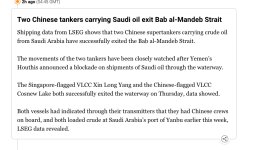
Potentially accelerating growing economic pressure are new threats from Iran-aligned Houthi groups that they will be targeting ships passing through Bab al-Mandab, the passageway to the Red Sea that has served as a relief valve for some oil from Saudi Arabia during the conflict. The group claimed to have attacked two Saudi tankers in the Red Sea early on Thursday morning.

On Tuesday, top defense officials faced withering pressure from lawmakers on the Senate Appropriations Committee, who demanded a clear strategy for the war.
“We need some hard answers and some straight talk,” Sen. John Kennedy, a Republican of Louisiana, said Wednesday, pressing Defense Secretary Pete Hegseth and Chairman of the Joint Chiefs of Staff Dan Caine on the consequences if the US withdrew from the conflict.
Three boys play in the shallow waters of the Strait of Hormuz, as a plume of smoke rises from an explosion in the background, off Bandar Abbas, Iran, Monday, July 13, 2026. (Razieh Poudat/ISNA via AP)

Three boys play in the shallow waters of the Strait of Hormuz, as a plume of smoke rises from an explosion in the background, off Bandar Abbas, Iran, Monday, July 13, 2026. (Razieh Poudat/ISNA via AP)
(Razieh Poudat/ISNA/AP)

Shifting success​

Trump and Hegseth had initially declared victory in the early days of the conflict, insisting that Iran had been militarily defeated.

Under intense pressure from the White House to prove that the war is going well, Hegseth and CENTCOM Commander Adm. Brad Cooper have taken steps to restrict information sharing related to the conflict with other parts of the military and the intelligence community
, CNN has previously reported.

Although its military was unquestionably degraded, Iran began striking energy infrastructure across the Gulf region, ratcheting up the economic consequences of the conflict not just for the United States but for its allies.

That’s led to repeated pressure from allies to curtail US military operations and find a deal that could open the Strait of Hormuz and end the threat to nearby countries.
Iran has shown its willingness to absorb economic and military pain in the belief that it might outlast Trump’s political appetite for the conflict, said Alex Vatanka, an analyst with the Middle East Institute in Washington who specializes in Iran. But that doesn’t mean that
Iran’s leaders can afford for the war to go on forever.
“Those against diplomacy just have a fundamental conception that the US never delivers. But those are not the people who are running Iran today,” Vatanka said. “They might not like Trump, or trust the US, but they still think that’s better than risking an open-ended war.”

The US has also restarted a blockade that some analysts believe may be doing more to push Tehran towards concessions than the bombing.
But for now, Iran’s ability to threaten the Strait of Hormuz — and its neighbors — remains its greatest point of leverage.

Iran has also learned it can leverage targeted strikes against the energy infrastructure of Gulf countries as an asymmetric capability after doing so to great effect during the war. That tool isn’t going away, a second source familiar with US intelligence assessments said.

Trump officials insist that the objective of the conflict remains to prevent Iran from obtaining a nuclear weapon. But that messaging has been muddled by the administration’s previous insistence that it “obliterated” Iran’s nuclear capabilities in a series of strikes last year. Since Trump launched this war, the closure of the Strait of Hormuz has become the dominating issue in the conflict.

“This is a bombing campaign in search of a strategy,” Joe Kent, a former Trump administration political appointee who resigned over the spin up to the conflict, said in a post on X. “We are choosing escalation when de-escalation remains an option, entrenching ourselves deeper into a broader war that we don’t have the capability or desire to sustain. There is not a military solution here that will lead to a win. More bombing will not convince Iran to open the SOH or to give us the deal we want, it will only harden their position.”
CNN’s Zachary Cohen and Davis Winkie contributed to this story
 
Houthis now starting to listen, no Pak ship attacked yet and Chinese shops allowed to pass

1784878609481.png
 
--
1000023983.jpg
UK 'ready to defend' itself after Iran warns of 'consequences' for US access
The UK says it is ready to defend itself, after Iran warned of "consequences" for opening its bases to the US military.

A little earlier, Iran's Ministry of Foreign Affairs said it "strongly condemns the decision" to allow the US's "illegal military attacks" (see the post below this one).

"Any party that participates in any way in committing military aggression against Iran will be responsible for the consequences... of its decision," a spokesperson said.

The UK's Ministry of Defence gave a stark response to Iran's threat:

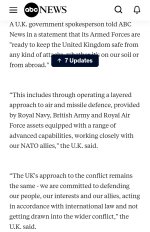
"Our Armed Forces are ready to keep the United Kingdom safe from any kind of attacks, whether it's on our soil or from abroad. The UK stands ready 24/7 to defend itself.

"This includes through operating a layered approach to air and missile defence, provided by Royal Navy, British Army and Royal Air Force assets equipped with a range of advanced capabilities, working closely with our NATO allies.

"The UK's approach to the conflict remains the same - we are committed to defending our people, our interests and our allies, acting in accordance with international law and not getting drawn into the wider conflict."
--
If Iran launches a direct ballistic missile, cyber, or drone attack against RAF Fairford in England, it constitutes an attack on sovereign European territory. This would legally allow the UK to invoke Article 5, compelling NATO allies to consider it an attack on all members.

Even an attack on RAF Akrotiri which is technically outside the NATO geographical zone, any large scale attack on such a critical infrastructure could lead to NATO invoking Article 4 leading to a non-article 5 coalition response by NATO if there is a belief that "that a NATO member feels its territorial integrity, political independence, or security is threatened.".
 
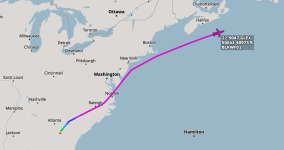
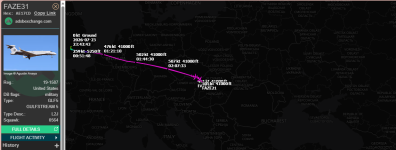
USAF E11-A Callsign blackwolf01 was tracked yesterday departing Atlanta headed to the UK:
1784883036011.png

After clearing London control, it landed in Ramstein Germany and has been tracked again today headed towards CENTCOM AOR
1784883215825.png

The E11A functions as the US military BACN (Battlefield Airborne Communications Node) the aircraft is a specialized U.S. Air Force communications relay and gateway system nicknamed "Wi-Fi in the sky," it acts as a high-altitude translator and router to connect military assets that otherwise cannot communicate due to incompatible radio waveforms or blocking mountain terrain.

It is able to provide battlespace awareness to both troops on the ground commanders, planners and controllers back in the US in real-time:
1784883383640.png
 
USAF E11-A Callsign blackwolf01 was tracked yesterday departing Atlanta headed to the UK:
View attachment 207887

After clearing London control, it landed in Ramstein Germany and has been tracked again today headed towards CENTCOM AOR
View attachment 207888

The E11A functions as the US military BACN (Battlefield Airborne Communications Node) the aircraft is a specialized U.S. Air Force communications relay and gateway system nicknamed "Wi-Fi in the sky," it acts as a high-altitude translator and router to connect military assets that otherwise cannot communicate due to incompatible radio waveforms or blocking mountain terrain.

It is able to provide battlespace awareness to both troops on the ground commanders, planners and controllers back in the US in real-time:
View attachment 207890

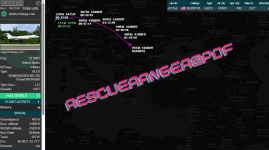
The x 2 USAF EA37B Compass Call' that arrived at RAF Fairford yesterday departed UK headed towards CENTCOM AOR.
1784885292727.png1784885390716.png


Compass Call is a tactical airborne electromagnetic attack weapon system that denies, degrades and disrupts adversary command, control, communications, radars, and navigation systems to restrict enemy electromagnetic-based battlespace coordination. The weapon system neutralizes enemy air defenses by preventing the transmission of essential information between sensors, weapon systems and control networks.

To view this content we will need your consent to set third party cookies.
For more detailed information, see our cookies page.

I must admit watching this explainer video made me die of cringe. What is that voiceover? :ROFLMAO:
 
Only two things holding him back are :

  1. Forecasts about Iran have proven incorrect repeatedly and this latest demand to go all out and finish them off may suffer the same fate.
  2. The US has proven unable to protect Gulf oil infrastructure, the destruction of which will have severe negative effects on the US economy.
Hmm, looks like my assessment is incorrect ☹️ Trump the lifelong bully and thug is so frustrated over Iran he is going back to all out war.
Trump’s Foul-Mouthed Oval Office Meltdown Is Leaked​


President Donald Trump flew into an expletive-laden rage in the Oval Office over his bungled war on Iran, according to people who heard the meltdown.

The U.S. and Iran remain locked in a rapidly escalating war, with American forces on a run of 13 consecutive nights of airstrikes. Tensions have peaked since Iran rejected a U.S. ceasefire proposal delivered by Iraq on Thursday.

To make matters worse for petulant Trump, crude oil prices topped $100 a barrel for the first time since May after fighting metastasized into other parts of the region.
On Friday, Al Jazeera reported a top Iranian diplomatic official as saying the U.S. is “up the creek.”

Indeed, he has an ever-growing headache. He is increasingly frustrated by the length of the war, one that he said would be over in a matter of weeks. It’s been almost five months.

He showed this frustration when he was quizzed by a reporter about the timeline at Joint Base Andrews in Maryland, after attending Sunday’s World Cup final in New Jersey. “On Iran, Mr. President, you said at the start of the war it would be four or five weeks,” the reporter said. “Now it’s nearly five months?”

Trump immediately shot back that the reporter had somehow undersold the scale of the task at hand. “This is a far bigger job that we’re doing,” he said. “We were doing a little job, stopping them from having a certain capability. Now, we’re just ending it.”

He continued with a rambling, garbled answer before stopping the interview and hot-footing it to the waiting Marine One helicopter.

He was much clearer inside the White House, according to insiders who spoke to the Wall Street Journal. He reportedly went into meltdown mode, calling Iranian leaders “scumbags and lunatics” in a rant peppered with expletives.

Failed negotiations with Iran have made him angry, according to people familiar with the matter. One senior administration official told the Journal that the president believes that the only thing Iran understands is military force.

They said that he was in “revenge mode” against Tehran, adding that he has no bright ideas beyond continuing strikes.


“The United States signed an MOU with Iran and they broke it, shot at commercial ships, and killed American soldiers. President Trump is not going to stand by and allow this terrorist behavior to occur,” White House press secretary Karoline Leavitt said in a statement. The 28-year-old added that Iran was paying for its behavior and would continue to do so “until they come to the table in what President Trump deems a meaningful way.”

However, a senior Iranian diplomatic source told Al Jazeera that Trump’s approach won’t work. They lamented the “administration’s coercive posturing and continued acts of aggression.”

He accused the U.S. of breaking the Memorandum of Understanding, signed in June. “The U.S. reneging on its commitments under the 17 June MoU is the cause of the current situation,” he noted, adding that Tehran considers all options to be on the table, including diplomacy and—of course—force.

Indeed, the Iranian military released a statement on Friday morning, saying that it has launched drones over U.S. bases in Jordan and Bahrain in response to American attacks on targets in Iran.

The Journal cited “people familiar with the matter” who said that Trump has complained about the Kafkaesque network of people that his diplomats must navigate to reach Iranian leadership. He has also moaned that every time he feels progress has been made at the negotiating table, Iran strikes a U.S. target, undoing all the good work, the sources said.

His headaches have been made worse by claims from Israeli intelligence that he is personally a target. Israeli sources told the WSJ earlier this month that Iran had devised a plot to kill him.

Trump referenced being “No. 1 on the kill list for Iran” when asked why he flew home from a NATO summit in Turkey on an older Air Force One instead of his new plane, the $400 million Boeing 747-800 that was gifted to him by Qatar. After initially claiming he used the older jet for “old times’ sake,” it later emerged that his new Air Force One lacks the same defensive systems—including antimissile capabilities—as the old one, and the Secret Service urged the switch.

The Journal has now been told that this threat extends to his top aides. They have been told to stop using car services as a result, according to people familiar with the matter.

Trump’s answer appears to be to step up the war. He has told aides that he thinks he can break the Iranians’ resolve with another bombing campaign, the Journal reported, citing a person familiar with Trump’s views.

“I believe he thinks he gave peace a chance,” said Texas Republican Rep. Michael McCaul, a senior member of the House Foreign Affairs Committee. “He’s going back to Plan A, which is the military operation.”

The White House has been approached for comment.
 
I’m surprised at the lack of ballistic missile fire from Iran in recent days. Suppression efforts are working or Iran is running into stockpile/launcher issues.
 
I’m surprised at the lack of ballistic missile fire from Iran in recent days. Suppression efforts are working or Iran is running into stockpile/launcher issues.
No notable difference.

To view this content we will need your consent to set third party cookies.
For more detailed information, see our cookies page.
 
Bro
Land invasion is easy to say - in practice its next to impossible. The losses would be astronomical. Is orange brain capable of answering to his inbreds when they see the body bags?
Maybe the thinking (twisted) is that flag draped coffins of soldiers could be used to turn the tide of American opinion on the war.

As it is, critics of this unprovoked and illegal attack on Iran have to constantly declare how ‘the Iranian regime is evil/bad’. So demonization of Iran (and directly/indirectly Islam and Muslims) continues unabated.

Quite a few American Zionists and Israeli puppets on the media are arguing about how ‘America is rich and can easily fund the war and Israel and absorb the casualties’ … but apparently not rich enough to fund school lunches, healthcare and education at home.
 
I’m surprised at the lack of ballistic missile fire from Iran in recent days. Suppression efforts are working or Iran is running into stockpile/launcher issues.

Iran does not need to fire as many missiles now to get to a target as the defenses can no longer keep up with the missiles that Iran is firing, and far far more of them are getting through successfully. Iran has burnt through the bulk of the USA intercept fleet, to the point where the Americans are ordering PAC2 missiles because they can get them quicker than the later variants.


The low Iranian missile firing rates is the turning of the tide from advantage USA, to advantage Iran now.
 

Users who are viewing this thread

Back
Top