Chinese Universities Dominate Asia’s Best and IISc Still Leads India

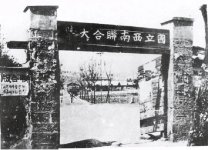
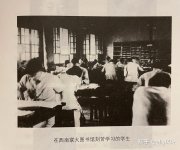
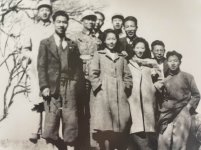
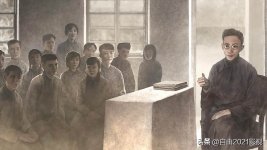
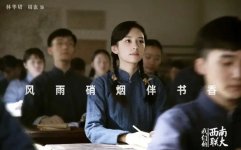
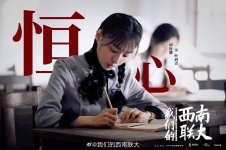
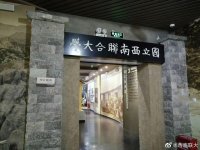
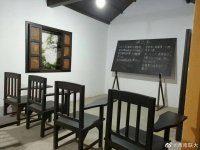
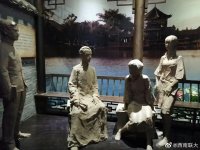
During WW2 ( Chinese anti Japanese War) Peking University, Tsinghua University and Nankai University moved to Yunnan and merged to form National Southwestern Associated University, the most famous exile university in the Chinese history.

Illustrious alumni

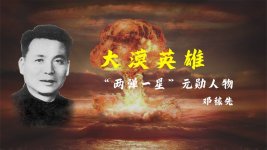
Deng Jiaxian, or Chia Hsien Teng[1] (simplified Chinese: 邓稼先; traditional Chinese: 鄧稼先; pinyin: Dèng Jiàxiān; Wade–Giles: Teng Chia-Hsien; June 25, 1924 – July 29, 1986), was a Chinese nuclear physicist and academician of Chinese Academy of Sciences. He was a leading organizer and key contributor to the Chinese nuclear weapon programs.
e64ab515aed6494193cbd946625557dd~tplv-pk90l89vgd-crop-center_864_486.jpeg

Qian Sanqiang (Chinese: 钱三强; October 16, 1913 – June 28, 1992), also known as Tsien San-Tsiang, was a Chinese nuclear physicist and among the leading scientists of the Two Bombs, One Satellite program. Due to his central role in the development of China's nuclear industry and nuclear weapons program, he is referred to as the "father of China's atomic bomb".
调整大小 maxresdefault (1).jpg

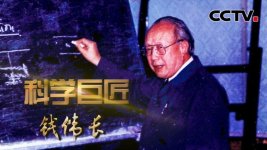
Qian Weichang or Chien Wei-zang (simplified Chinese: 钱伟长; traditional Chinese: 錢偉長; pinyin: Qián Wěicháng; Wade–Giles: Ch'ien Wei-ch'ang; 9 October 1912 – 30 July 2010) was a Chinese physicist and applied mathematician, as well as academician of the Chinese Academy of Sciences. He served as President of Shanghai University.He was one of the three famous “Qians” in China’s science and technology field, along with Qian Xuesen, the father of China’s space program, and Qian Sanqiang, a nuclear physicist who oversaw development of China’s nuclear weapons program.
调整大小 maxresdefault (1) (1).jpg
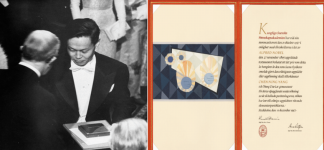
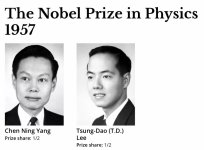
Yang Chen-Ning or Chen-Ning Yang (Chinese: 杨振宁; pinyin: Yáng Zhènníng; born 1 October 1922),[1] also known as C. N. Yang or by the English name Frank Yang, is a Chinese theoretical physicist who made significant contributions to statistical mechanics, integrable systems, gauge theory, and both particle physics and condensed matter physics. He and Tsung-Dao Lee received the 1957 Nobel Prize in Physics
调整大小 402153098244484c90a7106597d74071.png
Tsung-Dao Lee (Chinese: 李政道; pinyin: Lǐ Zhèngdào; born November 24, 1926) is a Chinese-American physicist, known for his work on parity violation, the Lee–Yang theorem, particle physics, relativistic heavy ion (RHIC) physics, nontopological solitons, and soliton stars. He was a University Professor Emeritus at Columbia University in New York City, where he taught from 1953 until his retirement in 2012.

In 1957, at the age of 30, Lee won the Nobel Prize in Physics with Chen Ning Yang for their work on the violation of the parity law in weak interactions, which Chien-Shiung Wu experimentally proved from 1956 to 1957, with her legendary Wu experiment.

Lee remains the youngest Nobel laureate in the science fields after World War II.
55e736d12f2eb9389b343761de628535e4dd6fc3.jpg
 
During WW2 ( Chinese anti Japanese War) Peking University, Tsinghua University and Nankai University moved to Yunnan and merged to form National Southwestern Associated University, the most famous exile university in the Chinese history.

调整大小 3a6418490b5f9fe41a75d4a038808212_tplv-dy-resize-origshort-autoq-75_330.jpeg27f4-c94442fce2aae99cb7a38e791aab65e8.jpgv2-88524d44be0c48963741efc88c421c06_1440w_proc.jpg调整大小 604E44EB386E8DD9DEB61825D58_E8D53A4F_383E60.jpg
 
During WW2 ( Chinese anti Japanese War) Peking University, Tsinghua University and Nankai University moved to Yunnan and merged to form National Southwestern Associated University, the most famous exile university in the Chinese history.

In 1937 PKU had to merge with Tsinghua university and left Beijing during WW2, (China anti Japanese War), thousands of students carrying their own food and belongings traveled thousands of miles on foot, climbing mountains and crossing rivers, from Beijing to the far south Yunnan province to save the elites for the future Chinese nation.

National Southwestern Associated University memorial song

Stars brightening up China​

To view this content we will need your consent to set third party cookies.
For more detailed information, see our cookies page.

星耀中华​

痛南渡 辞宫阙
望中原 遍洒血
师生恨 同悲切
抵绝徼 继学业

桢干质 历霜雪
为鬼雄 为人杰
四万万 志奇崛
历八载 贼寇灭

千秋耻 终已雪
神州复 弦歌接
功勒石 昭日月
纪嘉庆 告来哲

见仇寇 如烟灭
维三校 兄弟列
为一体 如胶结
同艰难 共欢悦

联合竟 使命彻
神京复 还燕碣
功勒石 昭日月
纪嘉庆 告来哲
 

Asia University Rankings 2025​

Explore the best universities in Asia with the Times Higher Education Asia University Rankings 2025, providing the most comprehensive assessment of Asia’s research universities. This year, we’ve ranked 853 universities from 35 countries/territories, assessing their research, teaching, knowledge transfer and international outlook.

Asian universities: highlights

  • China leads the rankings, retaining first and second place and holding five of the top 10 spots
  • Singapore, Japan and Hong Kong also feature in the top 10
  • Four countries rank for the first time: Uzbekistan, Bahrain, Mongolia and Syria
  • All six of Hong Kong’s ranked universities make the top 50 for the first time since 2017
Explore the table below to discover the full ranking and how universities across Asia are performing this year.

View attachment 114112


National Taiwan University is not even on the list?

This is surprising!

What is happening to Taiwan?

Taiwanese politicians always talk and brag about righteousness, but they can't do anything right.

Shameful!!!
 
Last edited:
University of Tokyo is the only university from non Chinese majority countries and regions making the top 10 list.

View attachment 114118

What about Seoul National University?

It's not even in the top ten.

Even uncreative, uninnovative places like Hong Kong and Singapore have better universities.
 

Asia University Rankings 2025​

Explore the best universities in Asia with the Times Higher Education Asia University Rankings 2025, providing the most comprehensive assessment of Asia’s research universities. This year, we’ve ranked 853 universities from 35 countries/territories, assessing their research, teaching, knowledge transfer and international outlook.

Asian universities: highlights

  • China leads the rankings, retaining first and second place and holding five of the top 10 spots
  • Singapore, Japan and Hong Kong also feature in the top 10
  • Four countries rank for the first time: Uzbekistan, Bahrain, Mongolia and Syria
  • All six of Hong Kong’s ranked universities make the top 50 for the first time since 2017
Explore the table below to discover the full ranking and how universities across Asia are performing this year.

View attachment 114112


And we are told India is a competitor to China 😂
 
Chinese universities continued to dominate the Asian university evaluation released by Times Higher

LEEYONGIK [email protected]
Input : 2025-05-06 17:54:19

Chinese universities continued to dominate the Asian university evaluation released by Times Higher Education (THE), a British university evaluation agency. On the other hand, the rankings of most of Korea's top universities fell, contrasting with the advancing Chinese universities.

According to the "THE Asian University Evaluation 2025" released on the 6th, both Seoul National University, which ranked highest among domestic universities last year, and Yonsei University, which ranked second, fell from last year. Seoul National University, which was ranked 11th last year, fell for the third consecutive year, ranking 14th last year and 15th this year. Yonsei University, which ranked 13th in 2023 and 17th in 2024, also fell to 19th this year.

KAIST, which was ranked 18th last year, rose one spot to 17th, and Sungkyunkwan University jumped three places to tie for 19th with Yonsei University.

THE has been publishing the results of Asian university evaluation for 13 years using five indicators: research quality (30%), research environment (28%), educational environment (24.5%), industry-academic cooperation (10%), and internationalization (7.5%).

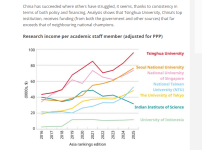
In this Asian university evaluation, the strength of Chinese universities was remarkable. With no significant change in the rankings overall, mainland Chinese universities took half of the top 10 as they did last year. For many years, Tsinghua University and Beijing University, ranked first and second, remained in place, and Fudan University and Storage University rose one space each to seventh and eighth. China's Shanghai Transportation University fell from 7th to 10th, but the rest were not much different. THE said, "There were 25 Chinese universities that ranked the highest ever in this year's evaluation," adding, "The competitiveness of Chinese universities continues to improve."

The background of China's continued strength was the Chinese government's "two-tier project" and large-scale investment. In 2015, China launched a dual-class project with the aim of fostering world-class universities and departments, and selected a total of 137 universities. "Until 2022, the gap between universities selected for dual-class projects and other universities was not large, but the gap almost doubled in 2024," explained Billy Wong, chief data scientist at THE.

In addition to mainland Chinese universities, universities in Singapore and Hong Kong also showed strong performance. In Singapore, National University of Singapore and Nanyang Technological University ranked third and fourth respectively. Hong Kong University (6th) and Hong Kong Chinese University (9th) were also listed in the top 10. For the first time since 2017, all six universities in Hong Kong have made the top 50. In the case of Japan, Tokyo University, which raised its ranking from 8th to 5th last year, maintained its ranking, followed by Kyoto University (13th) and Tohoku University (21st).

Compared to other universities in Asia, Korean universities scored high in industry-academic cooperation, but scored lower in internationalization, research environment, and educational environment. The level of internationalization is determined by the ratio of foreign students and professors and the ratio of international joint research. The research environment is judged by the research reputation within the academic world, the investment of research funds, and the number of excellent papers, and the educational environment is judged by the educational reputation, the ratio of faculty members to students, and the ratio of doctoral degrees.

In fact, nine Korean universities (Seoul National University, KAIST, Yonsei University, Sungkyunkwan University, Pohang University of Science and Technology, Korea University, Ulsan National University of Science and Technology, Hanyang University, and Kyunghee University) all scored higher than 97 points in industry-academia cooperation. This item had a weight of 7.5% until the year before last year, but increased to 10% since last year, which was more advantageous for Korean universities. However, in the research and educational environment, it remained in the 40s to 70s, showing weakness compared to competing universities in other countries.

The presidents of each university agreed that more national support is needed to improve the competitiveness of the university. Yang Oh-bong, president of Chonbuk National University, who serves as the president of the Korea University Education Council, stressed, "We need a policy to intensively foster local base universities at the level of Seoul National University." Lee Ki-jung, president of Hanyang University, also said, "Korea has a higher proportion of private universities than other countries, and tuition fees have been frozen for 16 years, which is why investment in research infrastructure and reinforcement of excellent teachers are slow."

 
The top universities Peking, Tsinghua and Fudan, their graduates are most pro-US and pro-West bunch in China, quite a number of them are in full support of US dominated international system. Something is wrong in Chinese educational system.
To view this content we will need your consent to set third party cookies.
For more detailed information, see our cookies page.
 
Not surprised...If you look at LLM AI leadership board its completely dominated by China now

 
The top universities Peking, Tsinghua and Fudan, their graduates are most pro-US and pro-West bunch in China, quite a number of them are in full support of US dominated international system. Something is wrong in Chinese educational system.

‘Discouraged’ at university, maths star Wang Hong spurs Chinese education debate

Fields Medal winner’s candid remarks resonate with young students in China who say they’ve had similar experiences

9d78f751-a9fa-4b77-9f29-484d8a5ec154_9e116e0c.jpg


Many young students in China have been inspired by the achievement of Wang Hong, the first Chinese woman to receive the Fields Medal – the world’s most prestigious prize in mathematics.

But it is the 35-year-old’s candid remarks about feeling “discouraged” in her early years at an elite Chinese university that appear to have struck the deepest chord.

Those comments have set off a broader debate about the country’s education system and whether it provides the support students need to develop confidence and pursue original ideas.

Wang and her compatriot Deng Yu, 37, were among four mathematicians awarded the Fields Medal on July 23. It was also the first time two Chinese mathematicians had won the prize in the same year.

In interviews since then, Wang has spoken about how she lost confidence as a young undergraduate at Peking University but regained it when she continued her studies in France.

According to a profile of Wang in Guangxi Daily, she saw mathematics as an “inner sanctuary for the mind” when she was at secondary school.

But this changed when she started studying at Peking University at the age of 16.

“When I went to college, suddenly mathematics [became] difficult,” she said in an interview posted by the Simons Foundation, a US-based organisation supporting research in mathematics and basic sciences.

“It took effort and discipline to actually learn it, and it took me many years. I felt a little discouraged.”

In another interview with her alma mater Ecole Polytechnique, Wang said studying in France was a turning point for her.

“That was the first time I realised I didn’t have to figure out everything by myself, and someone is there willing to help me,” she said, recalling a reading course with French mathematician Yvan Martel that gave her the support she needed.

That helped her to become “more patient and less nervous”, Wang said, adding that she eventually learned to work through most mathematical problems independently.

Wang, who was born in the southern Guangxi Zhuang region, started her mathematical training at Peking University, graduating in 2011.

She continued her studies in France and completed a PhD at the Massachusetts Institute of Technology in 2019. She is now a professor at New York University’s Courant Institute as well as at the Institut des Hautes Etudes Scientifiques in France.

Wang’s remarks appear to have resonated among young people in China, with “discouraged” becoming a buzzword on social media.

Many commenters say they have had a similar experience – plagued by self-doubt despite years of hard work as they navigated an education system where success is often only measured through academic achievement and visible outcomes.

In one post on social media, a doctoral student said she was relieved and grateful to hear Wang’s story. “Thank you, Wang Hong. You’ve made me realise that I have the right to feel discouraged,” the student wrote.

She said throughout university she had received little positive feedback and had few memories of discussing academic questions with her supervisors.

“The system placed almost exclusive emphasis on measurable outputs and I gradually internalised that standard,” she wrote. “The joy I once found in acquiring new knowledge and thinking through ideas was no longer recognised as meaningful feedback.”

This was not because her supervisors did not care – she said they helped students with publications, career opportunities and professional networks but simply did not have time for academic mentoring.

In China, academics are often required to balance their research output targets – which are linked to promotion and evaluation – with teaching and other responsibilities. It leaves little time for the mentoring and exchanges that are essential to academic development.

These struggles are part of a long-standing debate over China’s approach to education. While the country produces many high-achieving students, there are questions over whether its academic system provides enough space and support for students with potential.

3216c592-0a55-4877-92b2-d55374b20d65_98c54a39.jpg

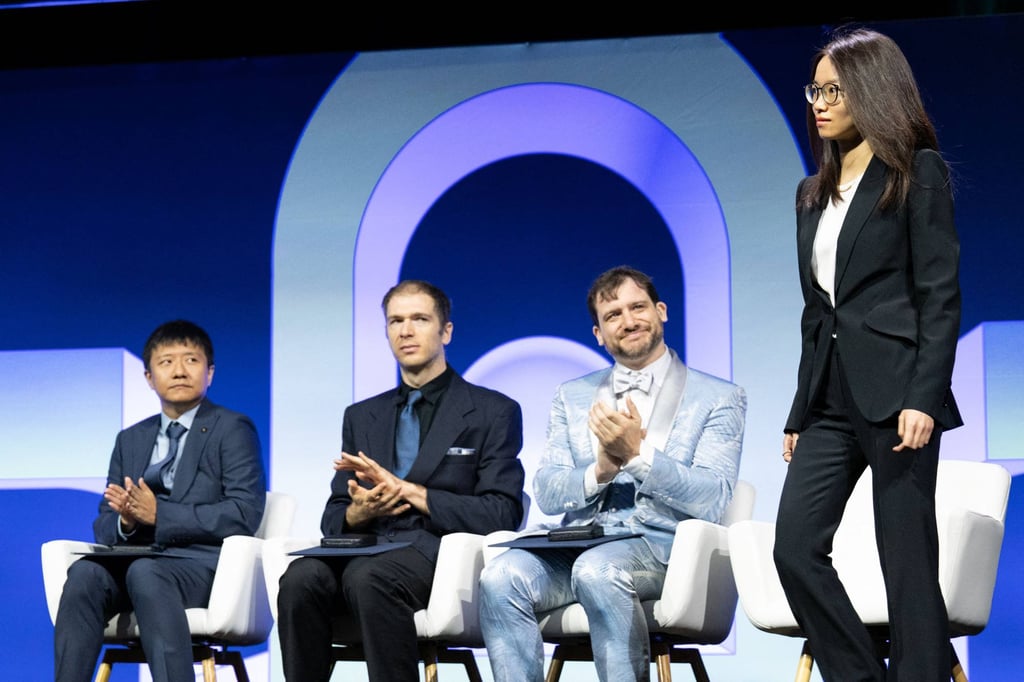
This year’s Fields Medallists (from left) Deng Yu, John Pardon, Jacob Tsimerman and Wang Hong. Photo: AFP

One commenter on social media said Wang was fortunate to have eventually found a learning environment that suited her development.

“But how many ‘slow-blooming’ talents are discouraged before they ever have the chance to flourish?” the person wrote. “Perhaps the question we should ask is not whether individuals have worked hard enough, but whether we rely on an overly narrow standard to measure talent.”

China’s top decision-makers have for years called for changes to what is seen as an inflexible academic system with biased evaluation criteria and an overreliance on papers, titles, degrees and awards. Critics say the system has hindered the country’s efforts to innovate.

Song Chunwei, a professor at Peking University’s School of Mathematical Sciences who taught Wang when she was an undergraduate, said young people in the higher education system faced the pressure of “climbing step by step” through a series of evaluations, many of which were not directly related to their academic research.

Young researchers often faced intense pressure to pass these evaluations because failing could threaten their academic positions, Song told state-run newspaper The Beijing News.

He said that pressure could push them towards “short-term and easily measurable” work that might not be beneficial to their long-term academic development.

“When [students or academics] are under excessive pressure, even if they work hard, it is difficult to reach their ideal state. It is like being driven by a whip, rather than acting out of their own will,” Song said.

Hu Xijin, the outspoken former editor of nationalist tabloid Global Times, also weighed in on the debate, writing on social media that Wang’s story should not be viewed as a simple contrast between Chinese and overseas education.

He said there were two competing views – that Wang only fully realised her potential after leaving China, and that she had done this because of a strong educational foundation from Peking University.

According to Hu, the fact that both Wang and Deng had achieved their career breakthroughs overseas after undergraduate studies in China could be a source of “regret” for many people in the country.

Deng also began his undergraduate studies at Peking University before transferring to MIT, where he completed his mathematics degree. He earned a PhD at Princeton University and is now a mathematics professor at the University of Chicago.

“People would hope that Chinese universities and institutions such as Peking University would one day be able to directly nurture Fields Medallists and Nobel Prize-level scientists of their own,” Hu wrote.

“Many also believe that China is now closer than ever to producing recipients of the world’s highest scientific honours domestically.”

He added that the discussion could have a positive outcome by highlighting the value of “opening up” and the role of international academic and professional experiences in young researchers’ development.

https://www.scmp.com/news/china/pol...star-wang-hong-spurs-chinese-education-debate
 
‘Discouraged’ at university, maths star Wang Hong spurs Chinese education debate

Fields Medal winner’s candid remarks resonate with young students in China who say they’ve had similar experiences

9d78f751-a9fa-4b77-9f29-484d8a5ec154_9e116e0c.jpg


Many young students in China have been inspired by the achievement of Wang Hong, the first Chinese woman to receive the Fields Medal – the world’s most prestigious prize in mathematics.

But it is the 35-year-old’s candid remarks about feeling “discouraged” in her early years at an elite Chinese university that appear to have struck the deepest chord.

Those comments have set off a broader debate about the country’s education system and whether it provides the support students need to develop confidence and pursue original ideas.

Wang and her compatriot Deng Yu, 37, were among four mathematicians awarded the Fields Medal on July 23. It was also the first time two Chinese mathematicians had won the prize in the same year.

In interviews since then, Wang has spoken about how she lost confidence as a young undergraduate at Peking University but regained it when she continued her studies in France.

According to a profile of Wang in Guangxi Daily, she saw mathematics as an “inner sanctuary for the mind” when she was at secondary school.

But this changed when she started studying at Peking University at the age of 16.

“When I went to college, suddenly mathematics [became] difficult,” she said in an interview posted by the Simons Foundation, a US-based organisation supporting research in mathematics and basic sciences.

“It took effort and discipline to actually learn it, and it took me many years. I felt a little discouraged.”

In another interview with her alma mater Ecole Polytechnique, Wang said studying in France was a turning point for her.

“That was the first time I realised I didn’t have to figure out everything by myself, and someone is there willing to help me,” she said, recalling a reading course with French mathematician Yvan Martel that gave her the support she needed.

That helped her to become “more patient and less nervous”, Wang said, adding that she eventually learned to work through most mathematical problems independently.

Wang, who was born in the southern Guangxi Zhuang region, started her mathematical training at Peking University, graduating in 2011.

She continued her studies in France and completed a PhD at the Massachusetts Institute of Technology in 2019. She is now a professor at New York University’s Courant Institute as well as at the Institut des Hautes Etudes Scientifiques in France.

Wang’s remarks appear to have resonated among young people in China, with “discouraged” becoming a buzzword on social media.

Many commenters say they have had a similar experience – plagued by self-doubt despite years of hard work as they navigated an education system where success is often only measured through academic achievement and visible outcomes.

In one post on social media, a doctoral student said she was relieved and grateful to hear Wang’s story. “Thank you, Wang Hong. You’ve made me realise that I have the right to feel discouraged,” the student wrote.

She said throughout university she had received little positive feedback and had few memories of discussing academic questions with her supervisors.

“The system placed almost exclusive emphasis on measurable outputs and I gradually internalised that standard,” she wrote. “The joy I once found in acquiring new knowledge and thinking through ideas was no longer recognised as meaningful feedback.”

This was not because her supervisors did not care – she said they helped students with publications, career opportunities and professional networks but simply did not have time for academic mentoring.

In China, academics are often required to balance their research output targets – which are linked to promotion and evaluation – with teaching and other responsibilities. It leaves little time for the mentoring and exchanges that are essential to academic development.

These struggles are part of a long-standing debate over China’s approach to education. While the country produces many high-achieving students, there are questions over whether its academic system provides enough space and support for students with potential.

3216c592-0a55-4877-92b2-d55374b20d65_98c54a39.jpg

This year’s Fields Medallists (from left) Deng Yu, John Pardon, Jacob Tsimerman and Wang Hong. Photo: AFP

One commenter on social media said Wang was fortunate to have eventually found a learning environment that suited her development.

“But how many ‘slow-blooming’ talents are discouraged before they ever have the chance to flourish?” the person wrote. “Perhaps the question we should ask is not whether individuals have worked hard enough, but whether we rely on an overly narrow standard to measure talent.”

China’s top decision-makers have for years called for changes to what is seen as an inflexible academic system with biased evaluation criteria and an overreliance on papers, titles, degrees and awards. Critics say the system has hindered the country’s efforts to innovate.

Song Chunwei, a professor at Peking University’s School of Mathematical Sciences who taught Wang when she was an undergraduate, said young people in the higher education system faced the pressure of “climbing step by step” through a series of evaluations, many of which were not directly related to their academic research.

Young researchers often faced intense pressure to pass these evaluations because failing could threaten their academic positions, Song told state-run newspaper The Beijing News.

He said that pressure could push them towards “short-term and easily measurable” work that might not be beneficial to their long-term academic development.

“When [students or academics] are under excessive pressure, even if they work hard, it is difficult to reach their ideal state. It is like being driven by a whip, rather than acting out of their own will,” Song said.

Hu Xijin, the outspoken former editor of nationalist tabloid Global Times, also weighed in on the debate, writing on social media that Wang’s story should not be viewed as a simple contrast between Chinese and overseas education.

He said there were two competing views – that Wang only fully realised her potential after leaving China, and that she had done this because of a strong educational foundation from Peking University.

According to Hu, the fact that both Wang and Deng had achieved their career breakthroughs overseas after undergraduate studies in China could be a source of “regret” for many people in the country.

Deng also began his undergraduate studies at Peking University before transferring to MIT, where he completed his mathematics degree. He earned a PhD at Princeton University and is now a mathematics professor at the University of Chicago.

“People would hope that Chinese universities and institutions such as Peking University would one day be able to directly nurture Fields Medallists and Nobel Prize-level scientists of their own,” Hu wrote.

“Many also believe that China is now closer than ever to producing recipients of the world’s highest scientific honours domestically.”

He added that the discussion could have a positive outcome by highlighting the value of “opening up” and the role of international academic and professional experiences in young researchers’ development.

https://www.scmp.com/news/china/pol...star-wang-hong-spurs-chinese-education-debate
jmvn39qflxlf1.jpg


It's like looking in a mirror. The Vietnamese Fields Medal winner also did his work in the West and used to speak out quite openly against authoritarianism. These days, the pro-Communist Party crowd in Vietnam can't stand him, and if he hadn't won that medal, there's a good chance he would have been locked up behind bars years ago.
 

Users who are viewing this thread

Back
Top