Beijingwalker
VIP Member

- Thread starter
- #16
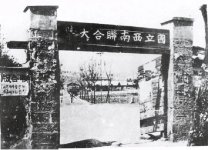
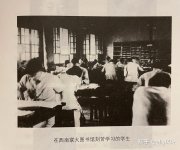
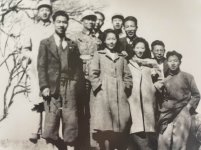
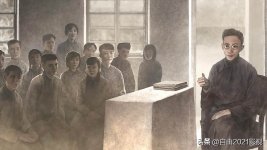
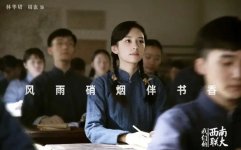
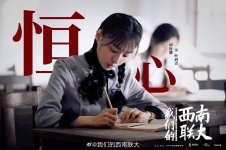
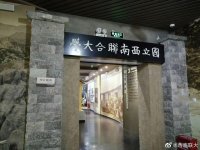
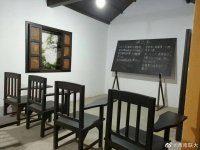
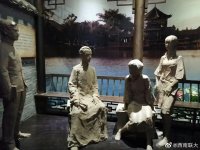
During WW2 ( Chinese anti Japanese War) Peking University, Tsinghua University and Nankai University moved to Yunnan and merged to form National Southwestern Associated University, the most famous exile university in the Chinese history.
Illustrious alumni
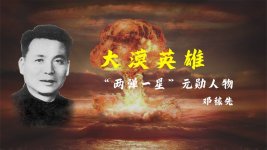
Deng Jiaxian, or Chia Hsien Teng[1] (simplified Chinese: 邓稼先; traditional Chinese: 鄧稼先; pinyin: Dèng Jiàxiān; Wade–Giles: Teng Chia-Hsien; June 25, 1924 – July 29, 1986), was a Chinese nuclear physicist and academician of Chinese Academy of Sciences. He was a leading organizer and key contributor to the Chinese nuclear weapon programs.
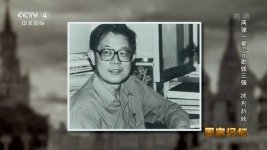
Qian Sanqiang (Chinese: 钱三强; October 16, 1913 – June 28, 1992), also known as Tsien San-Tsiang, was a Chinese nuclear physicist and among the leading scientists of the Two Bombs, One Satellite program. Due to his central role in the development of China's nuclear industry and nuclear weapons program, he is referred to as the "father of China's atomic bomb".
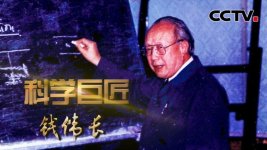
Qian Weichang or Chien Wei-zang (simplified Chinese: 钱伟长; traditional Chinese: 錢偉長; pinyin: Qián Wěicháng; Wade–Giles: Ch'ien Wei-ch'ang; 9 October 1912 – 30 July 2010) was a Chinese physicist and applied mathematician, as well as academician of the Chinese Academy of Sciences. He served as President of Shanghai University.He was one of the three famous “Qians” in China’s science and technology field, along with Qian Xuesen, the father of China’s space program, and Qian Sanqiang, a nuclear physicist who oversaw development of China’s nuclear weapons program.
Yang Chen-Ning or Chen-Ning Yang (Chinese: 杨振宁; pinyin: Yáng Zhènníng; born 1 October 1922),[1] also known as C. N. Yang or by the English name Frank Yang, is a Chinese theoretical physicist who made significant contributions to statistical mechanics, integrable systems, gauge theory, and both particle physics and condensed matter physics. He and Tsung-Dao Lee received the 1957 Nobel Prize in Physics
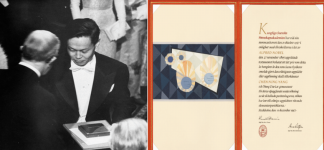
Tsung-Dao Lee (Chinese: 李政道; pinyin: Lǐ Zhèngdào; born November 24, 1926) is a Chinese-American physicist, known for his work on parity violation, the Lee–Yang theorem, particle physics, relativistic heavy ion (RHIC) physics, nontopological solitons, and soliton stars. He was a University Professor Emeritus at Columbia University in New York City, where he taught from 1953 until his retirement in 2012.
In 1957, at the age of 30, Lee won the Nobel Prize in Physics with Chen Ning Yang for their work on the violation of the parity law in weak interactions, which Chien-Shiung Wu experimentally proved from 1956 to 1957, with her legendary Wu experiment.
Lee remains the youngest Nobel laureate in the science fields after World War II.
Illustrious alumni
Deng Jiaxian, or Chia Hsien Teng[1] (simplified Chinese: 邓稼先; traditional Chinese: 鄧稼先; pinyin: Dèng Jiàxiān; Wade–Giles: Teng Chia-Hsien; June 25, 1924 – July 29, 1986), was a Chinese nuclear physicist and academician of Chinese Academy of Sciences. He was a leading organizer and key contributor to the Chinese nuclear weapon programs.
Qian Sanqiang (Chinese: 钱三强; October 16, 1913 – June 28, 1992), also known as Tsien San-Tsiang, was a Chinese nuclear physicist and among the leading scientists of the Two Bombs, One Satellite program. Due to his central role in the development of China's nuclear industry and nuclear weapons program, he is referred to as the "father of China's atomic bomb".
Qian Weichang or Chien Wei-zang (simplified Chinese: 钱伟长; traditional Chinese: 錢偉長; pinyin: Qián Wěicháng; Wade–Giles: Ch'ien Wei-ch'ang; 9 October 1912 – 30 July 2010) was a Chinese physicist and applied mathematician, as well as academician of the Chinese Academy of Sciences. He served as President of Shanghai University.He was one of the three famous “Qians” in China’s science and technology field, along with Qian Xuesen, the father of China’s space program, and Qian Sanqiang, a nuclear physicist who oversaw development of China’s nuclear weapons program.
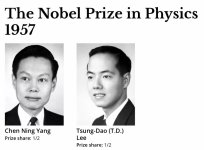
Yang Chen-Ning or Chen-Ning Yang (Chinese: 杨振宁; pinyin: Yáng Zhènníng; born 1 October 1922),[1] also known as C. N. Yang or by the English name Frank Yang, is a Chinese theoretical physicist who made significant contributions to statistical mechanics, integrable systems, gauge theory, and both particle physics and condensed matter physics. He and Tsung-Dao Lee received the 1957 Nobel Prize in Physics
Tsung-Dao Lee (Chinese: 李政道; pinyin: Lǐ Zhèngdào; born November 24, 1926) is a Chinese-American physicist, known for his work on parity violation, the Lee–Yang theorem, particle physics, relativistic heavy ion (RHIC) physics, nontopological solitons, and soliton stars. He was a University Professor Emeritus at Columbia University in New York City, where he taught from 1953 until his retirement in 2012.
In 1957, at the age of 30, Lee won the Nobel Prize in Physics with Chen Ning Yang for their work on the violation of the parity law in weak interactions, which Chien-Shiung Wu experimentally proved from 1956 to 1957, with her legendary Wu experiment.
Lee remains the youngest Nobel laureate in the science fields after World War II.