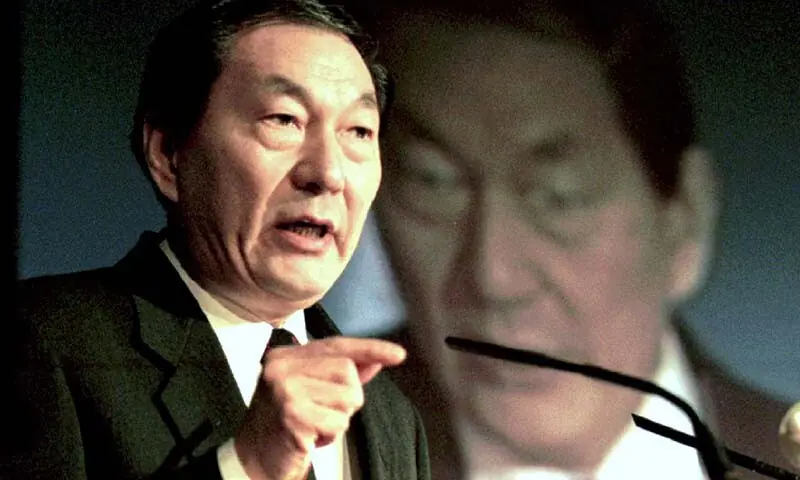
Zhu Rongji, the iron-fisted reformer: The virtuous and capable he represents is key to China's past and future.
Written by: Deng Feng
publishing: 2026-08-13 10:04 renew: 2026-08-13 12:17
On August 12, former Chinese Premier Zhu Rongji passed away in Beijing at the age of 98. In the process of China's modernization since the reform and opening up, Zhu Rongji was a legendary premier and a strong-willed reformer who left a deep impression on the world. He not only possessed outstanding economic governance capabilities but also an unwavering spirit of reform. With the support of Deng Xiaoping and Jiang Zemin, he established the system for China's socialist market economy, powerfully promoting China's economic take-off. Today, China's status as the world's second-largest economy and largest industrial nation, and the fact that the Chinese people have largely escaped poverty and enjoy a comfortable life, are inseparable from Zhu Rongji's landmark economic reforms.
Zhu Rongji possessed the spirit of a scholar-official and was an outstanding role model for Chinese officials. His life was full of ups and downs and trials, fully illustrating the saying of the Chinese philosopher Mencius: "Therefore, when Heaven is about to place a great responsibility on a person, it will first afflict his mind, exhaust his muscles and bones, starve his body, leave him destitute, and thwart his endeavors." Zhu Rongji was practically an orphan; his parents died early. In 1958, while working at the State Planning Commission, he was "punished" for his words and labeled a rightist. During the Cultural Revolution, he was sent to the countryside to do manual labor, planting wheat, rice, and cotton, raising pigs, and working as a cook. It wasn't until 1978, on the eve of the reform and opening up, that Zhu Rongji was rehabilitated and his Party membership was restored.
Zhu Rongji's 20 years as a rightist were the lowest point in his life. During this period, he suffered a series of blows and setbacks, but he possessed extraordinary willpower and resilience, and ultimately grew stronger in adversity. "Adversity makes one stronger." Deng Xiaoping's reform and opening up policy changed the political fate of the highly capable, responsible, and well-trained Zhu Rongji, allowing him to rise to prominence overnight.
On February 5, 1989, Jiang Zemin and Zhu Rongji accompanied Deng Xiaoping to celebrate the Spring Festival with Shanghai's Party, government, and military leaders. (China Communist Party News Network)
After working for many years in the State Planning Commission and the State Economic Commission, Zhu Rongji came to Shanghai in 1987 and began to shine. During his tenure as Mayor and Party Secretary of Shanghai, his integrity, courage, pragmatism, and outstanding economic governance abilities were widely praised. In 1991, he was promoted by Deng Xiaoping to Vice Premier of the State Council, and the following year became a member of the Standing Committee of the Political Bureau of the CPC Central Committee. He was elected Premier in 1998 and stepped down in 2003. During his 12 years in the State Council, he and Jiang Zemin created a remarkable cooperative relationship. In those 12 years, Zhu Rongji successfully resolved the "triangular debt" crisis, achieved a "soft landing" for inflation, effectively responded to the impact of the Asian financial crisis, and carried out tax-sharing reforms, financial reforms, and state-owned enterprise reforms. He also presided over China's negotiations for accession to the WTO, enabling China to successfully transition from a planned economy to a socialist market economy, laying a solid foundation for the "golden decade" under Hu Jintao.
Chinese culture has a tradition of valuing virtue and ability. Virtue refers to moral character and integrity, such as the advocacy that scholar-officials should be "dedicated to the Way," take the world as their responsibility, "devote themselves to the utmost until their dying breath," and "establish a heart for heaven and earth, and a destiny for the people." Ability refers to wisdom and competence, enabling one to "cultivate oneself, regulate one's family, govern the state, and bring peace to the world." Zhu Rongji is a representative of a virtuous and capable politician. On the level of virtue, he was honest and upright, dared to speak the truth, was ambitious and enterprising, courageous in taking responsibility, had an iron fist against corruption, and cared deeply for the people. On the level of ability, he was open-minded and skilled in economic governance. He combined virtue and ability, excelling at tackling tough challenges, and became China's chief economic engineer in the 1990s during the reform and opening-up wave initiated by Deng Xiaoping. He navigated a minefield, propelling China's economy, industry, and modernization forward significantly. The Chinese people's dream of national prosperity and strength, which has lasted for thousands of years, is becoming a reality. Zhu Rongji's historical contributions are indispensable, and he will be recorded in history like reformers such as Fan Zhongyan, Wang Anshi, and Zhang Juzheng.

On January 14, 2002, in New Delhi, India, then-Chinese Premier Zhu Rongji inspected the Indian Army honor guard. (VCG)
In Chinese history, successful reforms are few and far between. The success of the reform and opening up initiated by Deng Xiaoping and established by Jiang Zemin and Zhu Rongji is a stroke of luck for the Chinese people.
Zhu Rongji exemplifies why China's reform and opening-up policy succeeded. A key reason for the tremendous success of reform and opening-up and China's economy is that Deng Xiaoping established a new talent selection mechanism during the rectification process following the Cultural Revolution. This injected an invaluable element of talent into Chinese politics, leading to the emergence of a large number of outstanding reformers and politicians, among whom Zhu Rongji was one of the most outstanding.
In the post-World War II world, there are many countries that pursue national prosperity and strength. China is not the only country with a large population. There are also many countries that have implemented opening up to the outside world and market economy. However, China's economic growth miracle after reform and opening up is the most outstanding. One of the key reasons is good government governance.
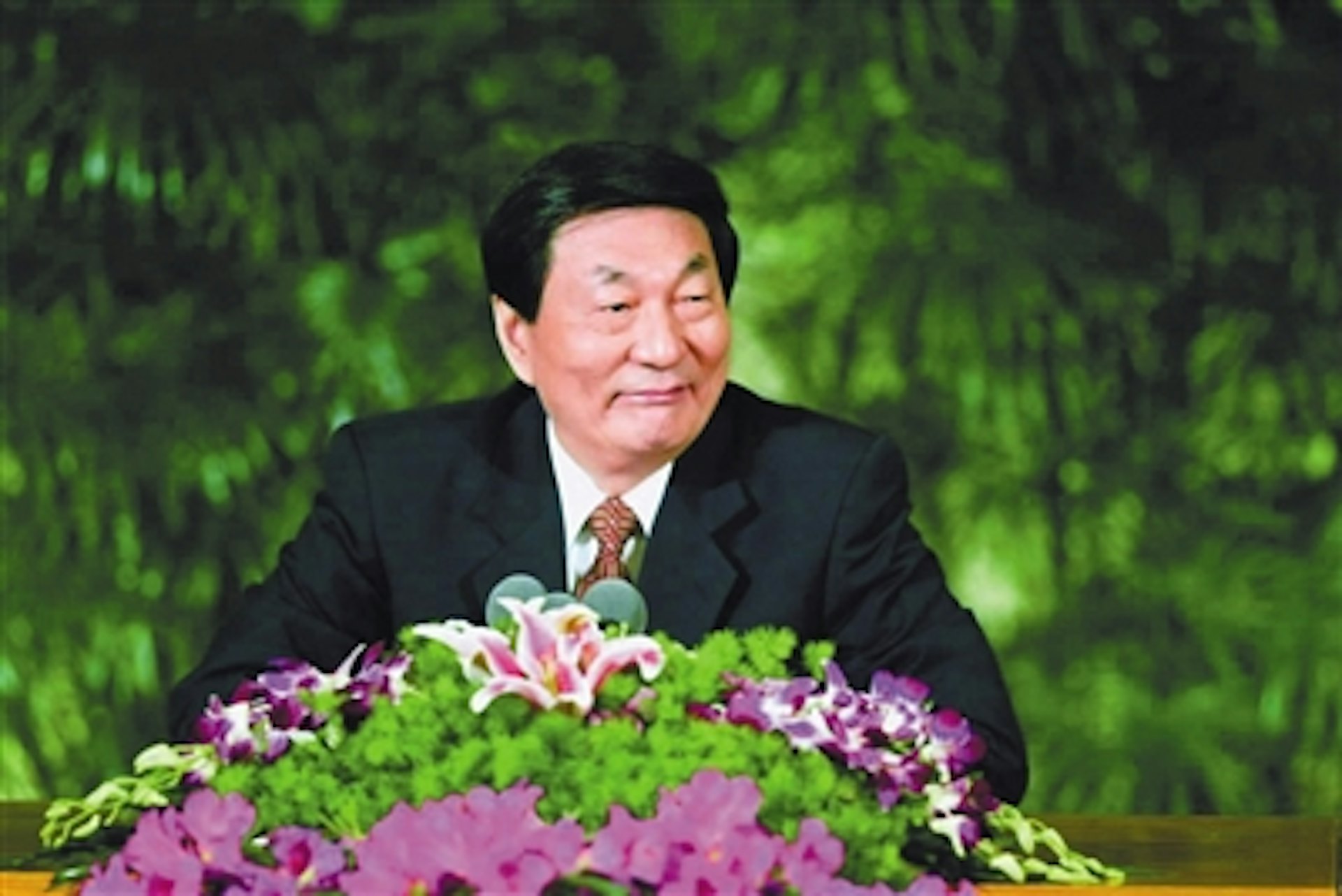
On March 15, 2002, Zhu Rongji answered questions from Chinese and foreign journalists at a press conference held during the Fifth Session of the Ninth National People's Congress. (People's Publishing House)
In his Southern Tour speeches in 1992, Deng Xiaoping said, "Whether China's affairs can be handled well, whether socialism and reform and opening up can be upheld, whether the economy can develop faster, and whether the country can enjoy long-term stability, in a certain sense, depends on people." Zhu Rongji, who was entrusted with important responsibilities by Deng Xiaoping, is a hero of China's reform and opening up. His unwavering commitment, courage to challenge huge vested interests, and outstanding governance ability to tackle tough issues are invaluable. In the future, China's healthy development will still need a large number of capable officials who take Zhu Rongji as their role model.
As China enters a new cycle of transformation and reform, facing a complex web of historical issues and new problems arising during development, including K-shaped economic divergence, unbalanced development, weak domestic demand, and a lack of confidence among many enterprises and the public, as well as the serious problems of official corruption, bureaucracy, inaction, and malfeasance, how to ensure that China can maintain good government governance, how to combine meritocracy with democracy and the rule of law, and how to ensure the healthy and sustainable development of meritocracy are the unfinished tasks left to China by Deng Xiaoping, Jiang Zemin, and Zhu Rongji.
8月12日,中國前總理朱鎔基在北京逝世,享年98歲。在改革開放以來的中國現代化進程中,朱鎔基是一位給世人留下深刻印象的傳奇總理、鐵腕改革家。他

www-hk01-com.translate.goog