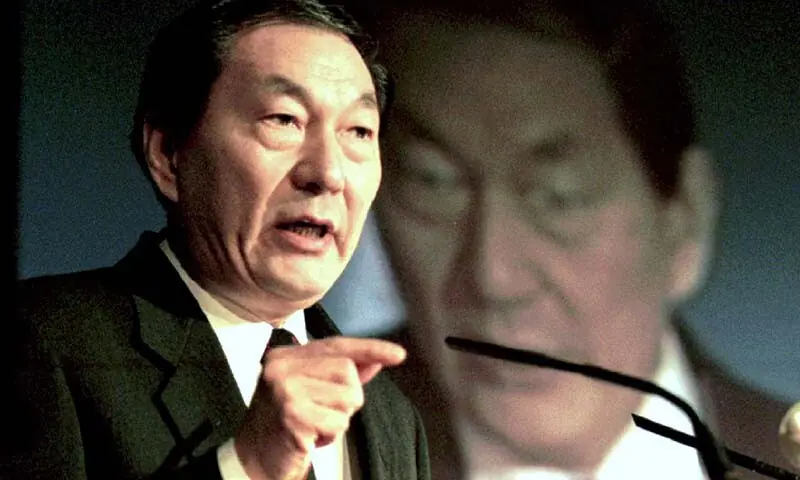
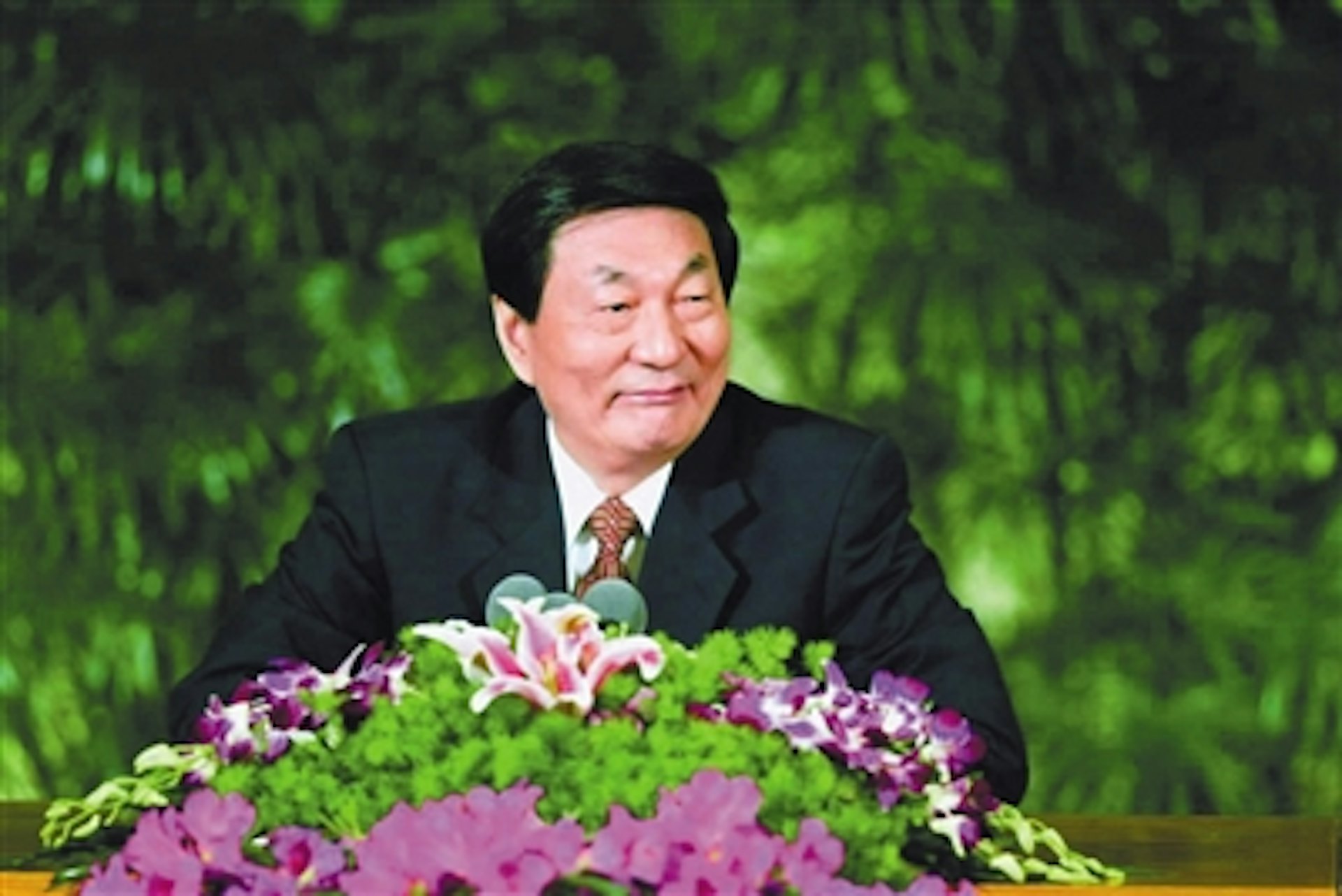
Former Chinese premier Zhu Rongji dies aged 97

Yasser76

Elite Member
Joined
Jan 3, 2024
Messages
11,540
Reaction score
27,878
Reputation
23,048.7
Country of Origin
Country of Residence
Sad news, great leader and helped lay foundations of modern Chinese economy, was a true friend of Pakistan too

 
In China, he is a respected iron-willed premier.Main Contributions1. Tax reform, through the implementation of a tax-sharing system, has enabled the Chinese central government to secure more fiscal revenue to support greater investment.2. State-owned enterprise reform: At that time, Chinese state-owned enterprises, like those in other countries, were inefficient and suffered widespread losses.Carrying out reforms on a large scale certainly requires great courage, and many people will lose their jobs, but it will make state-owned enterprises more competitive.3. Financial reform, at that time, banks had bad debts, and the issue of triangular debts was severe.He implemented extensive financial, banking, and credit reforms, laying the foundation for China's current financial structure.
Of course, he also orchestrated China's accession to the World Trade Organization, led the country through the 1997 Asian financial crisis, and implemented educational reforms, among other initiatives.It can be said that the economic framework of modern China was established by him.
 
RIP. A great leader, will be remembered fondly by the Chinese people.
images
 
Zhu was a great premier. He laid the foundations of current Chinese market economy. While Deng is regarded as the chief architect of Chinese reform, Zhu is regarded by many as the chief engineer of Chinese reform.
 
RIP. A great leader, will be remembered fondly by the Chinese people.
images

He kind of looks like Paul Bearer, the manager of the Undertaker in the WWF.

Can’t say RIP since he’s an atheist but condolences to the Chinese people and government for the loss of such a major figure in China’s ongoing ascendency.
 

Zhu Rongji, the iron-fisted reformer: The virtuous and capable he represents is key to China's past and future.

Written by: Deng Feng
publishing: 2026-08-13 10:04 renew: 2026-08-13 12:17


Zhu Rongji, the iron-fisted reformer: The virtuous and capable he represents is key to China's past and future.


On August 12, former Chinese Premier Zhu Rongji passed away in Beijing at the age of 98. In the process of China's modernization since the reform and opening up, Zhu Rongji was a legendary premier and a strong-willed reformer who left a deep impression on the world. He not only possessed outstanding economic governance capabilities but also an unwavering spirit of reform. With the support of Deng Xiaoping and Jiang Zemin, he established the system for China's socialist market economy, powerfully promoting China's economic take-off. Today, China's status as the world's second-largest economy and largest industrial nation, and the fact that the Chinese people have largely escaped poverty and enjoy a comfortable life, are inseparable from Zhu Rongji's landmark economic reforms.

Zhu Rongji possessed the spirit of a scholar-official and was an outstanding role model for Chinese officials. His life was full of ups and downs and trials, fully illustrating the saying of the Chinese philosopher Mencius: "Therefore, when Heaven is about to place a great responsibility on a person, it will first afflict his mind, exhaust his muscles and bones, starve his body, leave him destitute, and thwart his endeavors." Zhu Rongji was practically an orphan; his parents died early. In 1958, while working at the State Planning Commission, he was "punished" for his words and labeled a rightist. During the Cultural Revolution, he was sent to the countryside to do manual labor, planting wheat, rice, and cotton, raising pigs, and working as a cook. It wasn't until 1978, on the eve of the reform and opening up, that Zhu Rongji was rehabilitated and his Party membership was restored.

Zhu Rongji's 20 years as a rightist were the lowest point in his life. During this period, he suffered a series of blows and setbacks, but he possessed extraordinary willpower and resilience, and ultimately grew stronger in adversity. "Adversity makes one stronger." Deng Xiaoping's reform and opening up policy changed the political fate of the highly capable, responsible, and well-trained Zhu Rongji, allowing him to rise to prominence overnight.


On February 5, 1989, Jiang Zemin and Zhu Rongji accompanied Deng Xiaoping to celebrate the Spring Festival with Shanghai's Party, government, and military leaders. (China Communist Party News Network)

On February 5, 1989, Jiang Zemin and Zhu Rongji accompanied Deng Xiaoping to celebrate the Spring Festival with Shanghai's Party, government, and military leaders. (China Communist Party News Network)

After working for many years in the State Planning Commission and the State Economic Commission, Zhu Rongji came to Shanghai in 1987 and began to shine. During his tenure as Mayor and Party Secretary of Shanghai, his integrity, courage, pragmatism, and outstanding economic governance abilities were widely praised. In 1991, he was promoted by Deng Xiaoping to Vice Premier of the State Council, and the following year became a member of the Standing Committee of the Political Bureau of the CPC Central Committee. He was elected Premier in 1998 and stepped down in 2003. During his 12 years in the State Council, he and Jiang Zemin created a remarkable cooperative relationship. In those 12 years, Zhu Rongji successfully resolved the "triangular debt" crisis, achieved a "soft landing" for inflation, effectively responded to the impact of the Asian financial crisis, and carried out tax-sharing reforms, financial reforms, and state-owned enterprise reforms. He also presided over China's negotiations for accession to the WTO, enabling China to successfully transition from a planned economy to a socialist market economy, laying a solid foundation for the "golden decade" under Hu Jintao.

Chinese culture has a tradition of valuing virtue and ability. Virtue refers to moral character and integrity, such as the advocacy that scholar-officials should be "dedicated to the Way," take the world as their responsibility, "devote themselves to the utmost until their dying breath," and "establish a heart for heaven and earth, and a destiny for the people." Ability refers to wisdom and competence, enabling one to "cultivate oneself, regulate one's family, govern the state, and bring peace to the world." Zhu Rongji is a representative of a virtuous and capable politician. On the level of virtue, he was honest and upright, dared to speak the truth, was ambitious and enterprising, courageous in taking responsibility, had an iron fist against corruption, and cared deeply for the people. On the level of ability, he was open-minded and skilled in economic governance. He combined virtue and ability, excelling at tackling tough challenges, and became China's chief economic engineer in the 1990s during the reform and opening-up wave initiated by Deng Xiaoping. He navigated a minefield, propelling China's economy, industry, and modernization forward significantly. The Chinese people's dream of national prosperity and strength, which has lasted for thousands of years, is becoming a reality. Zhu Rongji's historical contributions are indispensable, and he will be recorded in history like reformers such as Fan Zhongyan, Wang Anshi, and Zhang Juzheng.


2002年1月14日,印度新德里,時任中國總理朱鎔基檢閲印軍儀仗隊。(VCG)

On January 14, 2002, in New Delhi, India, then-Chinese Premier Zhu Rongji inspected the Indian Army honor guard. (VCG)

In Chinese history, successful reforms are few and far between. The success of the reform and opening up initiated by Deng Xiaoping and established by Jiang Zemin and Zhu Rongji is a stroke of luck for the Chinese people.

Zhu Rongji exemplifies why China's reform and opening-up policy succeeded. A key reason for the tremendous success of reform and opening-up and China's economy is that Deng Xiaoping established a new talent selection mechanism during the rectification process following the Cultural Revolution. This injected an invaluable element of talent into Chinese politics, leading to the emergence of a large number of outstanding reformers and politicians, among whom Zhu Rongji was one of the most outstanding.

In the post-World War II world, there are many countries that pursue national prosperity and strength. China is not the only country with a large population. There are also many countries that have implemented opening up to the outside world and market economy. However, China's economic growth miracle after reform and opening up is the most outstanding. One of the key reasons is good government governance.


2002年3月15日,朱鎔基在九屆全國人大五次會議舉行的記者招待會上回答中外記者提問。(人民出版社)

On March 15, 2002, Zhu Rongji answered questions from Chinese and foreign journalists at a press conference held during the Fifth Session of the Ninth National People's Congress. (People's Publishing House)

In his Southern Tour speeches in 1992, Deng Xiaoping said, "Whether China's affairs can be handled well, whether socialism and reform and opening up can be upheld, whether the economy can develop faster, and whether the country can enjoy long-term stability, in a certain sense, depends on people." Zhu Rongji, who was entrusted with important responsibilities by Deng Xiaoping, is a hero of China's reform and opening up. His unwavering commitment, courage to challenge huge vested interests, and outstanding governance ability to tackle tough issues are invaluable. In the future, China's healthy development will still need a large number of capable officials who take Zhu Rongji as their role model.

As China enters a new cycle of transformation and reform, facing a complex web of historical issues and new problems arising during development, including K-shaped economic divergence, unbalanced development, weak domestic demand, and a lack of confidence among many enterprises and the public, as well as the serious problems of official corruption, bureaucracy, inaction, and malfeasance, how to ensure that China can maintain good government governance, how to combine meritocracy with democracy and the rule of law, and how to ensure the healthy and sustainable development of meritocracy are the unfinished tasks left to China by Deng Xiaoping, Jiang Zemin, and Zhu Rongji.


Zhu was a great premier. He laid the foundations of current Chinese market economy. While Deng is regarded as the chief architect of Chinese reform, Zhu is regarded by many as the chief engineer of Chinese reform.

Mao didn't like him and view him as a liberal right-winger.

Also, many people are very critical of him and Deng because their version of economic reform has left so many rooms for those oligarchs who didn't focus for innovation and made China greater, but to enrich themselves via privatization of the national strategic assets and moved everything abroad to the US with their family.

CPC has recently commemorated the former President Jiang Zemin with a documentary, but pays very little tribute to Zhu Rongji.

He and Deng were promoting the trickled down economy by letting a small group of people to become rich then theoretically supposed to pass the wealth down to benefit most people, but it didn't happen, this small group of people just moved their wealth abroad with their wife and kids, but eventually getting confiscated by their white masters.
 
Last edited:
Mao didn't like him and view him as a liberal right-winger.

Also, many people are very critical of him and Deng because their version of economic reform has left so many rooms for those oligarchs who didn't focus for innovation and made China greater, but to enrich themselves via privatization of the national strategic assets and moved everything abroad to the US with their family.

CPC has recently commemorated the former President Jiang Zemin with a documentary, but pays very little tribute to Zhu Rongji.

He and Deng were promoting the trickled down economy by letting a small group of people to become rich then theoretically supposed to pass the wealth down to benefit most people, but it didn't happen, this small group of people just moved their wealth abroad with their wife and kids, but eventually getting confiscated by their white masters.
That's one of the shortcomings of the strategy to let a group of people get rich first and then hopefully spread to the general population. Yes. I heard many wealthy Chinese that got rich in the reform moved to the West with their wealth. It's partly the Chinese gov's fault to let rich people move out the wealth so easily out of China, the gov should better control them. Some people maybe also criticize him to be too pro-US or West. But, the reform he carried out laid the foundations of current Chinese market economy. The article is published by Hong Kong media, so it's not entirely from mainland perspective but HK.
 
That's one of the shortcomings of the strategy to let a group of people get rich first and then hopefully spread to the general population. Yes. I heard many wealthy Chinese that got rich in the reform moved to the West with their wealth. It's partly the Chinese gov's fault to let rich people move out the wealth so easily out of China, the gov should better control them. Some people maybe also criticize him to be too pro-US or West. But, the reform he carried out laid the foundations of current Chinese market economy. The article is published by Hong Kong media, so it's not entirely from mainland perspective but HK.

Deng wanted full privatization, and Jiang backed by the conservative faction from the CPC didn't want full privatization, especially the national strategic assets cannot be privatized.

Deng and Zhu were very close aligned to Gorbachev and Yeltsin, except Gorbachev/Yeltsin wanted to fully remove all vestige of communism, while Deng and Zhu only wanted to leave communism in name only. However, they all believed this chaotic full liberalization of economy.

Jiang Zemin and the conversative faction were ended up being right, the state-capitalism is indeed more suitable for China during the economic reform than the full privatization championed by Deng Xiaoping and Zhu Rongji.

You can see the Hanjian group like Falungong fully hated Jiang when he was still alive, and now they hate Xi, but they don't really hate Deng and Zhu.

Of course, westernized places like Hong Kong and Taiwan indeed favors the privatization champions like Deng Xiaoping, Zhu Rongji, Wen Jiabao, Li Keqiang over conservative leaders like Mao Zedong, Jiang Zemin and Xi Jinping.

Basically all rich Hanjian who moved their wealth abroad were staunch supporters of Deng and Zhu.
 
Last edited:
Deng wanted full privatization, and Jiang backed by the conservation faction from the CPC didn't want full privatization, especially the strategic assets cannot be privatized.

Deng and Zhu were very close aligned to Gorbachev and Yeltsin, except Gorbachev/Yeltsin wanted to fully remove all vestige of communism, while Deng and Zhu only wanted to leave communism in name only. However, they all believed this chaotic full liberalization of economy.

Jiang Zemin and the conversative faction were ended up being right, the state-capitalism is indeed more suitable for China during the economic reform than the full privatization championed by Deng Xiaoping and Zhu Rongji.

You can see the Hanjian group like Falungong fully hated Jiang when he was still alive, and now they hate Xi, but they don't really hate Deng and Zhu.

Of course, westernized places like Hong Kong and Taiwan indeed favors the privatization champions like Deng Xiaoping, Zhu Rongji, Wen Jiabao, Li Keqiang over conservative like Mao Zedong, Jiang Zemin and Xi Jinping.

Basically all rich Hanjian who moved their wealth abroad were staunch supporters of Deng and Zhu.
I thought Deng despised Gorbachev, calling him stupid person, esp referring to his politics reform first and economic reform after, after their meeting in Beijing in summer 1989 according to Deng's interpreter Zhang Weiwei revealed. Hard to imagine Deng wanted to align with Gorbachev and Yeltsin. Also, Zhu was upset when some Westerners called him China's Gorbachev, Zhu didn't want to be associated with Gorbachev or his style of reform. China needs corrections now from many Deng and Zhu's earlier reform policies for sure.
 
Last edited:
I thought Deng despised Gorbachev, calling him stupid person, esp referring to his politics reform first and economic reform after, after their meeting in Beijing in summer 1989 according to Deng's interpreter Zhang Weiwei revealed. .Hard to imagine Deng wanted to align with Gorbachev and Yeltsin. Also, Zhu was upset when some Westerners call him China's Gorbachev, Zhu didn't want to be associated with Gorbachev or his style of reform.

The current successful state-capitalism model that was forged during the economic reform was the vision of Jiang Zemin and the pragmatic leaders from the conservative faction.

Deng's version of economic reform was in fact an utter failure that led into the color revolution of June 4 1989 because economic stagnation and high inflation that led into people manifestation on the street similar to the Arab spring.

Deng had vision to emulate the western capitalism in Shenzhen. However, without the ecosystem built by the strong state-owned enterprises that were forged by Jiang and conservative faction, how can a single private enterprise like Huawei to withstand against the full fledge sanction against the west?

Deng distrusted Jiang because he was promoted and backed by the conservative faction, that's why he used his power to appoint Zhu as the premier to keep Jiang under check.

Because of Zhu served as the umbrella for the rich Hanjian, the privatization was still rampant, and many national strategic assets were still getting robbed by those oligarchs and moved the wealth abroad.

Without Deng and Zhu, China's economic reform would be far in better shape than it is now.
 
The current successful state-capitalism model that was forged during the economic reform was the vision of Jiang Zemin and the pragmatic leaders from the conservative faction.

Deng's version of economic reform was in fact an utter failure that led into the color revolution of June 4 1989 because economic stagnation and high inflation that led into people manifestation on the street similar to the Arab spring.

Deng had vision to emulate the western capitalism in Shenzhen. However, without the ecosystem built by the strong state-owned enterprises that were forged by Jiang and conservative faction, how can a single private enterprise like Huawei to withstand against the full fledge sanction against the west?

Deng distrusted Jiang because he was promoted and backed by the conservative faction, that's why he used his power to appoint Zhu as the premier to keep Jiang under check.

Because of Zhu served as the umbrella for the rich Hanjian, the privatization was still rampant, and many national strategic assets were still getting robbed by those oligarchs and moved the wealth abroad.

Without Deng and Zhu, China's economic reform would be far in better shape than it is now.
During Deng, Jiang and Zhu's eras, there were rampant corruptions that are true even today to some extent, that corruptions and also uncontrolled inflations at the time were what really fueled the 1989 protest. I thought Jiang and Zhu had a good work relationship starting their partnership in Shanghai as party secretary and mayor.
 

Users who are viewing this thread

Pakistan Defence Latest

Country Watch Latest

Latest Posts

Back
Top