Pact with Saudi Arabia threatens to draw Pakistan into Middle East conflict
Activation of mutual defence agreement by Riyadh as fighting with Houthis escalates would have wide-reaching repercussions for Islamabad
Hannah Ellis-Petersen in Delhi and
Shah Meer Baloch in Islamabad
Sat 19 Sep 2026 08.00 BST
Share
Prefer the Guardian on Google
As he stood in Riyadh last September, the world looked like a very different place for Pakistan’s most powerful man, Gen Asim Munir.
The country’s army chief was there to witness
the signing of a historic defence pact with Saudi Arabia, which he had personally orchestrated with the crown prince, Mohammed bin Salman.
To Munir, it appeared to be a highly strategic win: Riyadh would provide cash-strapped Pakistan with billions of dollars of life-saving investments and loans. In exchange, Pakistan agreed to train up the Saudi military, and Pakistan’s armed forces would defend
Saudi Arabia in the unlikely event of an attack on its territory.
Analysts say it was clear that Pakistan presumed US-Iran relations would soon get back on track and the risk of a conflict sweeping across the Middle East and the Gulf was low.
But a very different scenario soon unfolded. By February, the Middle East was on fire after
the US and Israel began bombing Iran – and Iran began firing missiles at the Gulf states, including Saudi Arabia, in retaliation.
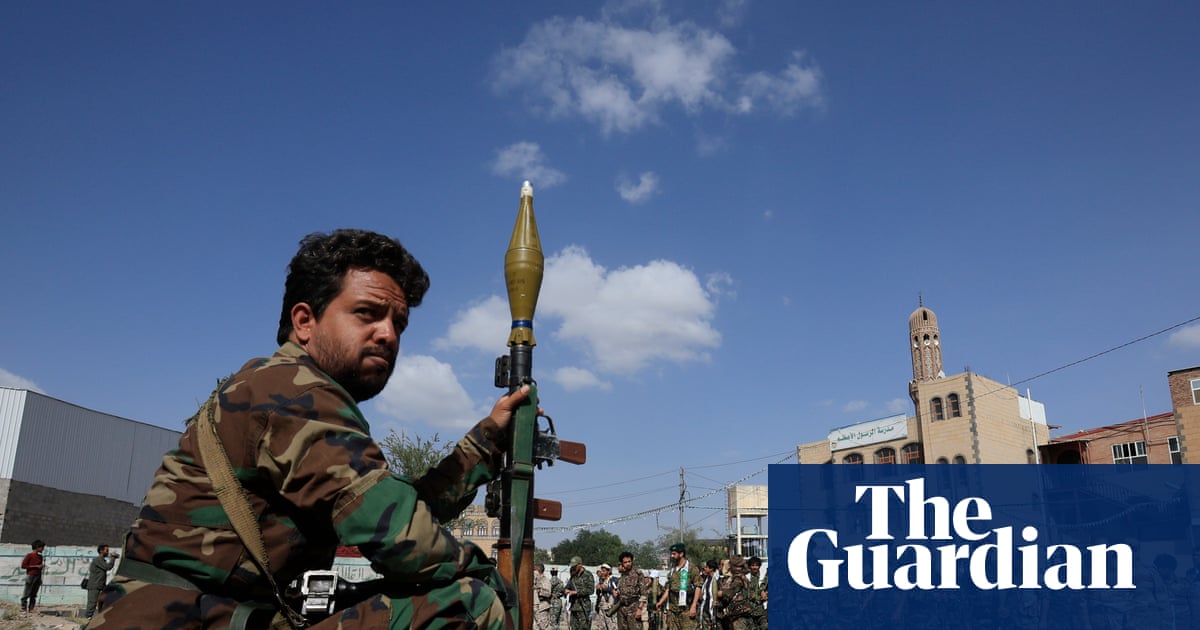
It did not take long for the war to reinflame Saudi’s conflict with the Houthis, the Iran-backed rebel group based in Yemen, and for their fragile truce to collapse. Earlier this month the Houthis
made unprecedented territorial gains in Yemen and hit Saudi territory with strikes and drones. Saudi Arabia has responded by pounding Yemen with airstrikes. Some believe a return to full-scale war is on the horizon.
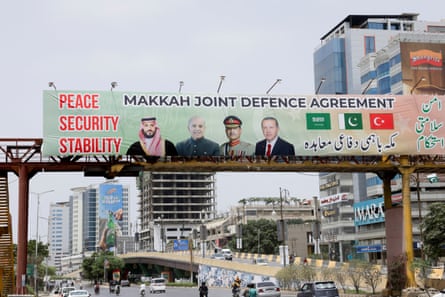
The pressure is now mounting on Pakistan, and particularly Munir. In August, the defence pact with Saudi Arabia was extended to include
Turkey and renamed the Mecca joint defence agreement. The countries agreed that an armed attack on any one of them would be treated as an attack on all three.
View image in fullscreen
A billboard in Karachi, Pakistan, marks the signing of the Mecca joint defence agreement in August. Photograph: Akhtar Soomro/Reuters
Ayesha Siddiqa, a defence analyst and senior fellow at King’s College London, said: “I don’t think Asim Munir properly calculated the threats the region was facing – and that Pakistan might need to put its troops on the line quite so soon.”
Saudi Arabia has tens of billions of dollars in fighter jets and war machinery, but it does not have any warfare experience to fight the
Houthis, who have proved to be tough, resilient fighters. Pakistan’s forces, trained to deal with the constant menace of India, would be highly valuable on the frontline.
Analysts say that if Saudi Arabia decided to activate the Mecca pact to fight the Houthis, Pakistan would have no choice but to send in its troops, including thousands who are already deployed in Saudi Arabia for training. As well as being a defence partner, Pakistan is almost totally economically and geopolitically dependent on Saudi Arabia, which has recently given the country a lifesaving $8bn (£6bn) in funds and investments.
Last week, Pakistani government ministers and senior military figures gave increasingly bullish statements, confirming their “unconditional” commitment to the pact and saying Islamabad would go to “any extent” to defend Saudi Arabia.
But privately, officials in Pakistan are deeply worried about being dragged into the never-ending war unfolding across the Middle East. The country is already economically crippled,
in a de facto war with the Taliban in Afghanistan, and facing an uncontrollable surge in militancy in its border areas.
To many, an activation of the Mecca pact would be perceived as Islamabad taking a clear stance against Iran. Before the US and Israeli strikes on Iran, Pakistan had good relations with its neighbour – ties that Munir utilised to bring Tehran to the negotiating table in his attempt to secure a lasting ceasefire. But as the war has dragged on, Pakistan has become increasingly infuriated with Iran, while Tehran has little trust left in Islamabad.
View image in fullscreen
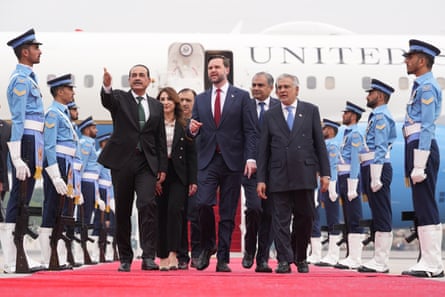
Gen Asim Munir welcomes the US vice-president, JD Vance, to Islamabad in April during diplomatic efforts to end the US-Israeli war with Iran. Photograph: Jacquelyn Martin/AP
As Siddiqa emphasised, Pakistan joining the fight against the Houthis “would come with major repercussions”. After Iran, Pakistan is home to the second-largest population of Shia Muslims, who would probably rise up in protest against any involvement in strikes on the Houthis.
Iran also maintains good relations with the Taliban in Afghanistan, posing the risk of further provoking one of Pakistan’s biggest security threats and driving militancy and security problems along the Afghanistan-Pakistan border to even deadlier levels.
It also risks inflaming the situation in Balochistan, Pakistan’s unstable border region with Iran, which is home to a long-running and uncontrollable insurgency.
Raja Nasir Abbas, the opposition leader in Pakistan’s senate, said that only the very few at the top of Pakistan’s military even knew what conditions and agreements had been made in the Mecca pact. With the military as Pakistan’s de facto rulers, the decision to join was not even put before parliament.
“It will be a disaster for the country if Pakistan jumps into war,” said Abbas. “We are already facing two lethal insurgencies; our economy is in a shambles and inflation has rocketed. If we take Saudi Arabia’s side in this conflict, the country will face chaos, instability and religious division.”
So far, no one has been able to pinpoint what the “red line” would be that would force the pact to be activated. Analysts said Pakistan appeared to be banking on Riyadh’s reluctance to enter into open warfare with Iran by escalating its fight with the Houthis. Turkey has also made it clear it does not want to enter the fray.
“Pakistan will do its best not to get involved in any incursion on Yemeni soil,” said Muhammad Amir Rana, the director of the Islamabad-based Pak Institute for Peace Studies.
Speaking privately, one senior official said he did not think the Saudi crown prince “wants to activate the pact now”.
“If the kingdom plans to send its ground forces, Pakistan would support that,” he said. “But I don’t think Saudi Arabia would start a full-fledged war against the Houthis without American approval and Trump has snubbed them. Right now, the US does not want to open up another front; they prefer talking to Houthis.”
He added: “You can’t predict the future though.”
Understanding what is happening in the Middle East is more important than ever
It’s the Guardian’s job to keep a close focus on events in the region for our global audience.
With reporters sharing live updates around the clock, we’re well-placed to provide comprehensive, fact-checked reporting and to help our audience understand every major development. But we can’t do it without your support.
We rely on the generosity of our readers, whose backing helps to keep our correspondents on the ground and our reporting free from commercial or political influence.
We appreciate that not everyone can afford to pay for news, but if you can,
can we count on your support? Here are three good reasons to make the choice to fund us today:
1. Our quality, investigative journalism is a scrutinising force.
2. We are independent and have no billionaire owner dictating what we do – your money directly powers our reporting.
3. It doesn’t cost much, and takes less time than it took to read this message.
Activation of mutual defence agreement by Riyadh as fighting with Houthis escalates would have wide-reaching repercussions for Islamabad

www.theguardian.com


 bill.
bill.