
Master Chief
Trusted Member


Genuinely not sure what you want in terms of "evidence" that wasnt posted on this thread and on others already. The videos and pictures taken by your own citizens require your urgent and meticulous review before anything else. Others are convinced, even non-Pakistanis. Feel free to cite Arma 3 or conspiracies about female pilots all you wish but none of that obviates the hard truths of the matter. These periodic lapses of memory of yours are becoming a drain on those you converse with.The evidence must be all over the internet right? Oh hey we all saw that Arma 3 footage you published had a good laugh at the "evidences". What is amiss this time is capture of a female pilot.
IAF did what they were asked to do so why fire him. " Bolnari Nur Khan base mein aage khire," you guys are great video graphers, gotta give you that. Meanwhile we had some rando air def interception and college kids howling at it. I guess his performance review went quite well since.

Posting all non Pakistani sources confirming multiple iaf aircraft getting shot down by paf
Reuters
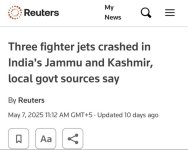
Indian express
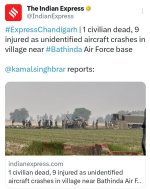
France 24

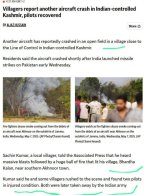
Bloomberg

Trt global

Reuters
Indian express
France 24
Bloomberg
Trt global


As for your IAF chief, please do persist with him. No complaints here.


